Bacopa lanigera
Also known as Hairy bacopa, Woolly bacopa, Herpestis lanigera
FreshwaterStemCuttingsSide shoots

Care at a glance
- Light
- High light
- CO2
- CO₂ beneficial
- Temperature
- 68–82°F
- 20–28°C
- Max height
- 11.8 in
- 30 cm
- Growth rate
- Medium
- Placement
- Background
- Type
- Stem
- pH
- 5.0–7.5
- Hardness
- 2–12 dGH
- Spread
- 2.4 in (6 cm)
- Nutrient uptake
- Root + water column
- Growth region
- Submersed or emersed
- Difficulty
- Medium
- Family
- Plantaginaceae
- Origin
- Brazil, South America
Overview
Bacopa lanigera is a less common stem plant for the background. It stays a fresh light green underwater and takes some care to grow well.
Did you know
Above the waterline, the stems of Bacopa lanigera are cloaked in fine white wool. That fuzzy coat vanishes on the smooth shoots it grows once it is underwater.
Caring for Bacopa lanigera
Strip the lower leaves and plant the stems one at a time in a nutrient-rich substrate, so they root well. Bacopa lanigera feeds through its roots and the water, so use root tabs along with a liquid fertilizer.
It does best with bright lighting, and in weak light the stems stretch and drop their lower leaves. Strong light also brings warmer tones into its fresh green. It grows without CO2, but injection plus regular macro and micro dosing gives faster, denser growth. Keep it at 68 to 82°F (20 to 28°C).
It grows at a moderate pace. Trim and replant the tops to encourage branching into a fuller group, and plant side shoots once they have a few leaves.
Good to know
The species name lanigera means wool-bearing. Bacopa lanigera sits in Plantaginaceae, the family that now holds Bacopa, Hygrophila and many other aquarium stems after the old Scrophulariaceae was broken up. It can be told apart from B. caroliniana by its slightly rounder leaves and its hairy stem.
In the wild
Bacopa lanigera comes from Brazil, where it grows in the wet, boggy ground and shallow water of tropical South American wetlands. Like other Bacopa it is amphibious, spending much of the year emersed on damp soil and going underwater when the ground floods. It closely resembles the far more common Bacopa caroliniana in habit and habitat.
Common questions
Does Bacopa lanigera need to be planted in the substrate?
Yes. Strip the leaves from the lower part of each stem, then push the stems into the substrate one at a time, a little apart.
Does Bacopa lanigera need CO2?
No, but it helps. Bacopa lanigera can grow without injected CO2, and added CO2 makes it grow faster.
How much light does Bacopa lanigera need?
Bacopa lanigera needs high light from a strong planted-tank LED. In weaker light its stems stretch and drop their lower leaves.
Does Bacopa lanigera need root tabs?
They help. Bacopa lanigera takes nutrients through both its roots and its leaves. Root tabs near its roots and a liquid fertilizer cover both.
How do you propagate Bacopa lanigera?
Bacopa lanigera propagates by cuttings and side shoots. Cut off the top of a stem and replant it, and the stump left behind grows new shoots. Cut a side shoot off once it has a few leaves and plant it on its own.
How tall does Bacopa lanigera grow?
Bacopa lanigera grows to about 11.8 in (30 cm) tall. It grows at a moderate pace.
Related plants
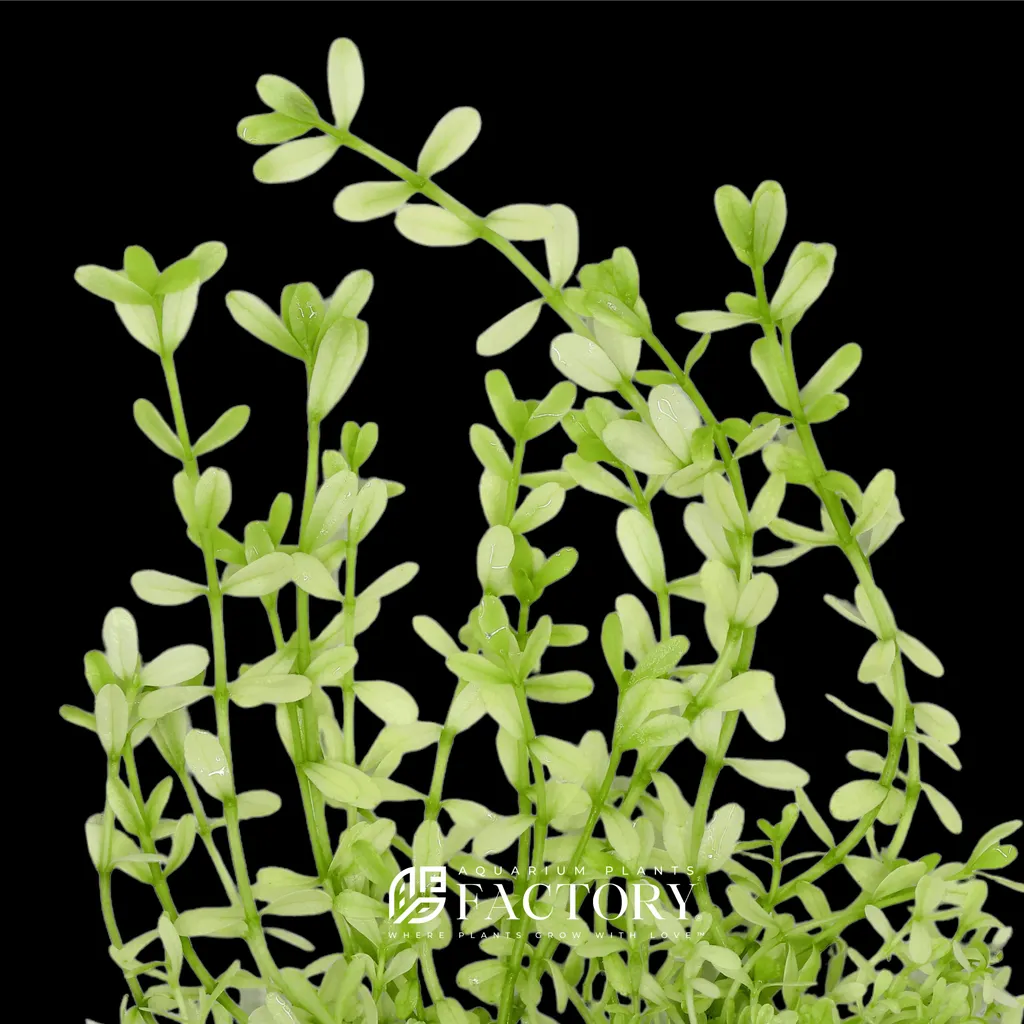 High lightBackground11.8 in (30 cm)
Bacopa Platinum
Bacopa monnieri 'Platinum'
High light · Background
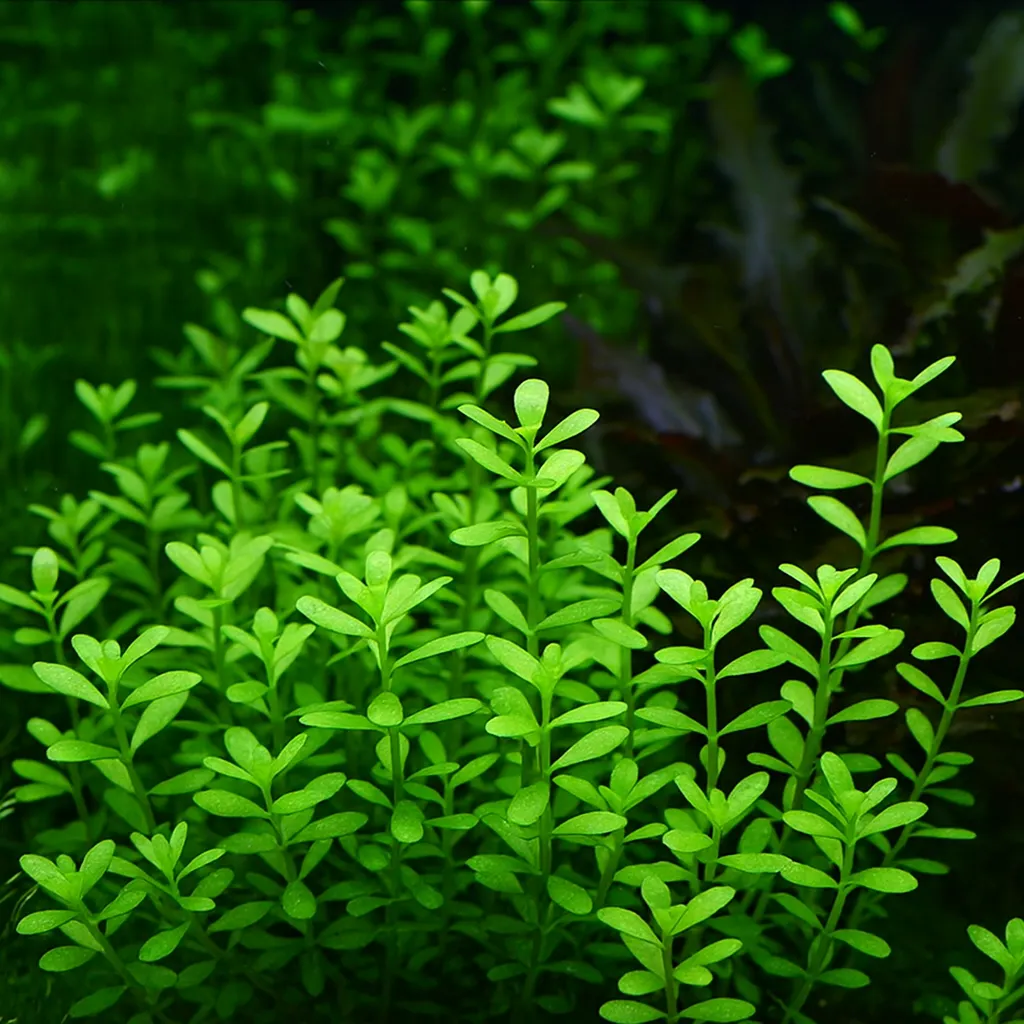 Medium lightBackground11.8 in (30 cm)
Moneywort
Bacopa monnieri
Medium light · Background
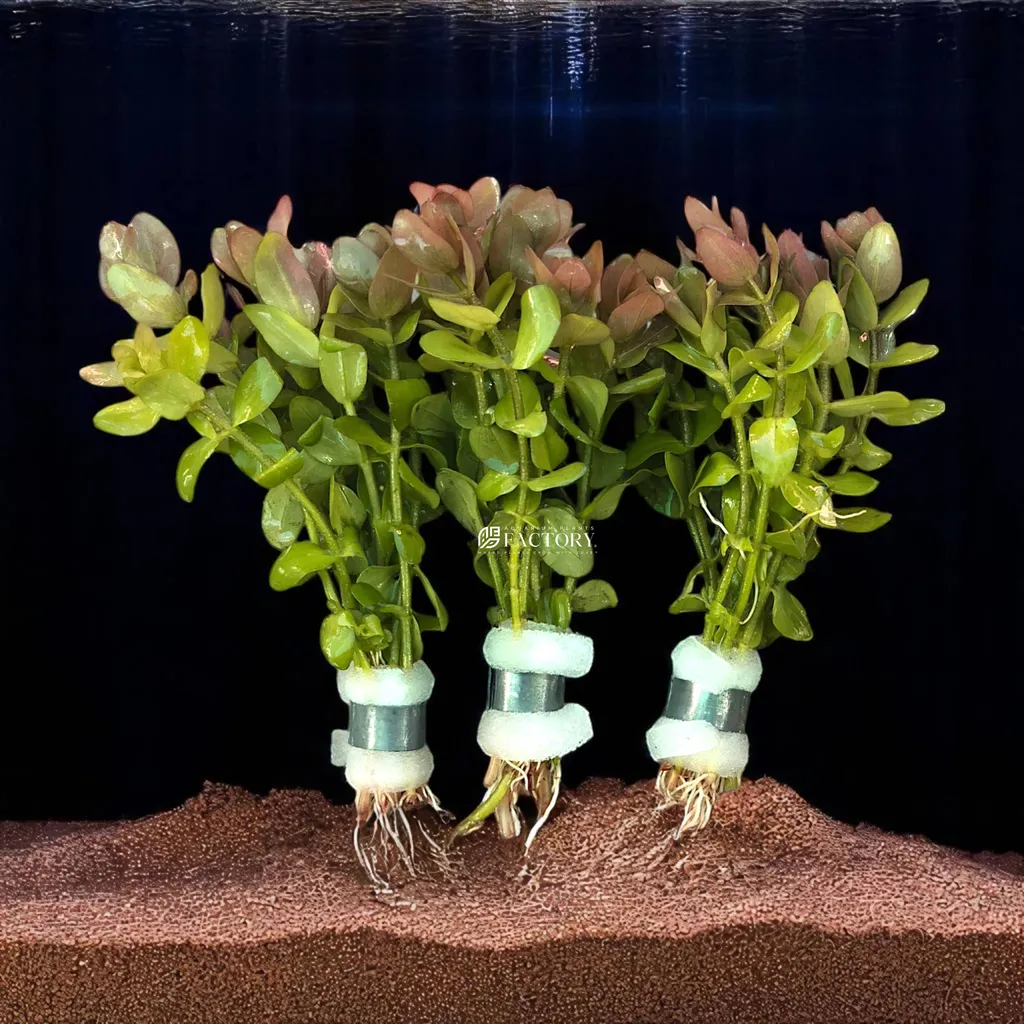 Low lightBackground15.7 in (40 cm)
Giant bacopa
Bacopa caroliniana
Low light · Background
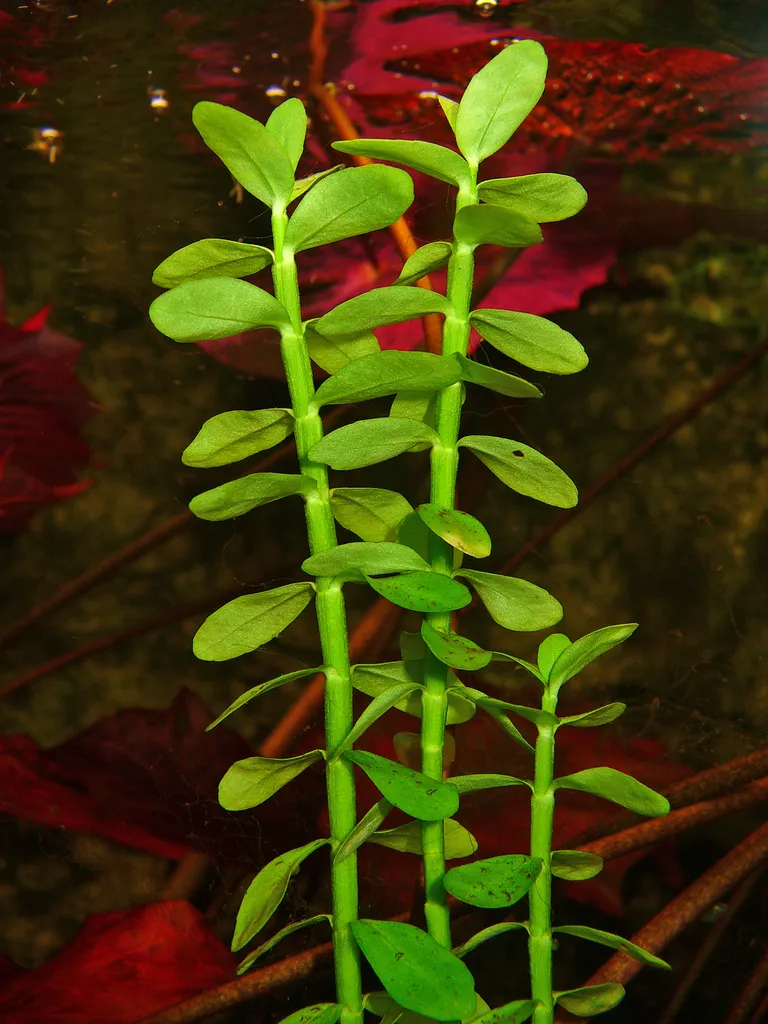 High lightMidground11.8 in (30 cm)
Bacopa madagascariensis
High light · Midground
 High lightMidground11.8 in (30 cm)
Needle leaf bacopa
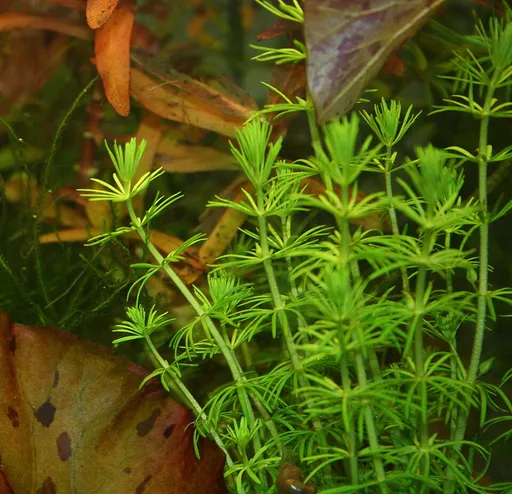
Bacopa myriophylloides
High light · Midground
 High lightMidground11.8 in (30 cm)
Purple bacopa
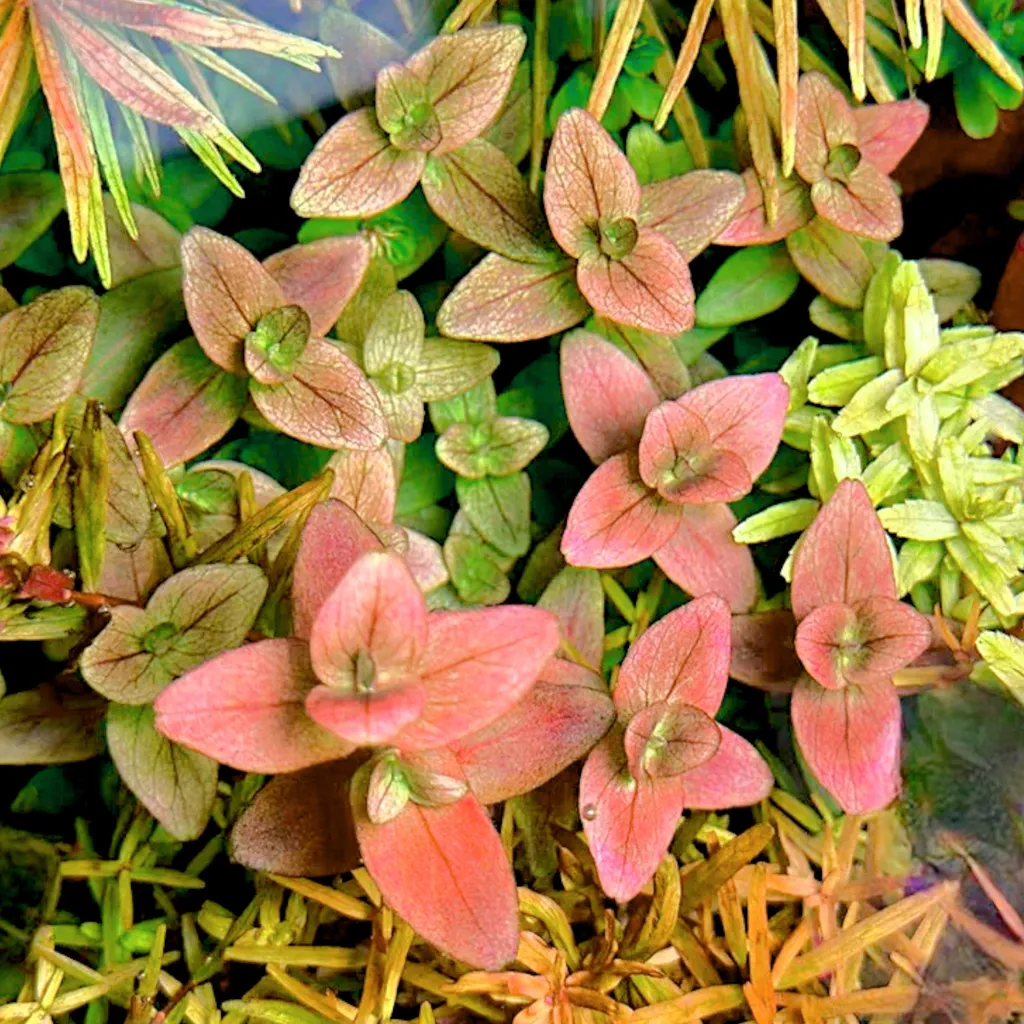
Bacopa salzmannii
High light · Midground