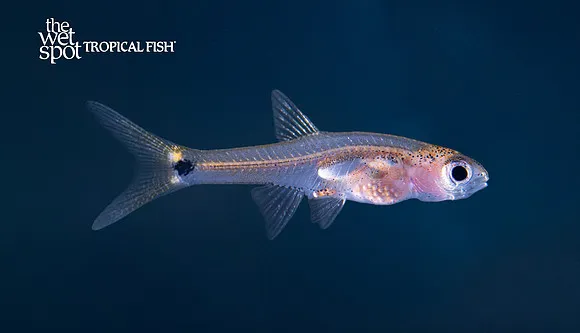
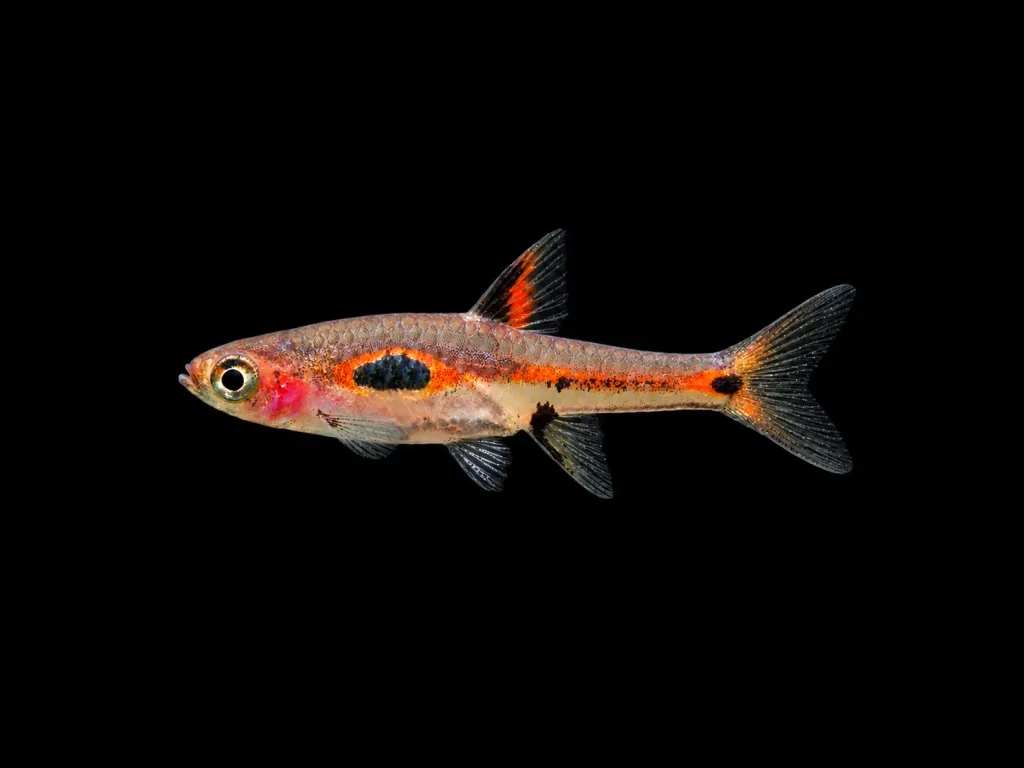
Dwarf amber barb
Barboides gracilis
Also known as Amber barbling
FreshwaterFish
Care at a glance
- Temperature
- 73–81°F
- 23–27°C
- pH
- 5.5–7.0
- Adult size
- 0.8 in
- 2 cm
- Minimum tank
- 5 gal
- 20 L
- Temperament
- Peaceful
- Social behavior
- Schooling
- Swim level
- Middle
- Difficulty
- Medium
- Breeding
- Egg scatterer · Medium
- Rarity
- Rare
- Family
- Cyprinidae
- Origin
- Coastal lowlands from Benin to Cameroon
Overview
The dwarf amber barb is one of the smallest aquarium fish, a peaceful schooler for a planted nano tank. It is a step up from the easiest fish.
Caring for the dwarf amber barb
Keep dwarf amber barbs in a dimly lit, densely planted tank over a dark substrate, which shows off their amber glow. A planted nano of 5 gal (20 L) houses a starter group, and more space with more fish only helps. Add botanicals or dried leaves to tint the water, and keep the filtration gentle.
Keep the water warm, soft and acidic to neutral, at 73 to 81°F (23 to 27°C) and a pH of 5.5 to 7.0. Feed micro foods such as finely crushed flake, micro pellets, baby brine shrimp, microworms and small frozen foods like cyclops.
Keep a shoal of at least a dozen, since single fish or tiny groups stay hidden and slowly lose condition. They swim in the middle water among plant thickets. They are peaceful and easily outcompeted, so pair them only with the calmest, smallest tank mates, or keep a species tank.
The dwarf amber barb is an egg scatterer and moderately tricky to spawn. That keeps wild-type stock uncommon in shops.
Good to know
Barboides gracilis belongs to Cyprinidae, the carp and minnow family. This translucent, amber-tinted micro cyprinid is one of the tiniest fishes on the African continent.
In the wild
The dwarf amber barb comes from shaded, slow coastal streams that run from Benin east to Cameroon. The water is often tea-stained, softened and darkened by leaf litter.
Weekly picks
Tank mates
The dwarf amber barb is a peaceful, schooling species that keeps to the middle. These picks share a community profile with it, are safe together in both directions, and overlap on water type, temperature and pH.
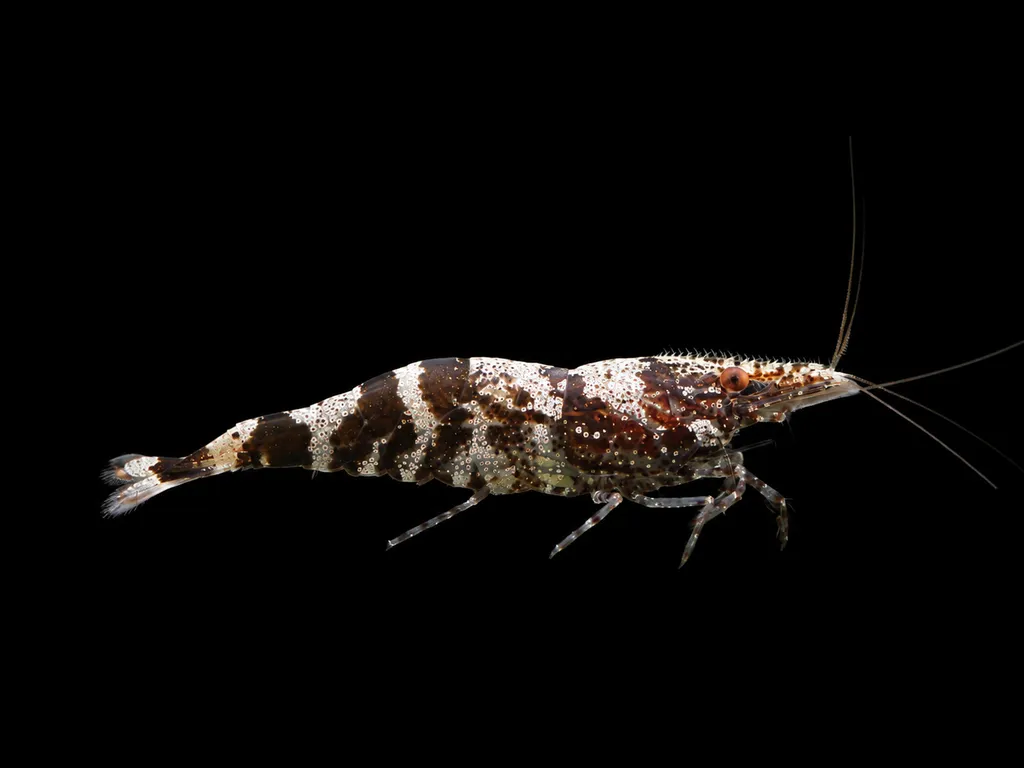
Ninja shrimp
Caridina serratirostris
Freshwater1.2 in (3 cm) · 5 gal (20 L)73–82°F (23–28°C)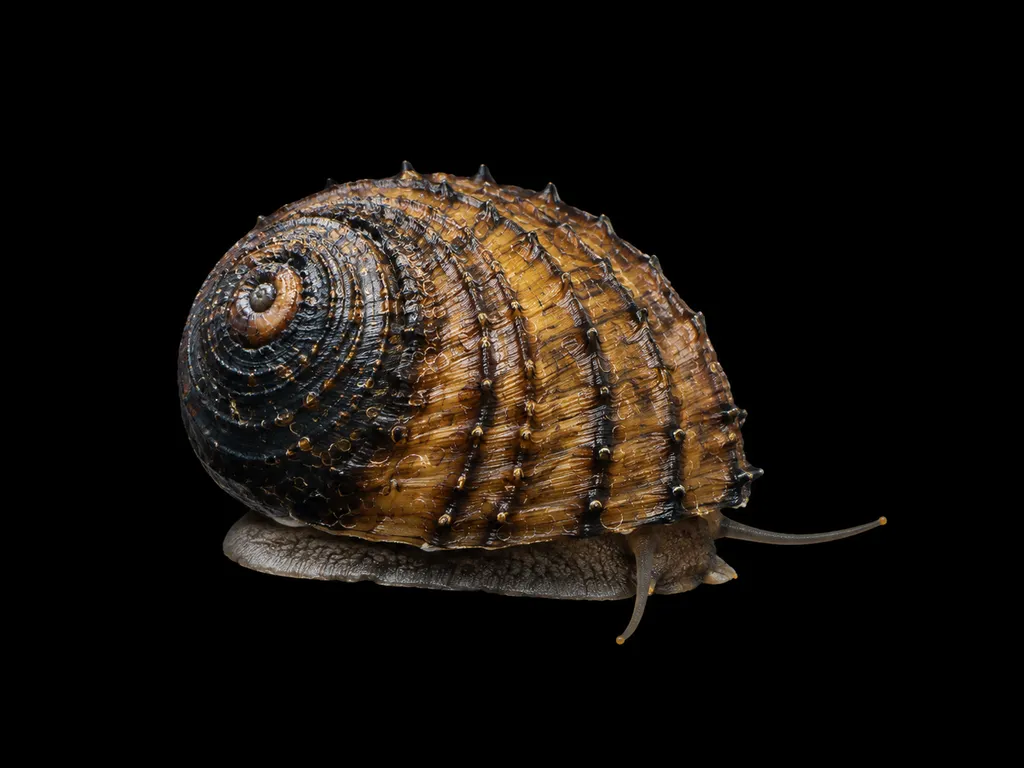
King Koopa nerite
Neritina juttingae
FreshwaterBrackish1 in (2.5 cm) · 5 gal (20 L)72–82°F (22–28°C)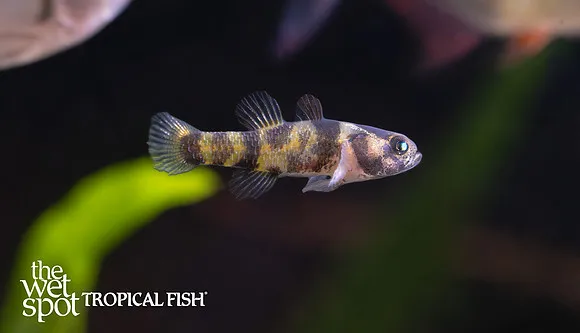
Micro bumblebee goby
Brachygobius nunus
FreshwaterBrackish1 in (2.5 cm) · 5 gal (20 L)73–82°F (23–28°C)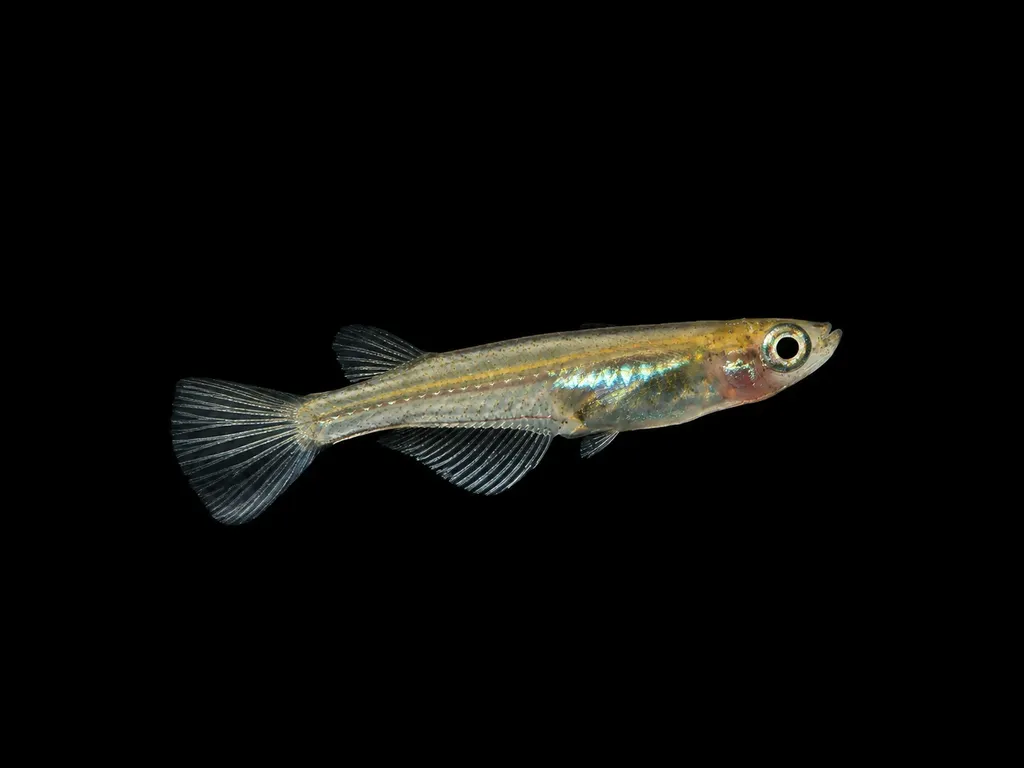
Dwarf medaka
Oryzias minutillus
Freshwater0.8 in (2 cm) · 5 gal (20 L)72–79°F (22–26°C)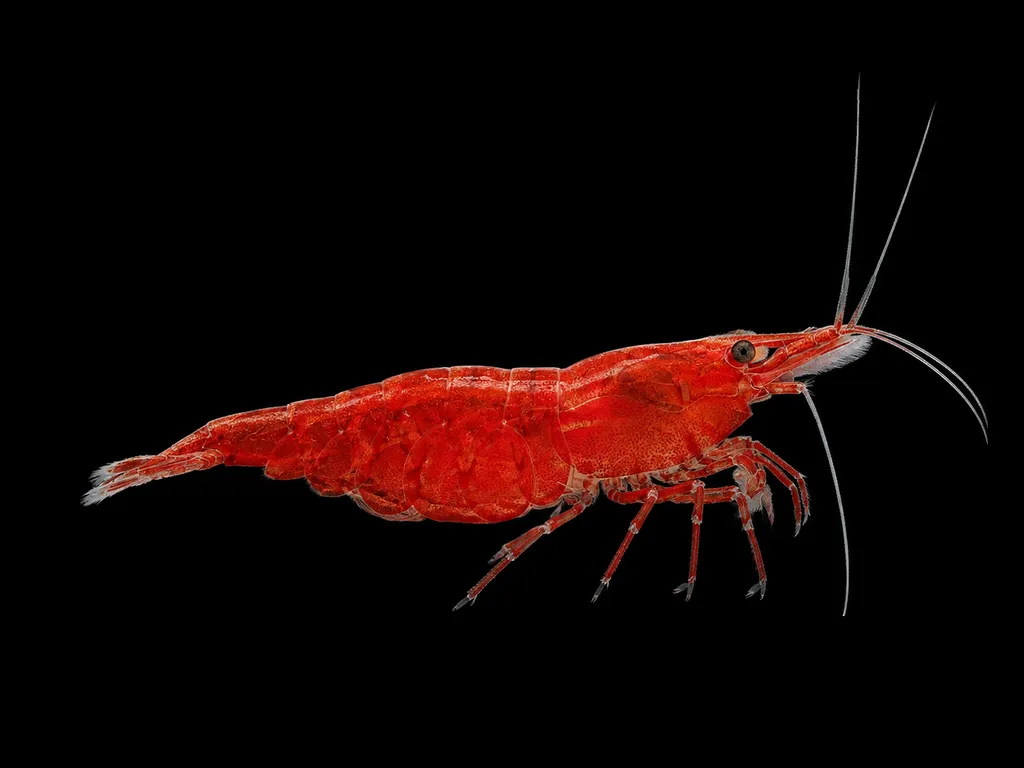
Neocaridina shrimp
Neocaridina davidi
Freshwater1.6 in (4 cm) · 5 gal (20 L)59–84°F (15–29°C)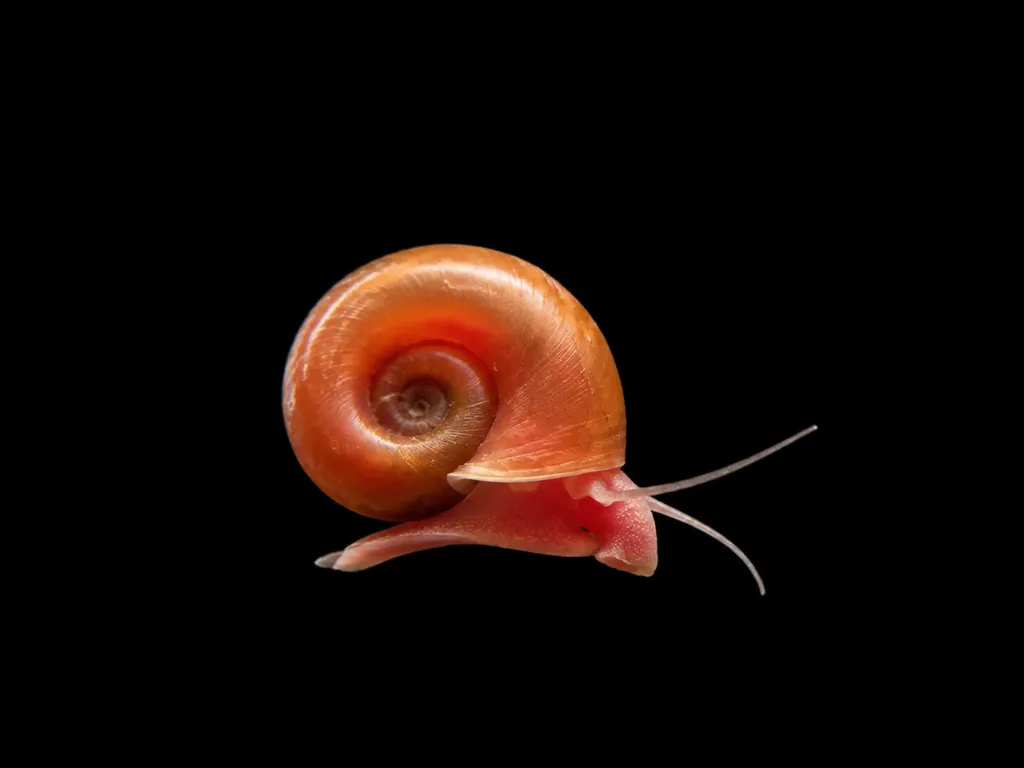
Red ramshorn snail
Indoplanorbis exustus
Freshwater0.8 in (2 cm) · 5 gal (20 L)68–86°F (20–30°C)
Common questions
What size tank does a dwarf amber barb need?
A dwarf amber barb needs at least 5 gal (20 L). It spends most of its time in the middle.
What temperature and pH does a dwarf amber barb need?
A dwarf amber barb is comfortable at 73–81°F (23–27°C) with a pH of 5.5–7.0.
What does a dwarf amber barb eat?
A dwarf amber barb eats micro foods, such as finely crushed flake, micro pellets, baby brine shrimp and microworms. Small frozen foods like cyclops suit it too.
How big does a dwarf amber barb get?
An adult dwarf amber barb reaches about 0.8 in (2 cm).
Does a dwarf amber barb need a group?
Yes. A dwarf amber barb is a schooling species and should be kept in a group, not singly.
How does a dwarf amber barb breed?
Dwarf amber barbs scatter their eggs, and they are moderately tricky to spawn.
Related species
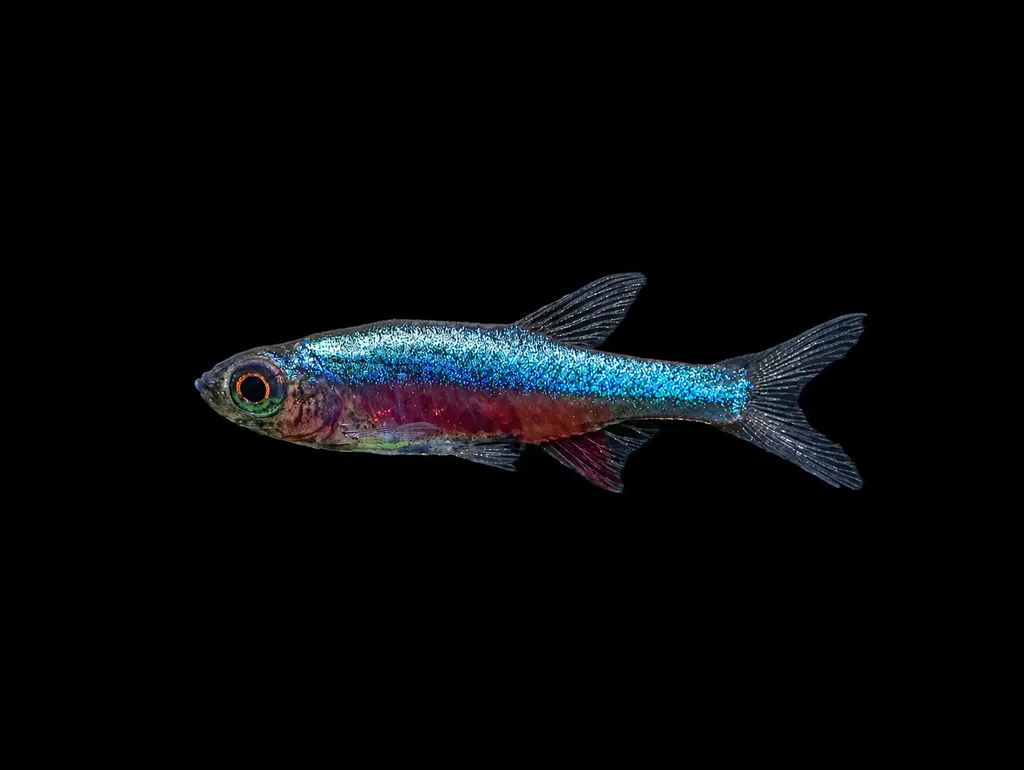 0.8 in (2 cm)12 gal (45 L)73–79°F (23–26°C)
Blue axelrodi rasbora
Sundadanio axelrodi
0.8 in (2 cm) · 12 gal (45 L)
 0.8 in (2 cm)9 gal (35 L)72–79°F (22–26°C)
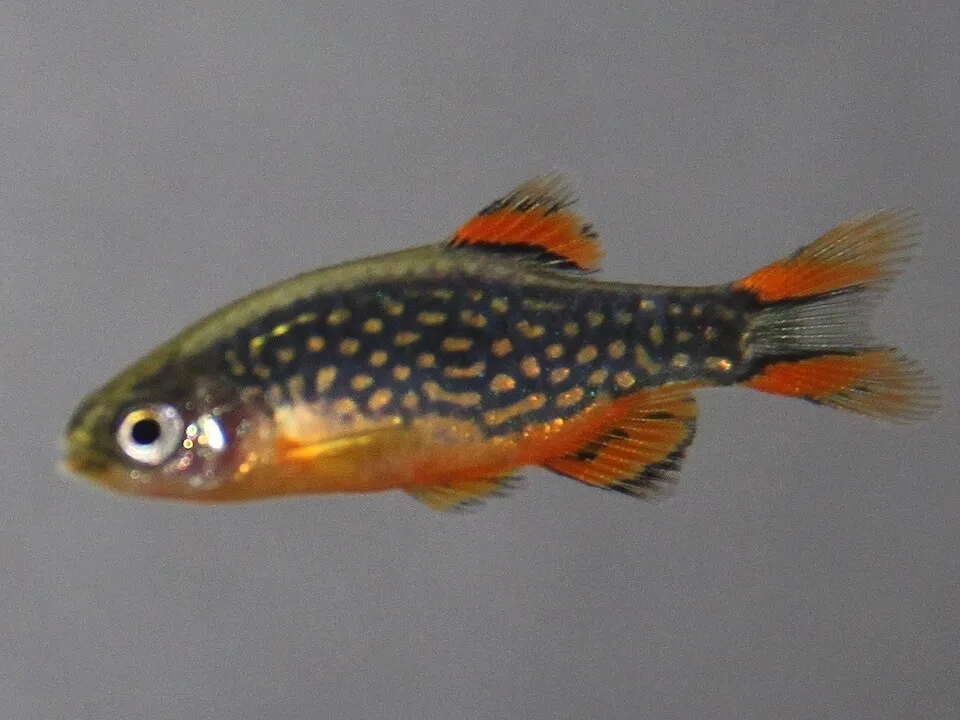
Celestial Pearl danio
Danio margaritatus
0.8 in (2 cm) · 9 gal (35 L)
 0.8 in (2 cm)11 gal (40 L)72–82°F (22–28°C)
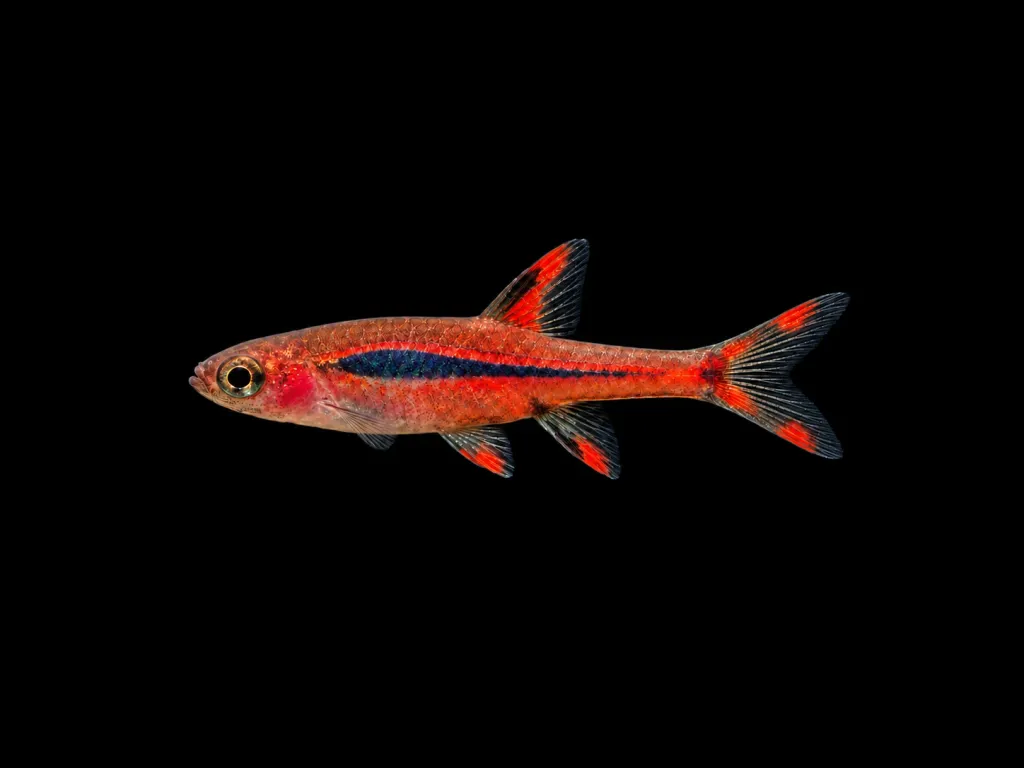
Chili rasbora
Boraras brigittae
0.8 in (2 cm) · 11 gal (40 L)
 0.8 in (2 cm)11 gal (40 L)68–75°F (20–24°C)
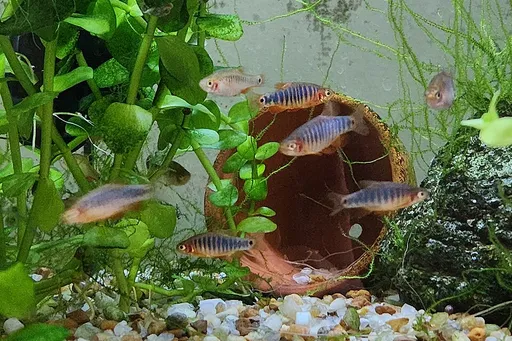
Emerald dwarf rasbora
Danio erythromicron
0.8 in (2 cm) · 11 gal (40 L)
 0.8 in (2 cm)12 gal (45 L)72–79°F (22–26°C)
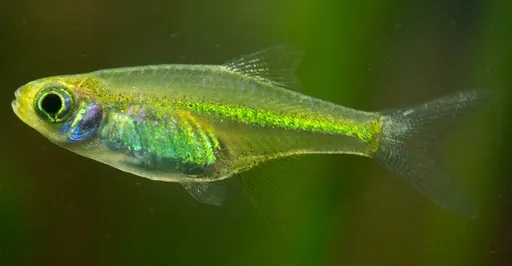
Green neon rasbora
Microdevario kubotai
0.8 in (2 cm) · 12 gal (45 L)
 0.8 in (2 cm)11 gal (40 L)72–81°F (22–27°C)
Phoenix rasbora
Boraras merah
0.8 in (2 cm) · 11 gal (40 L)