Silver arowana
Osteoglossum bicirrhosum
Also known as Dragonfish, Monkey fish, South American arowana, Golden Sun Arowana
FreshwaterFish
Care at a glance
- Temperature
- 75–82°F
- 24–28°C
- pH
- 6.0–7.5
- Adult size
- 39.4 in
- 100 cm
- Minimum tank
- 396 gal
- 1,500 L
- Temperament
- Mostly peaceful
- Social behavior
- Solitary
- Tankmates
- With caution
- Swim level
- Top
- Difficulty
- Difficult
- Breeding
- Hard
- Rarity
- Common
- Family
- Osteoglossidae
- Origin
- Native to the Amazon and surrounding river basins in South America, where it patrols slow flooded forest and backwaters just under the surface.
Overview
This is a big-tank commitment: adults reach around 90 to 100 cm and need a footprint of at least 1500 litres with a wide, well-covered top, since they routinely jump. Keep them at 24 to 28 C and pH 6.0 to 7.5 with strong filtration for the heavy waste load. They will eat any tankmate that fits in the mouth, so pair only with large, calm species, and feed a varied diet of pellets, prawns, insects and fish. A tight, weighted lid is essential.
In the wild
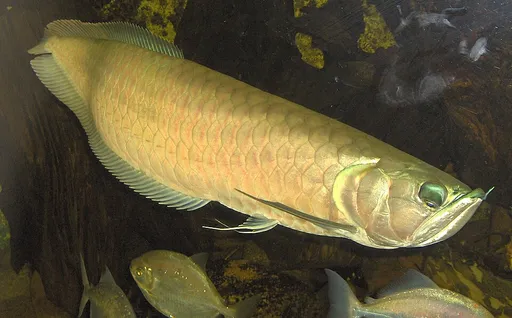
Silver arowanas are surface predators built like a long silver blade, with a steeply upturned mouth and two barbels for detecting prey. In the wild they cruise the top few inches of flooded forest and take insects, fish and anything that falls onto the water. They are powerful, nervous fish that will crash into the glass or leap clean out of an open tank when startled.
Good to know
Osteoglossum bicirrhosum belongs to the bony-tongue family Osteoglossidae, an ancient lineage sometimes called living fossils. Males are mouthbrooders that carry the large eggs and fry inside the mouth for weeks. Young are sold as button juveniles while they still carry a visible yolk sac.
Did you know
Silver arowanas are known as monkey fish for their ability to leap over a metre out of the water to snatch insects and even spiders from overhanging branches.
Common questions
What size tank does a Silver arowana need?
A Silver arowana needs at least 396 gal (1,500 L). It spends most of its time in the top.
What temperature and pH does a Silver arowana need?
A Silver arowana is comfortable at 75–82°F (24–28°C) with a pH of 6.0–7.5.
How big does a Silver arowana get?
An adult Silver arowana reaches about 39.4 in (100 cm).
Related species
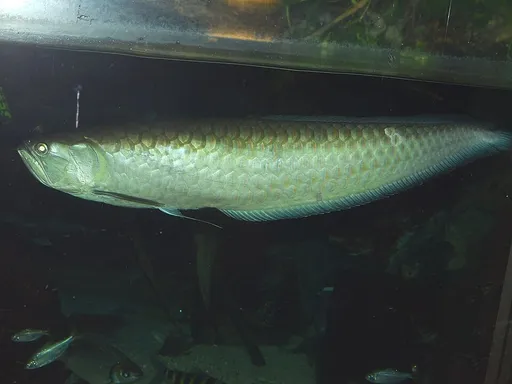 35.4 in (90 cm)396 gal (1,500 L)79–86°F (26–30°C)
Black arowana
Osteoglossum ferreirai
35.4 in (90 cm) · 396 gal (1,500 L)
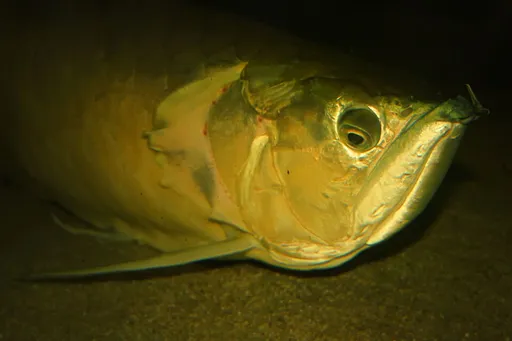 35.4 in (90 cm)264 gal (1,000 L)75–86°F (24–30°C)
Asian arowana
Scleropages formosus
35.4 in (90 cm) · 264 gal (1,000 L)
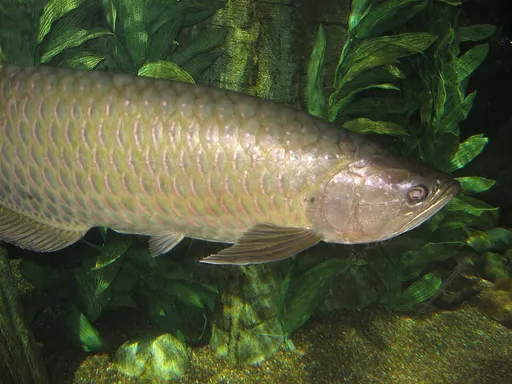 35.4 in (90 cm)317 gal (1,200 L)75–86°F (24–30°C)
Gulf saratoga
Scleropages jardinii
35.4 in (90 cm) · 317 gal (1,200 L)
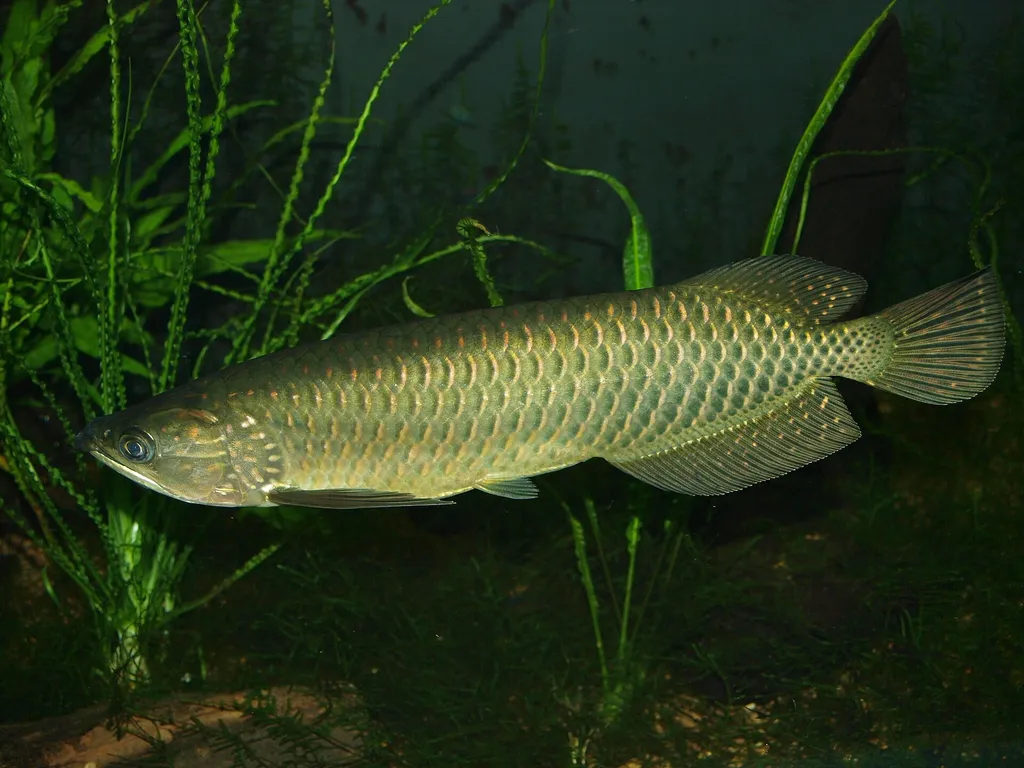 35.4 in (90 cm)396 gal (1,500 L)68–82°F (20–28°C)
Spotted saratoga
Scleropages leichardti
35.4 in (90 cm) · 396 gal (1,500 L)
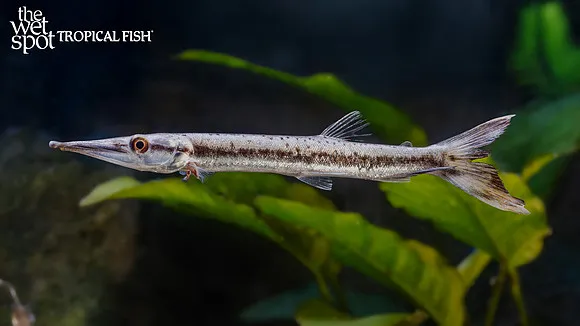 34.6 in (88 cm)528 gal (2,000 L)73–82°F (23–28°C)
Red-tail pike characin
Boulengerella cuvieri
34.6 in (88 cm) · 528 gal (2,000 L)
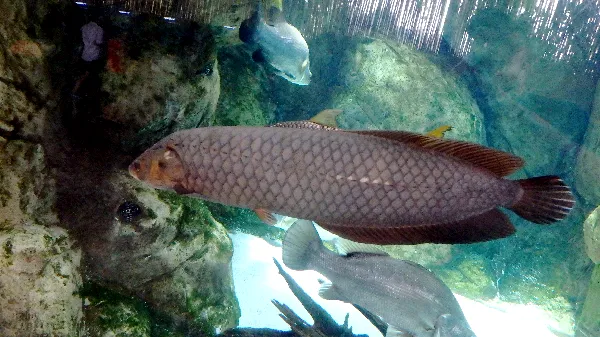 39.4 in (100 cm)528 gal (2,000 L)75–82°F (24–28°C)
African arowana
Heterotis niloticus
39.4 in (100 cm) · 528 gal (2,000 L)