African arowana
Heterotis niloticus
Also known as Heterotis
FreshwaterFish
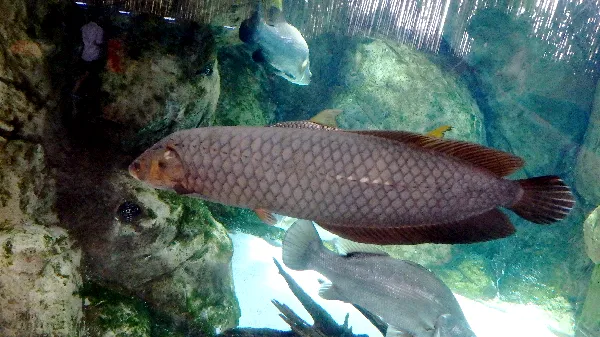
Care at a glance
- Temperature
- 75–82°F
- 24–28°C
- pH
- 6.2–7.8
- Adult size
- 39.4 in
- 100 cm
- Minimum tank
- 528 gal
- 2,000 L
- Temperament
- Mostly peaceful
- Social behavior
- Solitary
- Tankmates
- With caution
- Swim level
- Middle
- Diet
- Filter feeder
- Difficulty
- Difficult
- Breeding
- No record
- Rarity
- Rare
- Family
- Arapaimidae
- Origin
- Nile and West African basins
Overview
The African arowana is a giant, mostly peaceful bonytongue that cruises the middle of the water. It is a fish for experienced keepers with room on a pond scale.
Did you know
The African arowana is an arowana relative that gave up hunting for filter feeding. A coiled organ above its gills gathers plankton and fine particles into a mass the fish can swallow. It is the only bonytongue that feeds this way.
Caring for the African arowana
Plan on at least 528 gal (2,000 L) for an African arowana, which makes honest housing pond scale rather than an ordinary aquarium. Open swimming volume matters far more than decor, and only a very large system or pond comes close. Keeping one is a very long-term commitment.
Keep the water warm and soft to neutral, at 75 to 82°F (24 to 28°C) and a pH of 6.2 to 7.8, with gentle flow. It is a filter feeder that strains tiny food from the water rather than hunting. Feed small foods and prepared items, such as fine pellets, plankton foods and finely chopped meaty foods.
The African arowana is mostly peaceful and will not chew up tank mates the way a predator does. Its bulk and boisterous feeding mean any companions must be large and robust, so choose them with real caution. It is simplest kept alone. It is not reliably bred in home aquariums, though it nests and is farmed for food in parts of Africa.
Good to know
The African arowana, Heterotis niloticus, belongs to the family Arapaimidae. It is the smaller African cousin of the giant arapaima, and it is also sold simply as heterotis.
In the wild
The African arowana ranges across the Nile and the rivers and floodplains of much of West and central Africa. It cruises large, warm, slow waters and seasonally flooded plains.
Common questions
What size tank does an African arowana need?
An African arowana needs at least 528 gal (2,000 L). It spends most of its time in the middle.
What temperature and pH does an African arowana need?
An African arowana is comfortable at 75–82°F (24–28°C) with a pH of 6.2–7.8.
What does an African arowana eat?
An African arowana is a filter feeder that strains tiny food from the water. In the tank, feed it fine pellets, plankton foods and finely chopped meaty foods.
How big does an African arowana get?
An adult African arowana reaches about 39.4 in (100 cm).
How does an African arowana breed?
The African arowana nests, and it is farmed for food in parts of Africa. It is not reliably bred in home aquariums.
Related species
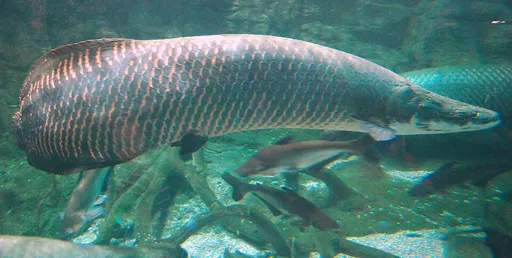 118.1 in (300 cm)10,567 gal (40,000 L)77–86°F (25–30°C)
Arapaima
Arapaima gigas
118.1 in (300 cm) · 10,567 gal (40,000 L)
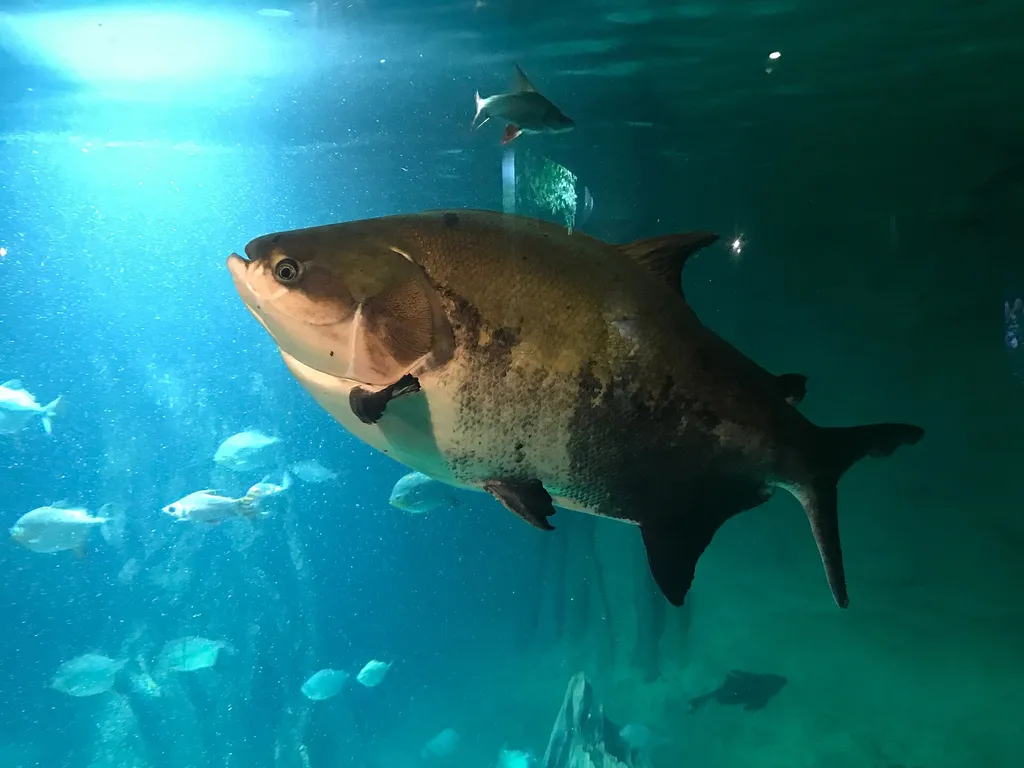 39.4 in (100 cm)660 gal (2,500 L)72–82°F (22–28°C)
Black pacu
Colossoma macropomum
39.4 in (100 cm) · 660 gal (2,500 L)
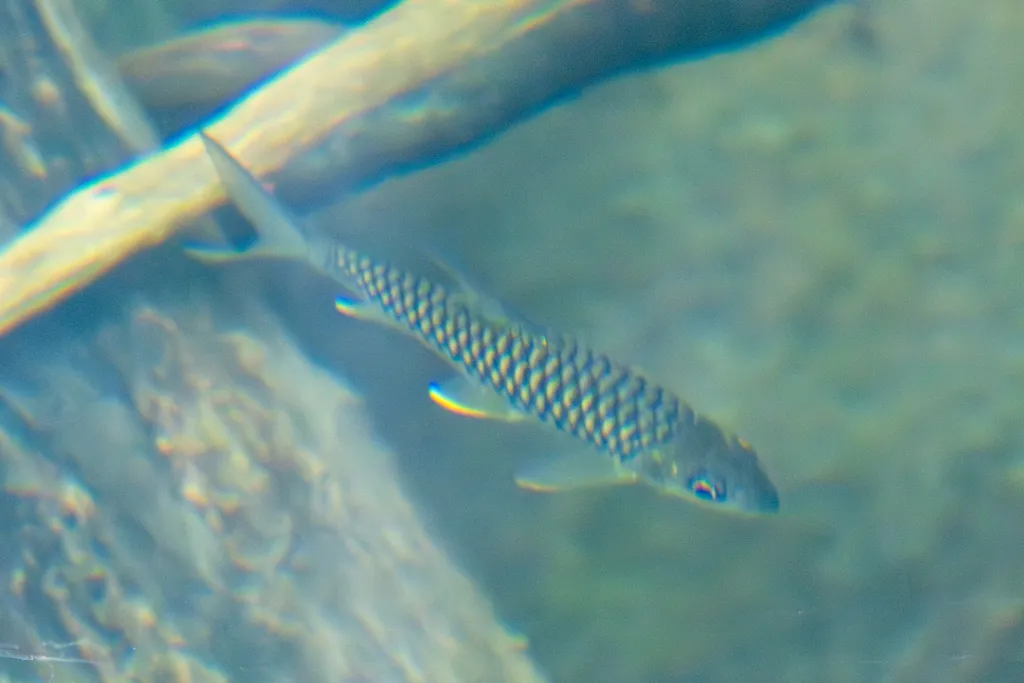 39.4 in (100 cm)502 gal (1,900 L)64–79°F (18–26°C)
Deccan mahseer
Tor khudree
39.4 in (100 cm) · 502 gal (1,900 L)
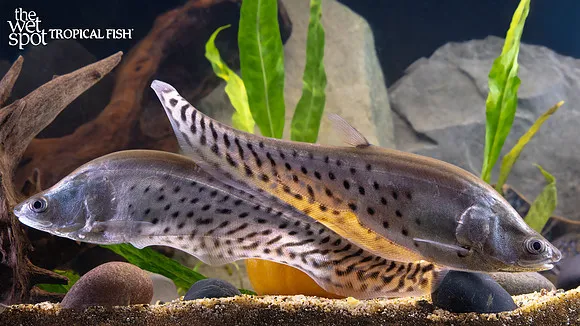 39.4 in (100 cm)317 gal (1,200 L)75–82°F (24–28°C)
Royal knifefish
Chitala blanci
39.4 in (100 cm) · 317 gal (1,200 L)
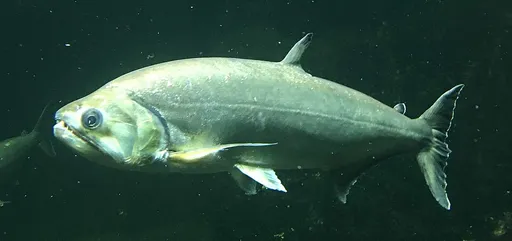 35 in (89 cm)1,057 gal (4,000 L)75–82°F (24–28°C)
Payara
Hydrolycus armatus
35 in (89 cm) · 1,057 gal (4,000 L)
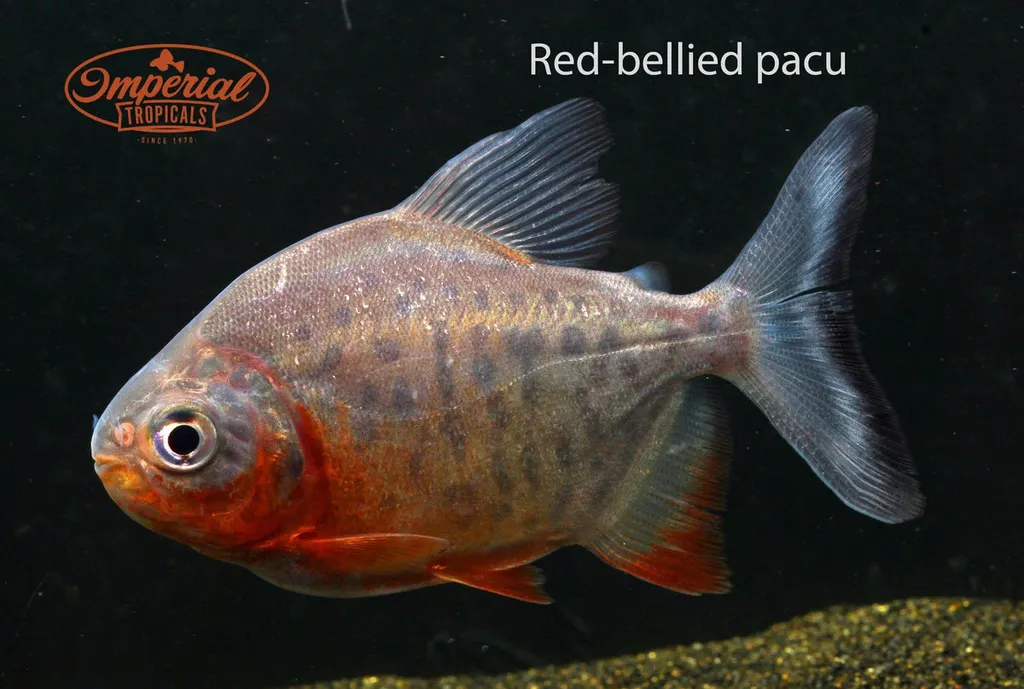 34.6 in (88 cm)1,057 gal (4,000 L)73–82°F (23–28°C)
Red-bellied pacu
Piaractus brachypomus
34.6 in (88 cm) · 1,057 gal (4,000 L)