Black pacu
Colossoma macropomum
FreshwaterFish
Care at a glance
- Temperature
- 72–82°F
- 22–28°C
- pH
- 5.5–7.5
- Adult size
- 39.4 in
- 100 cm
- Minimum tank
- 660 gal
- 2,500 L
- Temperament
- Mostly peaceful
- Social behavior
- Solitary
- Tankmates
- With caution
- Swim level
- Middle
- Difficulty
- Difficult
- Breeding
- No record
- Rarity
- Very rare
- Family
- Serrasalmidae
- Origin
- South America
Overview
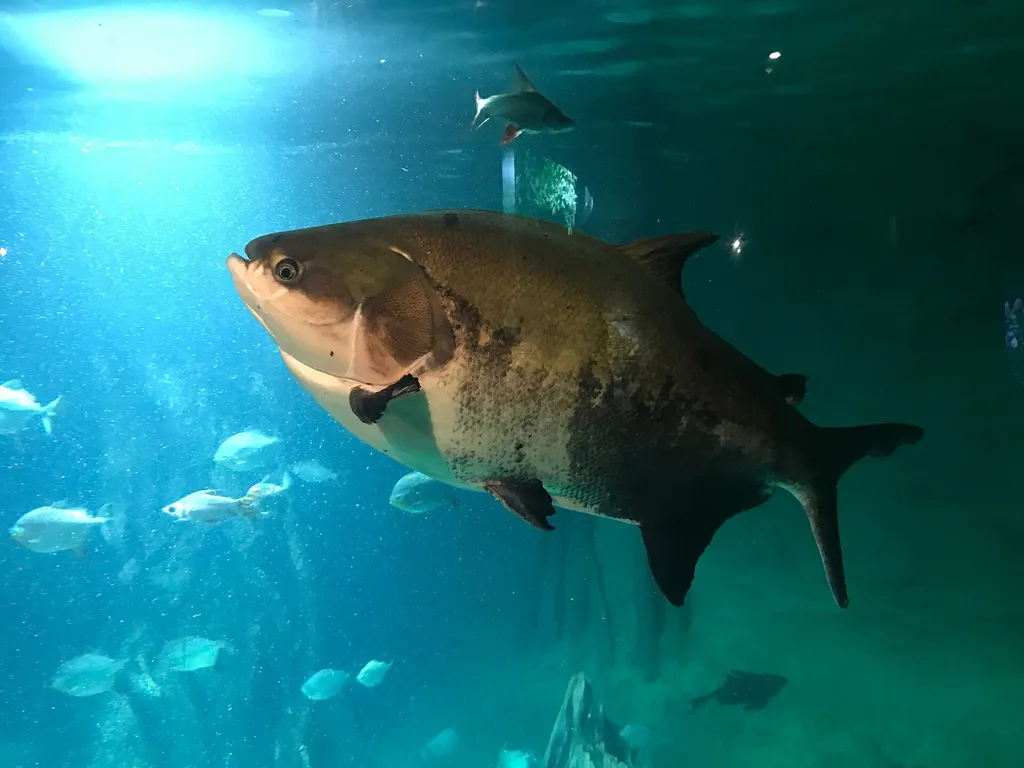
The black pacu, or tambaqui, is a giant fish that grows far too large for the average home aquarium and is really a project for a heated indoor pond or a public-scale tank. A single adult needs enormous space, so plan for at least 2500 liters and ideally much more, with powerful filtration to cope with its heavy waste. It is usually kept alone, as its sheer bulk rules out most tankmates, though it is not an aggressive fish by nature. Feed a mostly plant-based diet of fruit, vegetables, and sinking pellets, with occasional protein. Only take one on if you can meet its lifelong size and space needs.
In the wild
Tambaqui are native to the Amazon and Orinoco basins of South America, where they roam flooded forests and main river channels. During the annual floods they move into inundated woodland to feed on falling fruit and seeds, which shapes their whole biology. Keep them warm at 22 to 28 C with a pH from about 5.5 to 7.5 and strong, clean filtration. They are hardy across a wide range but produce a lot of waste, so large, frequent water changes matter far more than fine-tuning the chemistry.
Good to know
The black pacu belongs to Serrasalmidae, the family that also holds piranhas, but it is a peaceful giant rather than a hunter. It is one of the largest scaled fish in the Amazon, commonly passing 60 cm and reaching close to a metre and around 30 kg in the wild, with published records near 108 cm. Its jaws carry broad, molar-like teeth built for crushing nuts and seeds rather than tearing flesh. It is not bred in home aquaria, though it is farmed commercially across the tropics using hormone-induced spawning, so there is no meaningful hobby breeding record.
Did you know
A black pacu has flat, squared teeth that look unsettlingly human, which it uses to crack the hard fruit and nuts that drop into flooded forest. In the wild it acts as a seed disperser, carrying seeds far downstream, and as a youngster it is often confused with the piranhas it is related to.
Common questions
What size tank does a Black pacu need?
A Black pacu needs at least 660 gal (2,500 L). It spends most of its time in the middle.
What temperature and pH does a Black pacu need?
A Black pacu is comfortable at 72–82°F (22–28°C) with a pH of 5.5–7.5.
How big does a Black pacu get?
An adult Black pacu reaches about 39.4 in (100 cm).
Related species
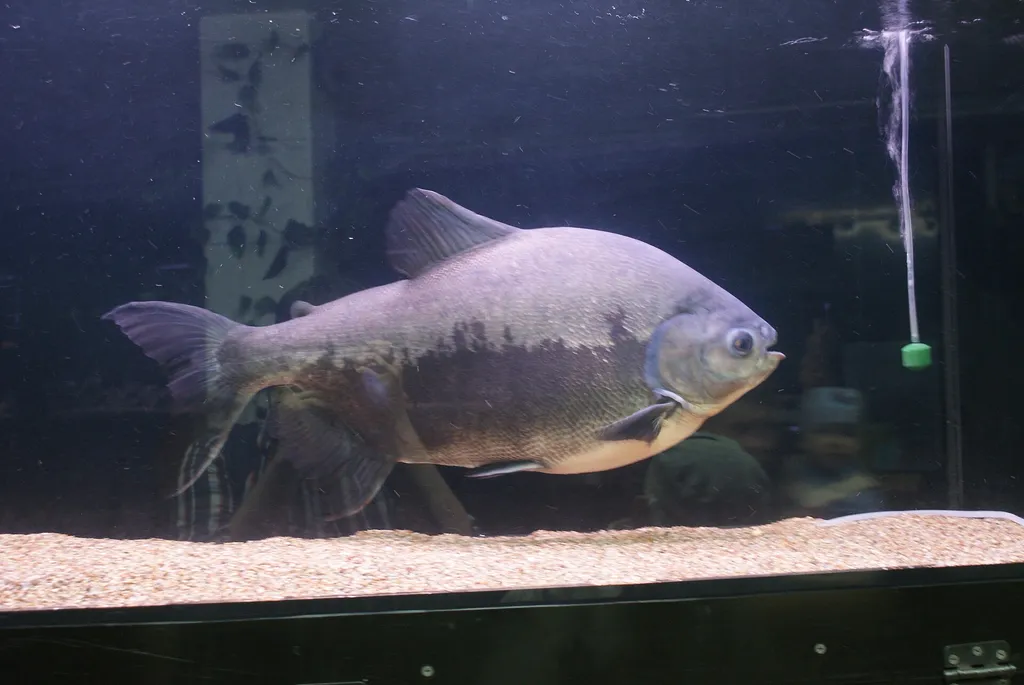 34.6 in (88 cm)1,057 gal (4,000 L)73–82°F (23–28°C)
Red-bellied pacu
Piaractus brachypomus
34.6 in (88 cm) · 1,057 gal (4,000 L)
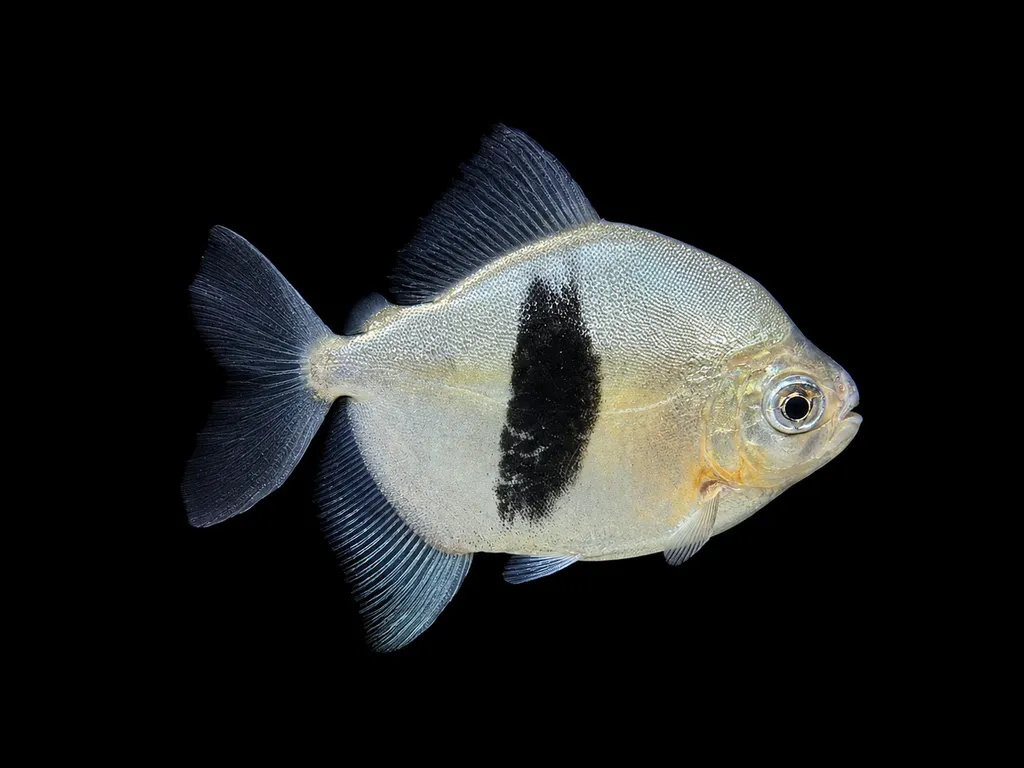 13.8 in (35 cm)170 gal (645 L)75–82°F (24–28°C)
Blue hook silver dollar
Myloplus aylan
13.8 in (35 cm) · 170 gal (645 L)
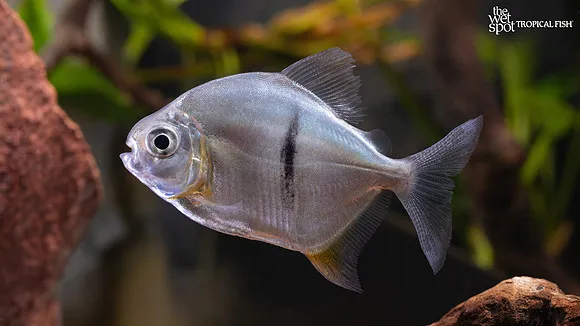 11.8 in (30 cm)159 gal (600 L)79–86°F (26–30°C)
Sauron silver dollar
Myloplus sauron
11.8 in (30 cm) · 159 gal (600 L)
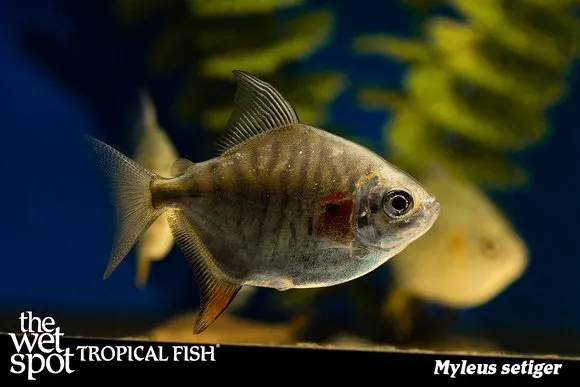 11 in (28 cm)159 gal (600 L)73–82°F (23–28°C)
Sailfin red hook
Myleus setiger
11 in (28 cm) · 159 gal (600 L)
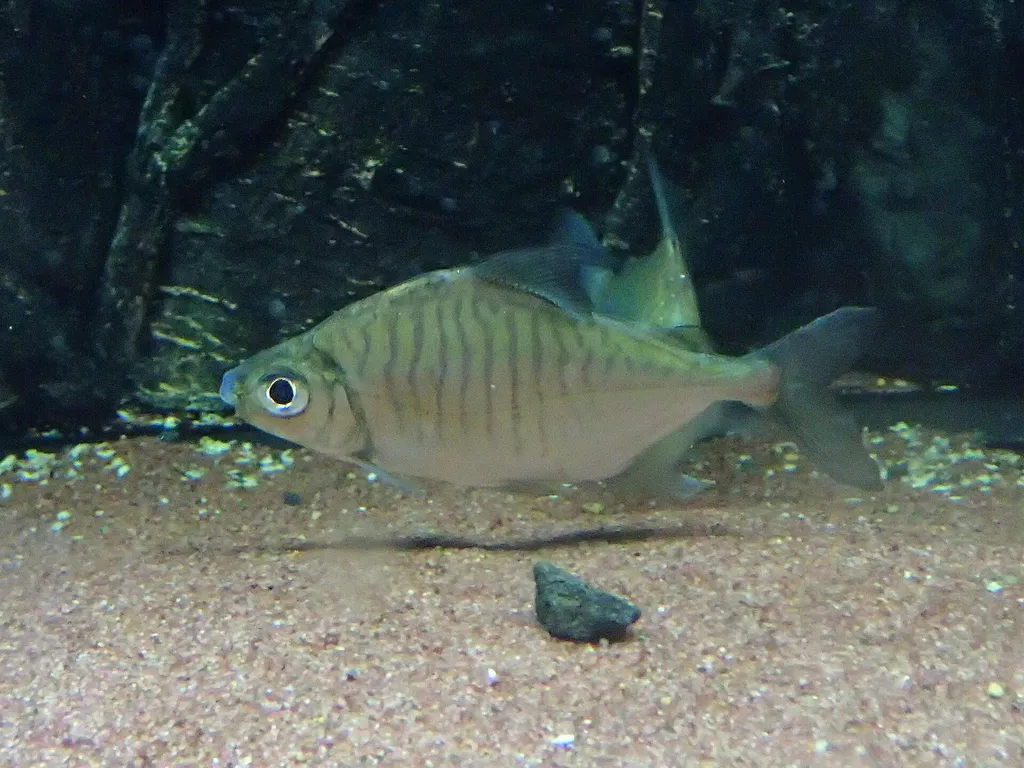 5.1 in (13 cm)46 gal (175 L)72–82°F (22–28°C)
Tiger pacu
Acnodon normani
5.1 in (13 cm) · 46 gal (175 L)
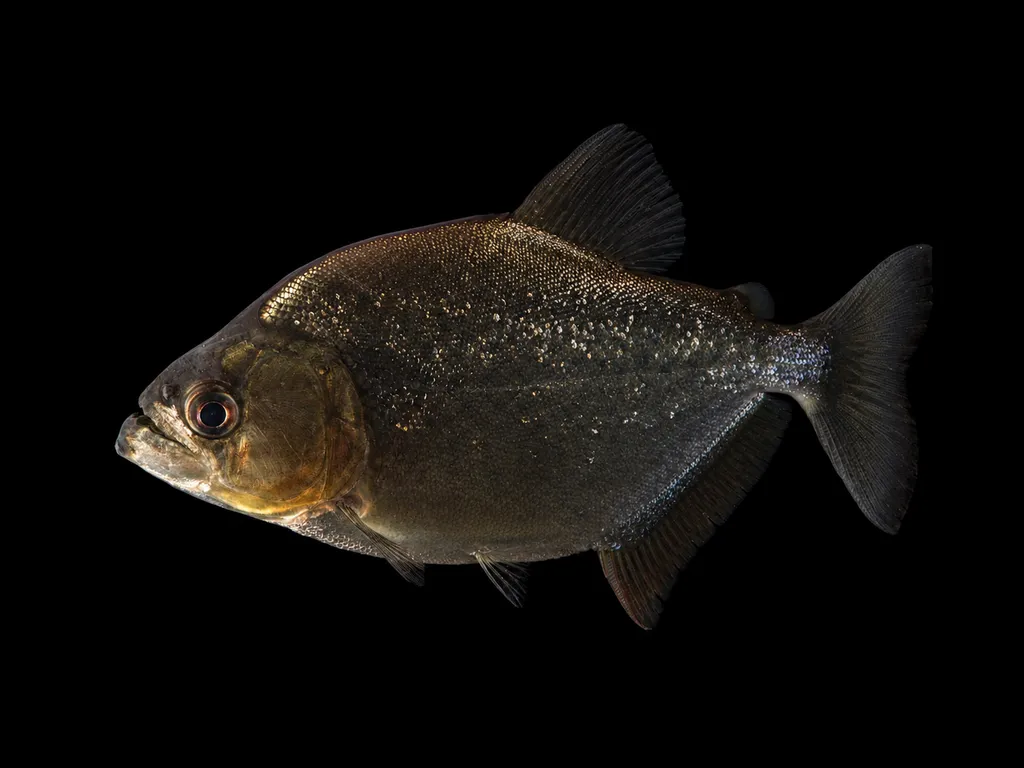 15.7 in (40 cm)106 gal (400 L)75–82°F (24–28°C)
Black piranha
Serrasalmus rhombeus
15.7 in (40 cm) · 106 gal (400 L)