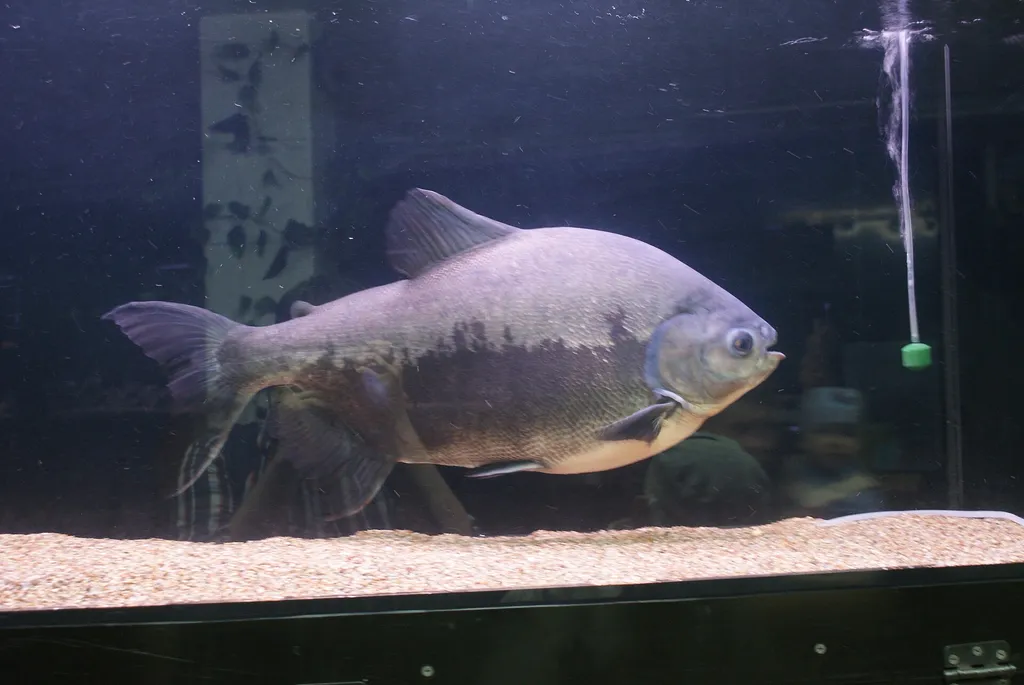
Red-bellied pacu
Piaractus brachypomus
Also known as Pirapitinga, Red pacu, Redbelly pacu, Cachama
FreshwaterFish
Care at a glance
- Temperature
- 73–82°F
- 23–28°C
- pH
- 5.5–7.5
- Adult size
- 34.6 in
- 88 cm
- Minimum tank
- 1,057 gal
- 4,000 L
- Temperament
- Mostly peaceful
- Social behavior
- Social
- Tankmates
- With caution
- Swim level
- Middle
- Difficulty
- Difficult
- Breeding
- No record
- Rarity
- Common
- Family
- Serrasalmidae
- Origin
- Native to the Amazon and Orinoco river basins across tropical South America.
Overview
This fish is sold at a few centimeters long but grows into a slab sided giant approaching 80 to 90 cm and many kilograms, so it is one of the most commonly dumped aquarium fish. It needs a very large custom tank or an indoor pond measured in thousands of liters, not a standard home aquarium. It is not aggressive, but its sheer size, appetite, and powerful bite make it a serious commitment for specialists only.
In the wild
Ranges through large river channels and seasonally flooded forest in the Amazon and Orinoco. During the floods it moves into the inundated forest to feed on fruits, seeds, and nuts that drop from the trees. Young fish shelter in vegetation while adults roam open water.
Good to know
Piaractus brachypomus is a close relative of the true pacus and the piranhas, but it is mainly a fruit and seed eater with flat, human like molar teeth for crushing. Fishbase records a maximum length of about 88 cm and a weight near 25 kg. Juveniles are often confused with red bellied piranha in stores.
Did you know
Its molar like teeth and taste for fruit have earned it the nickname of a vegetarian piranha, and it can crush hard seeds and nuts with ease.
Common questions
What size tank does a Red-bellied pacu need?
A Red-bellied pacu needs at least 1,057 gal (4,000 L). It spends most of its time in the middle.
What temperature and pH does a Red-bellied pacu need?
A Red-bellied pacu is comfortable at 73–82°F (23–28°C) with a pH of 5.5–7.5.
How big does a Red-bellied pacu get?
An adult Red-bellied pacu reaches about 34.6 in (88 cm).
Related species
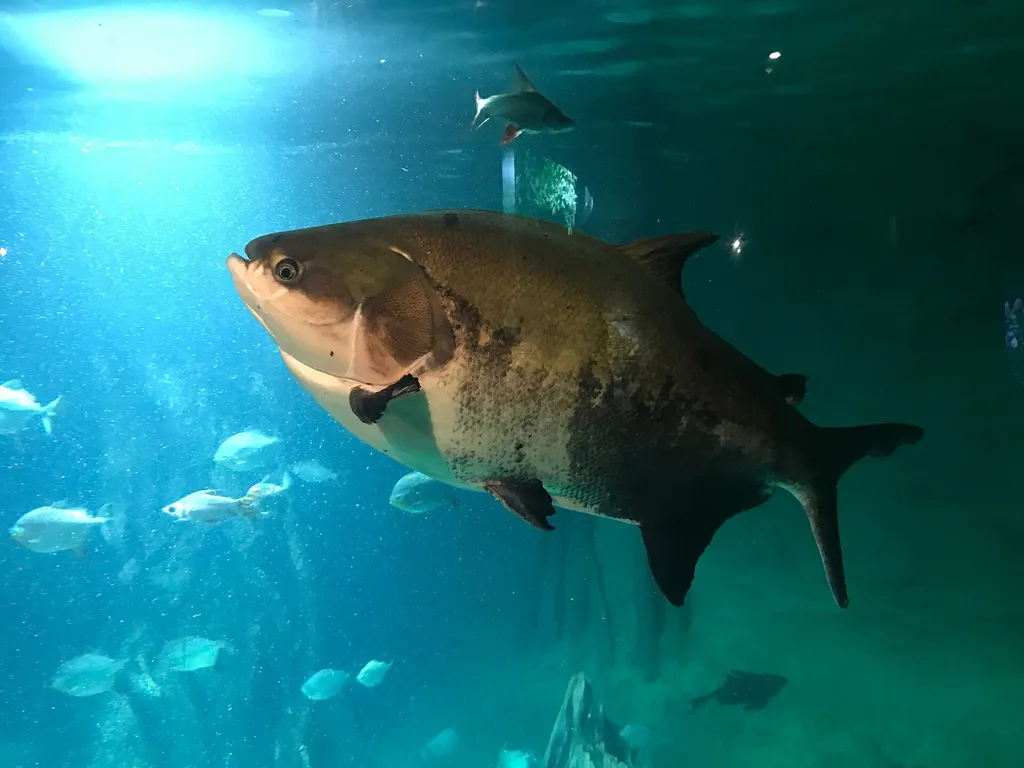 39.4 in (100 cm)660 gal (2,500 L)72–82°F (22–28°C)
Black pacu
Colossoma macropomum
39.4 in (100 cm) · 660 gal (2,500 L)
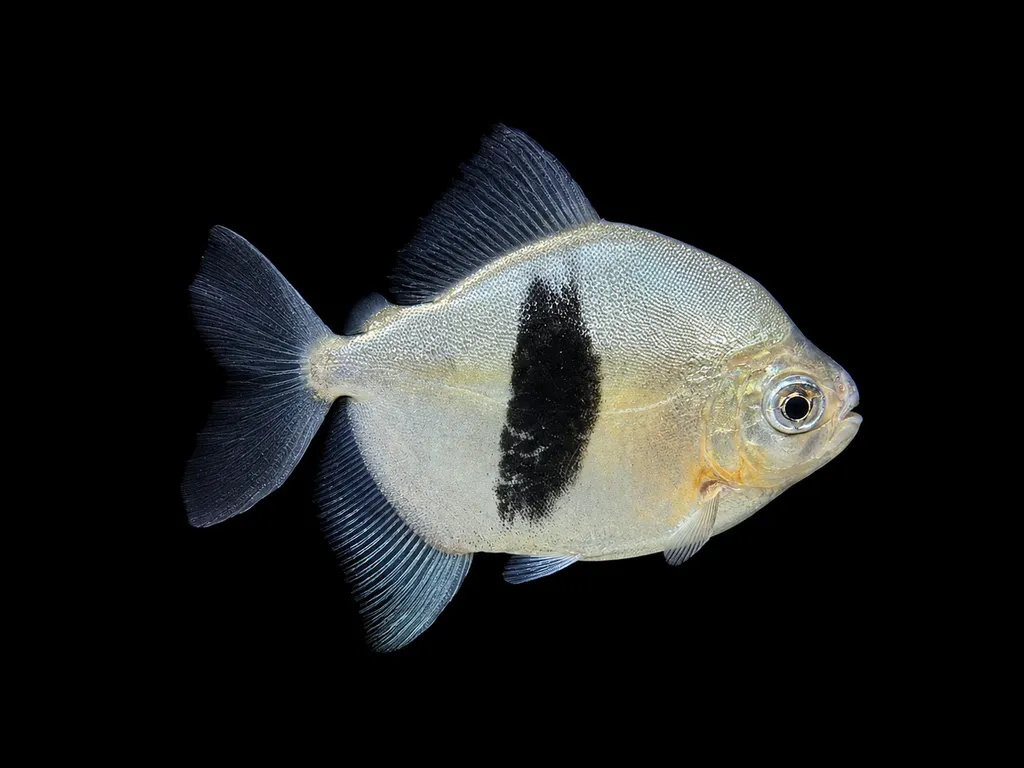 13.8 in (35 cm)170 gal (645 L)75–82°F (24–28°C)
Blue hook silver dollar
Myloplus aylan
13.8 in (35 cm) · 170 gal (645 L)
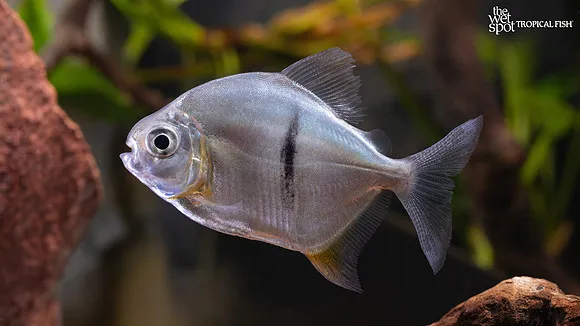 11.8 in (30 cm)159 gal (600 L)79–86°F (26–30°C)
Sauron silver dollar
Myloplus sauron
11.8 in (30 cm) · 159 gal (600 L)
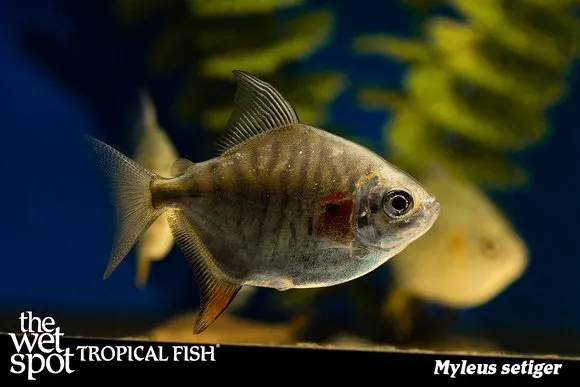 11 in (28 cm)159 gal (600 L)73–82°F (23–28°C)
Sailfin red hook
Myleus setiger
11 in (28 cm) · 159 gal (600 L)
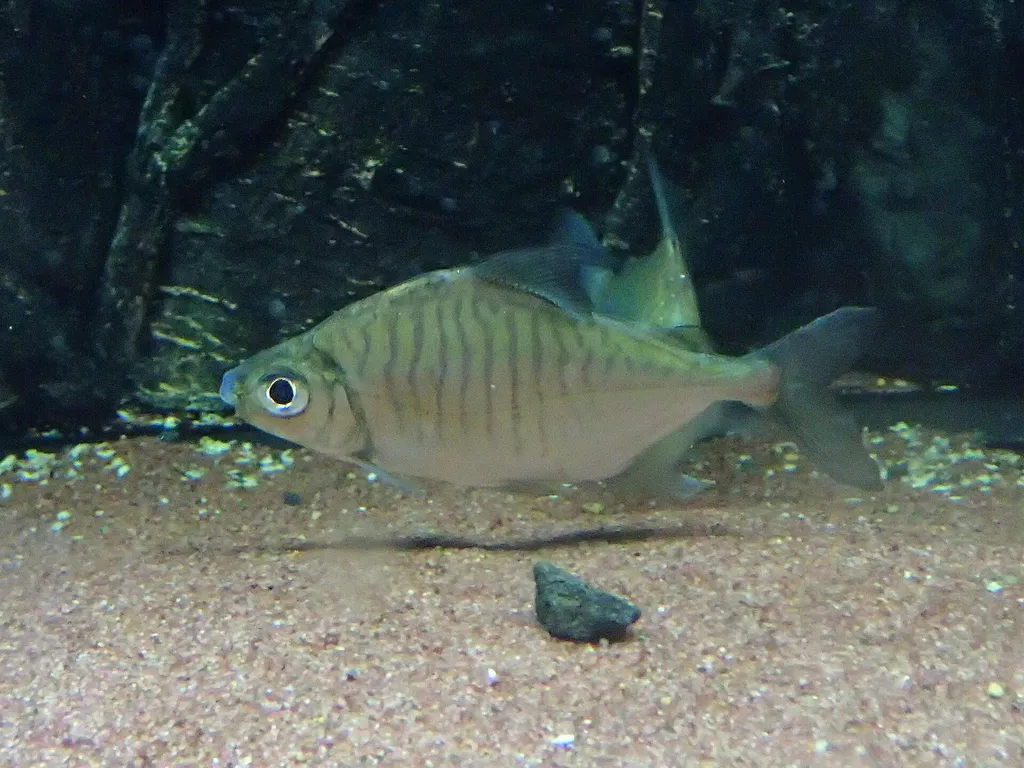 5.1 in (13 cm)46 gal (175 L)72–82°F (22–28°C)
Tiger pacu
Acnodon normani
5.1 in (13 cm) · 46 gal (175 L)
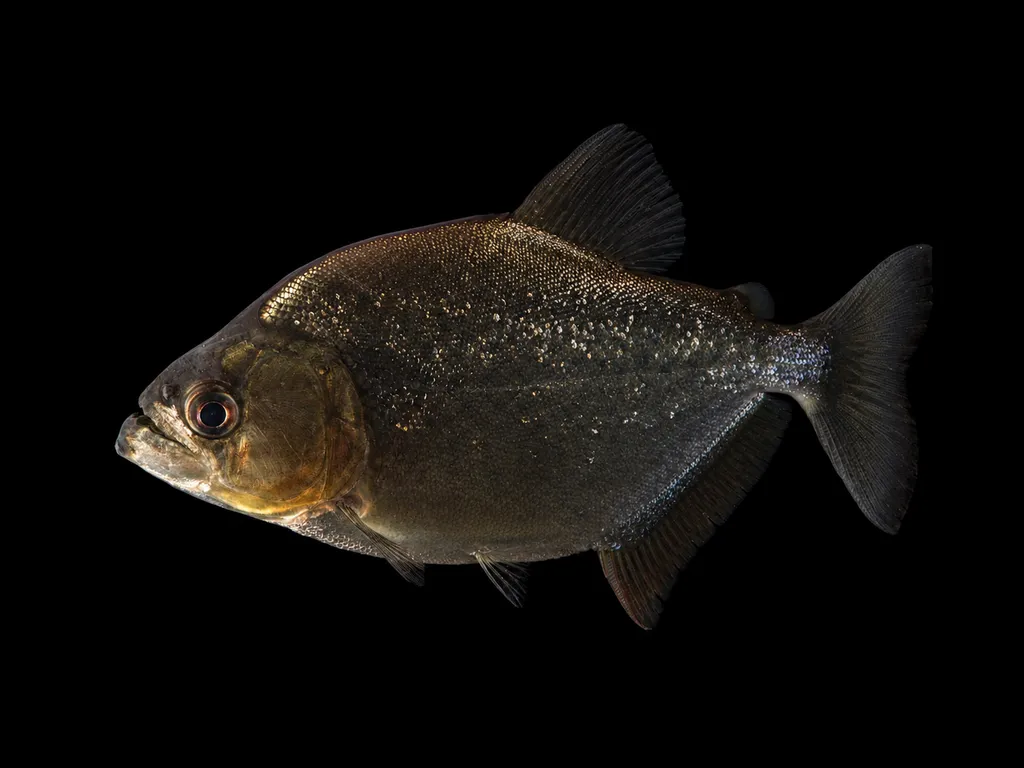 15.7 in (40 cm)106 gal (400 L)75–82°F (24–28°C)
Black piranha
Serrasalmus rhombeus
15.7 in (40 cm) · 106 gal (400 L)