Spotted saratoga
Scleropages leichardti
Also known as Leichardti arowana, Southern saratoga
FreshwaterFish
Care at a glance
- Temperature
- 68–82°F
- 20–28°C
- pH
- 6.2–7.8
- Adult size
- 35.4 in
- 90 cm
- Minimum tank
- 396 gal
- 1,500 L
- Temperament
- Aggressive
- Social behavior
- Solitary
- Tankmates
- With caution
- Swim level
- Top
- Diet
- Carnivore
- Difficulty
- Difficult
- Breeding
- Mouthbrooder
- Rarity
- Rare
- Family
- Osteoglossidae
- Origin
- Fitzroy basin, Queensland, Australia
Overview
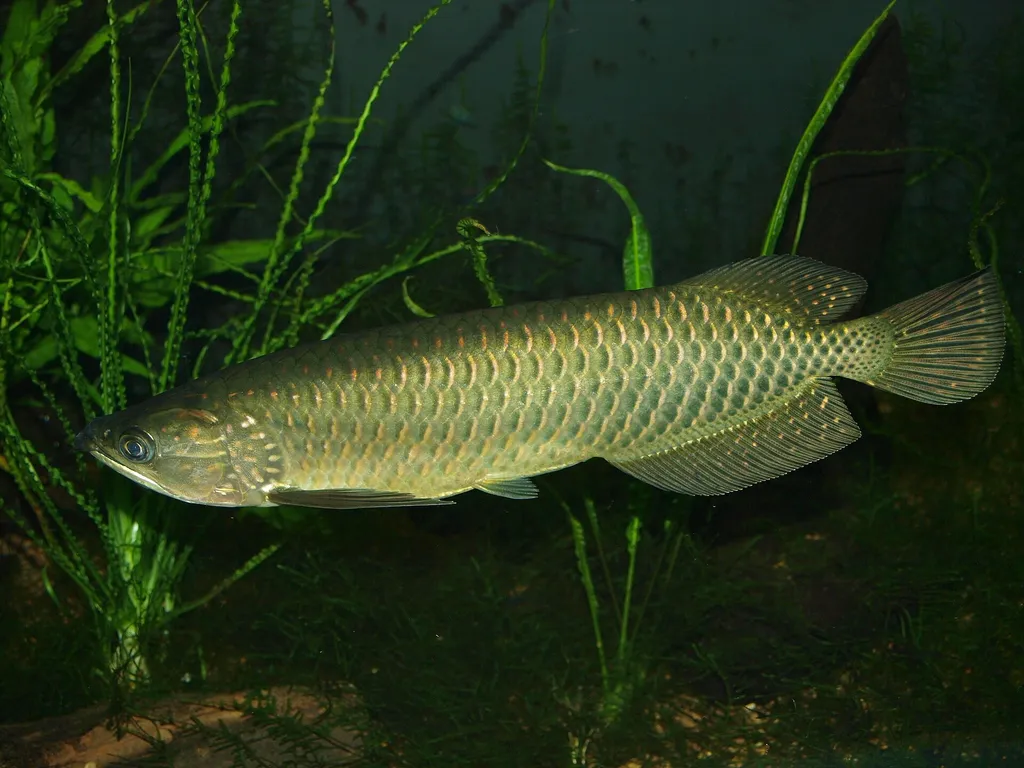
The spotted saratoga is an Australian arowana and a large, aggressive surface predator. Keeping one is a decades-long commitment for experienced keepers.
Did you know
The spotted saratoga's family rode the break-up of the ancient supercontinent Gondwana. That is why closely related bonytongues now live in South America, Africa, Asia and Australia. The saratoga is a living piece of that deep history.
Caring for the spotted saratoga
Keep a spotted saratoga singly in a very big tank of at least 396 gal (1,500 L). Fit a heavy, tightly fitting lid, because it is a strong jumper. It patrols the top of the water and needs length to turn, with open surface water and some floating or overhanging cover.
It tolerates a fairly wide range, from 68 to 82°F (20 to 28°C) at a pH of 6.2 to 7.8. Keep conditions calm and clean, with oversized, redundant filtration, strong oxygenation and steady water changes to match its size and appetite. Feed meaty foods such as prawn, earthworms and pieces of fish.
Treat any tank mate with caution, since it will eat fish it can swallow and often fights others of its own kind. Most keepers house it alone.
The male is a mouthbrooder, holding the pea-sized eggs and then the young in his mouth for weeks. The spotted saratoga is essentially not bred in home aquaria, and captive spawning is unrecorded outside very large, specialized systems.
Good to know
Scleropages leichardti belongs to Osteoglossidae, the bonytongues, an ancient lineage of large freshwater fish. It is also called the southern saratoga or Leichardti arowana.
In the wild
The spotted saratoga is native to the Fitzroy river system in Queensland, Australia. It cruises the surface of slow rivers and still pools.
Common questions
What size tank does a spotted saratoga need?
A spotted saratoga needs at least 396 gal (1,500 L). It spends most of its time in the top.
What temperature and pH does a spotted saratoga need?
A spotted saratoga is comfortable at 68–82°F (20–28°C) with a pH of 6.2–7.8.
What does a spotted saratoga eat?
A spotted saratoga eats meaty foods such as prawn, earthworms and pieces of fish. It will also eat any fish it can swallow.
How big does a spotted saratoga get?
An adult spotted saratoga reaches about 35.4 in (90 cm).
How does a spotted saratoga breed?
The spotted saratoga is a mouthbrooder, and the male holds the pea-sized eggs and then the young in his mouth for weeks. It is essentially not bred in home aquaria.
Related species
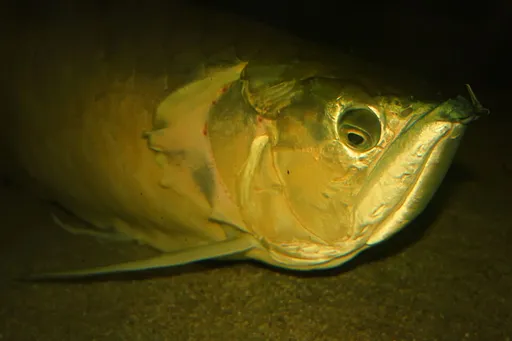 35.4 in (90 cm)264 gal (1,000 L)75–86°F (24–30°C)
Asian arowana
Scleropages formosus
35.4 in (90 cm) · 264 gal (1,000 L)
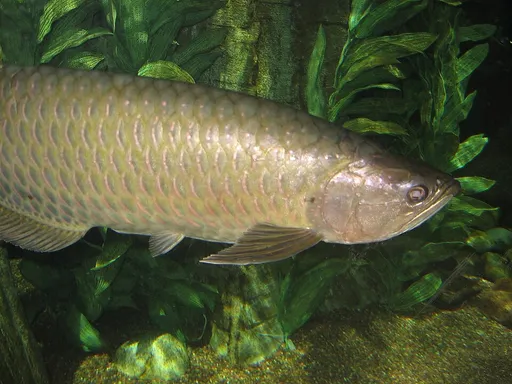 35.4 in (90 cm)317 gal (1,200 L)75–86°F (24–30°C)
Gulf saratoga
Scleropages jardinii
35.4 in (90 cm) · 317 gal (1,200 L)
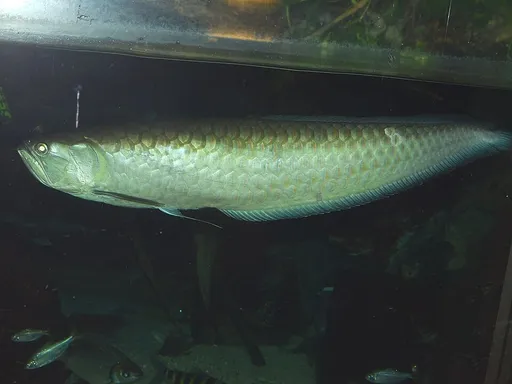 35.4 in (90 cm)396 gal (1,500 L)79–86°F (26–30°C)
Black arowana
Osteoglossum ferreirai
35.4 in (90 cm) · 396 gal (1,500 L)
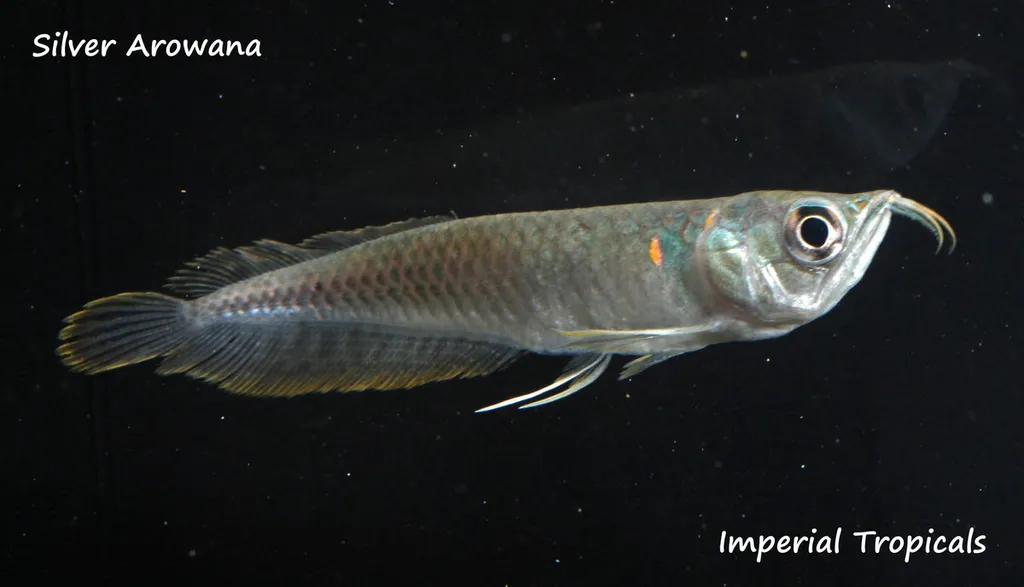 39.4 in (100 cm)396 gal (1,500 L)75–82°F (24–28°C)
Silver arowana
Osteoglossum bicirrhosum
39.4 in (100 cm) · 396 gal (1,500 L)
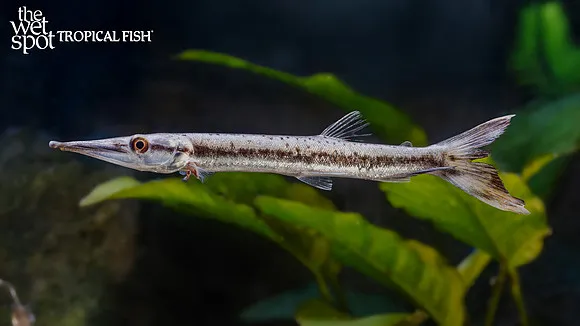 34.6 in (88 cm)528 gal (2,000 L)73–82°F (23–28°C)
Red-tail pike characin
Boulengerella cuvieri
34.6 in (88 cm) · 528 gal (2,000 L)
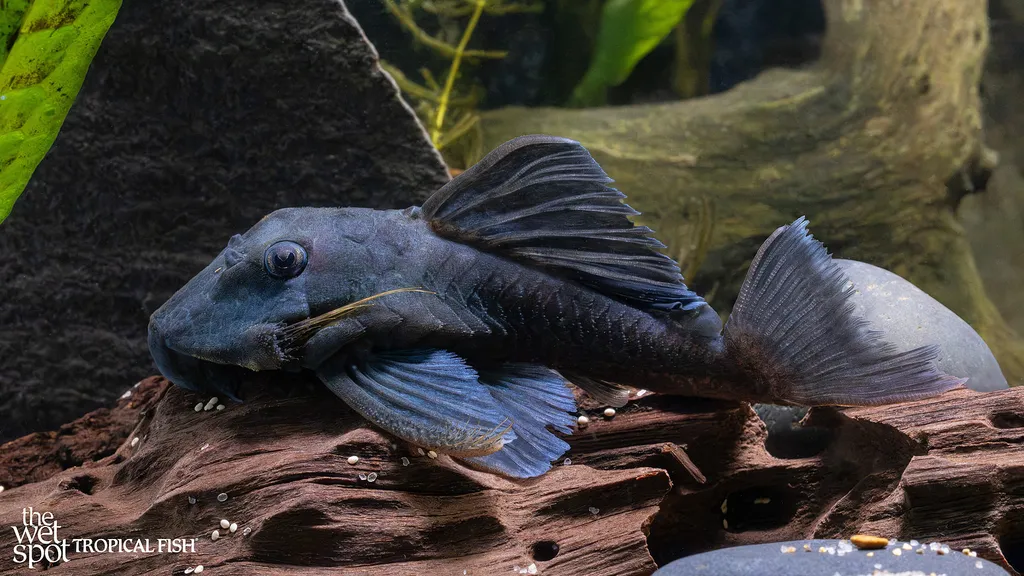 35.4 in (90 cm)264 gal (1,000 L)77–84°F (25–29°C)
Adonis pleco (L155)
Acanthicus adonis
35.4 in (90 cm) · 264 gal (1,000 L)