Gulf saratoga
Scleropages jardinii
Also known as Northern saratoga, Australian bonytongue, Pearl arowana, Jardini arowana, Jardinii Arowana
FreshwaterFish
Care at a glance
- Temperature
- 75–86°F
- 24–30°C
- pH
- 6.5–7.5
- Adult size
- 35.4 in
- 90 cm
- Minimum tank
- 317 gal
- 1,200 L
- Temperament
- Aggressive
- Social behavior
- Solitary
- Own kind
- One per tank
- Tankmates
- With caution
- Swim level
- Top
- Difficulty
- Difficult
- Breeding
- Hard
- Rarity
- Rare
- Family
- Osteoglossidae
- Origin
- Native to northern Australia and southern New Guinea, found in rivers, billabongs and still lagoons.
Overview
Expect an adult near 90 cm and provide at least 1200 litres with a wide surface and a heavy, tight lid, since saratogas jump hard. Keep them at 24 to 30 C and pH 6.5 to 7.5 with strong filtration. They are best kept singly or with large, robust tankmates, as they are aggressive and will eat smaller fish. Feed prawns, insects, earthworms and pellets.
In the wild
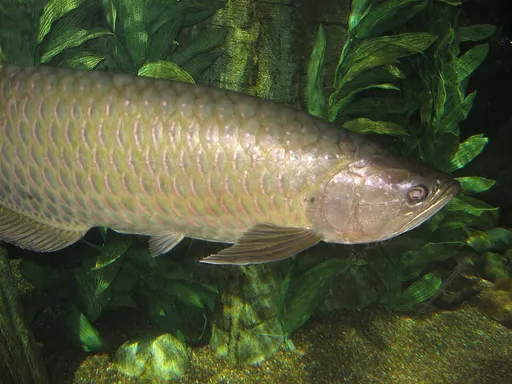
The Gulf saratoga is an Australian bony-tongue with large pearly scales, each marked with a pink or red crescent that catches the light. It is a surface-oriented ambush predator of still and slow waters. Adults are territorial and often aggressive toward their own kind.
Good to know
Scleropages jardinii is a mouthbrooder, with the male carrying the eggs and fry. It is one of two Australian Scleropages, separated from the southern saratoga by range and spot pattern. The species is an air-gulper adapted to warm, oxygen-poor billabongs.
Did you know
Saratogas are sometimes called living fossils because their bony-tongue lineage has changed little for tens of millions of years.
Common questions
What size tank does a Gulf saratoga need?
A Gulf saratoga needs at least 317 gal (1,200 L). It spends most of its time in the top.
What temperature and pH does a Gulf saratoga need?
A Gulf saratoga is comfortable at 75–86°F (24–30°C) with a pH of 6.5–7.5.
How big does a Gulf saratoga get?
An adult Gulf saratoga reaches about 35.4 in (90 cm).
Related species
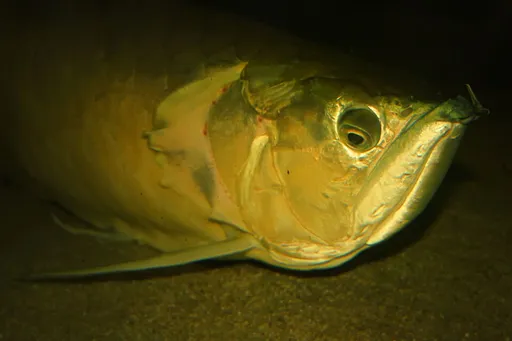 35.4 in (90 cm)264 gal (1,000 L)75–86°F (24–30°C)
Asian arowana
Scleropages formosus
35.4 in (90 cm) · 264 gal (1,000 L)
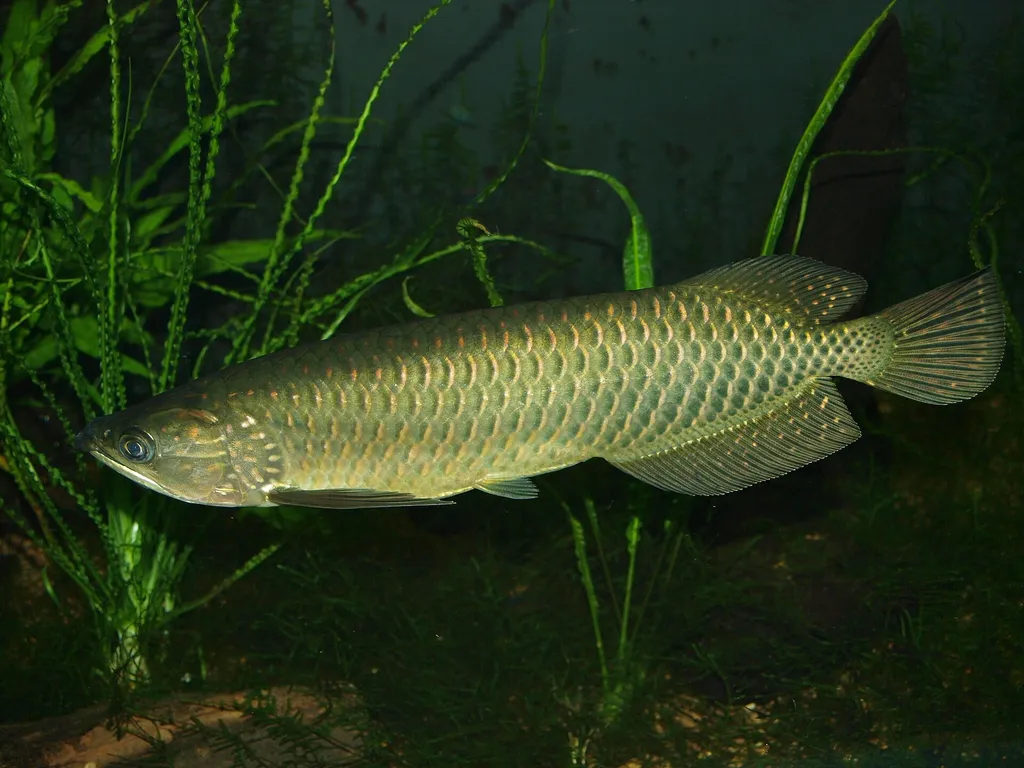 35.4 in (90 cm)396 gal (1,500 L)68–82°F (20–28°C)
Spotted saratoga
Scleropages leichardti
35.4 in (90 cm) · 396 gal (1,500 L)
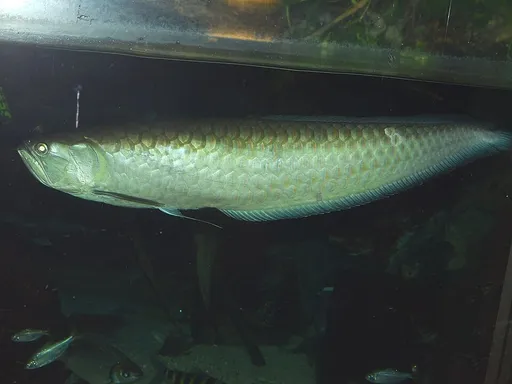 35.4 in (90 cm)396 gal (1,500 L)79–86°F (26–30°C)
Black arowana
Osteoglossum ferreirai
35.4 in (90 cm) · 396 gal (1,500 L)
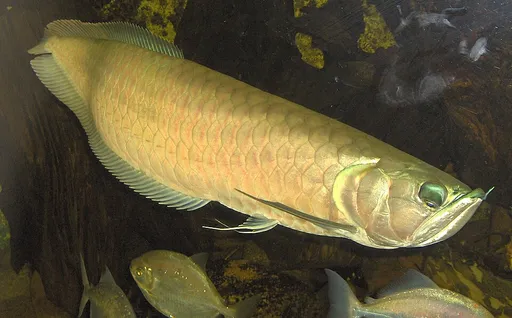 39.4 in (100 cm)396 gal (1,500 L)75–82°F (24–28°C)
Silver arowana
Osteoglossum bicirrhosum
39.4 in (100 cm) · 396 gal (1,500 L)
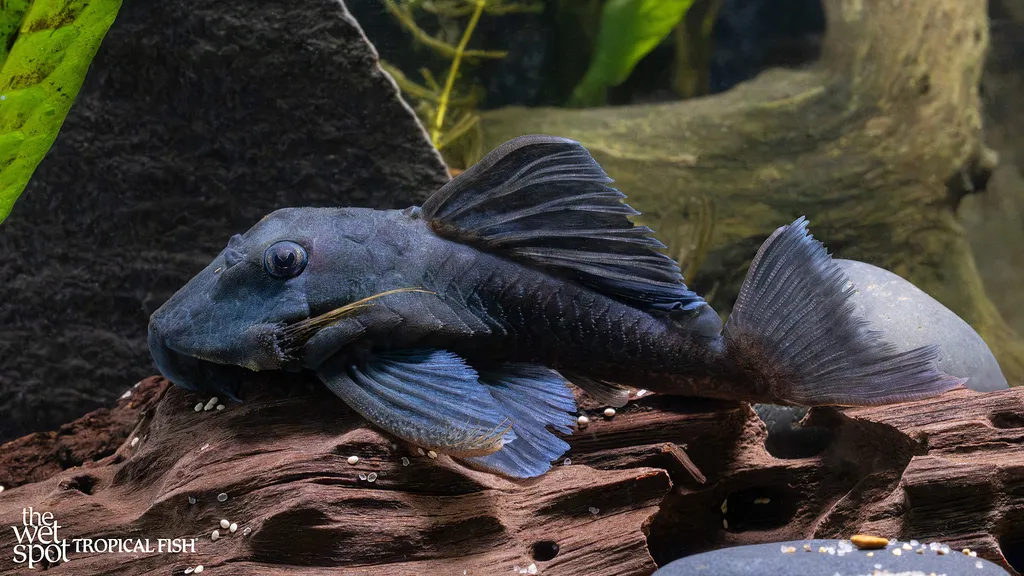 35.4 in (90 cm)264 gal (1,000 L)77–84°F (25–29°C)
Adonis pleco (L155)
Acanthicus adonis
35.4 in (90 cm) · 264 gal (1,000 L)
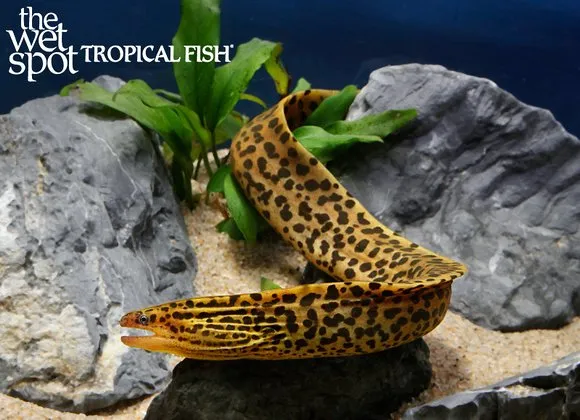 35.4 in (90 cm)159 gal (600 L)73–82°F (23–28°C)
Freshwater moray eel
Gymnothorax polyuranodon
35.4 in (90 cm) · 159 gal (600 L)