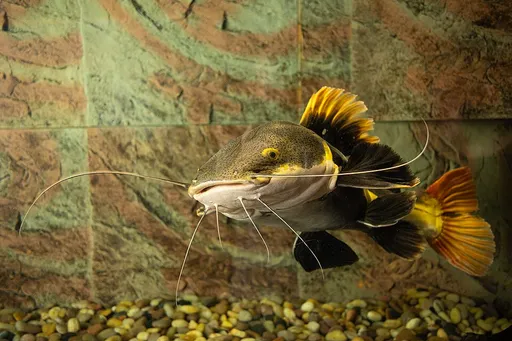
Redtail catfish
Phractocephalus hemioliopterus
Also known as RTC, Redtail cat, Red tail cat
FreshwaterFish
Care at a glance
- Temperature
- 68–79°F
- 20–26°C
- pH
- 6.0–7.5
- Adult size
- 39.4 in
- 100 cm
- Minimum tank
- 1,506 gal
- 5,700 L
- Temperament
- Aggressive
- Social behavior
- Solitary
- Tankmates
- With caution
- Swim level
- Bottom
- Difficulty
- Difficult
- Breeding
- No record
- Rarity
- Common
- Family
- Pimelodidae
- Origin
- Amazon and Orinoco basins
Overview
Check your local rules before buying one, since this fish is restricted or banned in some places, and never release it into the wild. This is not a fish for a normal home aquarium. It needs a minimum of 5700 liters, kept at 20 to 26 C and pH 6 to 7.5, with a bare bottom or large smooth pebbles since it will swallow gravel that fits in its mouth. Keep it alone or only with similarly huge fish, because it is aggressive and territorial and will eat any tankmate small enough to fit in its enormous mouth. Feed meaty foods like whole fish, shrimp, and prepared pellets sized for large predators, and keep it bottom focused, where it sits and waits.
In the wild
Redtail catfish come from the big main rivers and flooded forests of the Amazon and Orinoco basins, where they cruise open bottom in slow, warm water. To match that, give them a cavernous bare bottom tank measured in the thousands of liters, with oversized filtration to keep up with the waste a fish this size makes. Keep the water warm at 20 to 26 C and roughly neutral, pH 6 to 7.5. There is no planting or aquascaping to speak of here, just open swimming room and rock solid water quality.
Good to know
This is a large catfish in the family Pimelodidae, and it is a true monster, reaching about 100 cm and often 90 to 120 cm in captivity. It grows fast from the cute juvenile sold in stores, so the small size you buy is gone within a year or two. There is no reliable record of it breeding in home aquariums. With the right space it can live for many years.
Did you know
The mouth is the whole story with this fish. It is wide enough to swallow prey nearly as large as its own head, and in the wild it eats fish, crabs, and whatever else it can get down. That is exactly why a small tankmate that looked safe one week can simply be gone the next.
Common questions
What size tank does a Redtail catfish need?
A Redtail catfish needs at least 1,506 gal (5,700 L). It spends most of its time in the bottom.
What temperature and pH does a Redtail catfish need?
A Redtail catfish is comfortable at 68–79°F (20–26°C) with a pH of 6.0–7.5.
How big does a Redtail catfish get?
An adult Redtail catfish reaches about 39.4 in (100 cm).
Related species
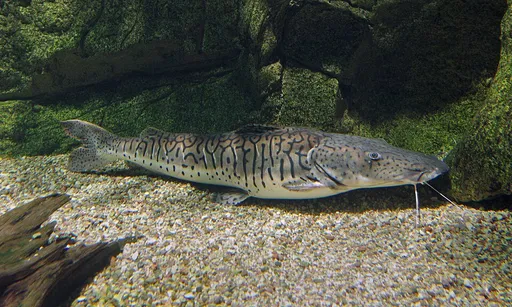 35.4 in (90 cm)300 gal (1,135 L)75–82°F (24–28°C)
Tiger shovelnose catfish
Pseudoplatystoma fasciatum
35.4 in (90 cm) · 300 gal (1,135 L)
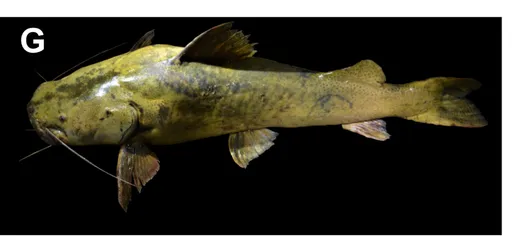 55.1 in (140 cm)793 gal (3,000 L)72–82°F (22–28°C)
Jau catfish
Zungaro zungaro
55.1 in (140 cm) · 793 gal (3,000 L)
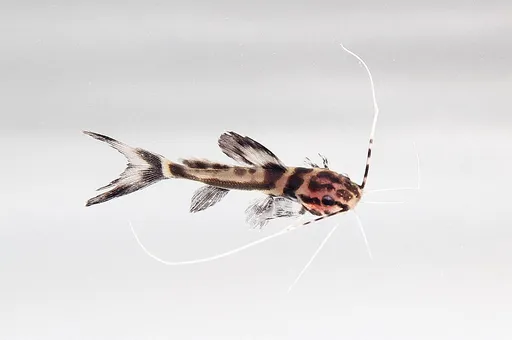 39.4 in (100 cm)528 gal (2,000 L)72–79°F (22–26°C)
Marbled sailfin pim
Leiarius marmoratus
39.4 in (100 cm) · 528 gal (2,000 L)
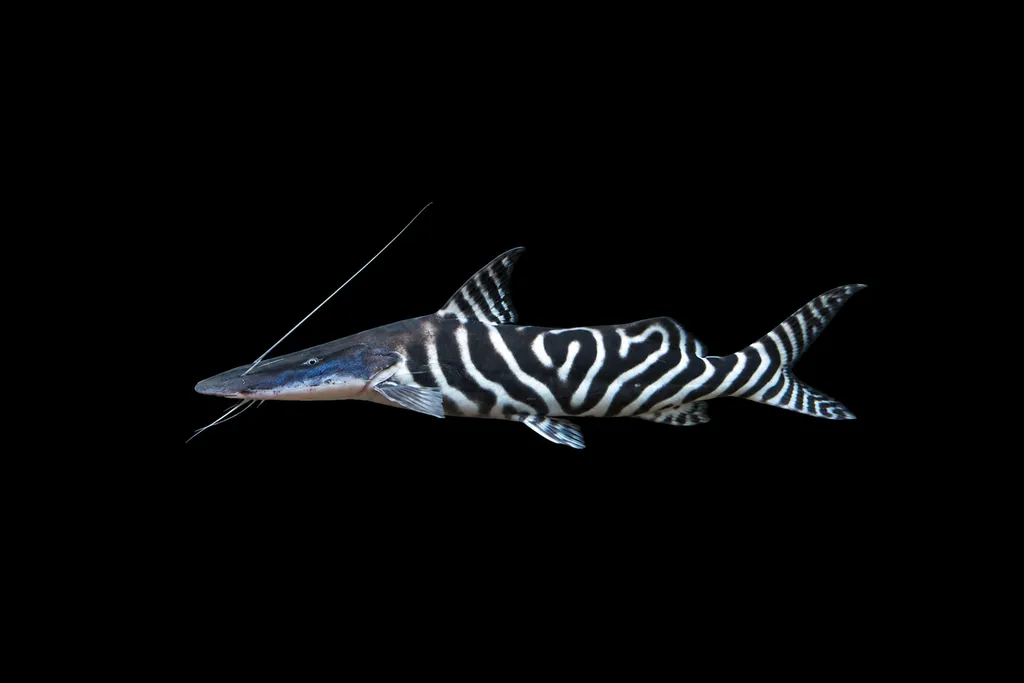 23.6 in (60 cm)151 gal (570 L)72–90°F (22–32°C)
Zebra shovelnose
Brachyplatystoma tigrinum
23.6 in (60 cm) · 151 gal (570 L)
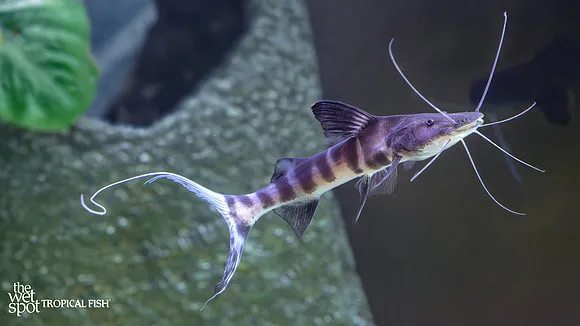 23.6 in (60 cm)396 gal (1,500 L)73–82°F (23–28°C)
Zebra shovelnose catfish
Brachyplatystoma juruense
23.6 in (60 cm) · 396 gal (1,500 L)
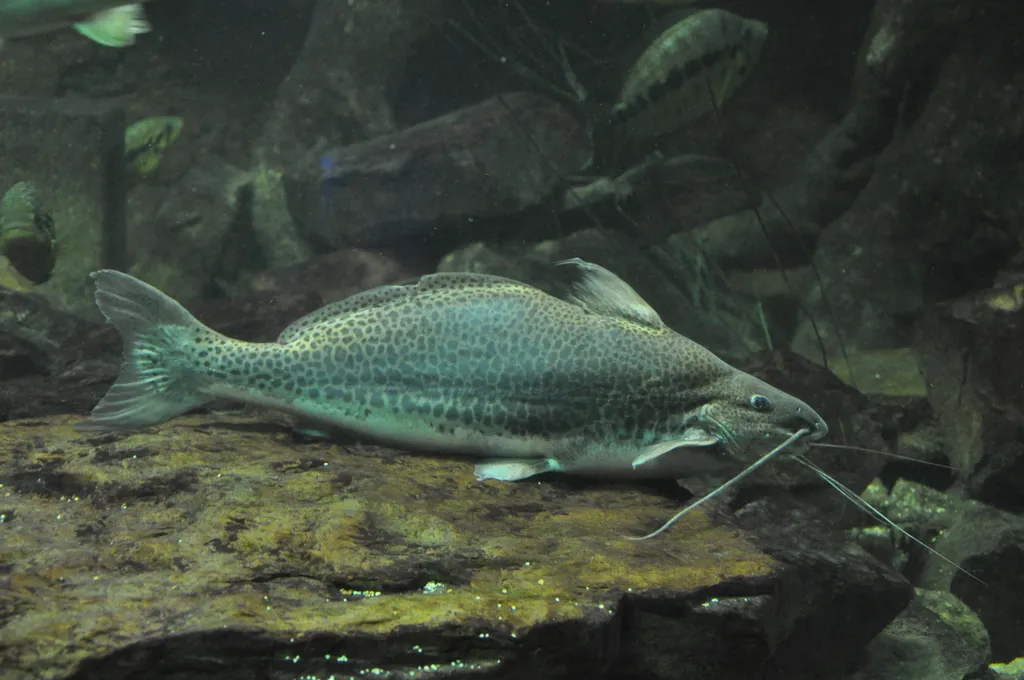 15.7 in (40 cm)120 gal (455 L)75–84°F (24–29°C)
Vulture catfish
Calophysus macropterus
15.7 in (40 cm) · 120 gal (455 L)