Vulture catfish
Calophysus macropterus
Also known as zamurito
FreshwaterFish
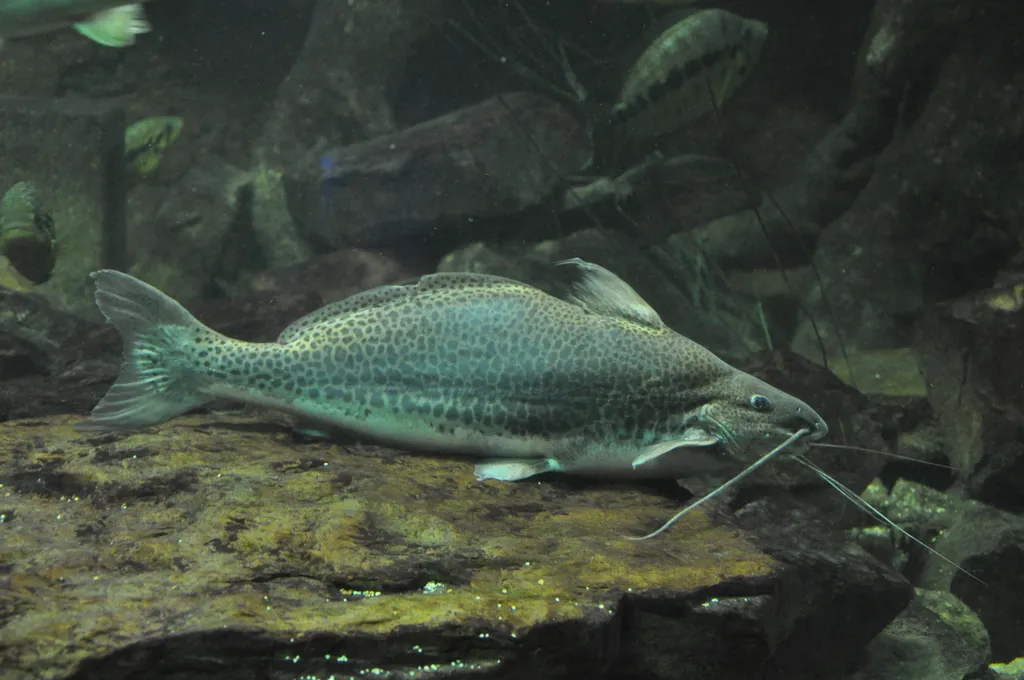
Care at a glance
- Temperature
- 75–84°F
- 24–29°C
- pH
- 6.0–7.5
- Adult size
- 15.7 in
- 40 cm
- Minimum tank
- 120 gal
- 455 L
- Temperament
- Aggressive
- Social behavior
- Social
- Tankmates
- With caution
- Swim level
- Bottom
- Difficulty
- Difficult
- Breeding
- No record
- Rarity
- Very rare
- Family
- Pimelodidae
- Origin
- Venezuela, Colombia
Overview
The vulture catfish is an aggressive, opportunistic scavenger that nips fins and will eat small or slow tankmates, so it belongs only with fast, robust fish too large to be bothered. It can be kept singly or, in a big tank, in a group, since it naturally scavenges in loose shoals in the wild. Give it open swimming room, strong flow, and solid caves, and expect an active, greedy fish. It eagerly takes meaty foods such as sinking pellets, prawn, mussel, and chunks of fish, so live feeders are not needed. Provide a large tank of around 455 liters or larger, and a bigger one still for a group of adults.
In the wild
The vulture catfish lives in the large rivers of the Amazon and Orinoco basins in Venezuela, Colombia, and beyond, roaming open channels in search of food. It prefers warm, soft water, so aim for around 24 to 29 C with a pH between 6 and 7.5 and strong, well-oxygenated flow. A roomy tank with a sand bed, sturdy wood, and open swimming space matches its restless, scavenging habits. It is not fussy about decor, but robust equipment and secure filtration suit this powerful, active fish.
Good to know
The vulture catfish is a long-whiskered catfish of the family Pimelodidae, reaching around 40 cm and occasionally larger. Silvery grey with a spotted back and broad fins, it is built as a scavenger, gathering in numbers to strip flesh from dead animals in the wild, which earns it names like water buzzard and piracatinga. In its home rivers it is caught commercially, sometimes using carcasses as bait. Its breeding is unrecorded in home aquariums.
Did you know
The vulture catfish is named for its scavenging habits. In the wild, groups gather at a carcass and can strip it to the bone with startling speed, and fishermen in the Amazon have long caught them using dead bait for exactly that reason.
Common questions
What size tank does a Vulture catfish need?
A Vulture catfish needs at least 120 gal (455 L). It spends most of its time in the bottom.
What temperature and pH does a Vulture catfish need?
A Vulture catfish is comfortable at 75–84°F (24–29°C) with a pH of 6.0–7.5.
How big does a Vulture catfish get?
An adult Vulture catfish reaches about 15.7 in (40 cm).
Related species
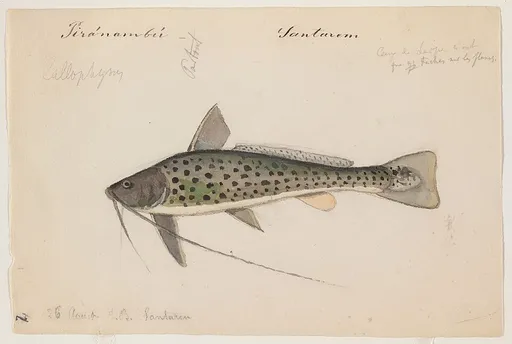 13.4 in (34 cm)120 gal (455 L)72–81°F (22–27°C)
Bolt catfish
Aguarunichthys torosus
13.4 in (34 cm) · 120 gal (455 L)
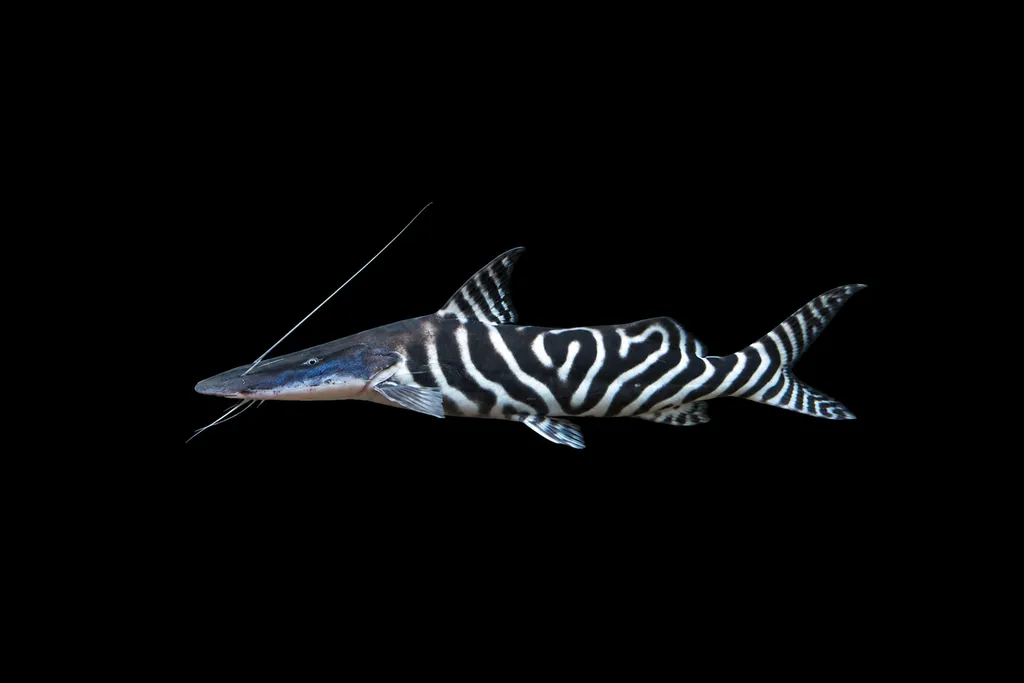 23.6 in (60 cm)151 gal (570 L)72–90°F (22–32°C)
Zebra shovelnose
Brachyplatystoma tigrinum
23.6 in (60 cm) · 151 gal (570 L)
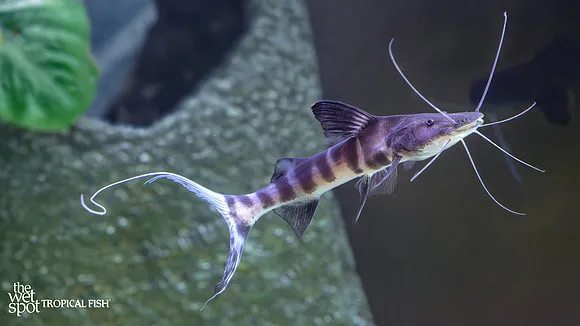 23.6 in (60 cm)396 gal (1,500 L)73–82°F (23–28°C)
Zebra shovelnose catfish
Brachyplatystoma juruense
23.6 in (60 cm) · 396 gal (1,500 L)
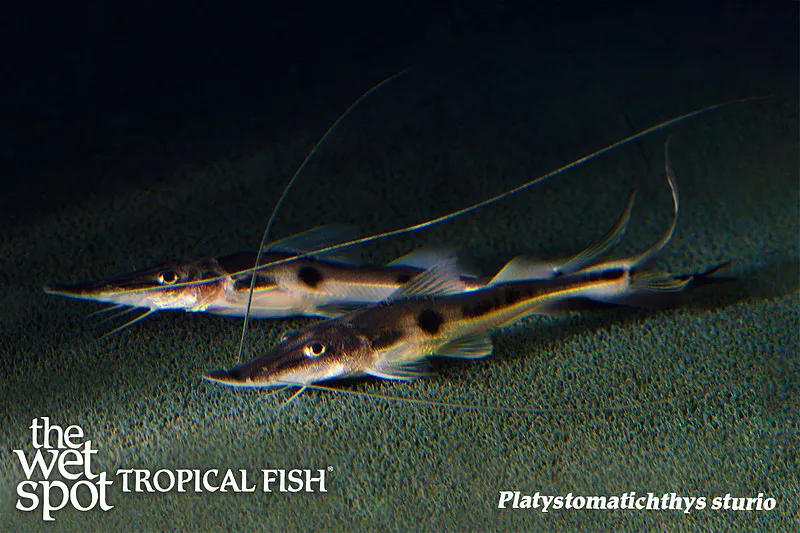 15.7 in (40 cm)120 gal (455 L)75–82°F (24–28°C)
Zorro catfish
Platystomatichthys sturio
15.7 in (40 cm) · 120 gal (455 L)
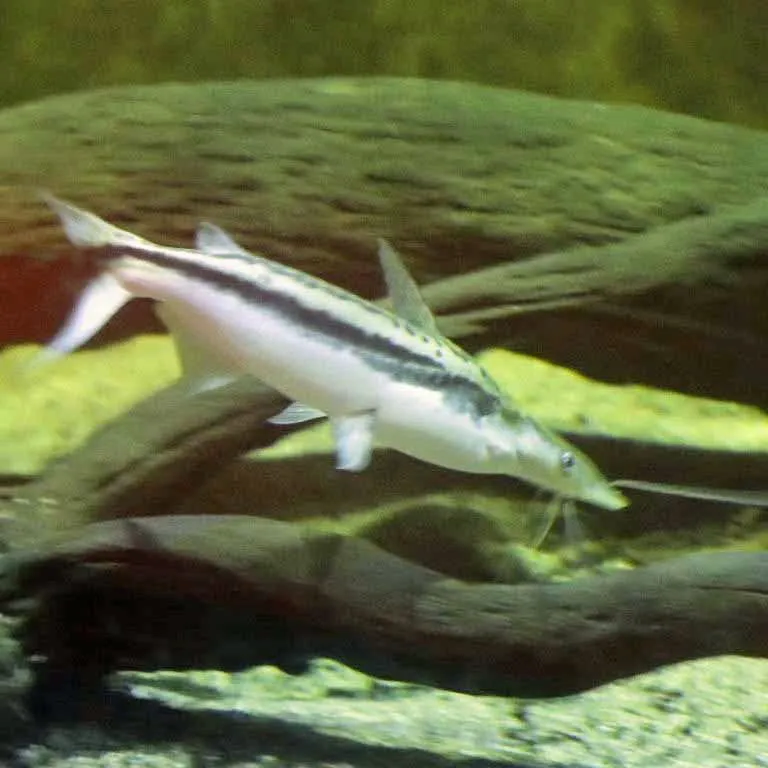 19.7 in (50 cm)190 gal (720 L)73–86°F (23–30°C)
Duckbill catfish
Sorubim lima
19.7 in (50 cm) · 190 gal (720 L)
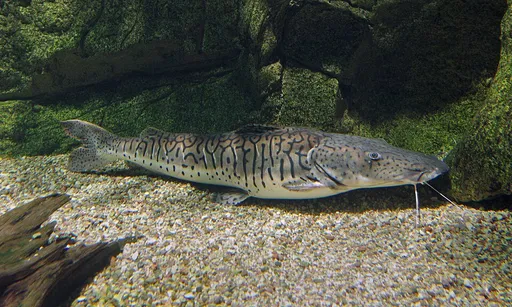 35.4 in (90 cm)300 gal (1,135 L)75–82°F (24–28°C)
Tiger shovelnose catfish
Pseudoplatystoma fasciatum
35.4 in (90 cm) · 300 gal (1,135 L)