Duckbill catfish
Sorubim lima
Also known as Lima shovelnose catfish
FreshwaterFish
Care at a glance
- Temperature
- 73–86°F
- 23–30°C
- pH
- 6.0–7.5
- Adult size
- 19.7 in
- 50 cm
- Minimum tank
- 190 gal
- 720 L
- Temperament
- Mostly peaceful
- Social behavior
- Social
- Tankmates
- With caution
- Swim level
- Bottom
- Difficulty
- Difficult
- Breeding
- No record
- Rarity
- Very rare
- Family
- Pimelodidae
- Origin
- South America
Overview
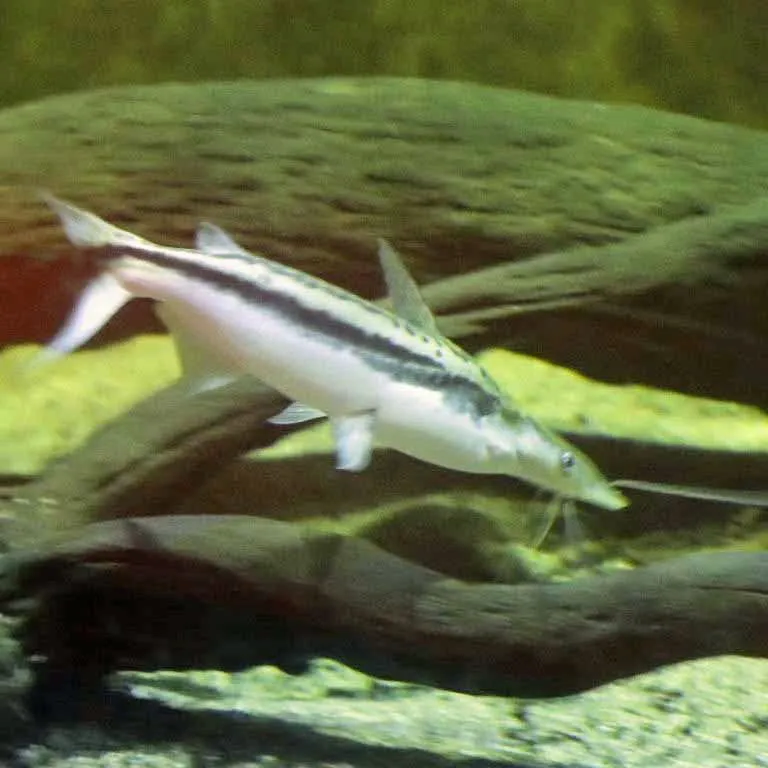
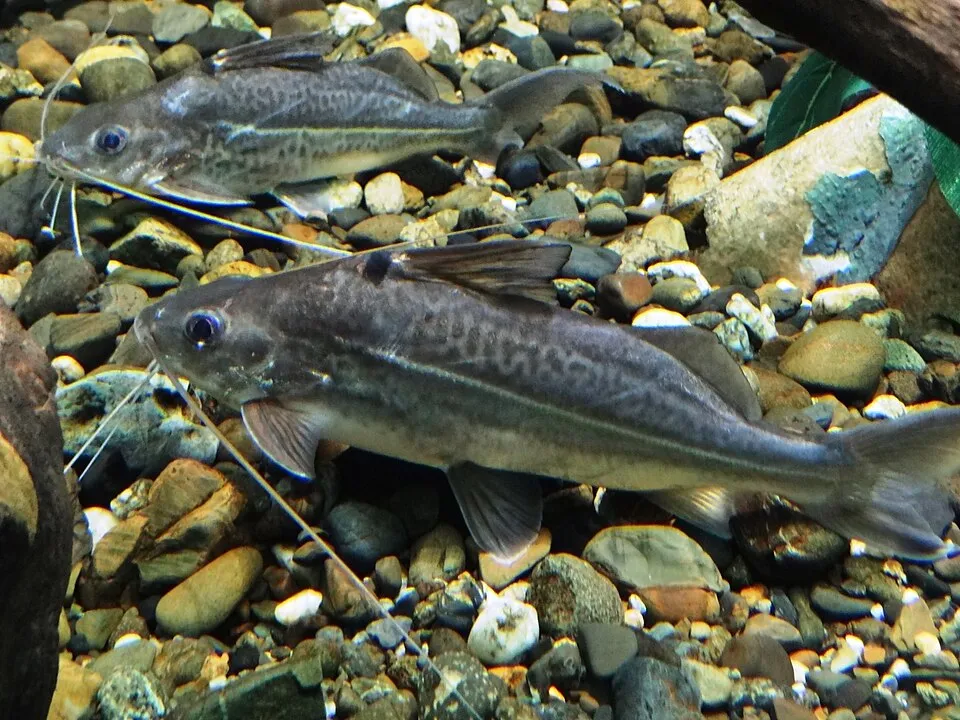
The duckbill catfish is a nocturnal ambush predator with a long, flattened, duck-like snout that it uses to snap up passing fish. It is peaceful toward tankmates too big to eat but becomes steadily more fish-eating as it grows, and it will swallow anything that fits in its wide mouth, so keep only large, calm companions. It often rests at a head-down angle against wood during the day, then hunts at night. It can be kept singly or in a group of its own kind given space. Offer strips of fish, prawn, earthworms, and sinking pellets, and provide a large tank of around 720 liters or larger with a soft bed and sturdy cover.
In the wild
The duckbill catfish is widespread across South America, in the Amazon, Orinoco, and Parana basins, where young fish shelter among submerged roots and marginal plants and adults patrol slow, deeper water. It likes warm, soft water, so keep it from around 23 to 30 C with a pH between 6 and 7.5 and gentle flow. Furnish the tank with driftwood, tall or overhanging plants, and shaded resting spots, over a soft sand bed, and keep the lighting dim to suit its evening habits.
Good to know
The duckbill catfish, also sold as the lima shovelnose, is a long-whiskered catfish of the family Pimelodidae and grows to around 50 cm. Its most striking feature is the broad, flat, extended snout tipped with a projecting upper jaw, giving it a duck-billed profile suited to sifting and grabbing prey. A marbled brown and cream pattern camouflages it against wood and leaf litter. It is not known to have been bred in home aquariums, though it spawns in the wild during the rains.
Did you know
The duckbill catfish often hangs at a steep, head-down angle against a branch during the day, its mottled colouring and long flat snout making it look like just another waterlogged stick until a smaller fish drifts within reach.
Common questions
What size tank does a Duckbill catfish need?
A Duckbill catfish needs at least 190 gal (720 L). It spends most of its time in the bottom.
What temperature and pH does a Duckbill catfish need?
A Duckbill catfish is comfortable at 73–86°F (23–30°C) with a pH of 6.0–7.5.
How big does a Duckbill catfish get?
An adult Duckbill catfish reaches about 19.7 in (50 cm).
Related species
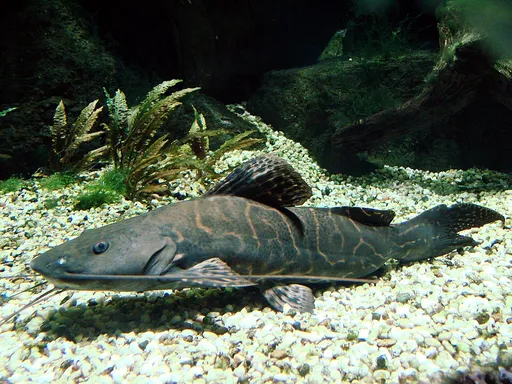 23.6 in (60 cm)185 gal (700 L)72–79°F (22–26°C)
Reticulated catfish
Perrunichthys perruno
23.6 in (60 cm) · 185 gal (700 L)
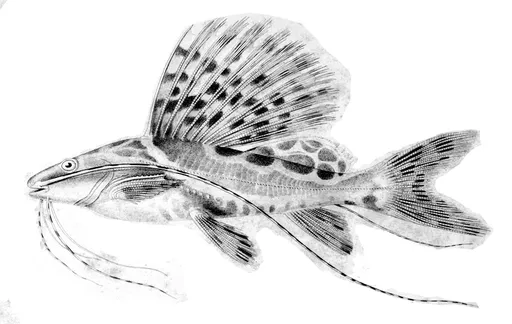 23.6 in (60 cm)396 gal (1,500 L)72–79°F (22–26°C)
Sailfin pim
Leiarius pictus
23.6 in (60 cm) · 396 gal (1,500 L)
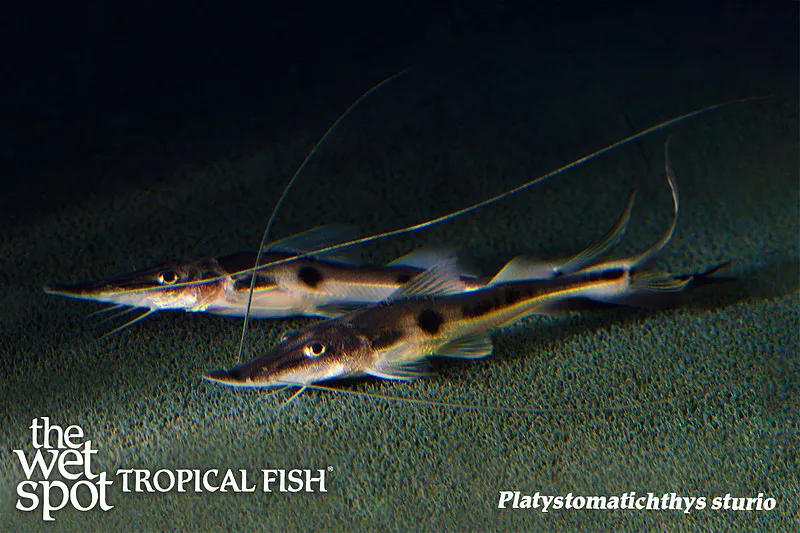 15.7 in (40 cm)120 gal (455 L)75–82°F (24–28°C)
Zorro catfish
Platystomatichthys sturio
15.7 in (40 cm) · 120 gal (455 L)
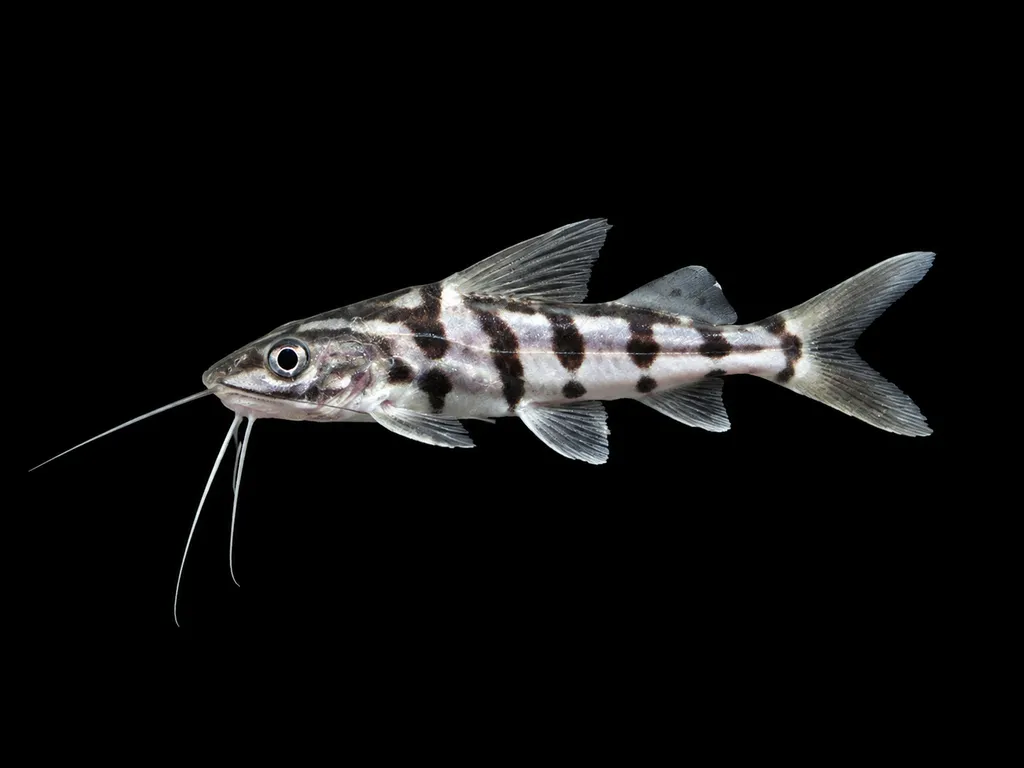
 12.2 in (31 cm)65 gal (245 L)75–82°F (24–28°C)
Ornate pimelodus
Pimelodus ornatus
12.2 in (31 cm) · 65 gal (245 L)
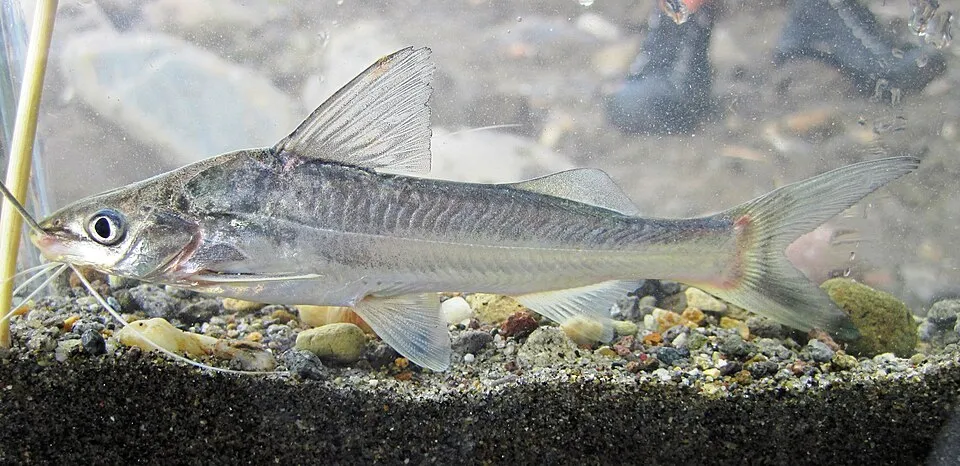
 11.8 in (30 cm)106 gal (400 L)73–82°F (23–28°C)
Four-line pimelodus
Pimelodus albofasciatus
11.8 in (30 cm) · 106 gal (400 L)
 9.8 in (25 cm)53 gal (200 L)68–79°F (20–26°C)
Bloch's catfish
Pimelodus blochii
9.8 in (25 cm) · 53 gal (200 L)