Zorro catfish
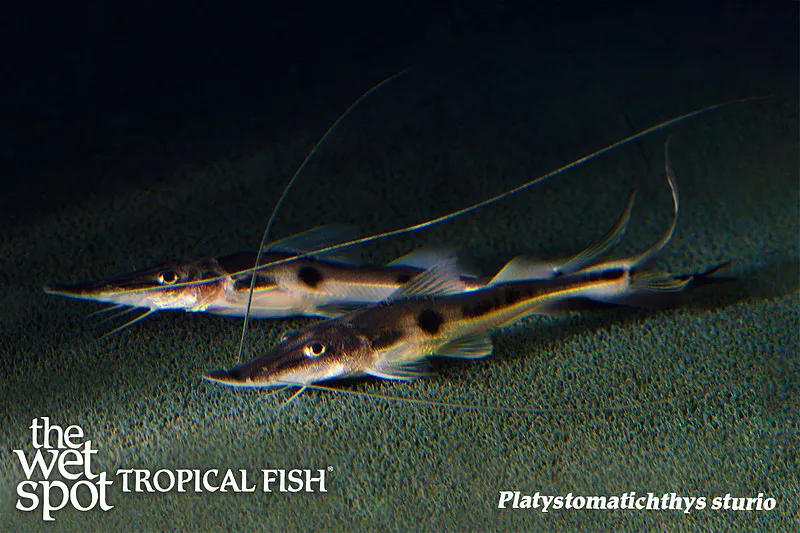
Platystomatichthys sturio
Also known as Sturio Catfish, Sturgeon Cat
FreshwaterFish
Care at a glance
- Temperature
- 75–82°F
- 24–28°C
- pH
- 6.0–7.5
- Adult size
- 15.7 in
- 40 cm
- Minimum tank
- 120 gal
- 455 L
- Temperament
- Mostly peaceful
- Social behavior
- Solitary
- Tankmates
- With caution
- Swim level
- Bottom
- Difficulty
- Difficult
- Breeding
- No record
- Rarity
- Very rare
- Family
- Pimelodidae
- Origin
- Peru
Overview
The zorro catfish is a slender, predatory catfish with a long, upturned snout and whip-like barbels, best kept as a single specimen. It is peaceful toward tankmates too large to eat, but it is a fish-eater and will take smaller companions, so choose big, fast, calm species. It loves current, so give it a long tank with strong, well-oxygenated flow, open swimming space, and a few caves. In the wild it eats live fish, but most learn to accept strips of fish, prawn, and earthworms in time, so persistence beats live feeders. Aim for a large tank of around 455 liters or larger, and a roomier one for a full-grown adult.
In the wild
The zorro catfish comes from the Amazon basin, particularly Peru, where it lives in the current of large, fast-flowing rivers. It needs warm, soft, well-oxygenated water, so aim for around 24 to 28 C with a pH between 6 and 7.5 and strong flow from a powerful filter or powerhead. A spacious tank with a smooth sand bed, open channels for swimming, and a little sturdy wood suits its habits. It swims against the current by nature, so brisk water movement keeps it active and healthy.
Good to know
The zorro catfish, also sold as the sturgeon catfish, is a long-whiskered catfish of the family Pimelodidae and reaches around 40 cm. It is instantly known by its long, curved, upturned snout and its extremely long barbels, which trail well past the body and give it a swordsman-like profile. It uses the sensitive snout and barbels to find small prey along the bottom while facing into the current. Like other river pims, it is not known to breed in home aquariums.
Did you know
The zorro catfish is named for its dashing looks, with a long upturned snout like a sabre and barbels that trail far behind its body. It is also sold as the sturgeon catfish because that curved snout recalls a sturgeon, though the two are not related.
Common questions
What size tank does a Zorro catfish need?
A Zorro catfish needs at least 120 gal (455 L). It spends most of its time in the bottom.
What temperature and pH does a Zorro catfish need?
A Zorro catfish is comfortable at 75–82°F (24–28°C) with a pH of 6.0–7.5.
How big does a Zorro catfish get?
An adult Zorro catfish reaches about 15.7 in (40 cm).
Related species
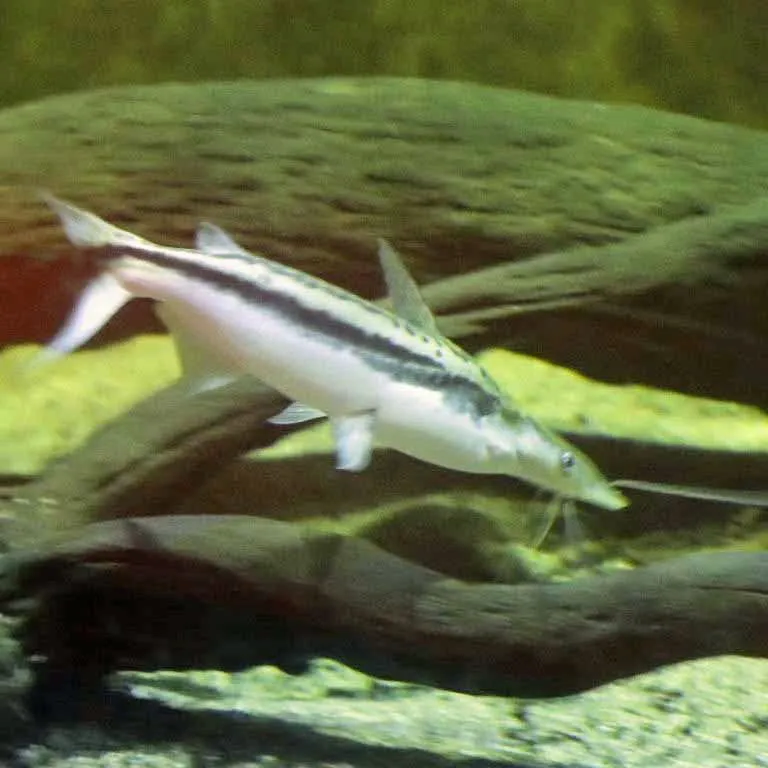 19.7 in (50 cm)190 gal (720 L)73–86°F (23–30°C)
Duckbill catfish
Sorubim lima
19.7 in (50 cm) · 190 gal (720 L)
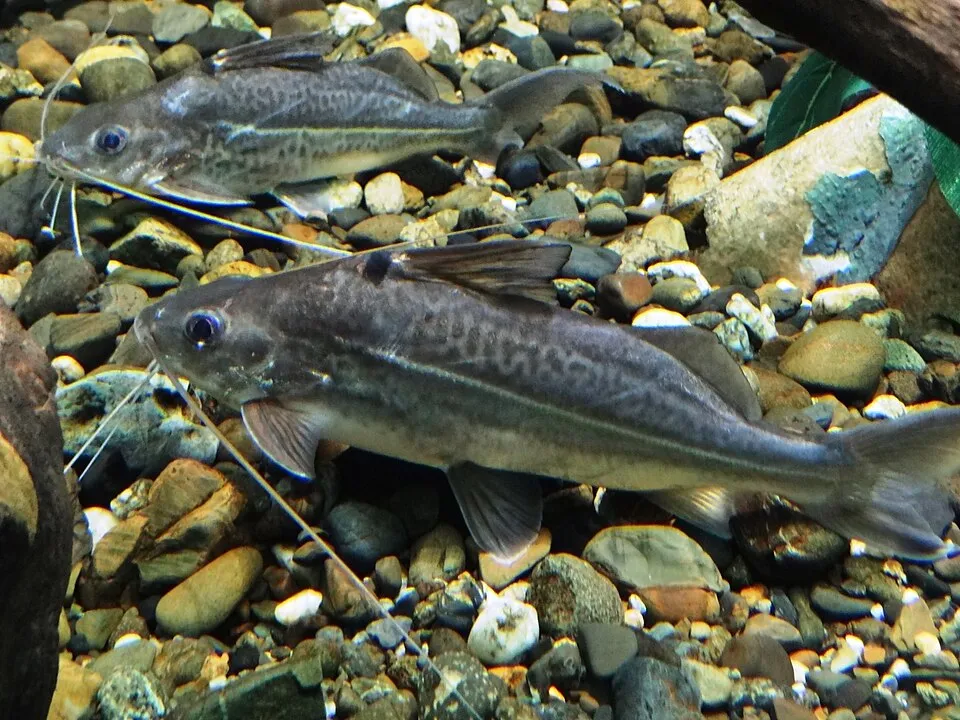 12.2 in (31 cm)65 gal (245 L)75–82°F (24–28°C)
Ornate pimelodus
Pimelodus ornatus
12.2 in (31 cm) · 65 gal (245 L)
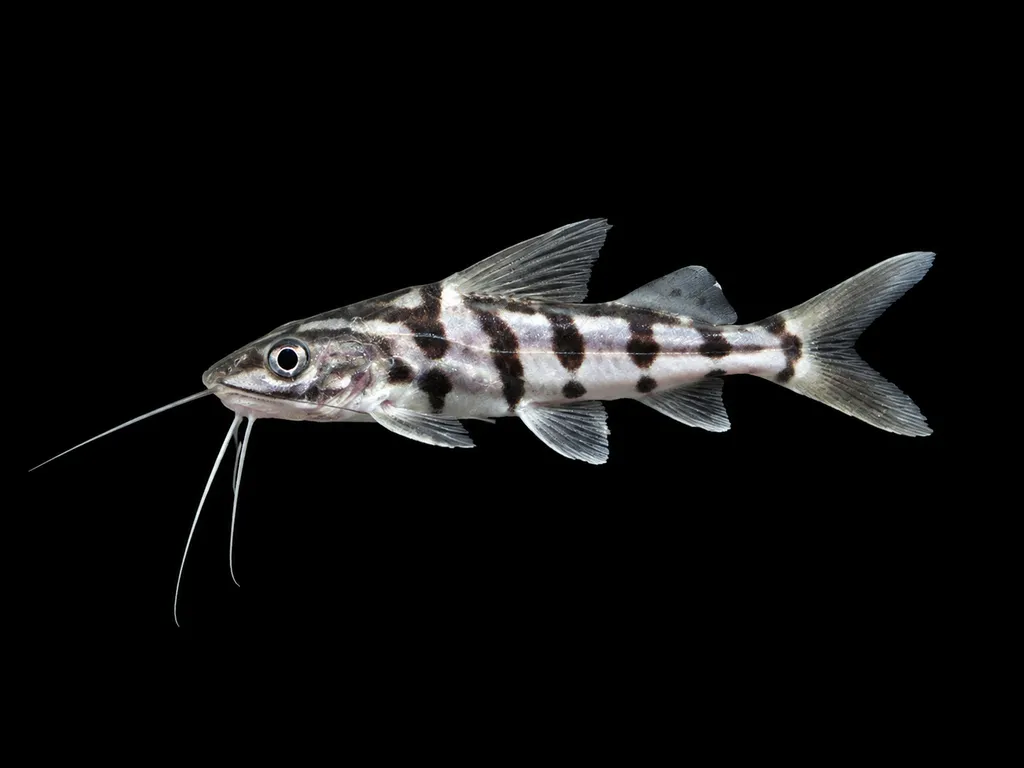 11.8 in (30 cm)106 gal (400 L)73–82°F (23–28°C)
Four-line pimelodus
Pimelodus albofasciatus
11.8 in (30 cm) · 106 gal (400 L)
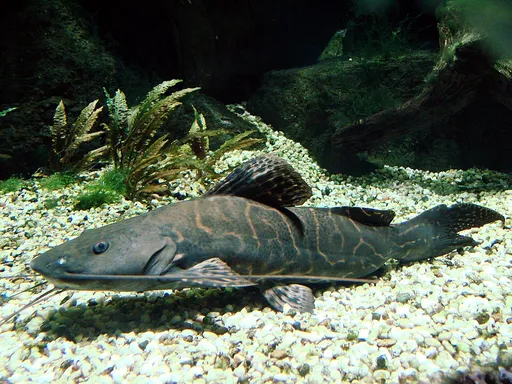 23.6 in (60 cm)185 gal (700 L)72–79°F (22–26°C)
Reticulated catfish
Perrunichthys perruno
23.6 in (60 cm) · 185 gal (700 L)
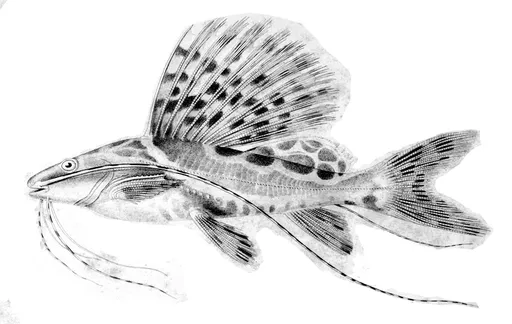 23.6 in (60 cm)396 gal (1,500 L)72–79°F (22–26°C)
Sailfin pim
Leiarius pictus
23.6 in (60 cm) · 396 gal (1,500 L)
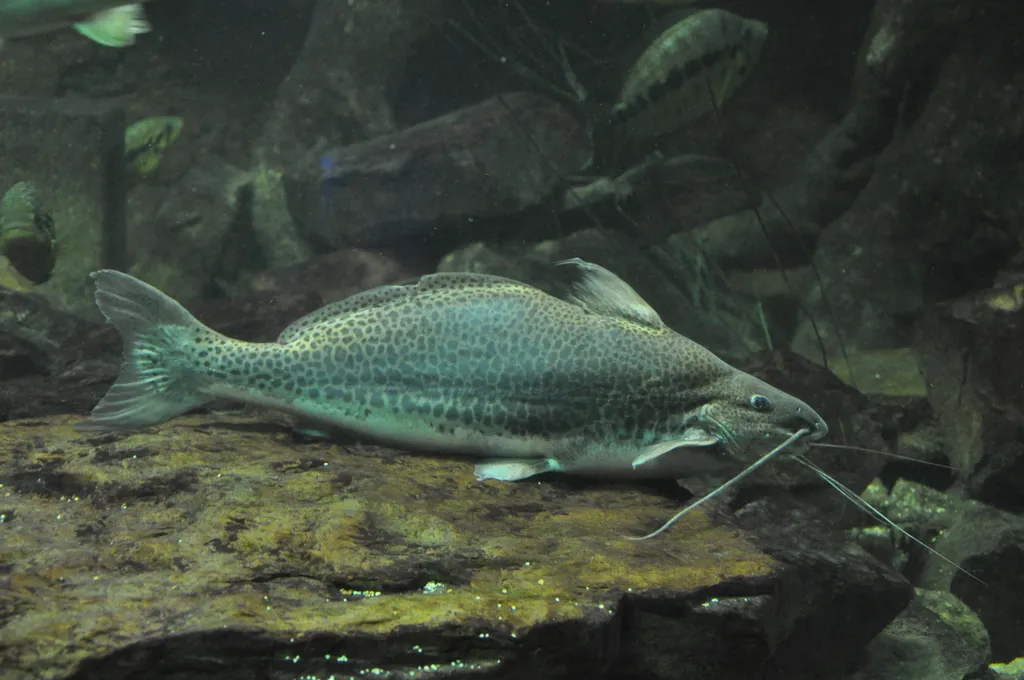 15.7 in (40 cm)120 gal (455 L)75–84°F (24–29°C)
Vulture catfish
Calophysus macropterus
15.7 in (40 cm) · 120 gal (455 L)