Reticulated catfish
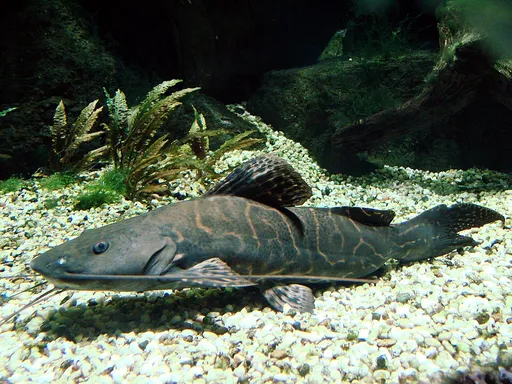
Perrunichthys perruno
Also known as Leopard catfish, Reticulated pim, Perruno catfish
FreshwaterFish
Care at a glance
- Temperature
- 72–79°F
- 22–26°C
- pH
- 6.0–7.2
- Adult size
- 23.6 in
- 60 cm
- Minimum tank
- 185 gal
- 700 L
- Temperament
- Mostly peaceful
- Social behavior
- Solitary
- Tankmates
- With caution
- Swim level
- Bottom
- Difficulty
- Difficult
- Breeding
- No record
- Rarity
- Rare
- Family
- Pimelodidae
- Origin
- Native to the Lake Maracaibo and Orinoco basins of Venezuela and Colombia.
Overview
This is a large, striking predator that grows quickly and reaches around 60 cm, so it needs a tank of at least 700 liters, big filtration, and generous weekly water changes. It is fairly peaceful for its size but is a nocturnal hunter that will eat any tankmate it can swallow, so only keep it with large, robust fish. It is usually maintained as a single specimen. Feed meaty foods like fish, prawns, mussel, and earthworms, weaning it onto sinking pellets over time.
In the wild
The reticulated catfish comes from the Lake Maracaibo and Orinoco basins, living in slower stretches of river and flooded margins and hunting at night. It is a large, nocturnal predator that hides in wood and shade by day. Give it a big tank with a soft floor, large driftwood, and one solid retreat, with clean, soft, slightly acidic water at 22 to 26 degrees C and strong filtration.
Good to know
Perrunichthys perruno grows to about 60 cm, with some individuals passing 62 cm, and is the only species in its genus. It wears a bold reticulated leopard pattern of dark blotches on a pale body. It is a fast grower, capable of exceeding 30 cm in its first year, and is intolerant of poor water quality.
Did you know
Its leopard-like reticulated pattern makes it one of the most beautiful large pimelodids, but that same fish can outgrow 30 cm in its first year, so the beauty comes with a fast countdown to needing a huge tank.
Common questions
What size tank does a Reticulated catfish need?
A Reticulated catfish needs at least 185 gal (700 L). It spends most of its time in the bottom.
What temperature and pH does a Reticulated catfish need?
A Reticulated catfish is comfortable at 72–79°F (22–26°C) with a pH of 6.0–7.2.
How big does a Reticulated catfish get?
An adult Reticulated catfish reaches about 23.6 in (60 cm).
Related species
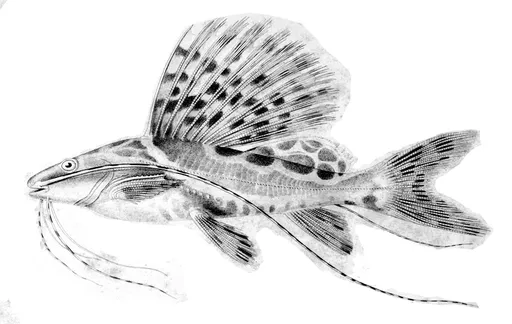 23.6 in (60 cm)396 gal (1,500 L)72–79°F (22–26°C)
Sailfin pim
Leiarius pictus
23.6 in (60 cm) · 396 gal (1,500 L)
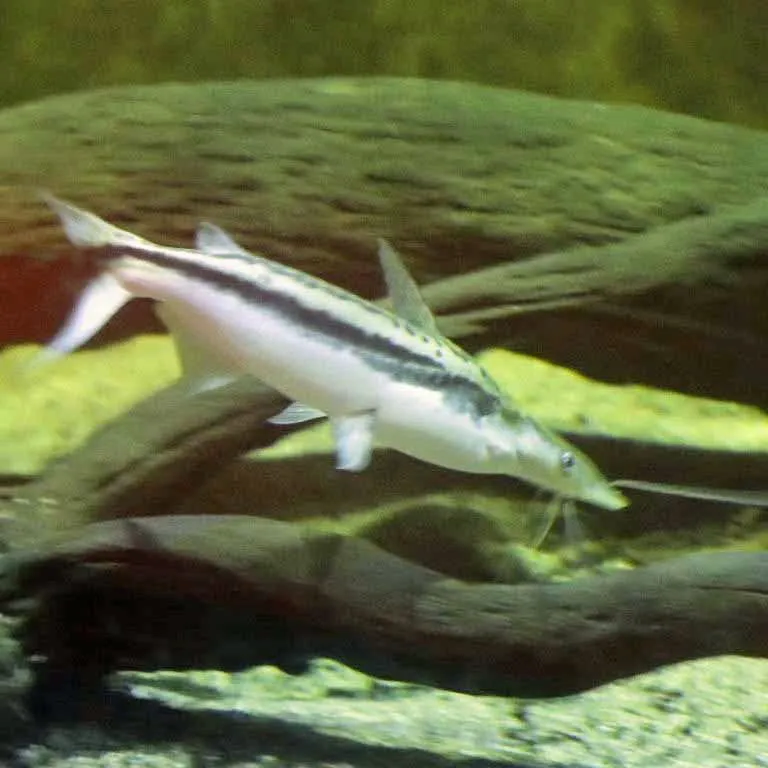 19.7 in (50 cm)190 gal (720 L)73–86°F (23–30°C)
Duckbill catfish
Sorubim lima
19.7 in (50 cm) · 190 gal (720 L)
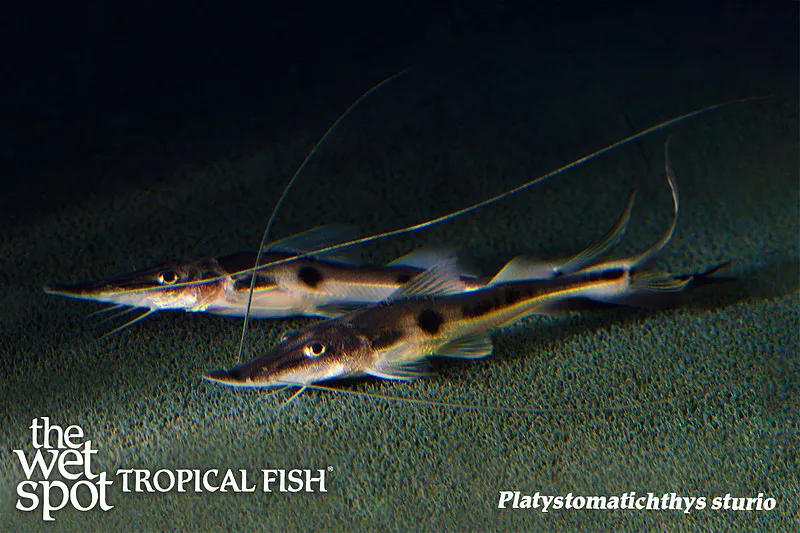 15.7 in (40 cm)120 gal (455 L)75–82°F (24–28°C)
Zorro catfish
Platystomatichthys sturio
15.7 in (40 cm) · 120 gal (455 L)
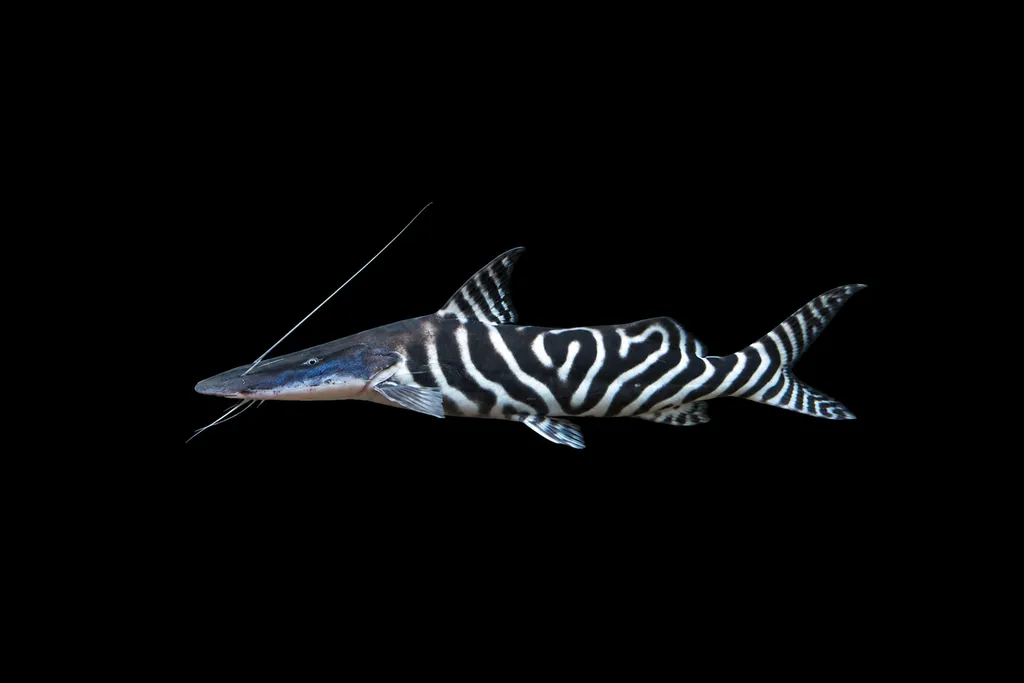 23.6 in (60 cm)151 gal (570 L)72–90°F (22–32°C)
Zebra shovelnose
Brachyplatystoma tigrinum
23.6 in (60 cm) · 151 gal (570 L)
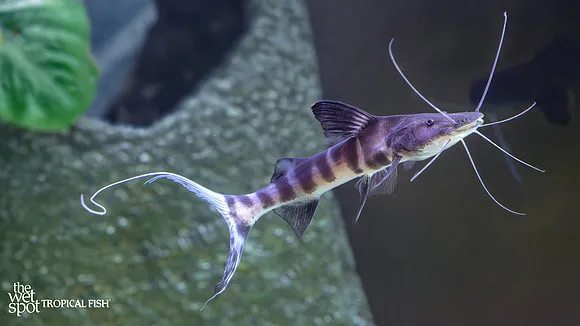 23.6 in (60 cm)396 gal (1,500 L)73–82°F (23–28°C)
Zebra shovelnose catfish
Brachyplatystoma juruense
23.6 in (60 cm) · 396 gal (1,500 L)
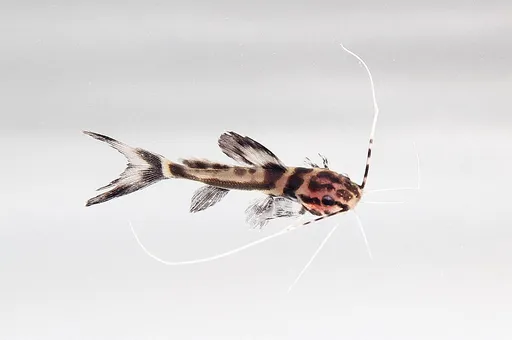 39.4 in (100 cm)528 gal (2,000 L)72–79°F (22–26°C)
Marbled sailfin pim
Leiarius marmoratus
39.4 in (100 cm) · 528 gal (2,000 L)