Marbled sailfin pim
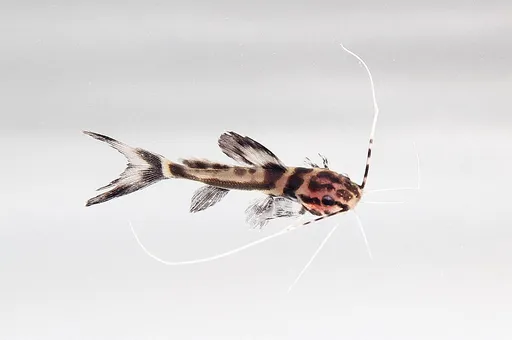
Leiarius marmoratus
Also known as Marbled pim, Sailfin marbled pim, Achara catfish
FreshwaterFish
Care at a glance
- Temperature
- 72–79°F
- 22–26°C
- pH
- 6.0–7.5
- Adult size
- 39.4 in
- 100 cm
- Minimum tank
- 528 gal
- 2,000 L
- Temperament
- Mostly peaceful
- Social behavior
- Solitary
- Tankmates
- With caution
- Swim level
- Bottom
- Difficulty
- Difficult
- Breeding
- No record
- Rarity
- Rare
- Family
- Pimelodidae
- Origin
- Native to the Amazon and Orinoco river basins of South America.
Overview
This fish reaches a meter or more, so plan for a tank of at least 2000 liters, effectively a pond or a very large custom build, and a commitment measured in decades. It is fairly peaceful for a giant catfish and will not usually harass tankmates, but it is a predator that swallows anything bite-sized, so only very large companions are safe. It is territorial with other big catfish, so it is normally kept alone. Feed a meaty diet of prawns, fish, earthworms, and large sinking pellets.
In the wild
The marbled sailfin pim is a big Amazon and Orinoco predator of deep river channels and flooded forest, hunting mainly at night. Juveniles carry a bold marbled pattern and a tall dorsal fin. It needs a very large tank with long open swimming lanes, a big cave or shaded retreat, and clean soft to neutral water at 22 to 26 degrees C.
Good to know
Leiarius marmoratus grows to a little over 100 cm, making it noticeably larger than the similar-looking Leiarius pictus, which it is regularly confused with in the trade. It is a long-lived pimelodid that can survive several decades. Its striking juvenile markings mute into a marbled brown as it matures.
Did you know
It is sold interchangeably with the smaller sailfin pim, but this species keeps growing well past a meter, so a mislabeled purchase can leave a keeper with a far bigger fish than they bargained for.
Common questions
What size tank does a Marbled sailfin pim need?
A Marbled sailfin pim needs at least 528 gal (2,000 L). It spends most of its time in the bottom.
What temperature and pH does a Marbled sailfin pim need?
A Marbled sailfin pim is comfortable at 72–79°F (22–26°C) with a pH of 6.0–7.5.
How big does a Marbled sailfin pim get?
An adult Marbled sailfin pim reaches about 39.4 in (100 cm).
Related species
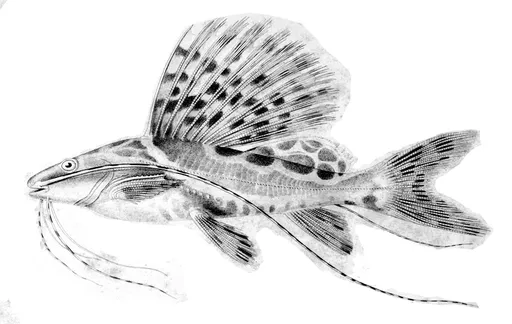 23.6 in (60 cm)396 gal (1,500 L)72–79°F (22–26°C)
Sailfin pim
Leiarius pictus
23.6 in (60 cm) · 396 gal (1,500 L)
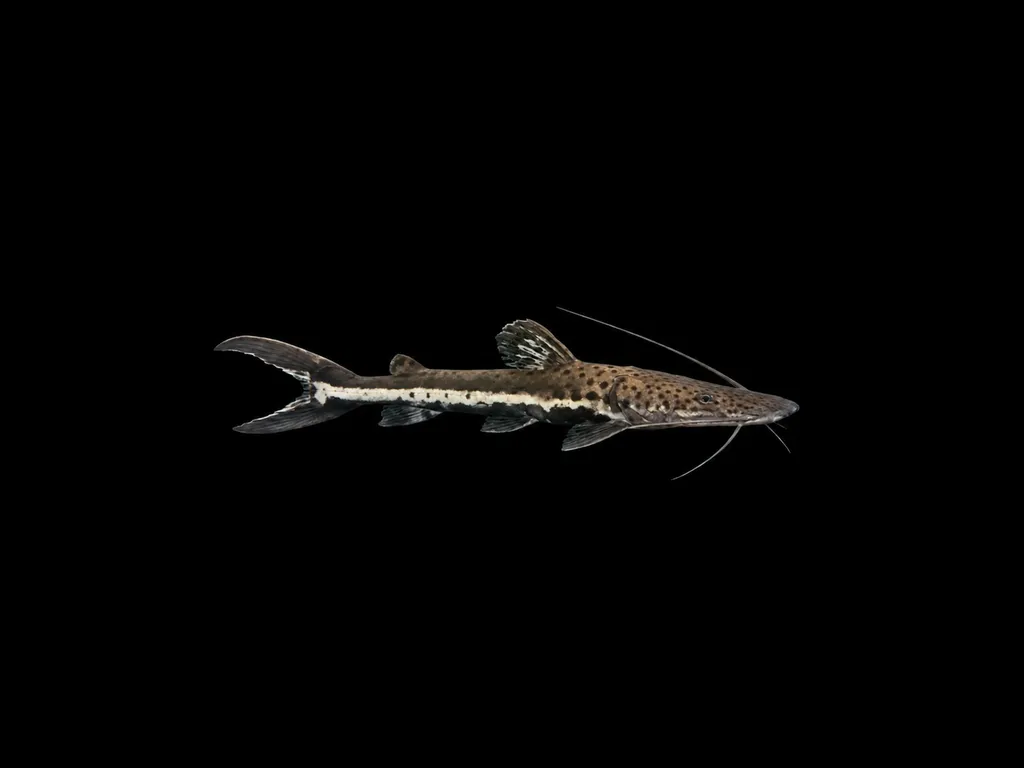 59.1 in (150 cm)793 gal (3,000 L)72–82°F (22–28°C)
Firewood catfish
Sorubimichthys planiceps
59.1 in (150 cm) · 793 gal (3,000 L)
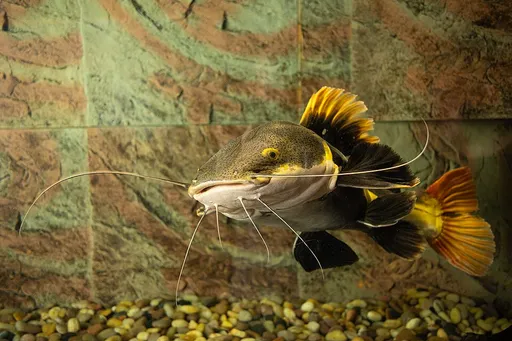 39.4 in (100 cm)1,506 gal (5,700 L)68–79°F (20–26°C)
Redtail catfish
Phractocephalus hemioliopterus
39.4 in (100 cm) · 1,506 gal (5,700 L)
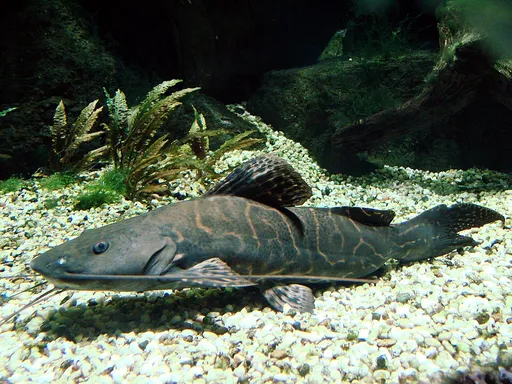 23.6 in (60 cm)185 gal (700 L)72–79°F (22–26°C)
Reticulated catfish
Perrunichthys perruno
23.6 in (60 cm) · 185 gal (700 L)
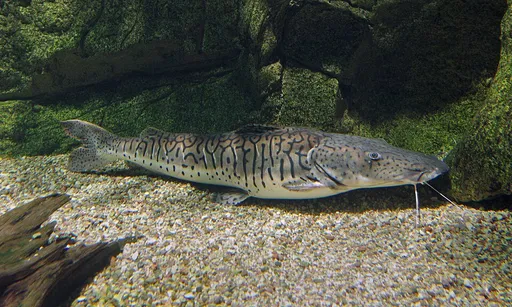 35.4 in (90 cm)300 gal (1,135 L)75–82°F (24–28°C)
Tiger shovelnose catfish
Pseudoplatystoma fasciatum
35.4 in (90 cm) · 300 gal (1,135 L)
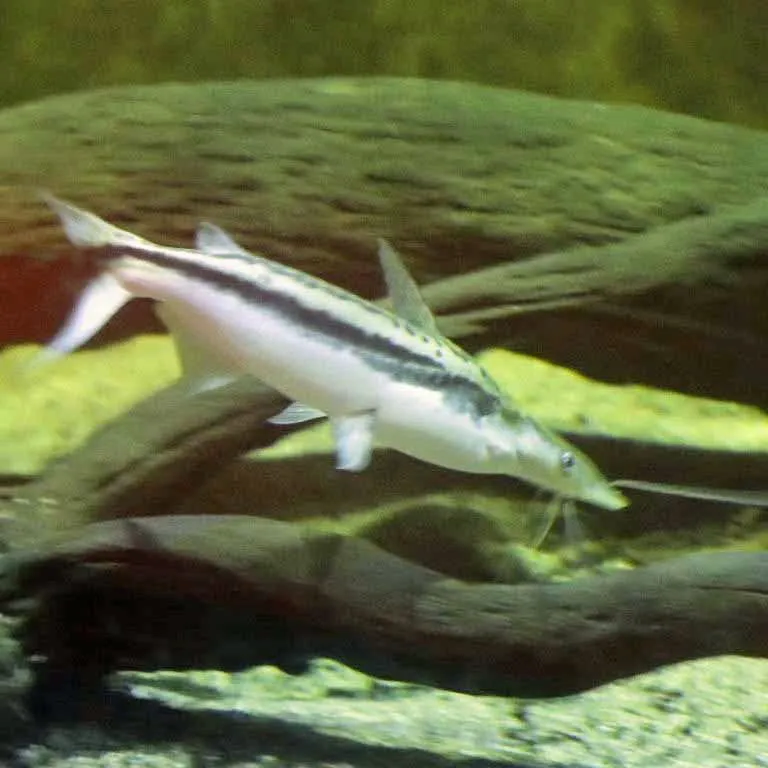 19.7 in (50 cm)190 gal (720 L)73–86°F (23–30°C)
Duckbill catfish
Sorubim lima
19.7 in (50 cm) · 190 gal (720 L)