Firewood catfish
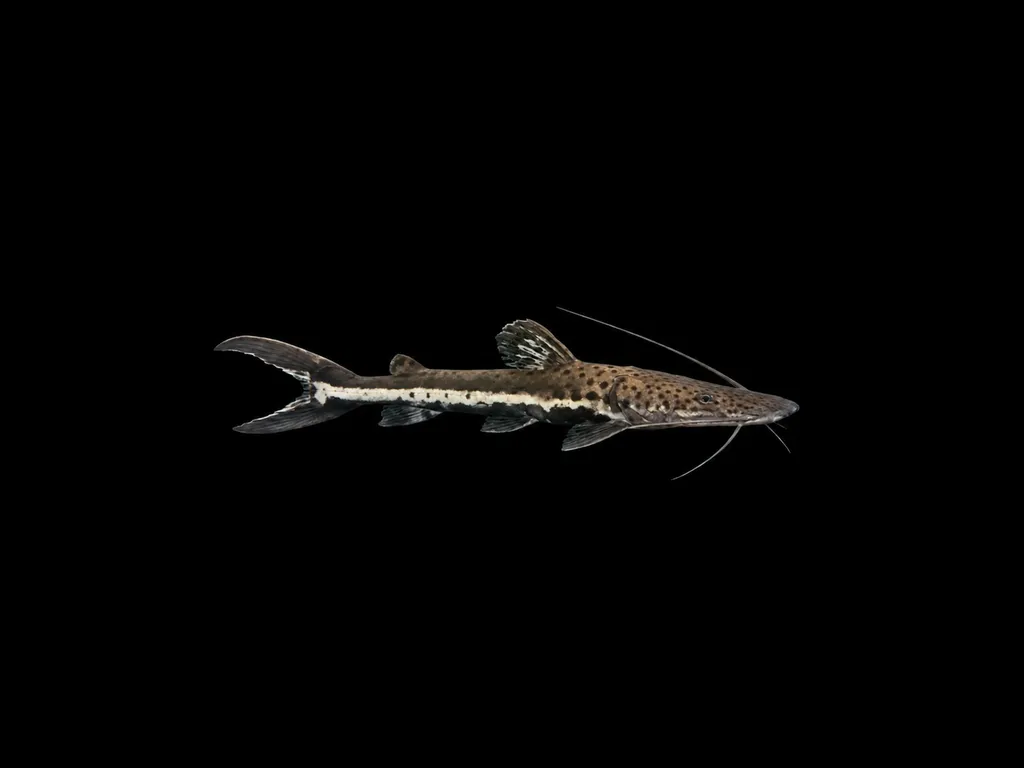
Sorubimichthys planiceps
Also known as Firewood shovelnose catfish, Planiceps catfish, Flatnose shovelnose
FreshwaterFish
Care at a glance
- Temperature
- 72–82°F
- 22–28°C
- pH
- 6.0–7.5
- Adult size
- 59.1 in
- 150 cm
- Minimum tank
- 793 gal
- 3,000 L
- Temperament
- Mostly peaceful
- Social behavior
- Solitary
- Tankmates
- With caution
- Swim level
- Bottom
- Difficulty
- Difficult
- Breeding
- No record
- Rarity
- Rare
- Family
- Pimelodidae
- Origin
- Native to the Amazon and Orinoco river basins of South America.
Overview
This is a true monster shovelnose that reaches a meter and a half, so it needs an enormous tank of at least 3000 liters, effectively a pond or a huge custom build, and lives for many years. It is not especially aggressive but it is a committed fish-eater, so any tankmate small enough to swallow will be eaten, and it can only be housed with very large companions. It is a strong, active swimmer that needs open space and a secure lid. Feed whole fish, prawns, and large sinking foods.
In the wild
The firewood catfish is a giant shovelnose of the Amazon and Orinoco, cruising open river channels and hunting fish at night. It has a long, flattened, spade-shaped head and a slim body patterned in a woodgrain of stripes and blotches. It needs a very large tank with long open swimming lanes, a soft floor, and clean, warm, soft to neutral water at 22 to 28 degrees C.
Good to know
Sorubimichthys planiceps grows to about 150 cm and is the only species in its genus, named for a body pattern that resembles a split log or firewood. It is a nocturnal open-water piscivore that runs down other fish. Its flattened head and long body are typical of the shovelnose catfish group.
Did you know
The firewood name comes from its markings, which look just like the grain and knots of a split log, camouflage that breaks up its outline in the dappled light of a big river.
Common questions
What size tank does a Firewood catfish need?
A Firewood catfish needs at least 793 gal (3,000 L). It spends most of its time in the bottom.
What temperature and pH does a Firewood catfish need?
A Firewood catfish is comfortable at 72–82°F (22–28°C) with a pH of 6.0–7.5.
How big does a Firewood catfish get?
An adult Firewood catfish reaches about 59.1 in (150 cm).
Related species
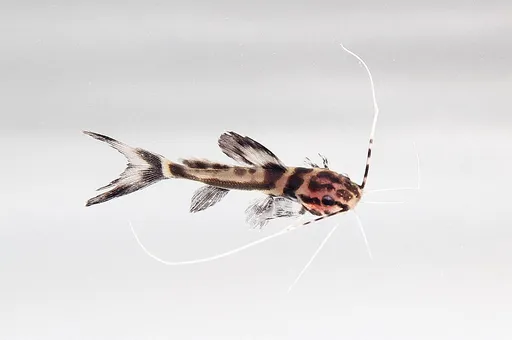 39.4 in (100 cm)528 gal (2,000 L)72–79°F (22–26°C)
Marbled sailfin pim
Leiarius marmoratus
39.4 in (100 cm) · 528 gal (2,000 L)
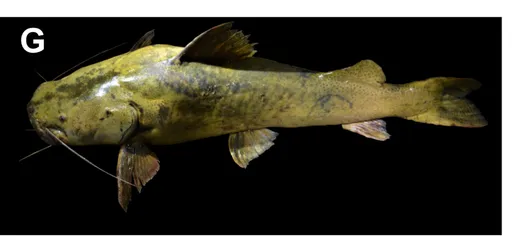 55.1 in (140 cm)793 gal (3,000 L)72–82°F (22–28°C)
Jau catfish
Zungaro zungaro
55.1 in (140 cm) · 793 gal (3,000 L)
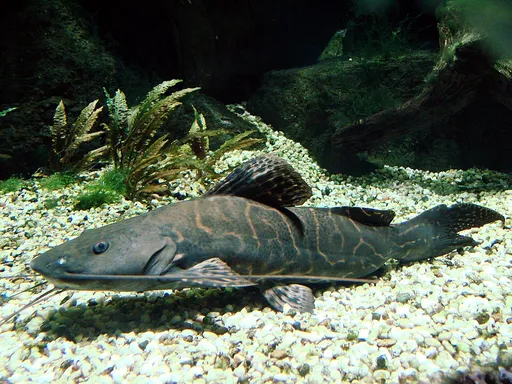 23.6 in (60 cm)185 gal (700 L)72–79°F (22–26°C)
Reticulated catfish
Perrunichthys perruno
23.6 in (60 cm) · 185 gal (700 L)
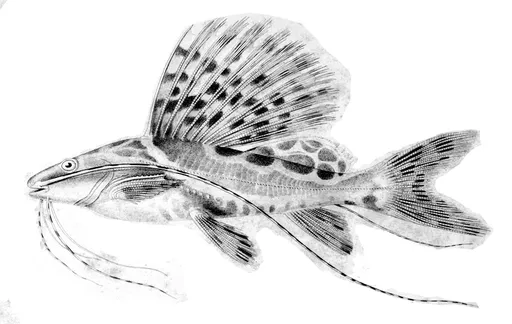 23.6 in (60 cm)396 gal (1,500 L)72–79°F (22–26°C)
Sailfin pim
Leiarius pictus
23.6 in (60 cm) · 396 gal (1,500 L)
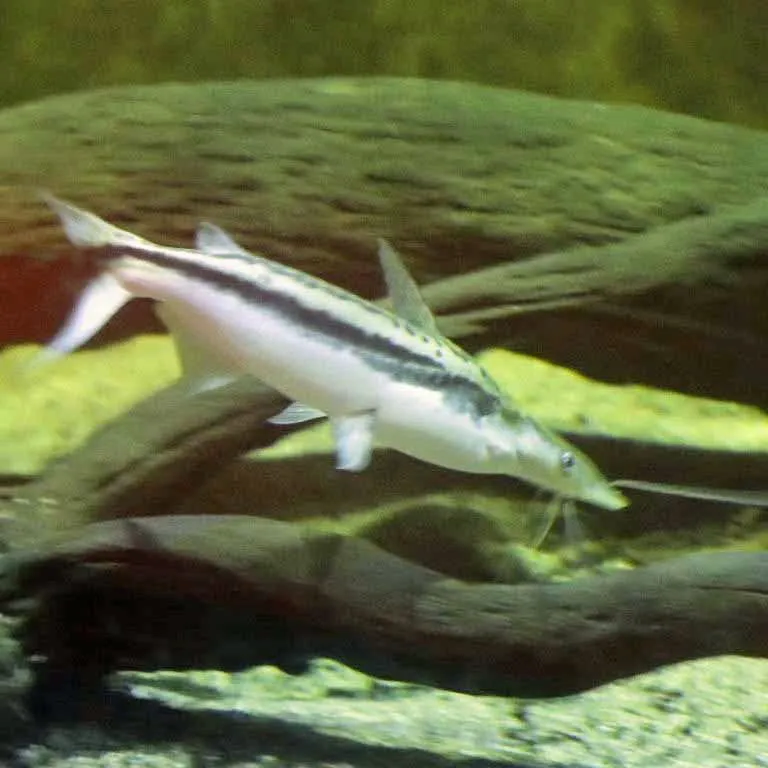 19.7 in (50 cm)190 gal (720 L)73–86°F (23–30°C)
Duckbill catfish
Sorubim lima
19.7 in (50 cm) · 190 gal (720 L)
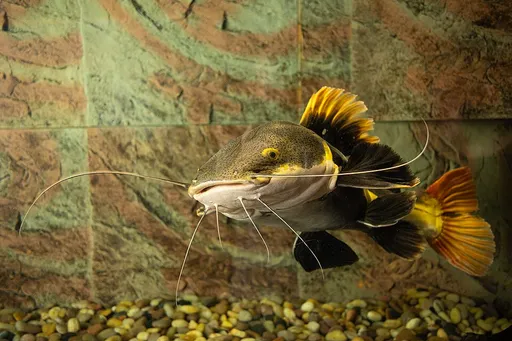 39.4 in (100 cm)1,506 gal (5,700 L)68–79°F (20–26°C)
Redtail catfish
Phractocephalus hemioliopterus
39.4 in (100 cm) · 1,506 gal (5,700 L)