Tiger shovelnose catfish
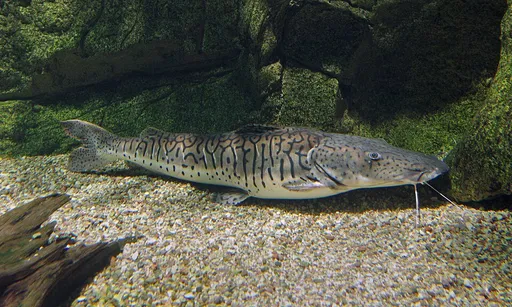
Pseudoplatystoma fasciatum
Also known as Tiger shovelnose, TSN
FreshwaterFish
Care at a glance
- Temperature
- 75–82°F
- 24–28°C
- pH
- 6.0–7.5
- Adult size
- 35.4 in
- 90 cm
- Minimum tank
- 300 gal
- 1,135 L
- Temperament
- Aggressive
- Social behavior
- Solitary
- Tankmates
- With caution
- Swim level
- Bottom
- Difficulty
- Difficult
- Breeding
- No record
- Rarity
- Common
- Family
- Pimelodidae
- Origin
- Amazon and Orinoco river basins, tropical South America
Overview
Keep this fish alone in a tank of at least 1135 liters, or only with similarly large, fast, non-aggressive tankmates it cannot swallow. It is an aggressive, solitary, nocturnal predator that sits on the bottom by day and hunts at night, and it will eat any tankmate small enough to fit in its mouth. Hold the water at 24 to 28 C with a pH from 6 to 7.5, and run oversized filtration with strong oxygenation to handle the heavy bioload. Feed varied meaty foods like fish fillet, prawns, mussels, squid, and carnivore pellets, and skip feeder fish for disease and nutrition reasons. This is a monster fish that outgrows almost every home setup, so never release it into the wild and check your local rules, since large catfish are restricted in some regions.
In the wild
Tiger shovelnose catfish come from the big rivers of the Amazon and Orinoco basins in tropical South America, where they patrol open channels and roam the bottom hunting after dark. To house one you need a genuinely huge tank, at least 1135 liters as an adult floor, and footprint matters more than volume, so aim for a length around 8 feet so the fish can actually turn. Keep the water warm at 24 to 28 C, soft to neutral, with pH from 6 to 7.5. Give them a smooth sand substrate, plenty of open swimming space, and rounded decor with a tight cover, since this is a freshwater fish, not brackish.
Good to know
This is Pseudoplatystoma fasciatum, a large predatory catfish in the family Pimelodidae. It grows fast and reaches roughly 90 cm in captivity, sometimes near a meter, and larger still in the wild. It is not bred in home aquaria, so commercial stock is pond raised, and many fish sold as tiger shovelnose are actually hybrids crossed with Phractocephalus or Sorubim. Care for a pure fish is the same.
Did you know
Its eyesight is poor, so it relies on its long barbels to find food and tends to swim fast and panic easily. That combination is why a covered tank and rounded decor matter so much, because a startled fish will bolt and can scrape its snout or tear off barbels on hard edges or an open rim.
Common questions
What size tank does a Tiger shovelnose catfish need?
A Tiger shovelnose catfish needs at least 300 gal (1,135 L). It spends most of its time in the bottom.
What temperature and pH does a Tiger shovelnose catfish need?
A Tiger shovelnose catfish is comfortable at 75–82°F (24–28°C) with a pH of 6.0–7.5.
How big does a Tiger shovelnose catfish get?
An adult Tiger shovelnose catfish reaches about 35.4 in (90 cm).
Related species
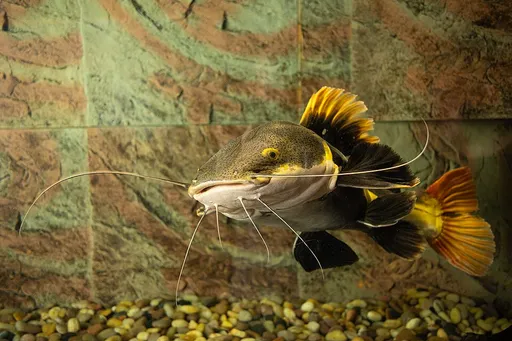 39.4 in (100 cm)1,506 gal (5,700 L)68–79°F (20–26°C)
Redtail catfish
Phractocephalus hemioliopterus
39.4 in (100 cm) · 1,506 gal (5,700 L)
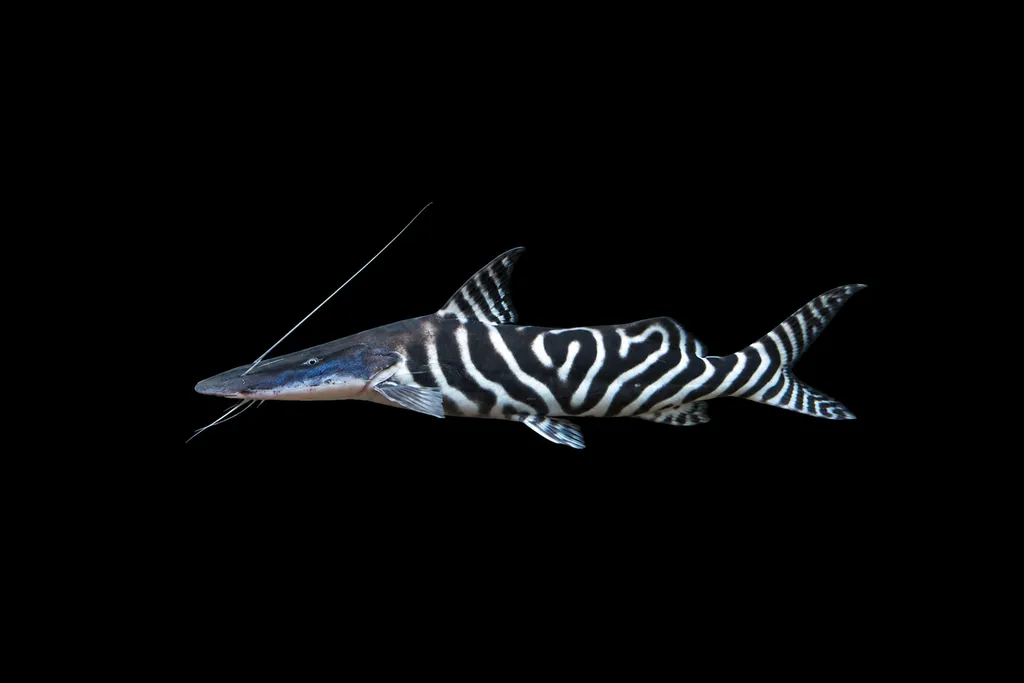 23.6 in (60 cm)151 gal (570 L)72–90°F (22–32°C)
Zebra shovelnose
Brachyplatystoma tigrinum
23.6 in (60 cm) · 151 gal (570 L)
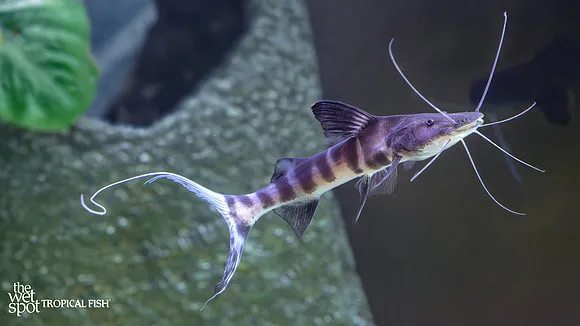 23.6 in (60 cm)396 gal (1,500 L)73–82°F (23–28°C)
Zebra shovelnose catfish
Brachyplatystoma juruense
23.6 in (60 cm) · 396 gal (1,500 L)
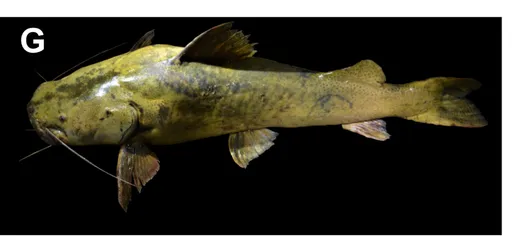 55.1 in (140 cm)793 gal (3,000 L)72–82°F (22–28°C)
Jau catfish
Zungaro zungaro
55.1 in (140 cm) · 793 gal (3,000 L)
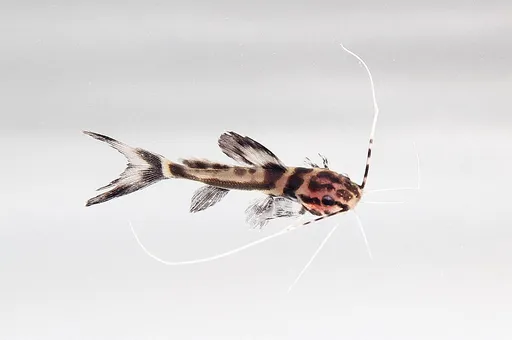 39.4 in (100 cm)528 gal (2,000 L)72–79°F (22–26°C)
Marbled sailfin pim
Leiarius marmoratus
39.4 in (100 cm) · 528 gal (2,000 L)
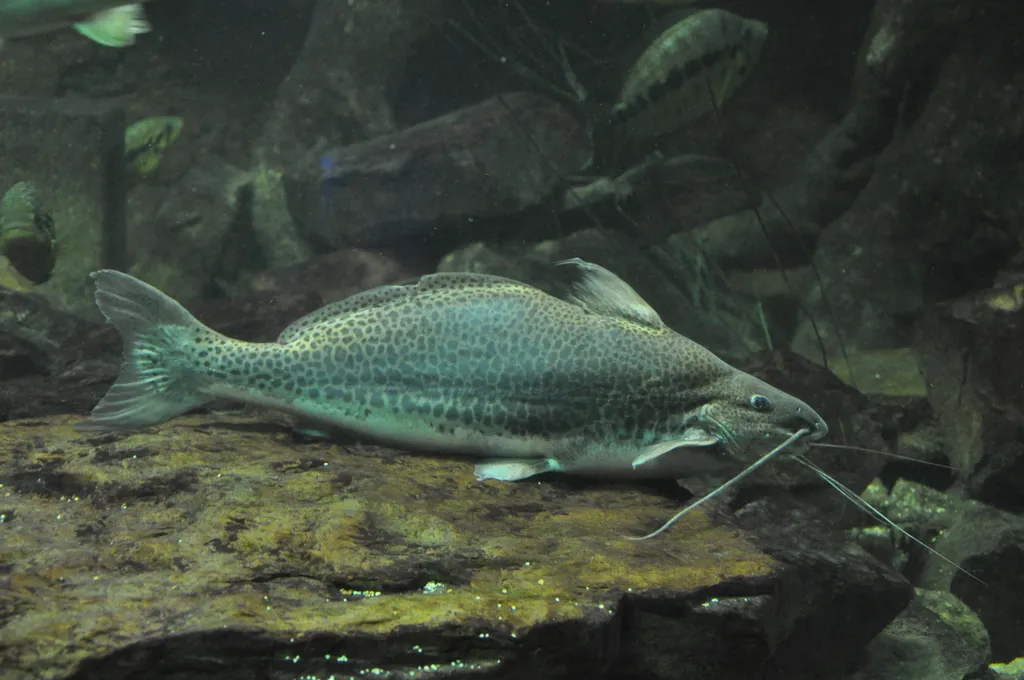 15.7 in (40 cm)120 gal (455 L)75–84°F (24–29°C)
Vulture catfish
Calophysus macropterus
15.7 in (40 cm) · 120 gal (455 L)