Zebra shovelnose
Brachyplatystoma tigrinum
FreshwaterFish
Care at a glance
- Temperature
- 72–90°F
- 22–32°C
- pH
- 6.0–7.5
- Adult size
- 23.6 in
- 60 cm
- Minimum tank
- 151 gal
- 570 L
- Temperament
- Aggressive
- Social behavior
- Solitary
- Tankmates
- With caution
- Swim level
- Bottom
- Difficulty
- Difficult
- Breeding
- No record
- Rarity
- Very rare
- Family
- Pimelodidae
- Origin
- Brazil, Colombia, Peru
Overview
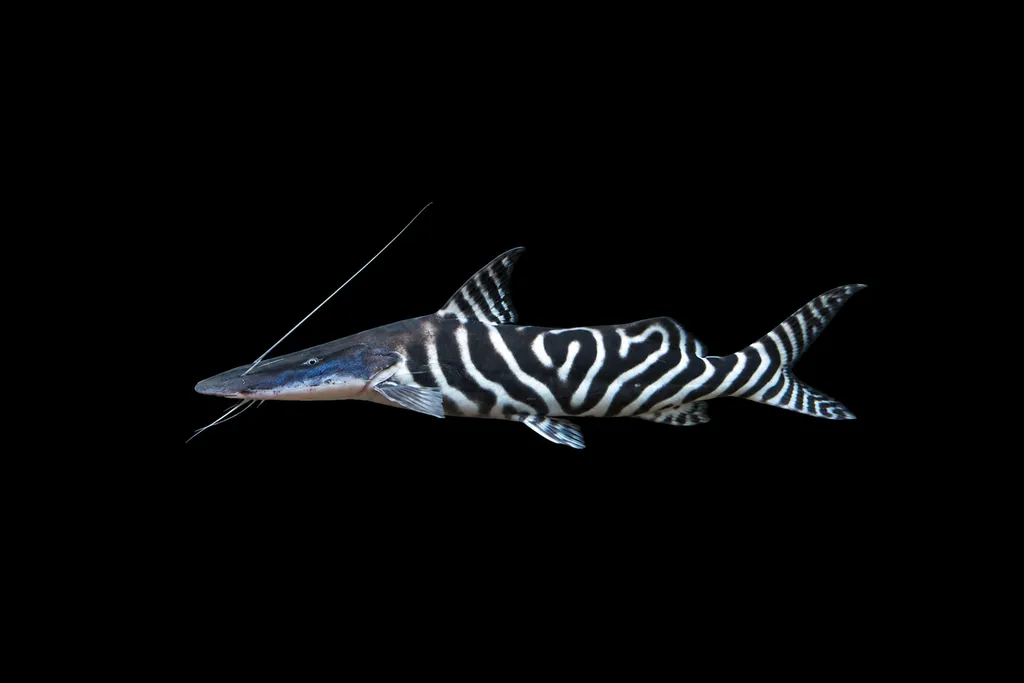
The zebra shovelnose is a large, striking, entirely fish-eating catfish, best kept as a single specimen. It is peaceful toward tankmates too big to eat but will take any fish it can swallow, and it can be nervous and easily spooked, so give it a calm, dimly lit tank with fast, sturdy companions well out of its size range. Provide a long, open swimming lane with strong, well-oxygenated flow and a few solid hiding places. Getting one to accept dead food takes patience, as it strongly prefers live fish at first, so wean it onto strips of fish, prawn, and earthworms over time. Aim for a very large tank of around 570 liters or larger with a tight lid.
In the wild
The zebra shovelnose lives in the main channels of the Amazon basin in Brazil, Colombia, and Peru, favouring deep, fast-flowing water with sand and open bottom. It handles a wide temperature span, from around 22 to 32 C, with a pH between 6 and 7.5, and it needs strong current and high oxygen levels to do well. A big tank with a smooth sand bed, open swimming space, and powerful, turbulent flow best matches its river-channel home. Keep the lighting subdued to suit this shy, current-loving fish.
Good to know
The zebra shovelnose, once placed in its own genus as Merodontotus tigrinum, is a long-whiskered catfish of the family Pimelodidae. It is unmistakable, patterned in bold black and cream tiger stripes with long trailing tail filaments. It is often listed at around 50 cm, but it grows larger, with wild fish recorded to roughly 85 cm. Like its relatives it is a migratory, entirely fish-eating predator of open river channels, and it is not known to have been bred in aquariums.
Did you know
The zebra shovelnose wears one of the boldest patterns of any catfish, a coat of black and cream tiger stripes trailing into long tail filaments. Long known to science as Merodontotus tigrinum, it remains one of the most sought-after and expensive of the large Amazonian catfishes.
Common questions
What size tank does a Zebra shovelnose need?
A Zebra shovelnose needs at least 151 gal (570 L). It spends most of its time in the bottom.
What temperature and pH does a Zebra shovelnose need?
A Zebra shovelnose is comfortable at 72–90°F (22–32°C) with a pH of 6.0–7.5.
How big does a Zebra shovelnose get?
An adult Zebra shovelnose reaches about 23.6 in (60 cm).
Related species
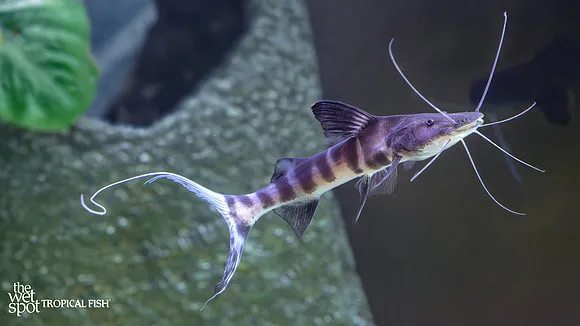 23.6 in (60 cm)396 gal (1,500 L)73–82°F (23–28°C)
Zebra shovelnose catfish
Brachyplatystoma juruense
23.6 in (60 cm) · 396 gal (1,500 L)
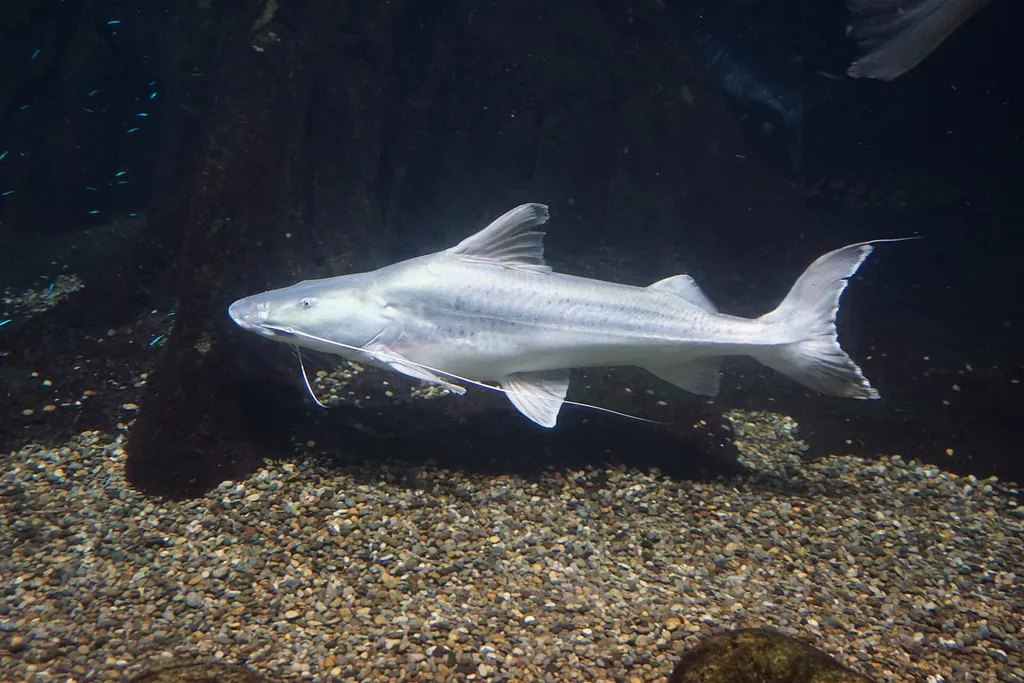 118.1 in (300 cm)2,642 gal (10,000 L)72–82°F (22–28°C)
Piraiba
Brachyplatystoma filamentosum
118.1 in (300 cm) · 2,642 gal (10,000 L)
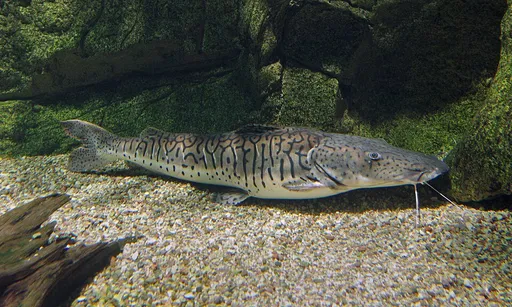 35.4 in (90 cm)300 gal (1,135 L)75–82°F (24–28°C)
Tiger shovelnose catfish
Pseudoplatystoma fasciatum
35.4 in (90 cm) · 300 gal (1,135 L)
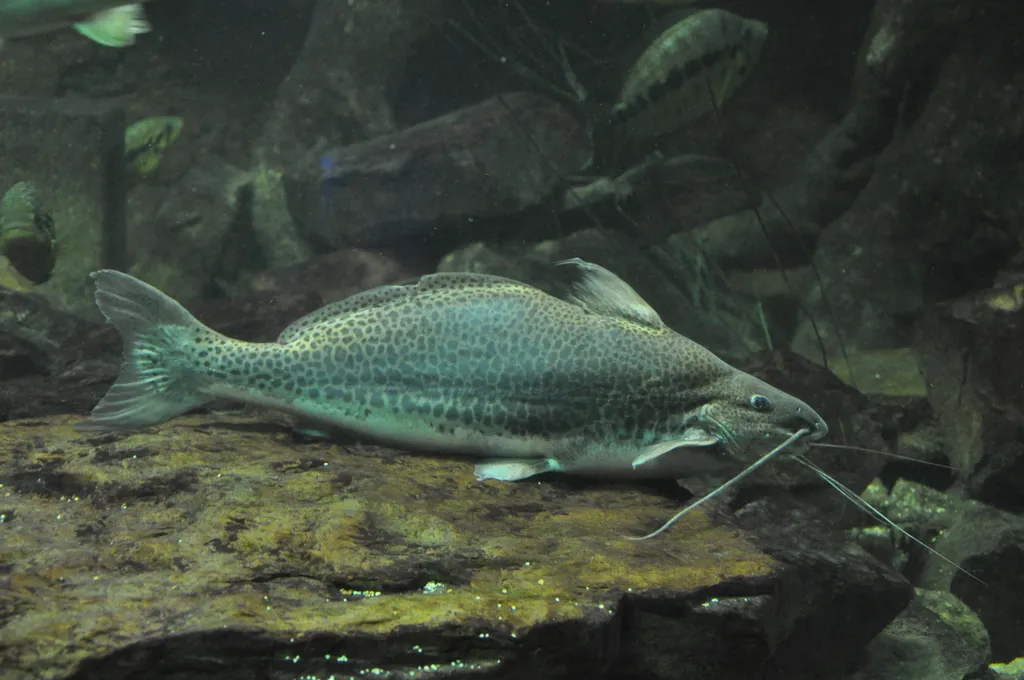 15.7 in (40 cm)120 gal (455 L)75–84°F (24–29°C)
Vulture catfish
Calophysus macropterus
15.7 in (40 cm) · 120 gal (455 L)
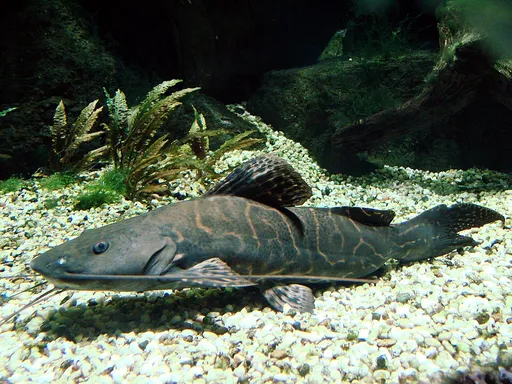 23.6 in (60 cm)185 gal (700 L)72–79°F (22–26°C)
Reticulated catfish
Perrunichthys perruno
23.6 in (60 cm) · 185 gal (700 L)
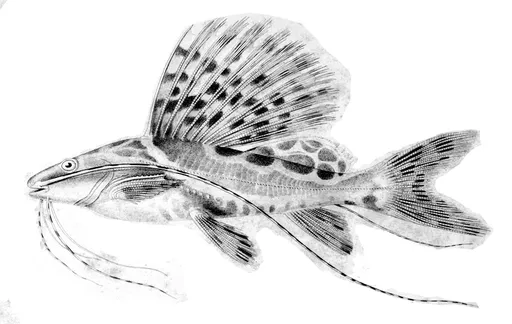 23.6 in (60 cm)396 gal (1,500 L)72–79°F (22–26°C)
Sailfin pim
Leiarius pictus
23.6 in (60 cm) · 396 gal (1,500 L)