Fighting gaucho
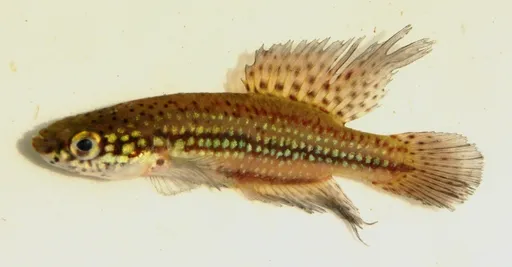
Cynopoecilus melanotaenia
Also known as Fighting gaucho killifish, Melanotaenia killi
FreshwaterFish
Care at a glance
- Temperature
- 64–75°F
- 18–24°C
- pH
- 6.0–7.0
- Adult size
- 1.8 in
- 4.5 cm
- Minimum tank
- 5 gal
- 20 L
- Temperament
- Mostly peaceful
- Social behavior
- Social
- Tankmates
- With caution
- Swim level
- Bottom
- Difficulty
- Medium
- Breeding
- Medium
- Rarity
- Rare
- Family
- Rivulidae
- Origin
- Native to shallow seasonal swamps and grassy pools of the coastal lowlands of Rio Grande do Sul in southern Brazil and neighbouring northeastern Uruguay.
Overview
Because it is small and fairly gentle, a pair or trio is comfortable in a planted 20 litre species tank at 18 to 24 C and pH 6.0 to 7.0. Keep it cool and shaded, and do not mix it with boisterous fish. Feed small live and frozen foods such as daphnia, micro worm, baby brine shrimp, and finely chopped bloodworm. Spawn over peat and store the eggs damp for a couple of months.
In the wild
This tiny annual lives in temporary marshes and grassy pools that dry out each year in a subtropical climate. Males are slender with a dark side stripe and red and blue markings in the fins, and stay under 5 cm. A small, densely planted tank of about 20 litres with dim light and a soft bottom suits a pair or trio.
Good to know
Cynopoecilus melanotaenia is unusual among killifish for using internal fertilisation, a trait it shares only with its close relative Campellolebias. It is an annual species whose eggs survive the dry season buried in the substrate. It is the type species of its genus and part of a complex of very similar southern Brazilian killifish.
Did you know
Unlike almost all other killifish, which fertilise eggs in the water, the male fertilises the female internally before she lays.
Common questions
What size tank does a Fighting gaucho need?
A Fighting gaucho needs at least 5 gal (20 L). It spends most of its time in the bottom.
What temperature and pH does a Fighting gaucho need?
A Fighting gaucho is comfortable at 64–75°F (18–24°C) with a pH of 6.0–7.0.
How big does a Fighting gaucho get?
An adult Fighting gaucho reaches about 1.8 in (4.5 cm).
Related species
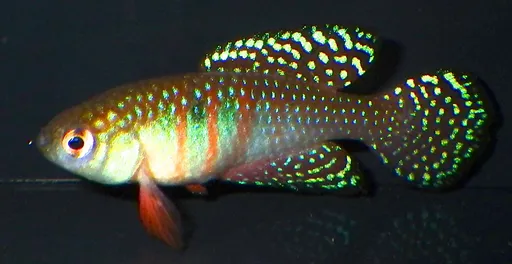 2 in (5 cm)10 gal (38 L)72–79°F (22–26°C)
Magnificent killifish
Hypsolebias magnificus
2 in (5 cm) · 10 gal (38 L)
- 3.1 in (8 cm)14 gal (54 L)68–77°F (20–25°C)
Rio pearlfish
Nematolebias whitei
3.1 in (8 cm) · 14 gal (54 L)
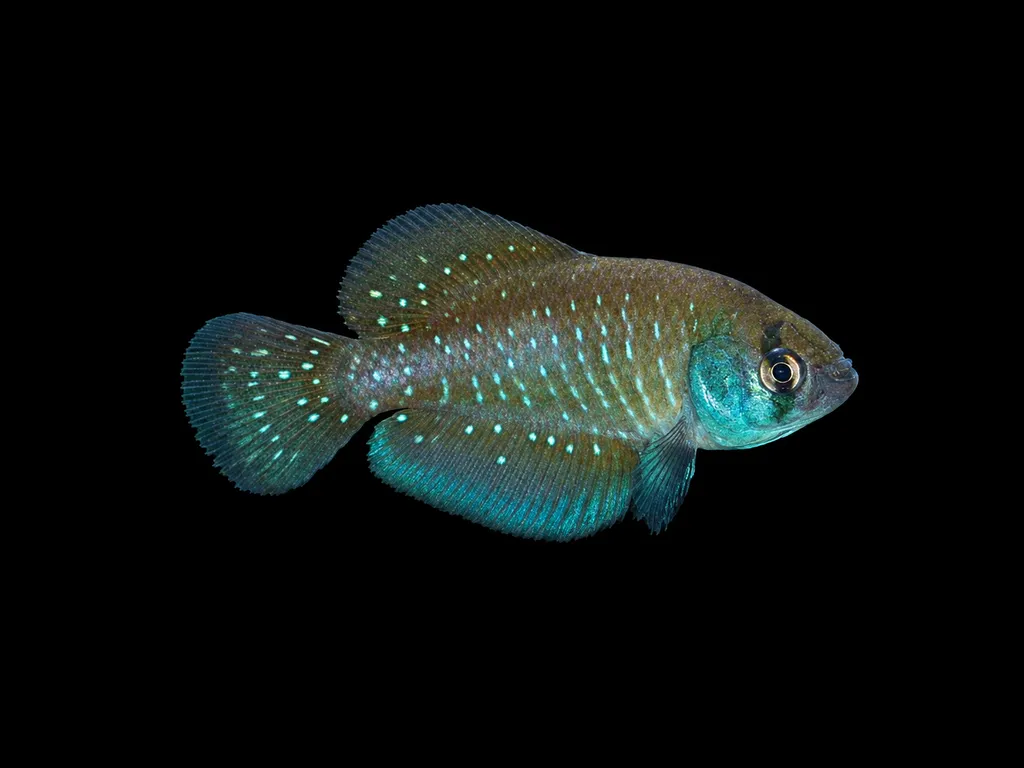 2.8 in (7 cm)14 gal (54 L)61–75°F (16–24°C)
Argentine pearlfish
Austrolebias bellottii
2.8 in (7 cm) · 14 gal (54 L)
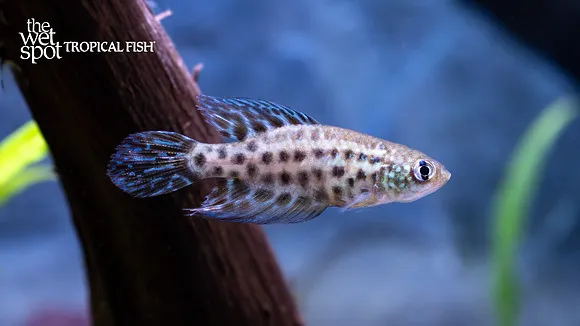 2.4 in (6 cm)11 gal (40 L)68–77°F (20–25°C)
Constanciae killifish
Simpsonichthys constanciae
2.4 in (6 cm) · 11 gal (40 L)
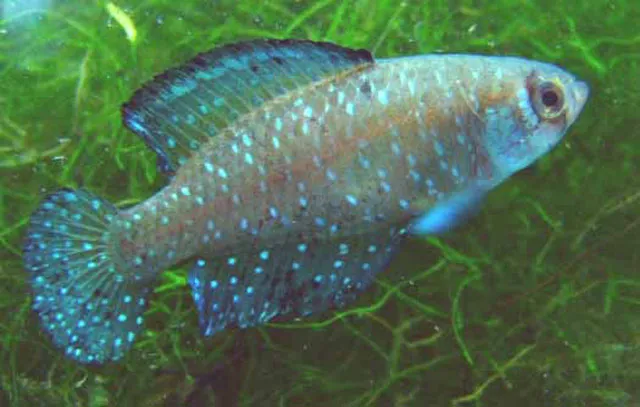 2.8 in (7 cm)18 gal (70 L)64–75°F (18–24°C)
Argentine pearl killifish
Austrolebias nigripinnis
2.8 in (7 cm) · 18 gal (70 L)
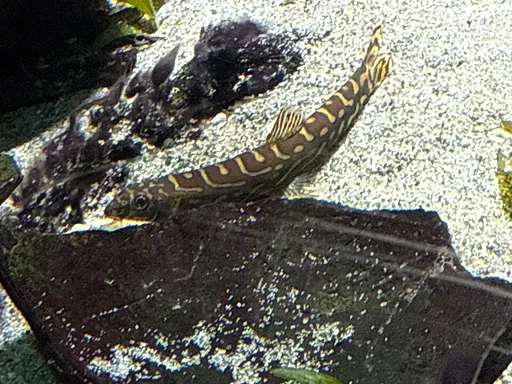 2.4 in (6 cm)24 gal (90 L)68–79°F (20–26°C)
Zodiac loach
Mesonoemacheilus triangularis
2.4 in (6 cm) · 24 gal (90 L)