Magnificent killifish
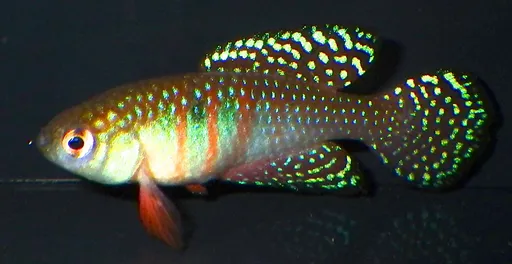
Hypsolebias magnificus
Also known as Magnificent pearlfish, Simpsonichthys magnificus, Magnificus killi
FreshwaterFish
Care at a glance
- Temperature
- 72–79°F
- 22–26°C
- pH
- 5.5–7.0
- Adult size
- 2 in
- 5 cm
- Minimum tank
- 10 gal
- 38 L
- Temperament
- Mostly peaceful
- Social behavior
- Social
- Tankmates
- With caution
- Swim level
- Bottom
- Difficulty
- Medium
- Breeding
- Medium
- Rarity
- Rare
- Family
- Rivulidae
- Origin
- Native to seasonal pools in the middle Sao Francisco River basin of eastern Brazil.
Overview
Keep one male with three or four females in a planted 38 litre species tank at 22 to 26 C and soft, acidic water of pH 5.5 to 7.0 with low carbonate hardness. It is peaceful enough to hold as a small group but is best kept on its own. Feed live and frozen brine shrimp, daphnia, and bloodworm. Spawn over a peat tray and store the collected eggs damp for several months.
In the wild
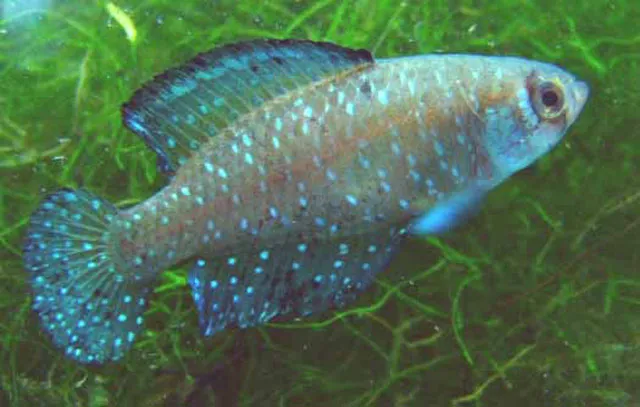
It lives in temporary rain pools in a dry region of inland eastern Brazil that vanish for months at a time. Males are patterned in gold, blue, and red with dark cross bars and speckled fins, while females are plain. A dim, soft-bottomed species tank of around 38 litres with gentle filtration and a tight lid works well.
Good to know
Hypsolebias magnificus is an annual killifish whose eggs pass the five to six month dry season in diapause before hatching with the rains. It was previously placed in the genus Simpsonichthys. In the wild it faces habitat loss, which makes captive-bred lines important.
Did you know
Fry grow so fast that they can reach breeding age in about three weeks, racing to reproduce before the next dry season.
Common questions
What size tank does a Magnificent killifish need?
A Magnificent killifish needs at least 10 gal (38 L). It spends most of its time in the bottom.
What temperature and pH does a Magnificent killifish need?
A Magnificent killifish is comfortable at 72–79°F (22–26°C) with a pH of 5.5–7.0.
How big does a Magnificent killifish get?
An adult Magnificent killifish reaches about 2 in (5 cm).
Related species
 1.8 in (4.5 cm)5 gal (20 L)64–75°F (18–24°C)
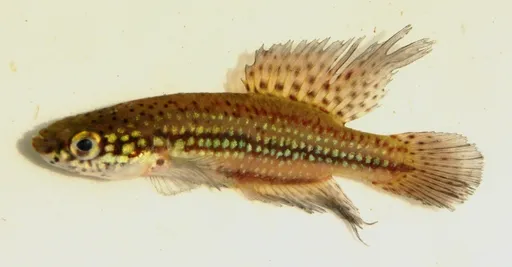
Fighting gaucho
Cynopoecilus melanotaenia
1.8 in (4.5 cm) · 5 gal (20 L)
- 3.1 in (8 cm)14 gal (54 L)68–77°F (20–25°C)
Rio pearlfish
Nematolebias whitei
3.1 in (8 cm) · 14 gal (54 L)
 2.8 in (7 cm)14 gal (54 L)61–75°F (16–24°C)
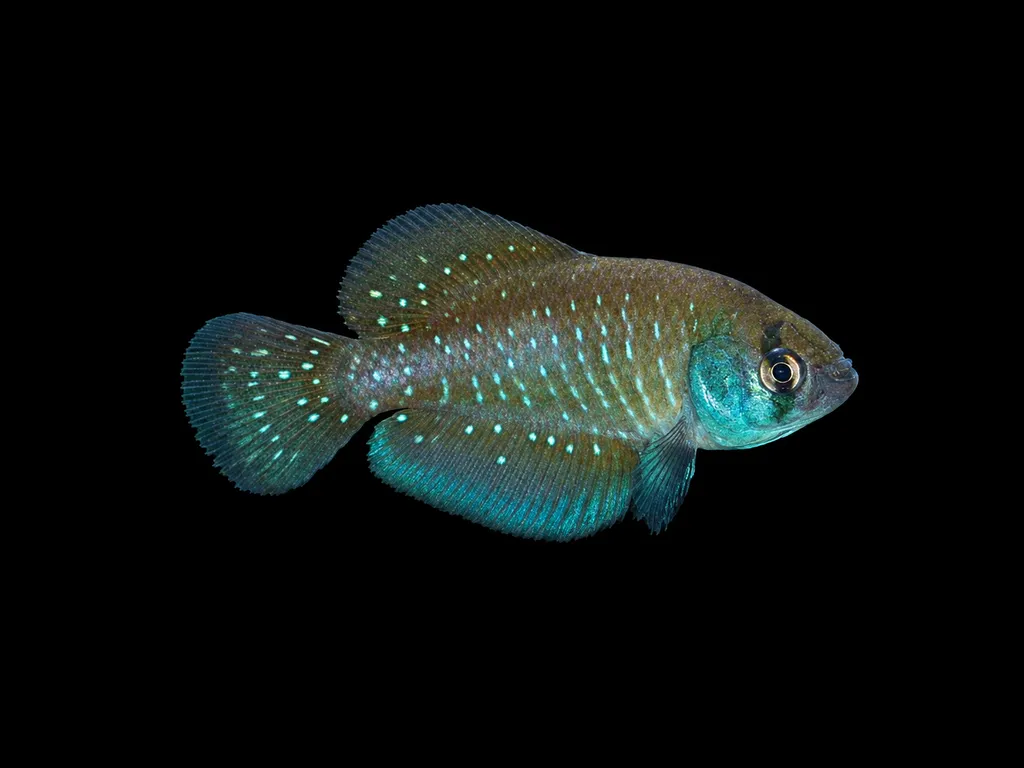
Argentine pearlfish
Austrolebias bellottii
2.8 in (7 cm) · 14 gal (54 L)
 2.4 in (6 cm)11 gal (40 L)68–77°F (20–25°C)
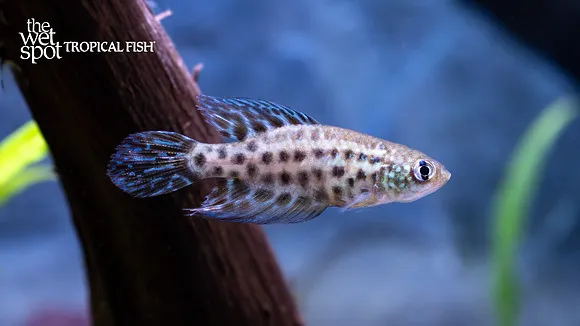
Constanciae killifish
Simpsonichthys constanciae
2.4 in (6 cm) · 11 gal (40 L)
 2.8 in (7 cm)18 gal (70 L)64–75°F (18–24°C)
Argentine pearl killifish
Austrolebias nigripinnis
2.8 in (7 cm) · 18 gal (70 L)
 2.4 in (6 cm)24 gal (90 L)68–79°F (20–26°C)
Zodiac loach
Mesonoemacheilus triangularis
2.4 in (6 cm) · 24 gal (90 L)