Argentine pearl killifish
Austrolebias nigripinnis
FreshwaterFish
Care at a glance
- Temperature
- 64–75°F
- 18–24°C
- pH
- 6.5–7.5
- Adult size
- 2.8 in
- 7 cm
- Minimum tank
- 18 gal
- 70 L
- Temperament
- Peaceful
- Social behavior
- Social
- Tankmates
- With caution
- Swim level
- Middle
- Difficulty
- Medium
- Breeding
- Hard
- Rarity
- Rare
- Family
- Rivulidae
- Origin
- Argentina, Uruguay
Overview
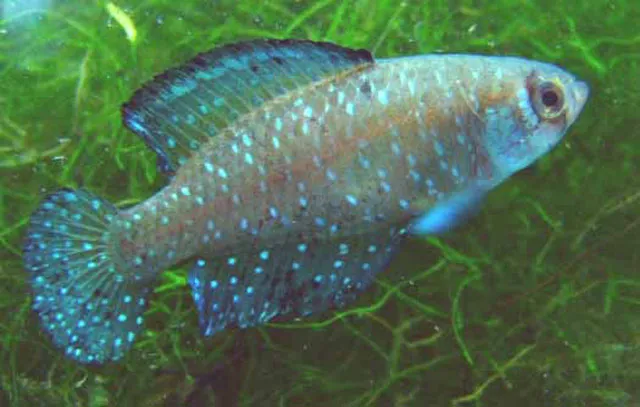
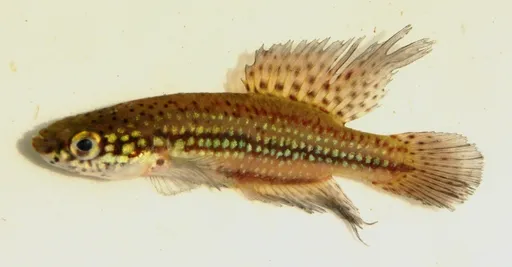
This annual killifish is best kept as a single male with two or three females in a quiet, soft-water tank with plenty of planting and cover. Males court constantly and can wear down a lone female, so extra females spread the attention. It is a keen predator that wants live and frozen foods like bloodworms, blackworms, daphnia and brine shrimp, and usually ignores flake. It lives in the middle and lower water and does best kept cool, ideally in the lower part of its range. A tank of 70 liters or larger is enough for a trio, with a soft substrate for spawning.
In the wild
The Argentine pearl killifish lives in temporary pools and flooded grassland across the lowlands of Argentina and Uruguay. These pools fill with the seasonal rains, warm and cool through the year, and then dry out completely, so the adults live fast and die within a single season. Recreate a soft, slightly acidic pool with tannin-stained water, gentle filtration and a deep layer of peat or fine substrate for spawning. It is a subtropical fish that prefers cool water around 18 to 24 C, well below the tropical killifish.
Good to know
Austrolebias nigripinnis is a South American annual killifish in the family Rivulidae, reaching about 6 to 7 cm, with dark, pearl-spangled males. As an annual species it survives the dry season only as eggs, which the adults bury in the soft bottom before the pool disappears. The eggs pass through resting phases called diapause and hatch when they are wetted again. Breeding is demanding because it means managing the substrate, drying the eggs for the right period and then triggering a clean hatch.
Did you know
Argentine pearl killifish complete their whole lives in seasonal pools that vanish each dry season. The parents die when the water goes, but their eggs rest in the dried mud through diapause and hatch when the rains return.
Common questions
What size tank does an Argentine pearl killifish need?
An Argentine pearl killifish needs at least 18 gal (70 L). It spends most of its time in the middle.
What temperature and pH does an Argentine pearl killifish need?
An Argentine pearl killifish is comfortable at 64–75°F (18–24°C) with a pH of 6.5–7.5.
How big does an Argentine pearl killifish get?
An adult Argentine pearl killifish reaches about 2.8 in (7 cm).
Related species
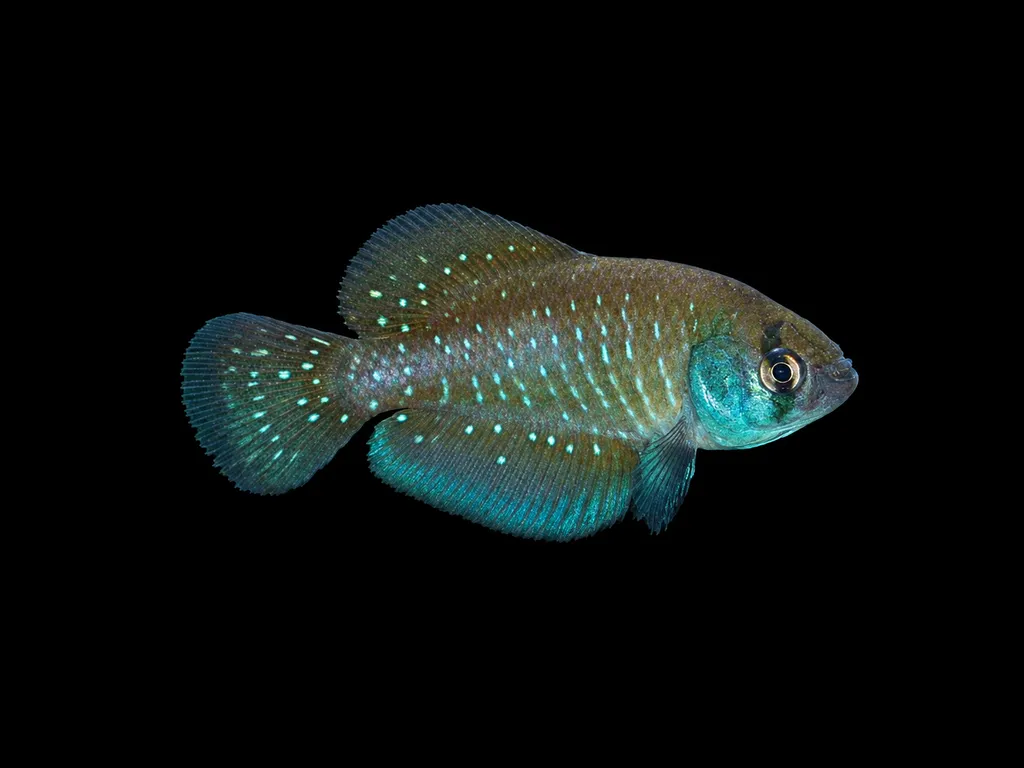 2.8 in (7 cm)14 gal (54 L)61–75°F (16–24°C)
Argentine pearlfish
Austrolebias bellottii
2.8 in (7 cm) · 14 gal (54 L)
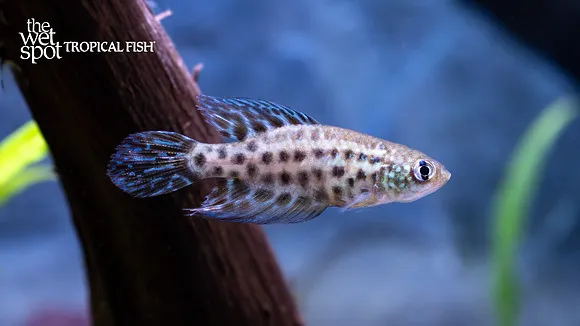 2.4 in (6 cm)11 gal (40 L)68–77°F (20–25°C)
Constanciae killifish
Simpsonichthys constanciae
2.4 in (6 cm) · 11 gal (40 L)
- 3.1 in (8 cm)14 gal (54 L)68–77°F (20–25°C)
Rio pearlfish
Nematolebias whitei
3.1 in (8 cm) · 14 gal (54 L)
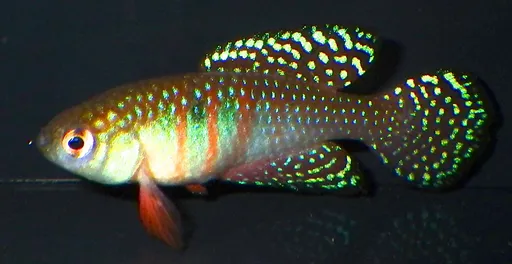 2 in (5 cm)10 gal (38 L)72–79°F (22–26°C)
Magnificent killifish
Hypsolebias magnificus
2 in (5 cm) · 10 gal (38 L)
 1.8 in (4.5 cm)5 gal (20 L)64–75°F (18–24°C)
Fighting gaucho
Cynopoecilus melanotaenia
1.8 in (4.5 cm) · 5 gal (20 L)
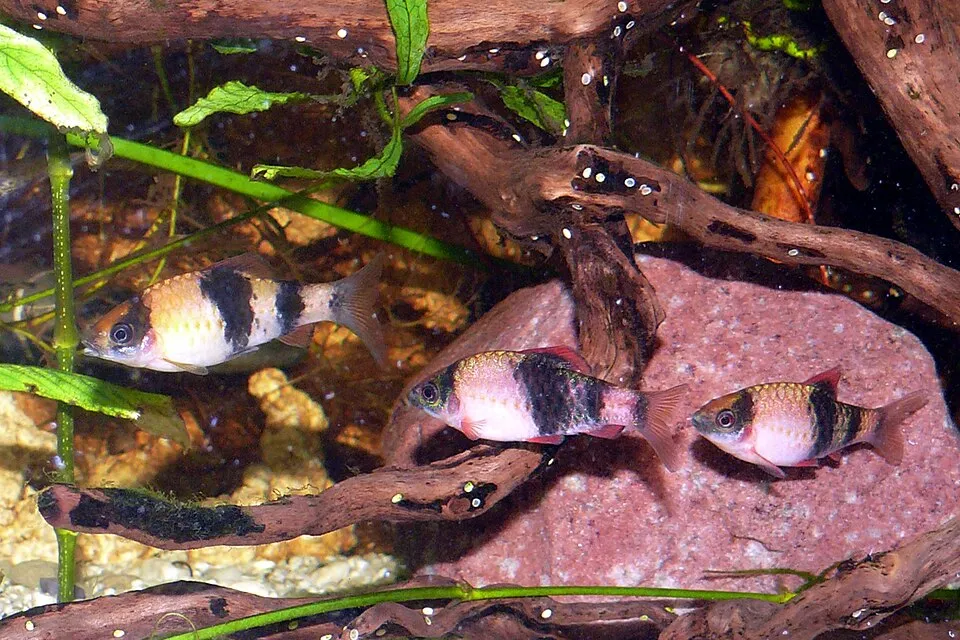 2.8 in (7 cm)40 gal (150 L)72–79°F (22–26°C)
Melon barb
Haludaria fasciata
2.8 in (7 cm) · 40 gal (150 L)