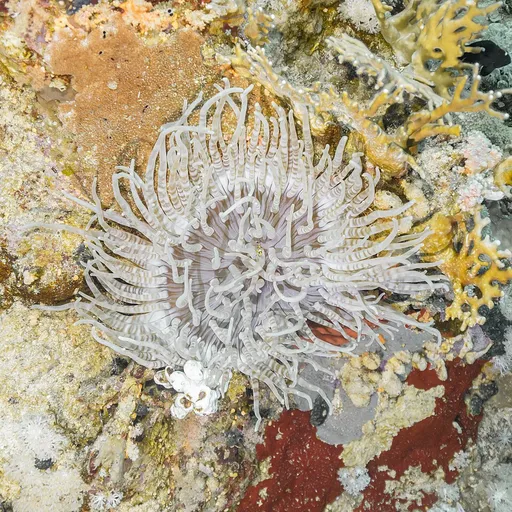
Sebae anemone
Heteractis crispa
Also known as Leathery Sea Anemone, Purple Base Anemone
SaltwaterAnemone
Care at a glance
- Temperature
- 75–81°F
- 24–27°C
- pH
- 8.1–8.4
- Adult size
- 15.7 in
- 40 cm
- Minimum tank
- 40 gal
- 150 L
- Temperament
- Peaceful
- Social behavior
- Solitary
- Swim level
- Bottom
- Difficulty
- Difficult
- Breeding
- No record
- Rarity
- Common
- Reef safe
- Reef safe with caution
- Family
- Stichodactylidae
- Origin
- Indo-Pacific reefs (East Africa and the Red Sea to Polynesia)
Overview
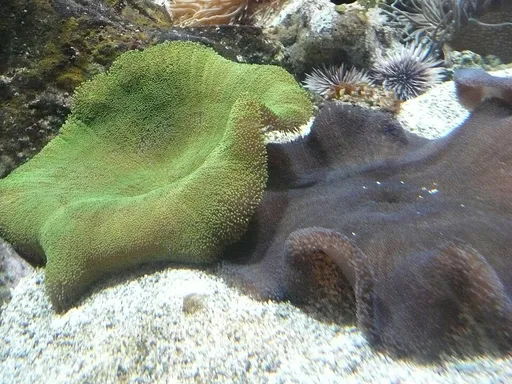
Needs strong, stable lighting and moderate flow, plus target feedings of chopped fish or shrimp every week or two once it is settled. It moves on its pedal disc like any true anemone, so keep it clear of powerheads and give corals room in case it relocates and stings something on the way. Clark's clownfish, pink skunk clownfish, and several other Amphiprion species will host in it readily. The real catch with this species is the import pipeline: sebae anemones ship and hold up poorly, and a large share arrive already bleached white from the stress. A bleached specimen can sometimes recover its brown or tan color under good light and steady feeding, but plenty do not, so buying a local, already colored-up specimen rather than gambling on a stressed import is worth the extra cost, and acclimation into a fully mature tank should be slow.
In the wild
Ranges across the Indo-Pacific from East Africa and the Red Sea to Polynesia and south to Australia, usually anchored in a crevice on hard substrate with a light dusting of sand, from the shallows to about 40 m. It wants strong reef lighting and a spot on the lower rockwork where it can wedge its foot into a hole; it will also climb onto the base of a branching coral if given the chance, so plan its placement with that in mind. It is one of the most generalist clownfish hosts in the trade.
Good to know
Currently accepted by the World Register of Marine Species as Radianthus crispa, though Heteractis crispa is still the name most hobbyists and retailers use. The oral disc can flare to 20–50 cm across, with tentacles that have a rounded end often tipped in purple or blue. It is one of the most generalist host anemones, recorded hosting around 15 anemonefish species, and the wide band anemonefish (Amphiprion latezonatus) uses this species almost exclusively.
Did you know
Sebae anemones ship so poorly that hobbyists half joke you should expect to buy one bleached white; a specimen that browns or greens back up and opens normally within a few weeks of steady feeding and good light is considered a genuine success story.
Symbiotic relationships
Clownfish and their host anemones
A clownfish lives inside an anemone that stings and eats other fish its size. Its mucus coat keeps the anemone's stinging cells from firing, and a new fish builds that protection up over hours of brief touches. The fish gets a refuge no predator will follow it into and a nest site at the anemone's base. The anemone gets a guard that drives off the butterflyfish that would graze its tentacles, a steady supply of nitrogen from the fish's waste, and water movement at night, when the fish fans its fins among the tentacles and the anemone takes up more oxygen. Only ten anemone species host clownfish in the wild, and each clownfish species uses its own short list of them.
Captive-bred clownfish have never seen an anemone and do not need one; they settle for a coral, a powerhead or a corner of the tank. If you want the pairing, the anemone is the harder animal by far and goes in first, into a mature tank with strong light and stable water, at the tank size its own profile lists. The bubble tip anemone is the hardy host, and the one most clownfish accept in captivity even when it is not a natural host, so a clownfish profile lists it as the usual tank host where that is the case. The sebae, magnificent and carpet anemones are marked difficult, and the carpets eat fish. Expect a paired clownfish to defend its anemone against everything else in the tank.
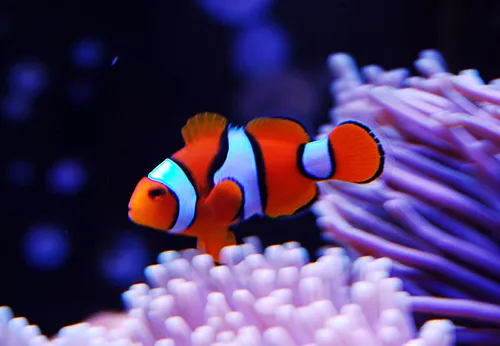
Percula clownfish
Amphiprion percula
Saltwater3.1 in (8 cm) · 20 gal (75 L)75–82°F (24–28°C)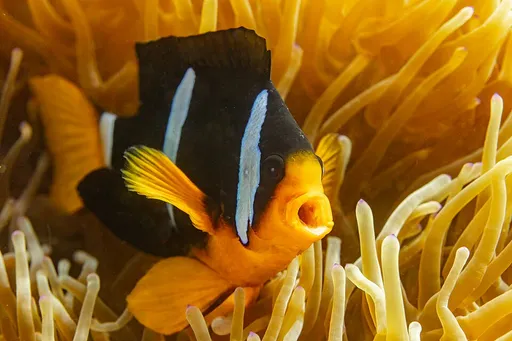
Clark's clownfish
Amphiprion clarkii
Saltwater5.5 in (14 cm) · 30 gal (115 L)75–82°F (24–28°C)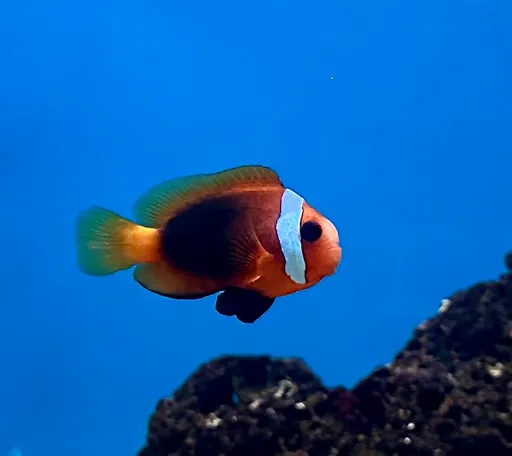
Cinnamon clownfish
Amphiprion melanopus
Saltwater4.7 in (12 cm) · 30 gal (115 L)75–82°F (24–28°C)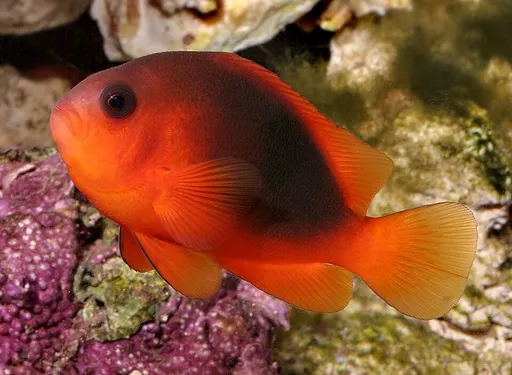
Red saddleback anemonefish
Amphiprion ephippium
Saltwater5.5 in (14 cm) · 30 gal (115 L)75–81°F (24–27°C)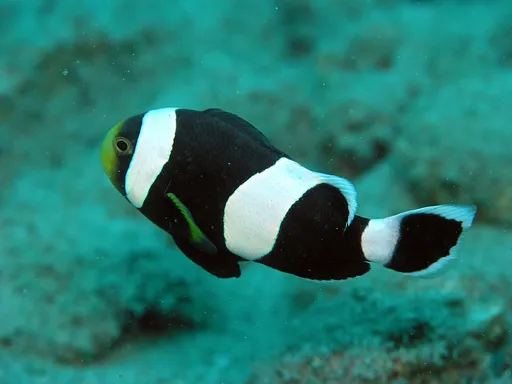
Saddleback clownfish
Amphiprion polymnus
Saltwater5.1 in (13 cm) · 40 gal (150 L)75–82°F (24–28°C)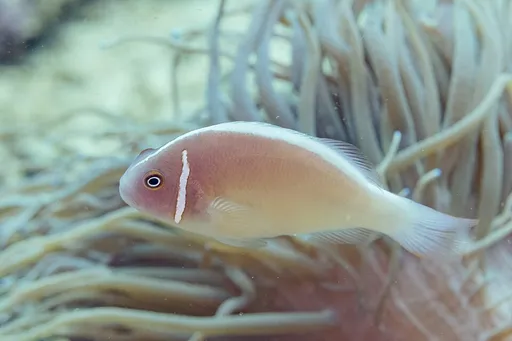
Pink skunk clownfish
Amphiprion perideraion
Saltwater3.9 in (10 cm) · 30 gal (115 L)75–82°F (24–28°C)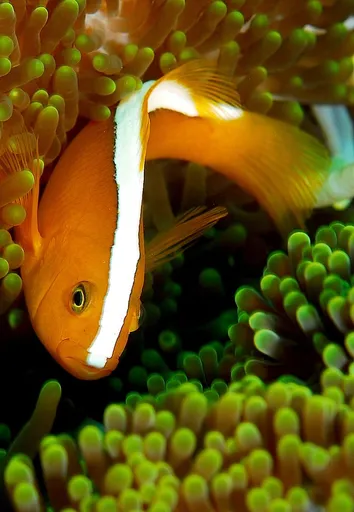
Orange skunk clownfish
Amphiprion sandaracinos
Saltwater5.5 in (14 cm) · 30 gal (115 L)75–82°F (24–28°C)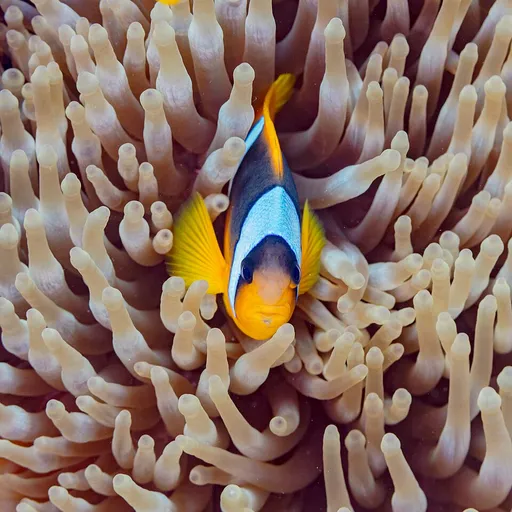
Red Sea clownfish
Amphiprion bicinctus
Saltwater5.5 in (14 cm) · 30 gal (115 L)75–82°F (24–28°C)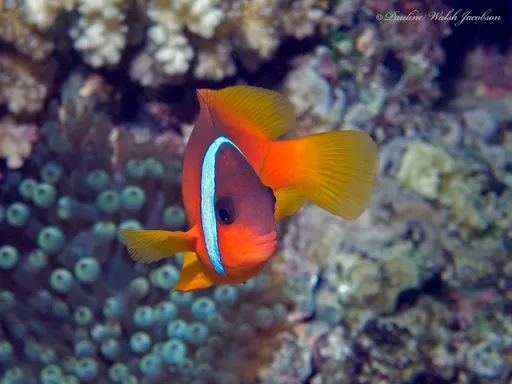
Barberi clownfish
Amphiprion barberi
Saltwater3.5 in (9 cm) · 30 gal (115 L)75–81°F (24–27°C)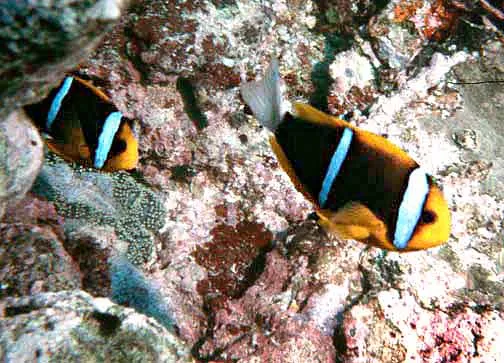
Bluestripe clownfish
Amphiprion chrysopterus
Saltwater6.7 in (17 cm) · 55 gal (210 L)75–82°F (24–28°C)
Common questions
What size tank does a Sebae anemone need?
A Sebae anemone needs at least 40 gal (150 L). It spends most of its time in the bottom.
What temperature and pH does a Sebae anemone need?
A Sebae anemone is comfortable at 75–81°F (24–27°C) with a pH of 8.1–8.4.
How big does a Sebae anemone get?
An adult Sebae anemone reaches about 15.7 in (40 cm).
Related species
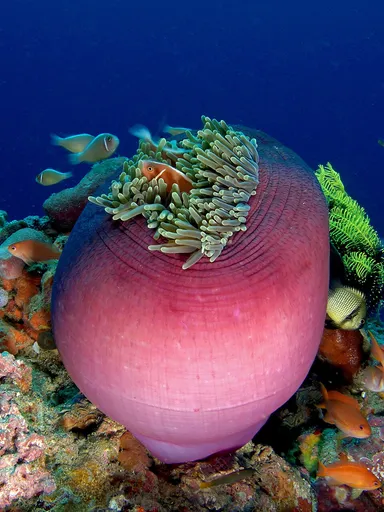 19.7 in (50 cm)53 gal (200 L)75–81°F (24–27°C)
Magnificent anemone
Heteractis magnifica
19.7 in (50 cm) · 53 gal (200 L)
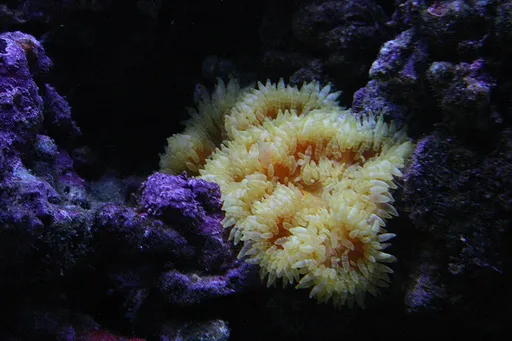 11.8 in (30 cm)50 gal (190 L)72–79°F (22–26°C)
Aurora anemone
Heteractis aurora
11.8 in (30 cm) · 50 gal (190 L)
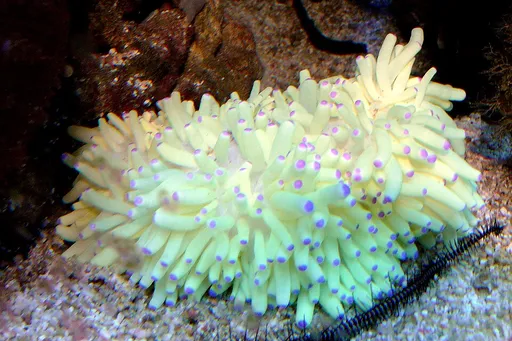 7.9 in (20 cm)40 gal (150 L)75–81°F (24–27°C)
Malu anemone
Heteractis malu
7.9 in (20 cm) · 40 gal (150 L)
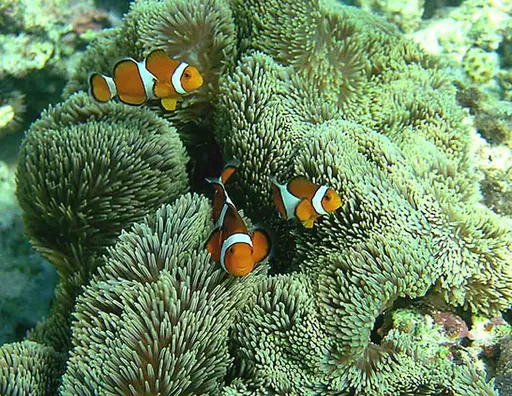 19.7 in (50 cm)53 gal (200 L)75–81°F (24–27°C)
Gigantea carpet anemone
Stichodactyla gigantea
19.7 in (50 cm) · 53 gal (200 L)
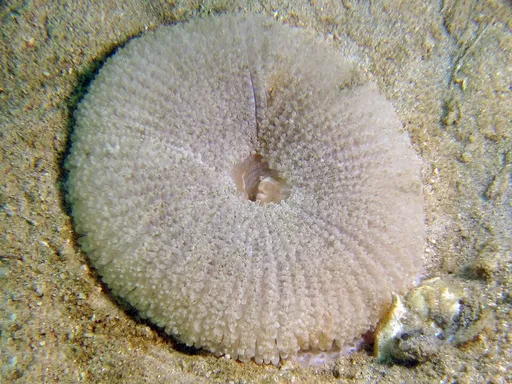 3.1 in (8 cm)20 gal (75 L)75–81°F (24–27°C)
Maxi-mini carpet anemone
Stichodactyla tapetum
3.1 in (8 cm) · 20 gal (75 L)
 33.5 in (85 cm)53 gal (200 L)75–81°F (24–27°C)
Haddon's carpet anemone
Stichodactyla haddoni
33.5 in (85 cm) · 53 gal (200 L)