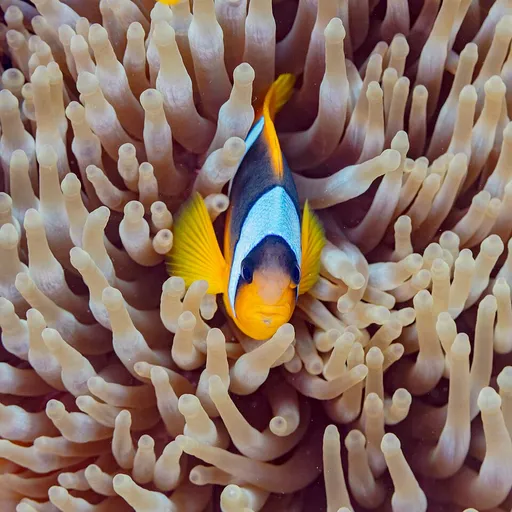
Red Sea clownfish
Amphiprion bicinctus
Also known as Two-Band Clownfish, Two-Banded Anemonefish
SaltwaterFish
Care at a glance
- Temperature
- 75–82°F
- 24–28°C
- pH
- 8.1–8.4
- Adult size
- 5.5 in
- 14 cm
- Minimum tank
- 30 gal
- 115 L
- Temperament
- Mostly peaceful
- Social behavior
- Social
- Swim level
- Middle
- Difficulty
- Easy
- Breeding
- Medium
- Rarity
- Common
- Reef safe
- Reef safe
- Family
- Pomacentridae
- Origin
- Red Sea and Gulf of Aden
Overview
The Red Sea clownfish is a sturdy, undemanding clownfish that suits a reef tank. It swims in the middle of the tank and is easy to keep.
Did you know
The Red Sea clownfish is the source of the spotted Spotcinctus strain in the trade, which arose from naturally odd-barred fish.
Caring for the Red Sea clownfish
Keep a Red Sea clownfish singly or as a bonded pair in at least 30 gal (115 L). It is reef safe and does not need an anemone. If none is present, it happily adopts a rock, a coral or a powerhead as home.
Hold the water at 75 to 82°F (24 to 28°C) with a pH of 8.1 to 8.4. It accepts flake, pellet and frozen foods without hesitation.
The Red Sea clownfish turns territorial around a claimed anemone or corner. It generally ignores unrelated tank mates that respect its patch.
Like all clownfish, it is a protandrous hermaphrodite, so the biggest fish in a group is the female. In a pair, the female is noticeably larger than the male. Several commercial hatcheries farm it, so captive-bred fish are widely available, and breeding takes some experience.
Good to know
The Red Sea clownfish, Amphiprion bicinctus, was described by Ruppell in 1830. It belongs to the family Pomacentridae.
In the wild
The Red Sea clownfish is native to the Red Sea and Gulf of Aden. It is the region's common anemonefish from shallow lagoons down the reef slopes, and the one most divers there actually meet. It partners with several host anemones, including bubble-tip and magnificent anemones, and is one of the least picky clownfish about hosts.
Symbiotic relationships
Clownfish and their host anemones
A clownfish lives inside an anemone that stings and eats other fish its size. Its mucus coat keeps the anemone's stinging cells from firing, and a new fish builds that protection up over hours of brief touches. The fish gets a refuge no predator will follow it into and a nest site at the anemone's base. The anemone gets a guard that drives off the butterflyfish that would graze its tentacles, a steady supply of nitrogen from the fish's waste, and water movement at night, when the fish fans its fins among the tentacles and the anemone takes up more oxygen. Only ten anemone species host clownfish in the wild, and each clownfish species uses its own short list of them.
Captive-bred clownfish have never seen an anemone and do not need one; they settle for a coral, a powerhead or a corner of the tank. If you want the pairing, the anemone is the harder animal by far and goes in first, into a mature tank with strong light and stable water, at the tank size its own profile lists. The bubble tip anemone is the hardy host, and the one most clownfish accept in captivity even when it is not a natural host, so a clownfish profile lists it as the usual tank host where that is the case. The sebae, magnificent and carpet anemones are marked difficult, and the carpets eat fish. Expect a paired clownfish to defend its anemone against everything else in the tank.
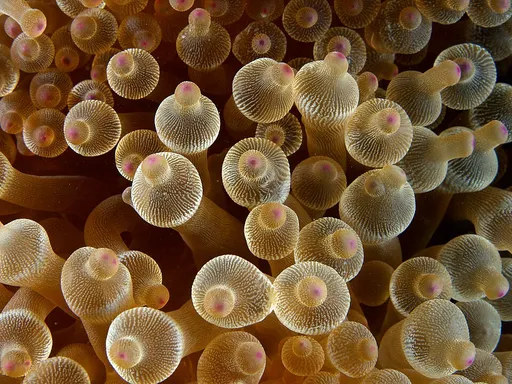
Bubble tip anemone
Entacmaea quadricolor
Saltwater11.8 in (30 cm) · 30 gal (115 L)75–81°F (24–27°C)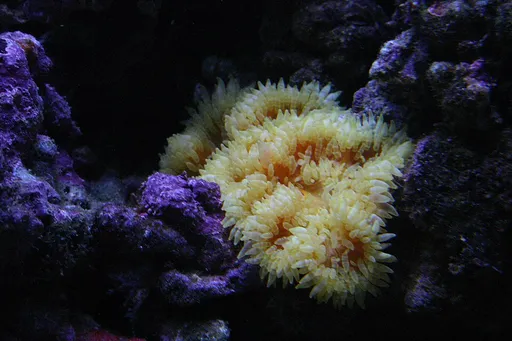
Aurora anemone
Heteractis aurora
Saltwater11.8 in (30 cm) · 50 gal (190 L)72–79°F (22–26°C)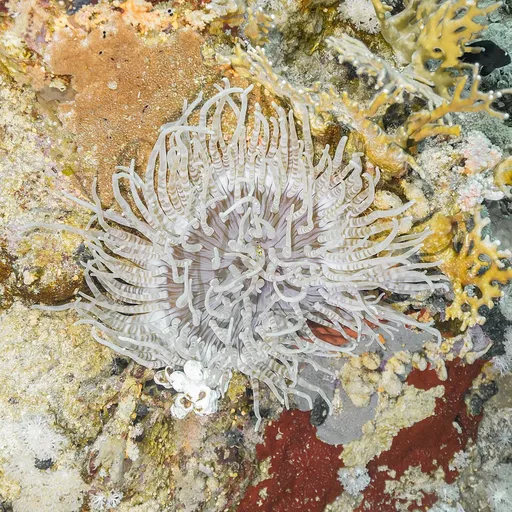
Sebae anemone
Heteractis crispa
Saltwater15.7 in (40 cm) · 40 gal (150 L)75–81°F (24–27°C)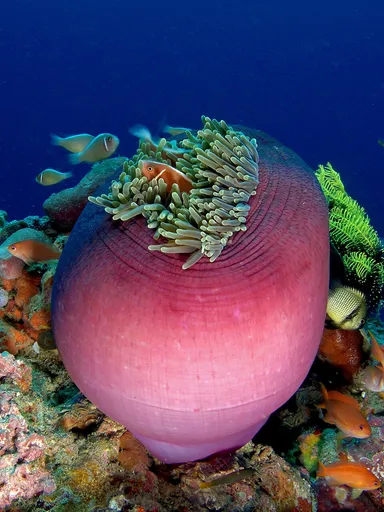
Magnificent anemone
Heteractis magnifica
Saltwater19.7 in (50 cm) · 53 gal (200 L)75–81°F (24–27°C)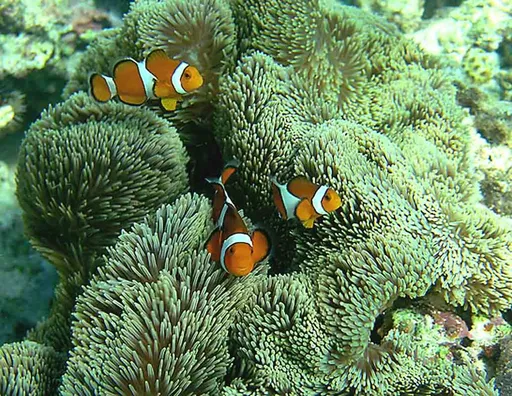
Gigantea carpet anemone
Stichodactyla gigantea
Saltwater19.7 in (50 cm) · 53 gal (200 L)75–81°F (24–27°C)
Weekly picks
Tank mates
The Red Sea clownfish is a mostly peaceful, social species that keeps to the middle. These picks share a community profile with it, are safe together in both directions, and overlap on water type, temperature and pH.
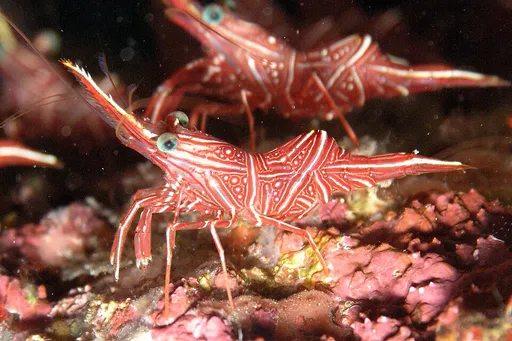
Camel / dancing shrimp
Rhynchocinetes durbanensis
Saltwater2 in (5 cm) · 16 gal (60 L)75–81°F (24–27°C)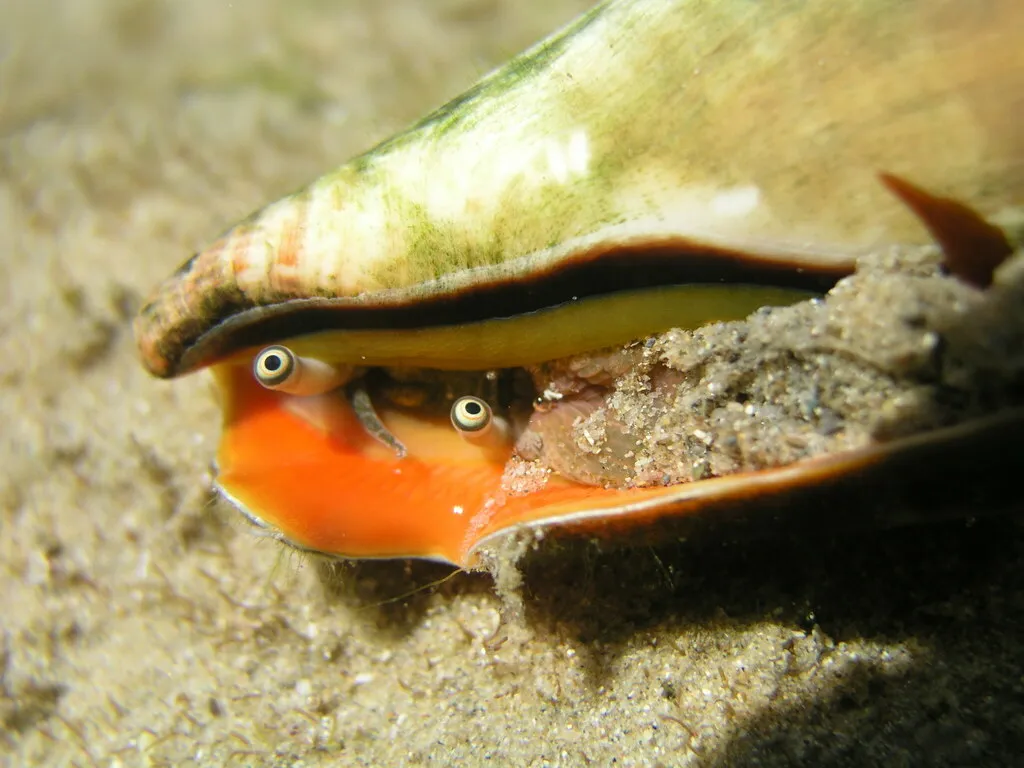
Tiger / strawberry conch
Conomurex luhuanus
Saltwater2.8 in (7 cm) · 20 gal (75 L)75–81°F (24–27°C)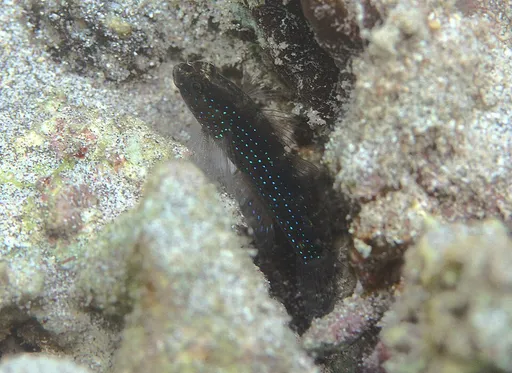
Starry goby
Asterropteryx semipunctata
Saltwater2.8 in (7 cm) · 13 gal (50 L)73–81°F (23–27°C)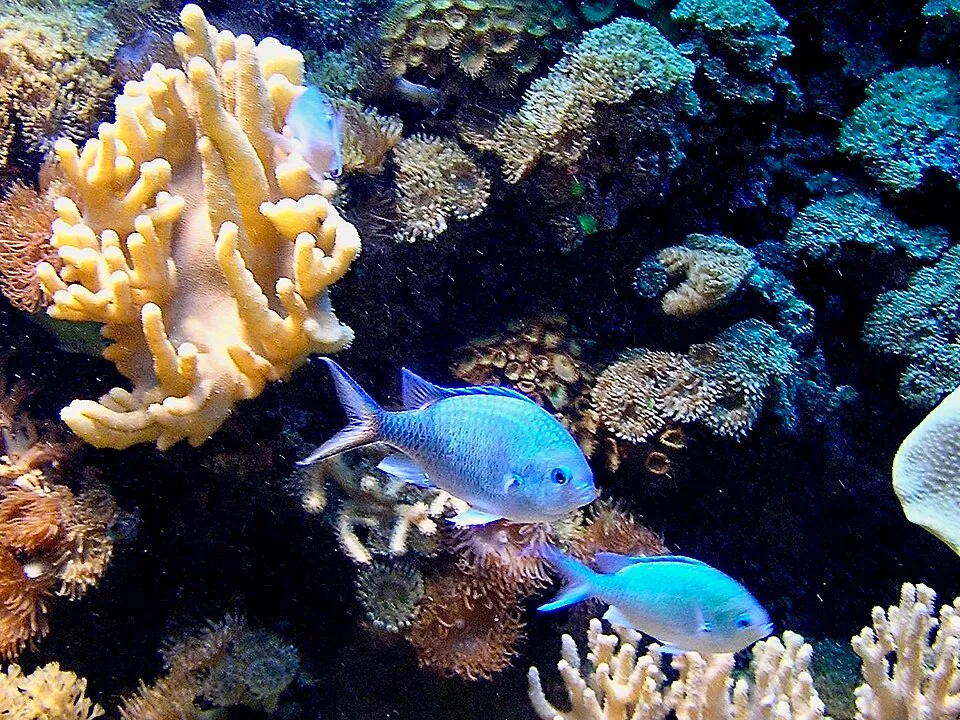
Black-axil chromis
Chromis atripectoralis
Saltwater4.7 in (12 cm) · 30 gal (115 L)75–82°F (24–28°C)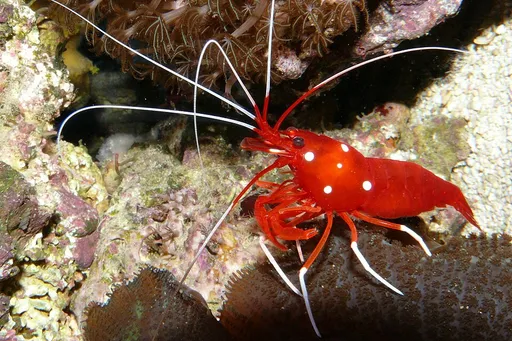
Fire shrimp
Lysmata debelius
Saltwater2.4 in (6 cm) · 20 gal (75 L)72–79°F (22–26°C)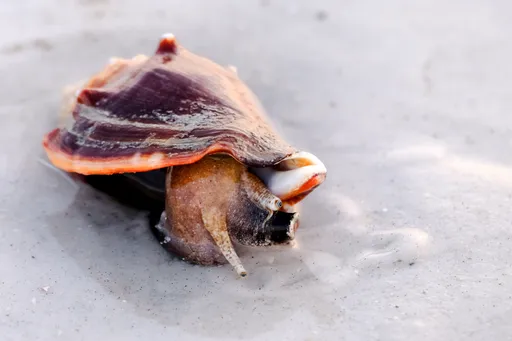
Fighting conch
Strombus alatus
Saltwater3.1 in (8 cm) · 20 gal (75 L)75–81°F (24–27°C)
Common questions
What size tank does a Red Sea clownfish need?
A Red Sea clownfish needs at least 30 gal (115 L). It spends most of its time in the middle.
What temperature and pH does a Red Sea clownfish need?
A Red Sea clownfish is comfortable at 75–82°F (24–28°C) with a pH of 8.1–8.4.
What does a Red Sea clownfish eat?
A Red Sea clownfish accepts flake, pellet and frozen foods without hesitation.
How big does a Red Sea clownfish get?
An adult Red Sea clownfish reaches about 5.5 in (14 cm).
How can you tell a male Red Sea clownfish from a female?
Males are the smaller fish. In a pair, the female Red Sea clownfish is noticeably larger than the male.
How does a Red Sea clownfish breed?
Red Sea clownfish are farmed by several commercial hatcheries, so captive-bred fish are widely available. Breeding them takes some experience.
Related species
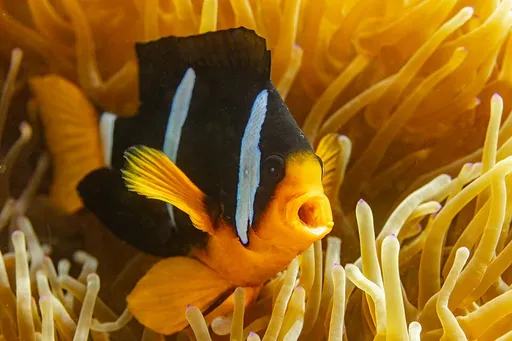 5.5 in (14 cm)30 gal (115 L)75–82°F (24–28°C)
Clark's clownfish
Amphiprion clarkii
5.5 in (14 cm) · 30 gal (115 L)
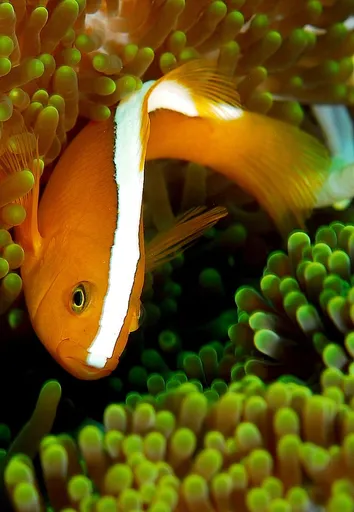 5.5 in (14 cm)30 gal (115 L)75–82°F (24–28°C)
Orange skunk clownfish
Amphiprion sandaracinos
5.5 in (14 cm) · 30 gal (115 L)
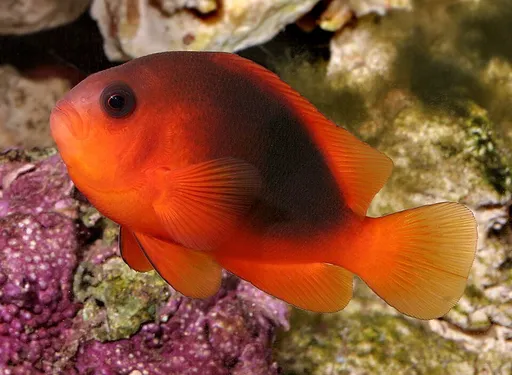 5.5 in (14 cm)30 gal (115 L)75–81°F (24–27°C)
Red saddleback anemonefish
Amphiprion ephippium
5.5 in (14 cm) · 30 gal (115 L)
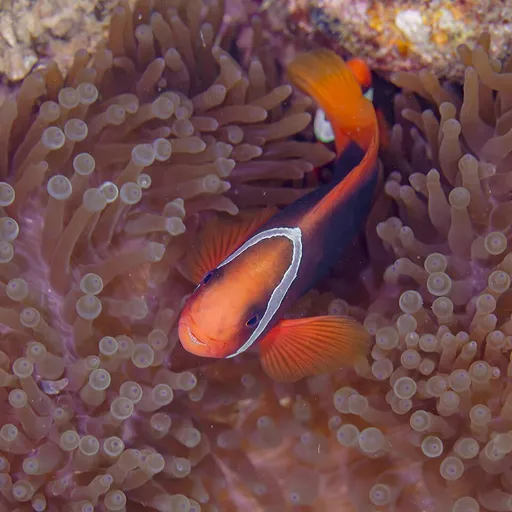 5.5 in (14 cm)30 gal (115 L)75–82°F (24–28°C)
Tomato clownfish
Amphiprion frenatus
5.5 in (14 cm) · 30 gal (115 L)
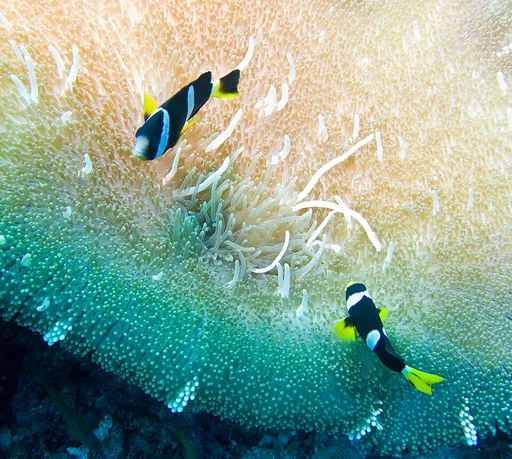 5.9 in (15 cm)30 gal (115 L)75–82°F (24–28°C)
Sebae clownfish
Amphiprion sebae
5.9 in (15 cm) · 30 gal (115 L)
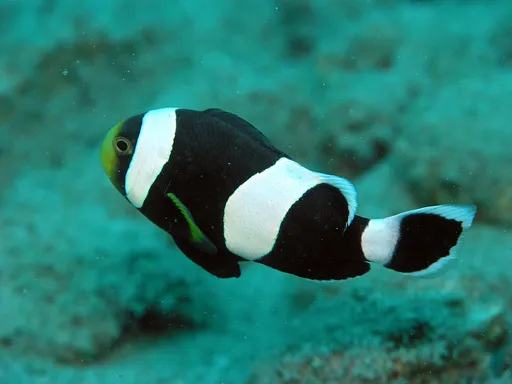 5.1 in (13 cm)40 gal (150 L)75–82°F (24–28°C)
Saddleback clownfish
Amphiprion polymnus
5.1 in (13 cm) · 40 gal (150 L)