Gigantea carpet anemone
Stichodactyla gigantea
Also known as Giant Carpet Anemone, Gigantea Anemone
SaltwaterAnemone
Care at a glance
- Temperature
- 75–81°F
- 24–27°C
- pH
- 8.1–8.4
- Adult size
- 19.7 in
- 50 cm
- Minimum tank
- 53 gal
- 200 L
- Temperament
- Aggressive
- Social behavior
- Solitary
- Tankmates
- With caution
- Swim level
- Bottom
- Difficulty
- Difficult
- Breeding
- No record
- Rarity
- Rare
- Reef safe
- Reef safe with caution
- Family
- Stichodactylidae
- Origin
- Indo-West Pacific reefs
Overview
Needs very intense reef lighting, strong flow, and rock stable water chemistry; it is widely regarded as needing the brightest light of any anemone commonly kept. Feed it chopped fish or shrimp with a target feeder once it is settled. It stings hard, can capture small fish or shrimp that get too close, and moves across the sand on its own schedule, so isolate it from corals and clams and keep pump intakes guarded. Beyond the classic percula and ocellaris pairing, clark's, pink skunk, and a few other regional Amphiprion species will also host in it. Survival rates outside a large, extremely well equipped and established reef tank are genuinely low, and even experienced keepers often lose specimens within a few years, so this is not a species to buy on impulse; acclimate it slowly and only into a tank that can already support demanding SPS corals.
In the wild
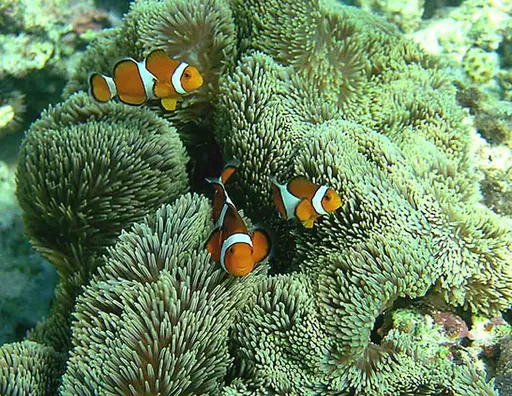
Found on shallow, current-swept sand and rubble flats across the Indo-West Pacific, where it anchors its foot in a hole and spreads a wide, sticky oral disc with long, pointed tentacles across the surface. Despite the giant in its name, it is actually one of the smaller carpet species by oral disc diameter next to Haddon's or Mertens', but it demands the most intense light of any of them, which is a big part of why it is considered an expert only anemone. In the wild it is a classic host for true percula and ocellaris clownfish.
Good to know
Stichodactyla gigantea gets much of its energy from symbiotic zooxanthellae but needs unusually high light intensity to keep them healthy, and it is notably slow to recover from shipping stress or a bacterial infection picked up in transit. It reproduces both sexually and asexually by fission, and, like its carpet relatives, carries a potent sting delivered through long, adhesive tentacles.
Did you know
Despite its name, the gigantea is smaller than several other carpet anemones in the hobby; the giant refers to its reputation rather than its size, since it is one of the hardest anemones to keep alive for more than a few years even with expert care.
Symbiotic relationships
Clownfish and their host anemones
A clownfish lives inside an anemone that stings and eats other fish its size. Its mucus coat keeps the anemone's stinging cells from firing, and a new fish builds that protection up over hours of brief touches. The fish gets a refuge no predator will follow it into and a nest site at the anemone's base. The anemone gets a guard that drives off the butterflyfish that would graze its tentacles, a steady supply of nitrogen from the fish's waste, and water movement at night, when the fish fans its fins among the tentacles and the anemone takes up more oxygen. Only ten anemone species host clownfish in the wild, and each clownfish species uses its own short list of them.
Captive-bred clownfish have never seen an anemone and do not need one; they settle for a coral, a powerhead or a corner of the tank. If you want the pairing, the anemone is the harder animal by far and goes in first, into a mature tank with strong light and stable water, at the tank size its own profile lists. The bubble tip anemone is the hardy host, and the one most clownfish accept in captivity even when it is not a natural host, so a clownfish profile lists it as the usual tank host where that is the case. The sebae, magnificent and carpet anemones are marked difficult, and the carpets eat fish. Expect a paired clownfish to defend its anemone against everything else in the tank.
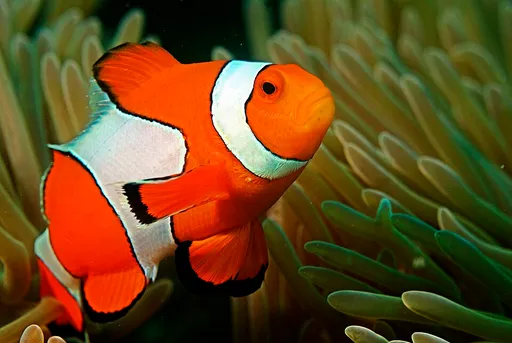
Ocellaris clownfish
Amphiprion ocellaris
Saltwater3.1 in (8 cm) · 20 gal (75 L)75–82°F (24–28°C)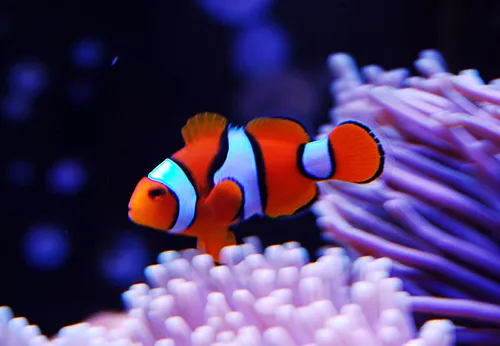
Percula clownfish
Amphiprion percula
Saltwater3.1 in (8 cm) · 20 gal (75 L)75–82°F (24–28°C)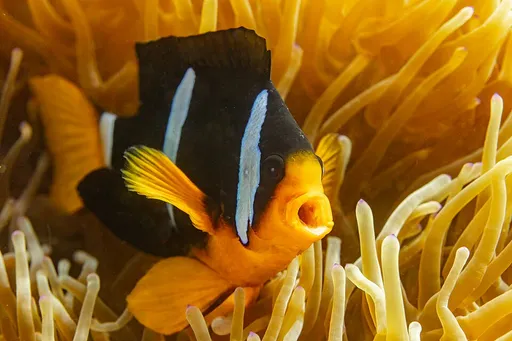
Clark's clownfish
Amphiprion clarkii
Saltwater5.5 in (14 cm) · 30 gal (115 L)75–82°F (24–28°C)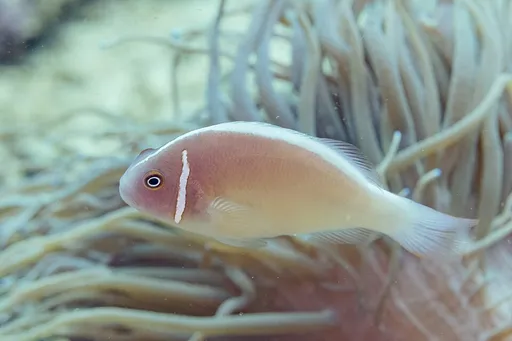
Pink skunk clownfish
Amphiprion perideraion
Saltwater3.9 in (10 cm) · 30 gal (115 L)75–82°F (24–28°C)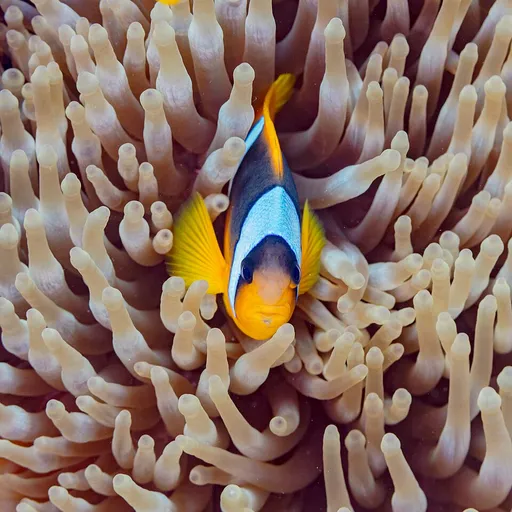
Red Sea clownfish
Amphiprion bicinctus
Saltwater5.5 in (14 cm) · 30 gal (115 L)75–82°F (24–28°C)
Shrimp and crabs that live in anemones
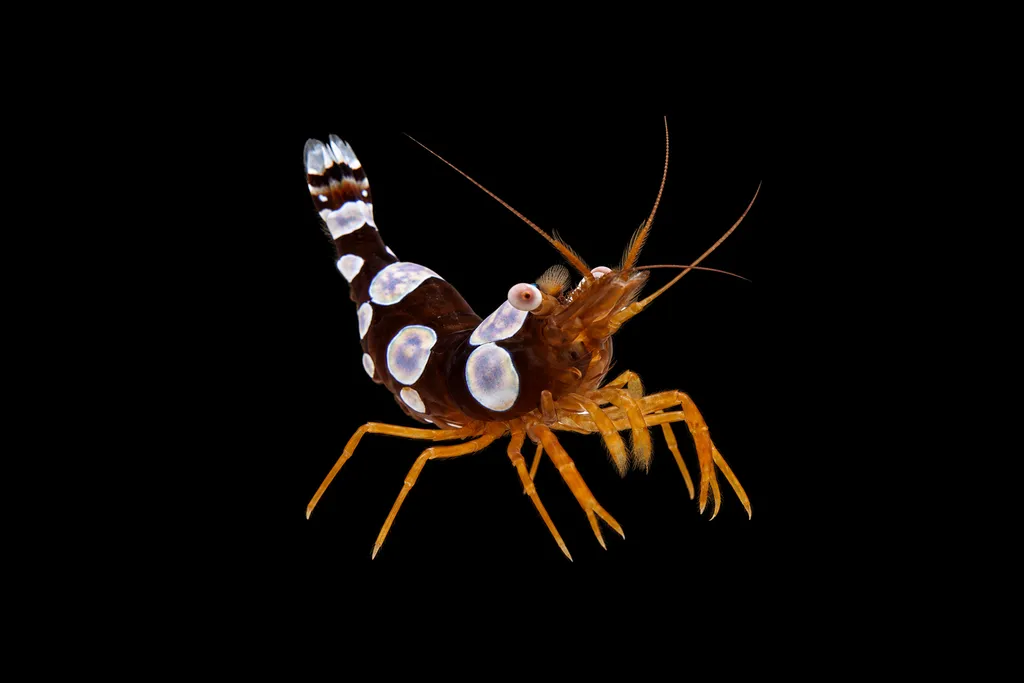
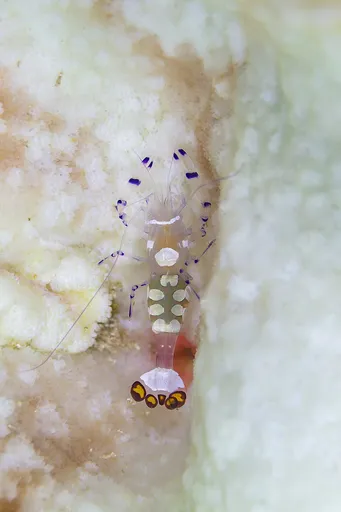
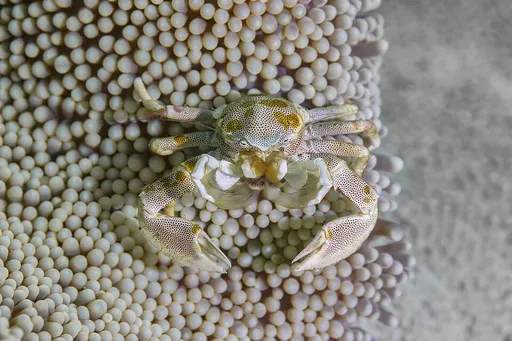
Several small crustaceans live where almost nothing else can: among the tentacles of an anemone. Sexy shrimp perch in the tentacles in a cluster, bobbing their tails in the display that named them. The white-spot anemone shrimp is near transparent apart from its spots and lives on carpet anemones. The porcelain anemone crab sits at the anemone's edge and filters plankton from the water with two fan-like arms. Pederson's cleaner shrimp lives in the Caribbean corkscrew anemone and cleans fish from there. In every case the anemone is a bodyguard: its sting keeps off the small fish that would eat the shrimp. The anemone gains little, and the white-spot shrimp will nibble its host's tentacles when it is hungry.
Give each of them its anemone. Sexy shrimp take a rock flower anemone, a bubble tip or a carpet. The white-spot shrimp and the porcelain crab want a carpet anemone or a long tentacle anemone, both of which need a mature tank at the tank size their profiles list. Pederson's shrimp wants a corkscrew anemone or a condy. Without a host they perch on a coral or hide in the rock and are picked off by any fish that eats shrimp, so they suit a peaceful nano reef. A clownfish will evict them from an anemone it has claimed.
Common questions
What size tank does a Gigantea carpet anemone need?
A Gigantea carpet anemone needs at least 53 gal (200 L). It spends most of its time in the bottom.
What temperature and pH does a Gigantea carpet anemone need?
A Gigantea carpet anemone is comfortable at 75–81°F (24–27°C) with a pH of 8.1–8.4.
How big does a Gigantea carpet anemone get?
An adult Gigantea carpet anemone reaches about 19.7 in (50 cm).
Related species
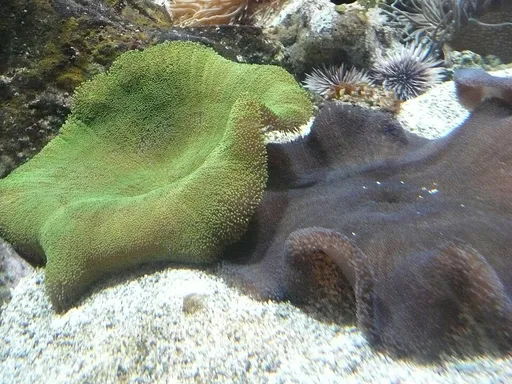 33.5 in (85 cm)53 gal (200 L)75–81°F (24–27°C)
Haddon's carpet anemone
Stichodactyla haddoni
33.5 in (85 cm) · 53 gal (200 L)
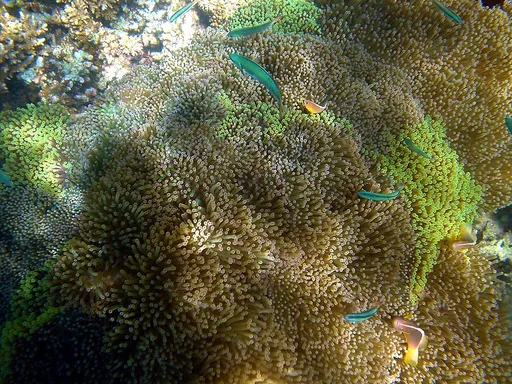 35.4 in (90 cm)53 gal (200 L)75–81°F (24–27°C)
Mertens' carpet anemone
Stichodactyla mertensii
35.4 in (90 cm) · 53 gal (200 L)
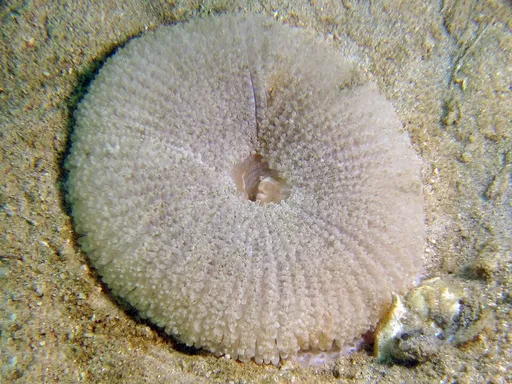 3.1 in (8 cm)20 gal (75 L)75–81°F (24–27°C)
Maxi-mini carpet anemone
Stichodactyla tapetum
3.1 in (8 cm) · 20 gal (75 L)
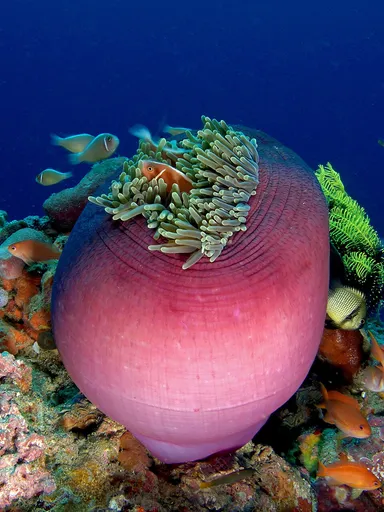 19.7 in (50 cm)53 gal (200 L)75–81°F (24–27°C)
Magnificent anemone
Heteractis magnifica
19.7 in (50 cm) · 53 gal (200 L)
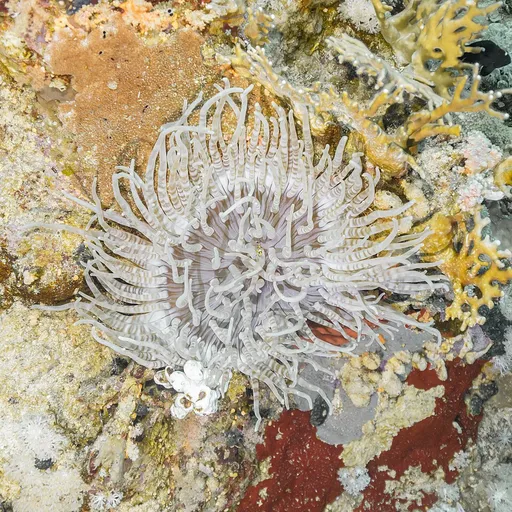 15.7 in (40 cm)40 gal (150 L)75–81°F (24–27°C)
Sebae anemone
Heteractis crispa
15.7 in (40 cm) · 40 gal (150 L)
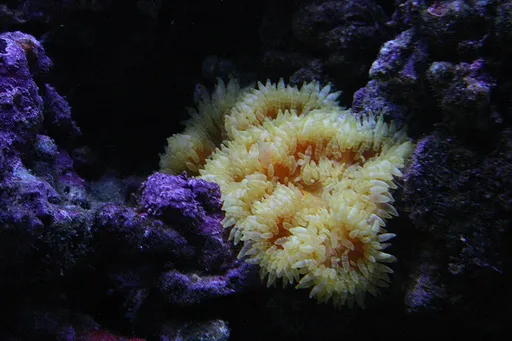 11.8 in (30 cm)50 gal (190 L)72–79°F (22–26°C)
Aurora anemone
Heteractis aurora
11.8 in (30 cm) · 50 gal (190 L)