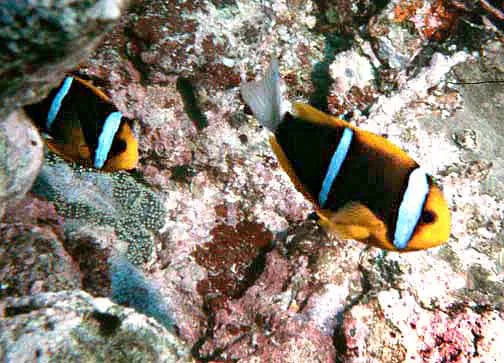
Bluestripe clownfish
Amphiprion chrysopterus
Also known as Blue Line Clownfish, Orange-Fin Anemonefish, Bluestripe Anemonefish
SaltwaterFish
Care at a glance
- Temperature
- 75–82°F
- 24–28°C
- pH
- 8.1–8.4
- Adult size
- 6.7 in
- 17 cm
- Minimum tank
- 55 gal
- 210 L
- Temperament
- Mostly peaceful
- Social behavior
- Social
- Tankmates
- With caution
- Swim level
- Middle
- Difficulty
- Easy
- Breeding
- Hard
- Rarity
- Rare
- Reef safe
- Reef safe
- Family
- Pomacentridae
- Origin
- Western and Central Pacific
Overview
The bluestripe clownfish is one of the larger clownfish and suits a reef tank. It is easy to keep.
Did you know
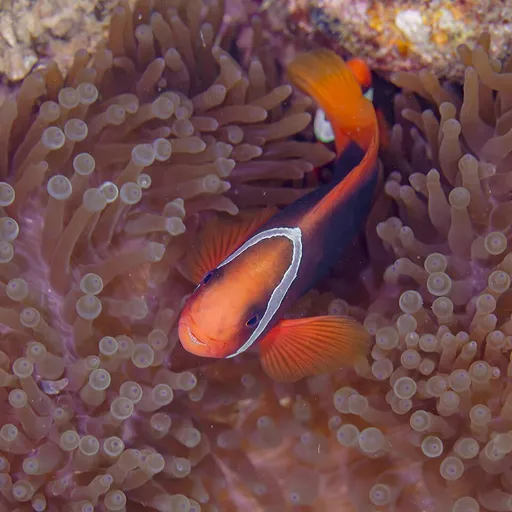
The bluestripe clownfish's fin color differs by location, with orange-finned fish in some island groups and white-finned fish in others. Experienced keepers can often tell roughly where a wild bluestripe came from.
Caring for the bluestripe clownfish
Give the bluestripe clownfish at least 55 gal (210 L), with open swimming room and a defined territory. It does best in stable, mature conditions, and wild-caught fish appreciate a settled tank. Hold the water at 75 to 82°F (24 to 28°C) and a pH of 8.1 to 8.4.
It eats everything from pellets to frozen mysis. It does not need an anemone, though it will gladly claim one.
The bluestripe clownfish grows bold and increasingly assertive with age. Pair it with similarly confident tank mates, and keep it as the only clownfish species in the tank. It is reef safe, and the main caution is its attitude toward other clownfish and similar-shaped fish. Breeding it is hard.
Good to know
The bluestripe clownfish, Amphiprion chrysopterus, is an anemonefish in the family Pomacentridae, described by Cuvier in 1830. Its blue-edged bars and fin colors vary between island groups, which has fueled debate over whether it is really a single species. Captive breeding exists but is uncommon, so most bluestripe clownfish in the trade are wild caught.
In the wild
The bluestripe clownfish ranges across the western and central Pacific, from New Guinea and Micronesia east to Fiji and Samoa. It lives on outer reef slopes and in lagoons. It favors large host anemones such as the bubble-tip and the leathery sea anemone, often on current-swept slopes.
Symbiotic relationships
Clownfish and their host anemones
A clownfish lives inside an anemone that stings and eats other fish its size. Its mucus coat keeps the anemone's stinging cells from firing, and a new fish builds that protection up over hours of brief touches. The fish gets a refuge no predator will follow it into and a nest site at the anemone's base. The anemone gets a guard that drives off the butterflyfish that would graze its tentacles, a steady supply of nitrogen from the fish's waste, and water movement at night, when the fish fans its fins among the tentacles and the anemone takes up more oxygen. Only ten anemone species host clownfish in the wild, and each clownfish species uses its own short list of them.
Captive-bred clownfish have never seen an anemone and do not need one; they settle for a coral, a powerhead or a corner of the tank. If you want the pairing, the anemone is the harder animal by far and goes in first, into a mature tank with strong light and stable water, at the tank size its own profile lists. The bubble tip anemone is the hardy host, and the one most clownfish accept in captivity even when it is not a natural host, so a clownfish profile lists it as the usual tank host where that is the case. The sebae, magnificent and carpet anemones are marked difficult, and the carpets eat fish. Expect a paired clownfish to defend its anemone against everything else in the tank.
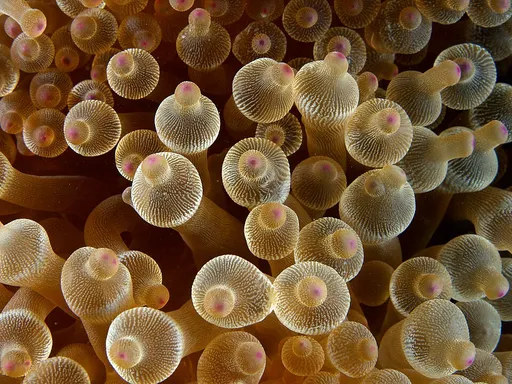
Bubble tip anemone
Entacmaea quadricolor
Saltwater11.8 in (30 cm) · 30 gal (115 L)75–81°F (24–27°C)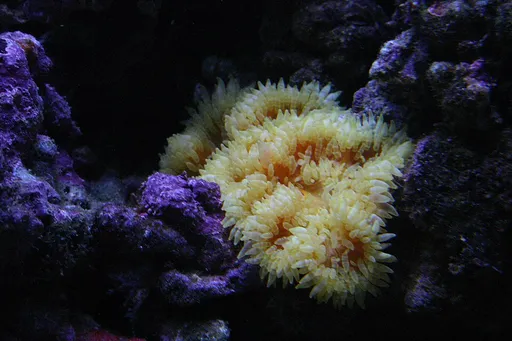
Aurora anemone
Heteractis aurora
Saltwater11.8 in (30 cm) · 50 gal (190 L)72–79°F (22–26°C)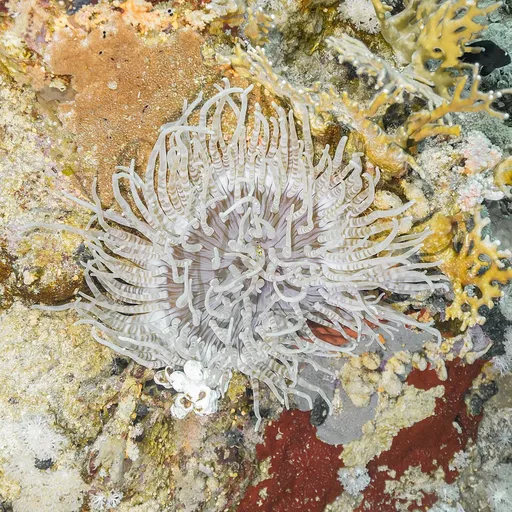
Sebae anemone
Heteractis crispa
Saltwater15.7 in (40 cm) · 40 gal (150 L)75–81°F (24–27°C)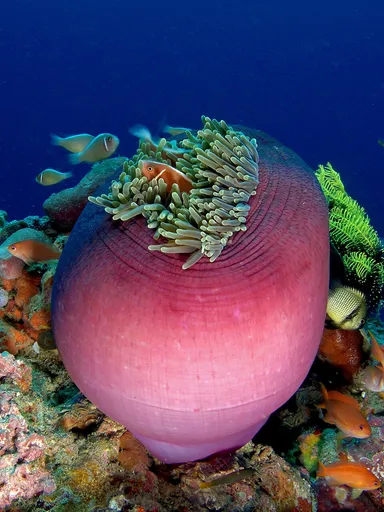
Magnificent anemone
Heteractis magnifica
Saltwater19.7 in (50 cm) · 53 gal (200 L)75–81°F (24–27°C)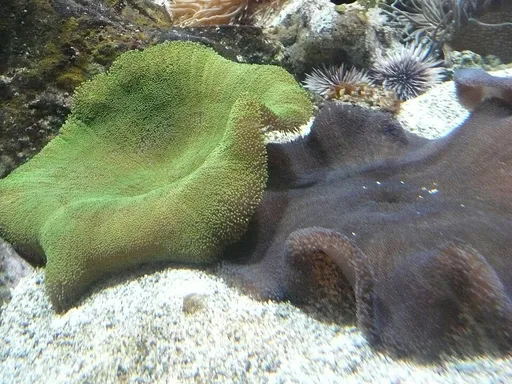
Haddon's carpet anemone
Stichodactyla haddoni
Saltwater33.5 in (85 cm) · 53 gal (200 L)75–81°F (24–27°C)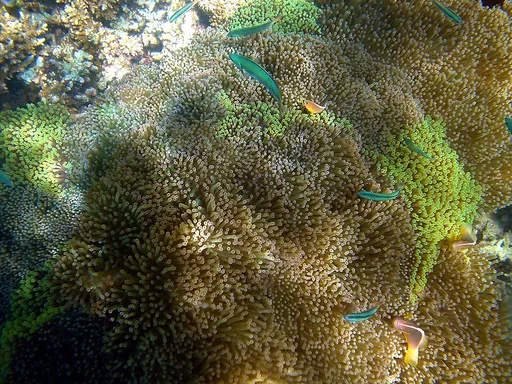
Mertens' carpet anemone
Stichodactyla mertensii
Saltwater35.4 in (90 cm) · 53 gal (200 L)75–81°F (24–27°C)
Common questions
What size tank does a bluestripe clownfish need?
A bluestripe clownfish needs at least 55 gal (210 L). It spends most of its time in the middle.
What temperature and pH does a bluestripe clownfish need?
A bluestripe clownfish is comfortable at 75–82°F (24–28°C) with a pH of 8.1–8.4.
What does a bluestripe clownfish eat?
A bluestripe clownfish eats everything from pellets to frozen mysis.
How big does a bluestripe clownfish get?
An adult bluestripe clownfish reaches about 6.7 in (17 cm).
Related species
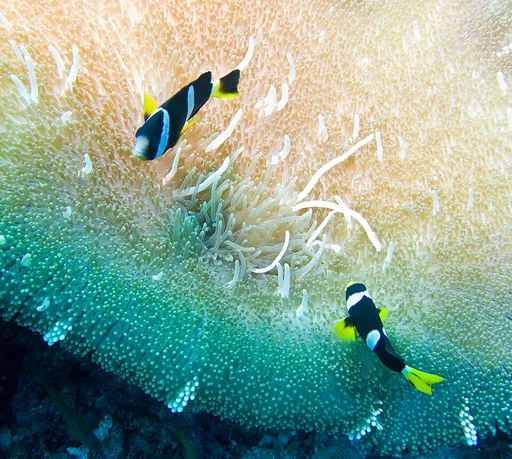 5.9 in (15 cm)30 gal (115 L)75–82°F (24–28°C)
Sebae clownfish
Amphiprion sebae
5.9 in (15 cm) · 30 gal (115 L)
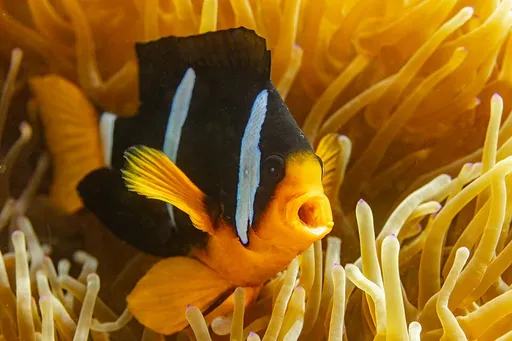 5.5 in (14 cm)30 gal (115 L)75–82°F (24–28°C)
Clark's clownfish
Amphiprion clarkii
5.5 in (14 cm) · 30 gal (115 L)
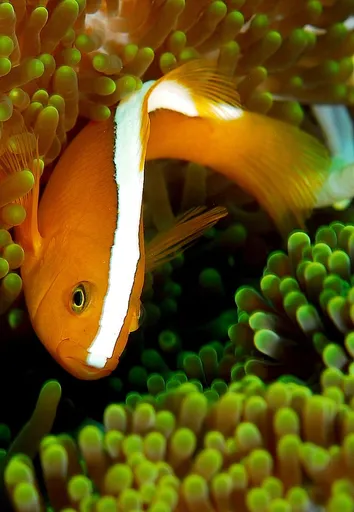 5.5 in (14 cm)30 gal (115 L)75–82°F (24–28°C)
Orange skunk clownfish
Amphiprion sandaracinos
5.5 in (14 cm) · 30 gal (115 L)
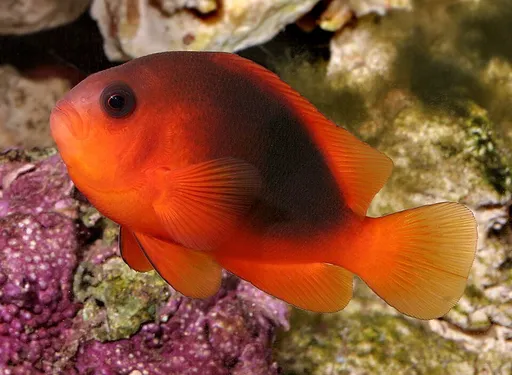 5.5 in (14 cm)30 gal (115 L)75–81°F (24–27°C)
Red saddleback anemonefish
Amphiprion ephippium
5.5 in (14 cm) · 30 gal (115 L)
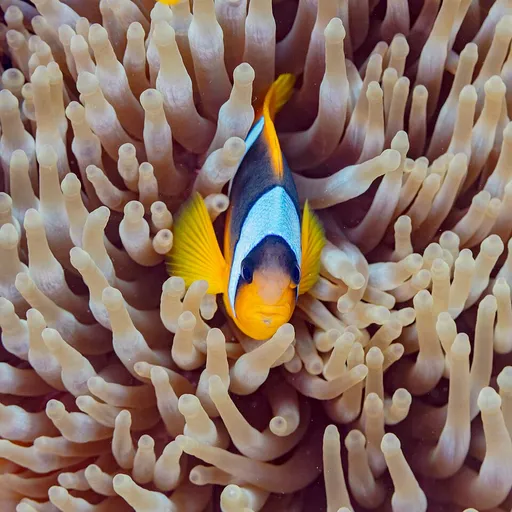 5.5 in (14 cm)30 gal (115 L)75–82°F (24–28°C)
Red Sea clownfish
Amphiprion bicinctus
5.5 in (14 cm) · 30 gal (115 L)
 5.5 in (14 cm)30 gal (115 L)75–82°F (24–28°C)
Tomato clownfish
Amphiprion frenatus
5.5 in (14 cm) · 30 gal (115 L)