Christmas tree worm
Spirobranchus giganteus
Also known as Christmas Tree Worm Rock, Christmas Tree Tube Worm, Tree Worm
SaltwaterInvertebrate
Care at a glance
- Temperature
- 75–81°F
- 24–27°C
- pH
- 8.1–8.4
- Adult size
- 1.6 in
- 4 cm
- Minimum tank
- 20 gal
- 75 L
- Temperament
- Peaceful
- Social behavior
- Social
- Swim level
- Bottom
- Difficulty
- Difficult
- Breeding
- No record
- Rarity
- Common
- Reef safe
- Reef safe
- Family
- Serpulidae
- Origin
- Circumtropical reefs, embedded in living Porites and other stony coral heads.
Overview
The worms need a mature tank of 75 litres or more at 24 to 27 C and pH 8.1 to 8.4, but the real challenge is keeping the host coral alive. That means strong light and flow for the Porites plus regular fine plankton feeding for the filter feeding worms. They are reef safe and harmless, but if the host coral dies the worms usually follow, so they suit established reefs only.
In the wild
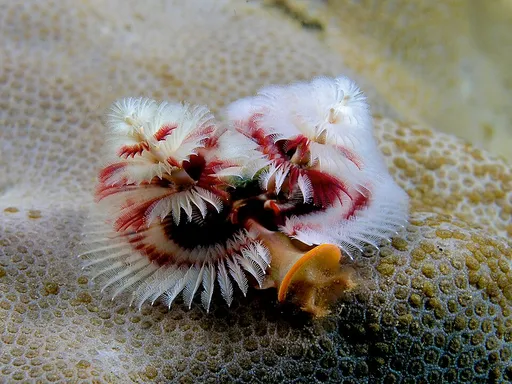
Each christmas tree worm shows two bright spiral crowns that stick up out of a living coral head like little fir trees. The crowns come in red, orange, blue, white, and yellow and pull instantly into a hidden tube when a shadow passes. They are almost always sold as a piece of Porites coral studded with many worms.
Good to know
Spirobranchus giganteus builds a hard calcium tube inside a living coral, most often Porites, and the two grow together over years. The spiral crown works as both its gill and its feeding fan, straining plankton from the water.
Did you know
The worm and its host coral live together for years, with the coral slowly growing up around the worm's tube.
Symbiotic relationships
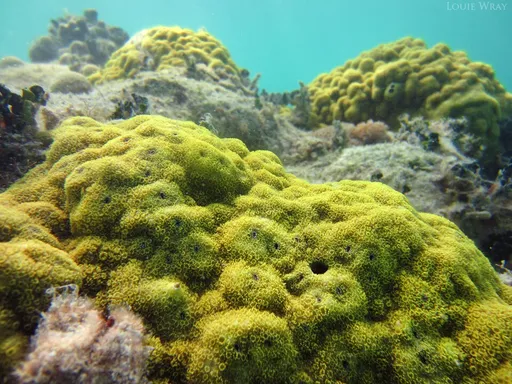
Christmas tree worms and Porites
A Christmas tree worm settles as a larva on living Porites, and the coral grows up around its tube, so the adult worm lives embedded in a coral head with only its two spiral crowns showing. The crowns are gills and feeding nets; the worm snaps them back into the tube at a shadow and unfurls them again a minute later. The coral seems to gain from the tenant: a Porites head with worms in it suffers less from crown-of-thorns starfish, which avoid the worms' spiny tube plugs, and patches of coral around each worm have been seen to survive bleaching that killed the rest of the colony.
The worms are sold on a piece of living Porites, often called a worm rock, and they live only as long as the coral does. Treat it as a coral first: reef lighting, stable water, moderate flow. Feed the worms phytoplankton or a fine coral food a few times a week, since a home tank carries little natural plankton. A worm that loses its crown can regrow it, but a worm whose coral dies rarely lasts long, so keeping the Porites alive is the whole job.
Common questions
What size tank does a Christmas tree worm need?
A Christmas tree worm needs at least 20 gal (75 L). It spends most of its time in the bottom.
What temperature and pH does a Christmas tree worm need?
A Christmas tree worm is comfortable at 75–81°F (24–27°C) with a pH of 8.1–8.4.
How big does a Christmas tree worm get?
An adult Christmas tree worm reaches about 1.6 in (4 cm).
Related species
 5.1 in (13 cm)20 gal (75 L)75–81°F (24–27°C)
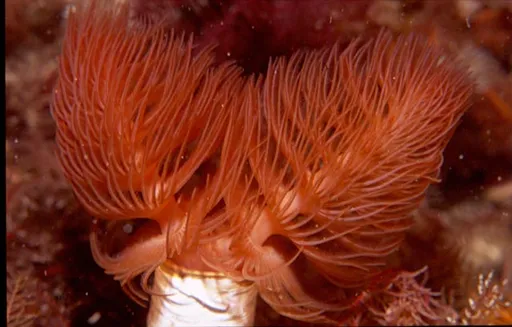
Coco worm
Protula bispiralis
5.1 in (13 cm) · 20 gal (75 L)
 1.6 in (4 cm)11 gal (40 L)75–81°F (24–27°C)
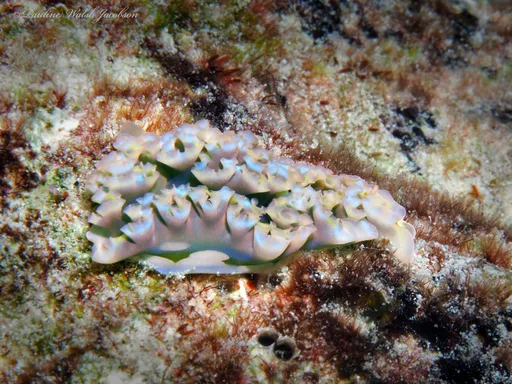
Lettuce sea slug
Elysia crispata
1.6 in (4 cm) · 11 gal (40 L)
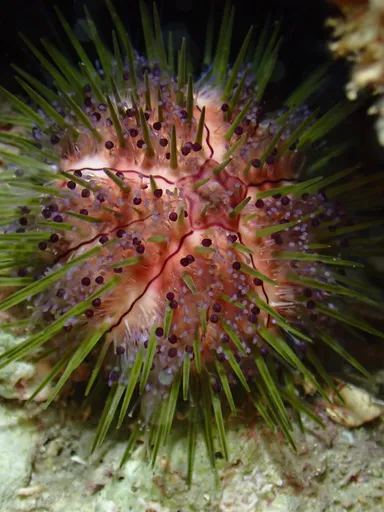 2 in (5 cm)11 gal (40 L)72–81°F (22–27°C)
Jewel urchin
Lytechinus williamsi
2 in (5 cm) · 11 gal (40 L)
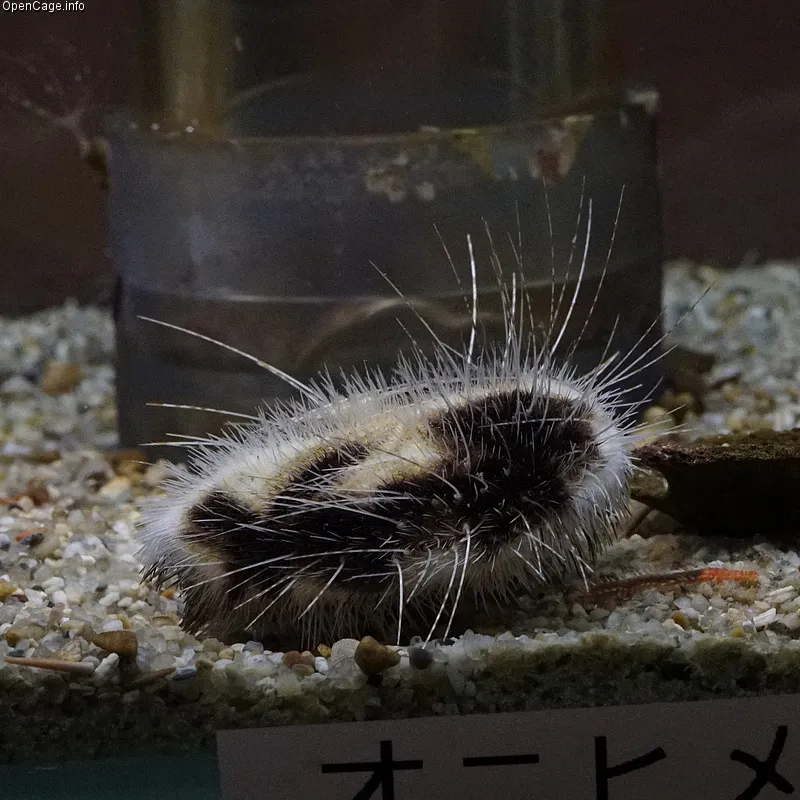 2.8 in (7 cm)53 gal (200 L)73–81°F (23–27°C)
Longspine heart urchin
Maretia planulata
2.8 in (7 cm) · 53 gal (200 L)
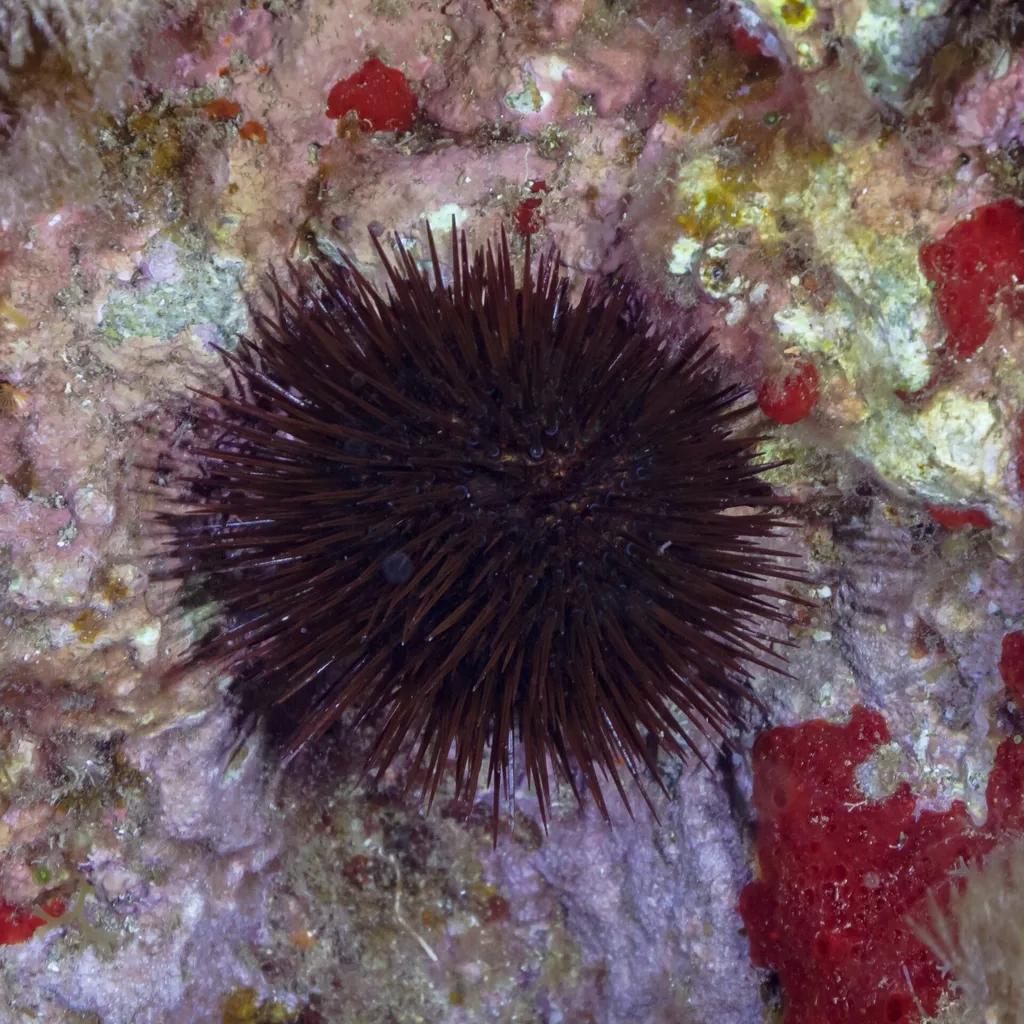 2.8 in (7 cm)40 gal (150 L)54–75°F (12–24°C)
Mediterranean purple urchin
Paracentrotus lividus
2.8 in (7 cm) · 40 gal (150 L)
- 2.8 in (7 cm)53 gal (200 L)72–81°F (22–27°C)
Elongated heart urchin
Lovenia elongata
2.8 in (7 cm) · 53 gal (200 L)