Mediterranean purple urchin
Paracentrotus lividus
Also known as Rock urchin, Stony sea urchin, Mediterranean purple sea urchin, Rock sea urchin
SaltwaterInvertebrate
Care at a glance
- Temperature
- 54–75°F
- 12–24°C
- pH
- 8.1–8.4
- Adult size
- 2.8 in
- 7 cm
- Minimum tank
- 40 gal
- 150 L
- Temperament
- Peaceful
- Social behavior
- Solitary
- Tankmates
- With caution
- Swim level
- Bottom
- Difficulty
- Difficult
- Breeding
- Hard
- Rarity
- Very rare
- Reef safe
- Not reef safe
- Family
- Parechinidae
- Origin
- Mediterranean and north-east Atlantic rocky shores, Ireland to Morocco and the Canaries
Overview
Peaceful and undemanding about food, but it is not a reef tank animal: it needs cool water, and in any tank it will eat every macroalga and seagrass and scrape the coralline off the rock. Keep it in a temperate setup with other Mediterranean or north-east Atlantic animals, feed kelp, dried seaweed, and algae wafers, hold the water at 12 to 24 C with high oxygen and full marine salinity, drip acclimate it, and never use copper. It does not tolerate low salinity. It is not collected for the US aquarium trade, so you will only meet it in European temperate tanks or as seafood.
In the wild
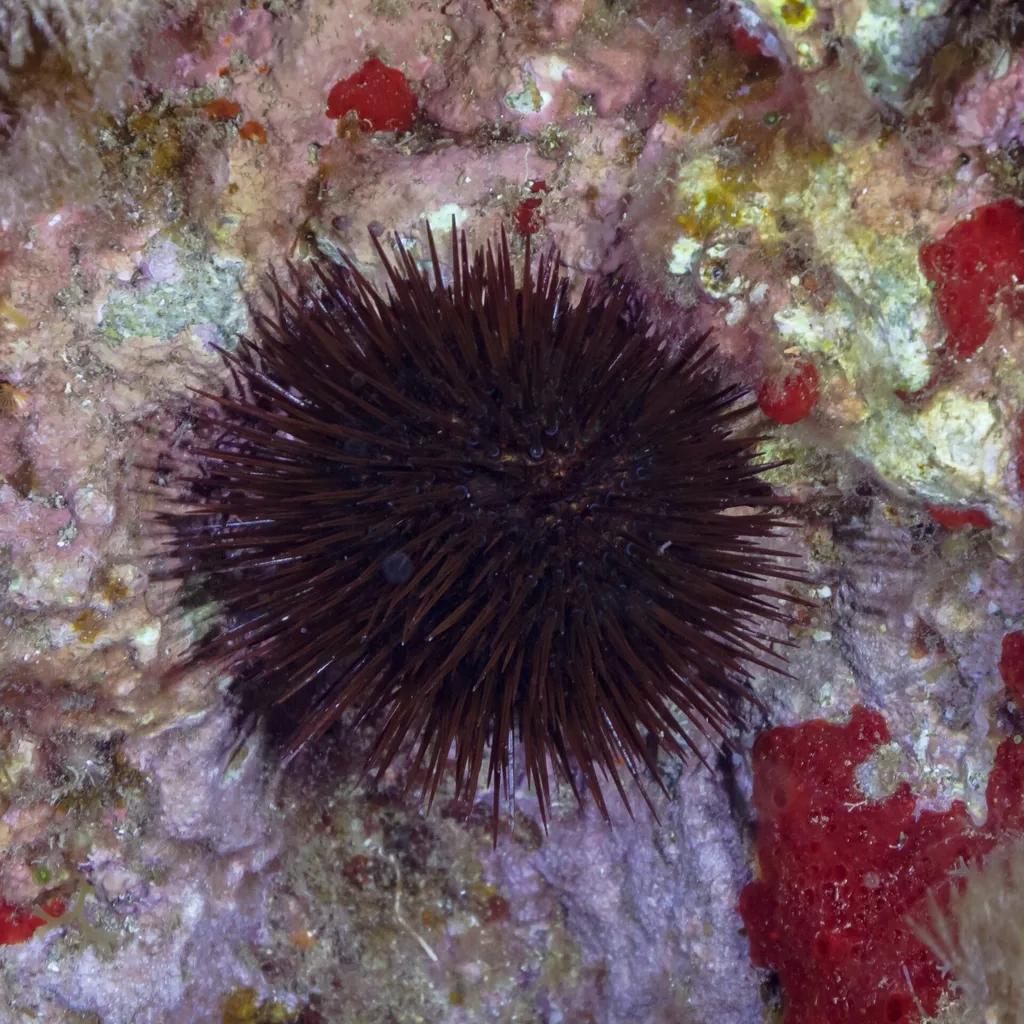
The Mediterranean purple urchin lives on rock, in boulder fields, tide pools, and seagrass meadows across the Mediterranean and along the north-east Atlantic from western Scotland and Ireland to Morocco, the Azores, and the Canary Islands, mostly at 0 to 20 m. In exposed spots it bores cup-shaped pits into soft rock with its teeth and spines and lives in them. It is a temperate animal: winter water where it is common runs 10 to 15 C and Mediterranean summers reach the mid 20s, so a home tank needs 12 to 24 C and usually a chiller, plus rock, strong flow, and 150 liters or more. Water stays at pH 8.1 to 8.4.
Good to know
Paracentrotus lividus is a regular urchin in the family Parechinidae. The test is flattened and reaches about 7 cm across, with spines that are usually purple but can be brown, olive, or green. It eats red, green, and brown algae and seagrass and is one of the main grazers of Mediterranean shallows. It is the edible urchin of Mediterranean cooking, harvested for its roe from Ireland to Greece and raised in hatcheries, and some fished populations have collapsed. Heat kills it: field and lab work in the eastern Mediterranean found mass mortality once water passed about 30 C.
Did you know
Along wave-beaten shores this urchin lives in pits it has bored into limestone and sandstone with its own teeth, sometimes so deep it can never leave. Old rock faces in Brittany and Ireland are pocked with rows of urchin-sized holes made this way.
Common questions
What size tank does a Mediterranean purple urchin need?
A Mediterranean purple urchin needs at least 40 gal (150 L). It spends most of its time in the bottom.
What temperature and pH does a Mediterranean purple urchin need?
A Mediterranean purple urchin is comfortable at 54–75°F (12–24°C) with a pH of 8.1–8.4.
How big does a Mediterranean purple urchin get?
An adult Mediterranean purple urchin reaches about 2.8 in (7 cm).
Related species
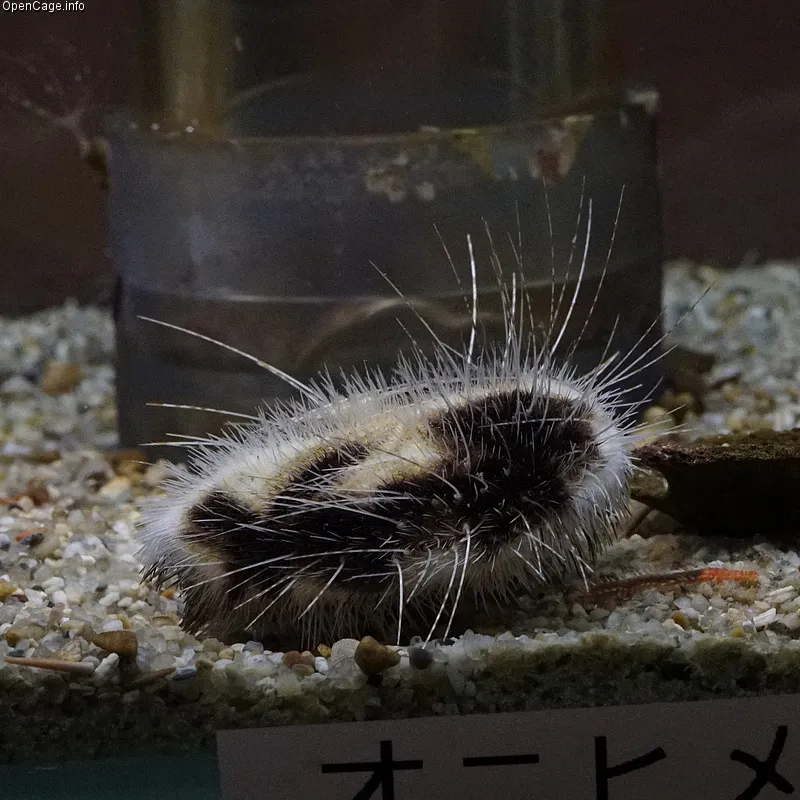 2.8 in (7 cm)53 gal (200 L)73–81°F (23–27°C)
Longspine heart urchin
Maretia planulata
2.8 in (7 cm) · 53 gal (200 L)
- 2.8 in (7 cm)53 gal (200 L)72–81°F (22–27°C)
Elongated heart urchin
Lovenia elongata
2.8 in (7 cm) · 53 gal (200 L)
 3 in (7.5 cm)11 gal (40 L)68–81°F (20–27°C)
Spurilla nudibranch
Spurilla neapolitana
3 in (7.5 cm) · 11 gal (40 L)
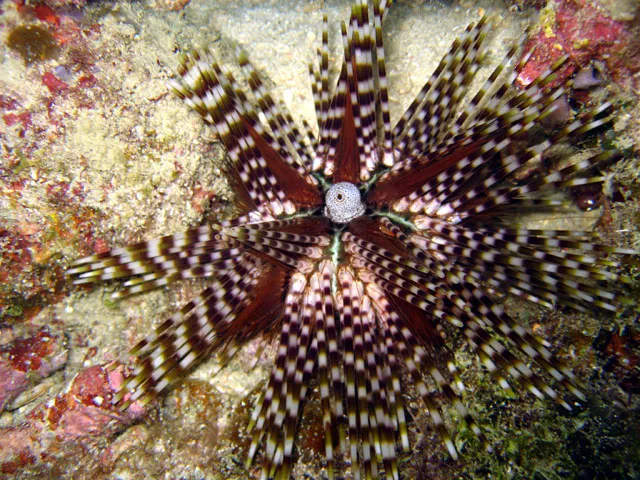 3.1 in (8 cm)50 gal (190 L)72–79°F (22–26°C)
Banded urchin
Echinothrix calamaris
3.1 in (8 cm) · 50 gal (190 L)
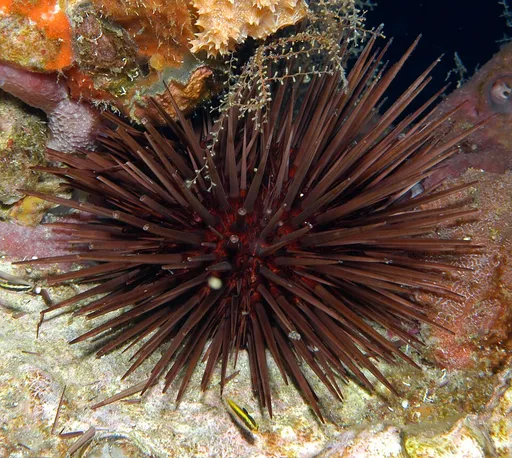 3.1 in (8 cm)20 gal (75 L)68–81°F (20–27°C)
Purple urchin
Arbacia punctulata
3.1 in (8 cm) · 20 gal (75 L)
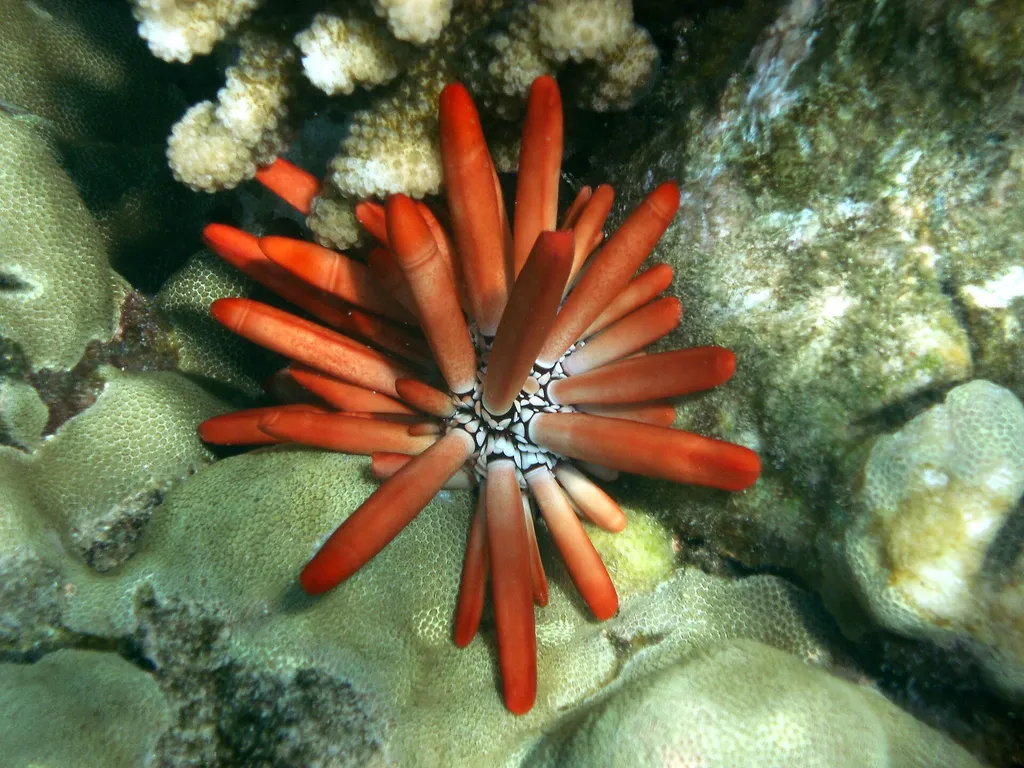 3.1 in (8 cm)50 gal (190 L)72–81°F (22–27°C)
Red slate pencil urchin
Heterocentrotus mamillatus
3.1 in (8 cm) · 50 gal (190 L)