Longspine heart urchin
Maretia planulata
Also known as Heart urchin, Fine-spined heart urchin, Hearth heart urchin, Sea mouse urchin
SaltwaterInvertebrate
Care at a glance
- Temperature
- 73–81°F
- 23–27°C
- pH
- 8.1–8.4
- Adult size
- 2.8 in
- 7 cm
- Minimum tank
- 53 gal
- 200 L
- Temperament
- Peaceful
- Social behavior
- Solitary
- Tankmates
- With caution
- Swim level
- Bottom
- Difficulty
- Difficult
- Breeding
- No record
- Rarity
- Rare
- Reef safe
- Reef safe
- Family
- Maretiidae
- Origin
- Indo-West Pacific sand flats and seagrass beds
Overview
Peaceful and completely harmless to corals and fish, but it usually starves in an aquarium. Most home tanks do not produce enough sand-bed food for a nonstop deposit feeder, and it gives no warning before it dies. Keep it only in a large, old, lightly cleaned tank with a deep live sand bed, no sand-sifting gobies, sea cucumbers, or crabs competing for the same food, and no puffers, triggers, or large wrasses that would bite it. Water stays at 23 to 27 C with pH 8.1 to 8.4 and steady salinity; it needs a slow drip acclimation and should never be lifted into the air. Keep copper medications out of the tank.
In the wild
The longspine heart urchin lives buried in sandy intertidal flats and seagrass beds across the Indo-West Pacific, down to about 60 m. It is an irregular urchin that ploughs through sand rather than grazing rock, so the tank has to be built around a sand bed: at least 10 cm of mature coarse sand or crushed coral over a wide open footprint, not fine sugar sand or mud, which can smother it. It spends most of its time out of sight below the surface. Plan on 200 liters or more so the bed is big enough to hold food.
Good to know
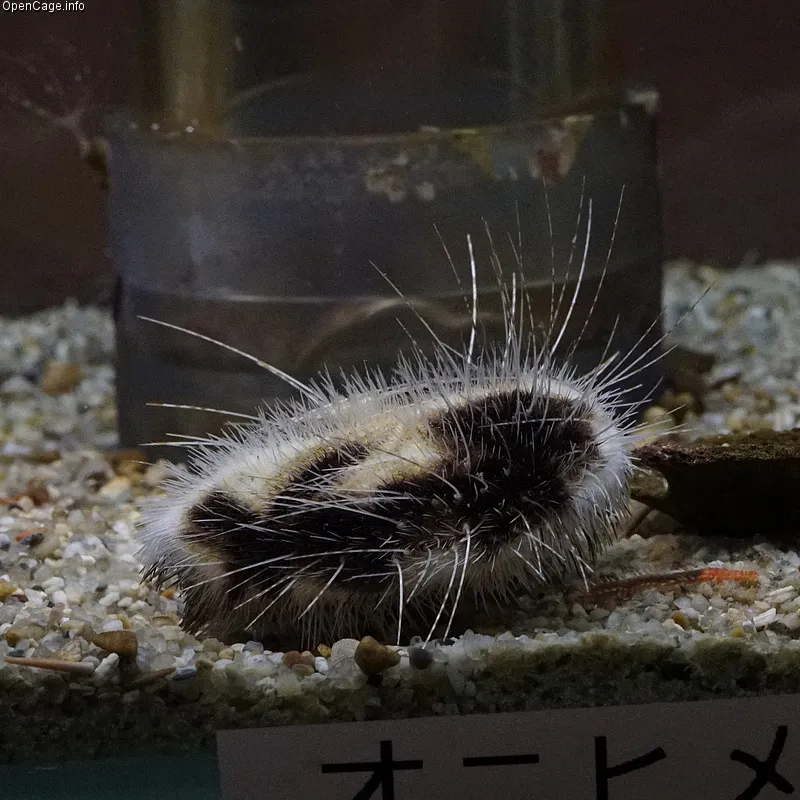
Maretia planulata is a heart urchin in the family Maretiidae, order Spatangoida. The test is oval and slightly heart shaped, 5 to 7 cm long, covered in short spines with longer fine spines that sweep backward and give the trade name. It is a deposit feeder that swallows sand and digests the bacteria, diatoms, and detritus in it, and it feeds around the clock. It has no Aristotle's lantern, so it cannot scrape algae off rock the way regular urchins do.
Did you know
Heart urchins are bilaterally symmetrical rather than round, with a front end that leads as they burrow, which is why the test looks like a heart from above. In the wild they turn over huge volumes of sediment and are counted among the important bioturbators of tropical sand flats.
Common questions
What size tank does a Longspine heart urchin need?
A Longspine heart urchin needs at least 53 gal (200 L). It spends most of its time in the bottom.
What temperature and pH does a Longspine heart urchin need?
A Longspine heart urchin is comfortable at 73–81°F (23–27°C) with a pH of 8.1–8.4.
How big does a Longspine heart urchin get?
An adult Longspine heart urchin reaches about 2.8 in (7 cm).
Related species
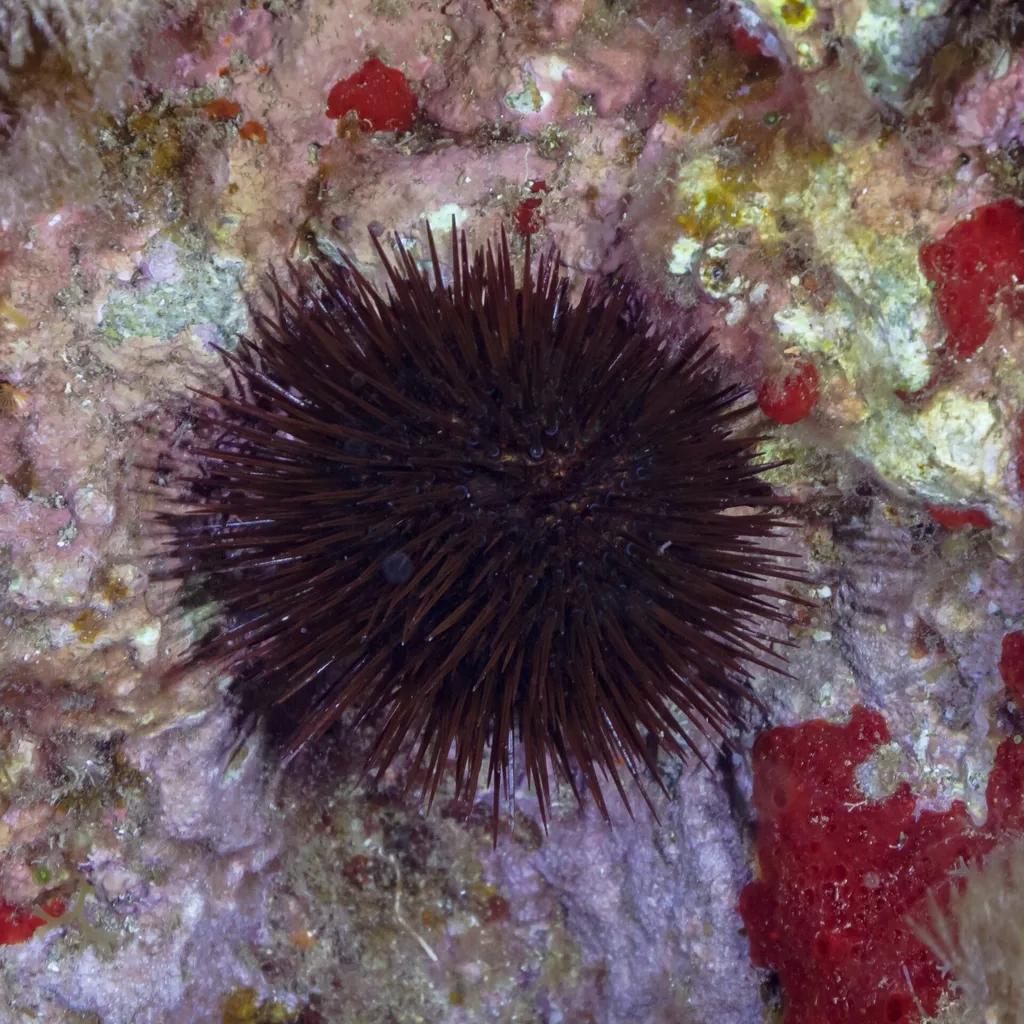 2.8 in (7 cm)40 gal (150 L)54–75°F (12–24°C)
Mediterranean purple urchin
Paracentrotus lividus
2.8 in (7 cm) · 40 gal (150 L)
- 2.8 in (7 cm)53 gal (200 L)72–81°F (22–27°C)
Elongated heart urchin
Lovenia elongata
2.8 in (7 cm) · 53 gal (200 L)
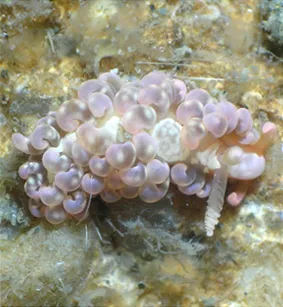 3 in (7.5 cm)11 gal (40 L)68–81°F (20–27°C)
Spurilla nudibranch
Spurilla neapolitana
3 in (7.5 cm) · 11 gal (40 L)
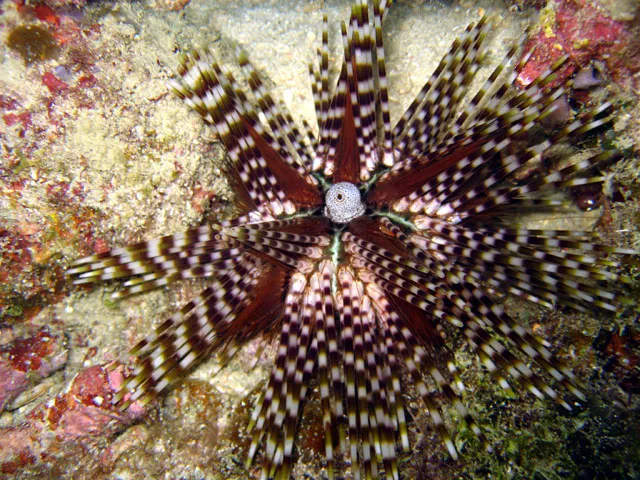 3.1 in (8 cm)50 gal (190 L)72–79°F (22–26°C)
Banded urchin
Echinothrix calamaris
3.1 in (8 cm) · 50 gal (190 L)
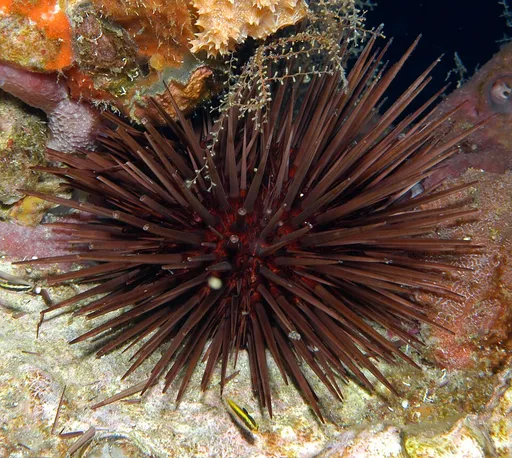 3.1 in (8 cm)20 gal (75 L)68–81°F (20–27°C)
Purple urchin
Arbacia punctulata
3.1 in (8 cm) · 20 gal (75 L)
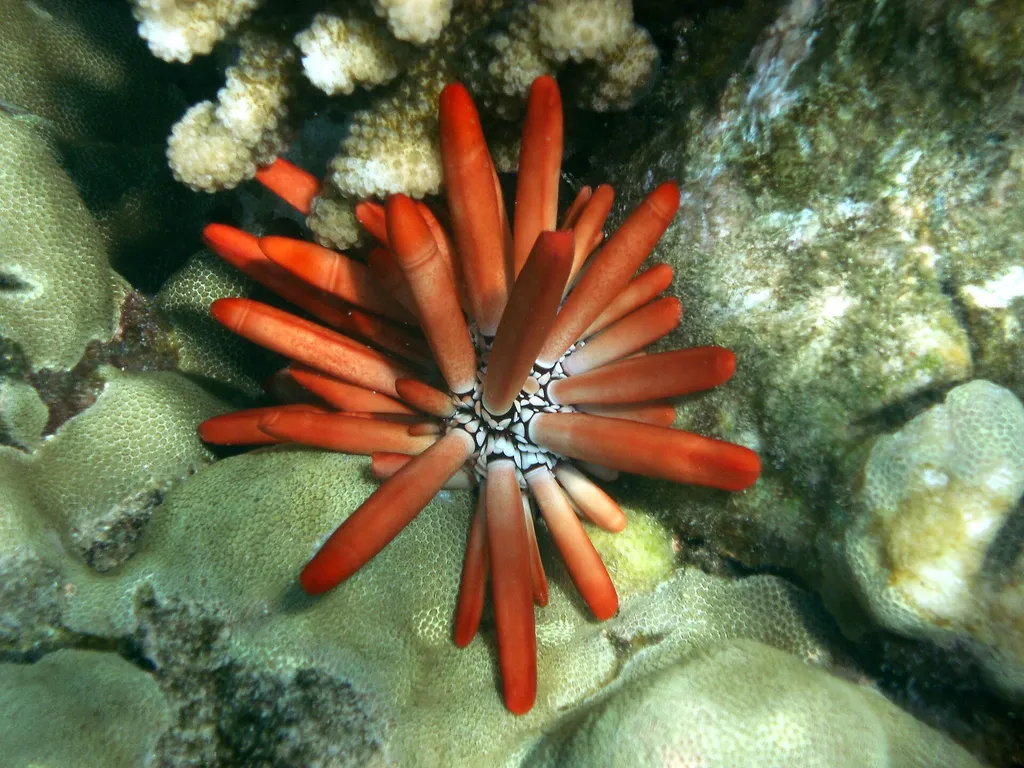 3.1 in (8 cm)50 gal (190 L)72–81°F (22–27°C)
Red slate pencil urchin
Heterocentrotus mamillatus
3.1 in (8 cm) · 50 gal (190 L)