Porites
Also known as Christmas Tree Worm Rock, Worm Rock
SaltwaterCoral
Care at a glance
- Temperature
- 75–81°F
- 24–27°C
- pH
- 8.1–8.4
- Adult size
- 13.8 in
- 35 cm
- Minimum tank
- 40 gal
- 150 L
- Temperament
- Peaceful
- Social behavior
- Solitary
- Swim level
- Bottom
- Difficulty
- Medium
- Breeding
- Easy
- Rarity
- Common
- Reef safe
- Reef safe
- Family
- Poritidae
- Origin
- Widespread across Indo-Pacific reef flats and slopes
Overview
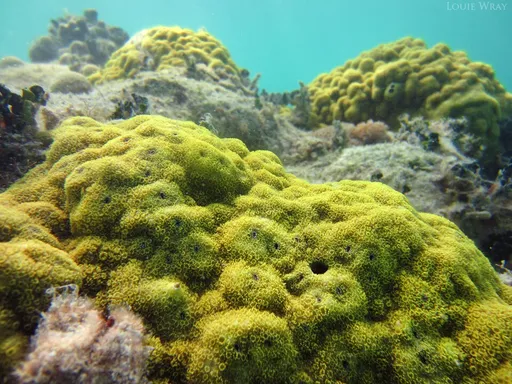
A peaceful stony coral whose short tentacles pose little threat to neighbors, so ordinary SPS spacing for growth is enough. It wants high light, in the range of 200 to 250 PAR or more, and moderate to strong flow, though flow aimed straight at the colony can strip its short polyps and stop it from feeding. It is fairly undemanding for an SPS coral once established and is widely aquacultured, but it still needs stable calcium, alkalinity, and magnesium like any stony coral, and wild-collected colonies can be slow to settle in. A piece kept specifically to host Christmas tree worms is a different project: the worms need much more frequent feeding with fine planktonic foods than the coral does, which pulls the tank's nutrient levels in the opposite direction from what the Porites wants.
In the wild
Porites is a widespread Indo-Pacific genus that builds some of the largest and oldest colonies on the reef, from low branching thickets in shallow water to massive dome-shaped heads that can stand for centuries. It grows in full sun on shallow reef flats and slopes, and large old colonies are the classic home for Christmas tree worms, whose spiral crowns dot the surface of a mature head. In the aquarium a Porites colony wants high light, in the range of 200 to 250 PAR or more, and moderate to strong flow, set in an open, high spot on the rockwork much like it gets on a real reef flat.
Good to know
Porites, family Poritidae, includes both branching species such as Porites cylindrica, which forms fields of grey or yellow fingers, and massive species such as Porites lutea, which build the large dome and boulder colonies that can dominate a reef flat and live for centuries. Its skeleton is made of very fine, densely packed corallites, part of why Christmas tree worms and other boring organisms can tunnel into a colony without killing it outright. It hosts zooxanthellae like other reef-building stony corals and grows its skeleton fastest under strong, direct light.
Did you know
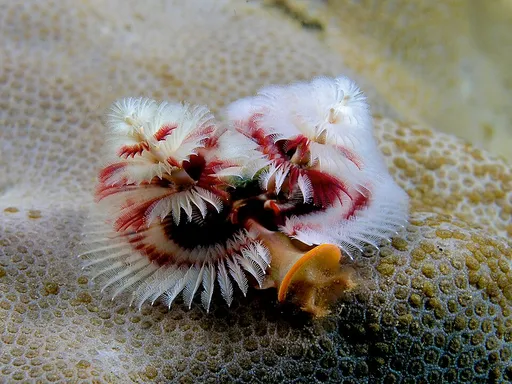
The colorful Christmas tree worms sold on worm rock are not part of the coral at all. They are tube worms that bore into a living Porites colony and live inside it for years, and a single old Porites head in the wild can host dozens of worms at once, each one snapping instantly into its tube at the slightest disturbance.
Symbiotic relationships
Christmas tree worms and Porites
A Christmas tree worm settles as a larva on living Porites, and the coral grows up around its tube, so the adult worm lives embedded in a coral head with only its two spiral crowns showing. The crowns are gills and feeding nets; the worm snaps them back into the tube at a shadow and unfurls them again a minute later. The coral seems to gain from the tenant: a Porites head with worms in it suffers less from crown-of-thorns starfish, which avoid the worms' spiny tube plugs, and patches of coral around each worm have been seen to survive bleaching that killed the rest of the colony.
The worms are sold on a piece of living Porites, often called a worm rock, and they live only as long as the coral does. Treat it as a coral first: reef lighting, stable water, moderate flow. Feed the worms phytoplankton or a fine coral food a few times a week, since a home tank carries little natural plankton. A worm that loses its crown can regrow it, but a worm whose coral dies rarely lasts long, so keeping the Porites alive is the whole job.
Common questions
What size tank does a Porites need?
A Porites needs at least 40 gal (150 L). It spends most of its time in the bottom.
What temperature and pH does a Porites need?
A Porites is comfortable at 75–81°F (24–27°C) with a pH of 8.1–8.4.
How big does a Porites get?
An adult Porites reaches about 13.8 in (35 cm).
Related species
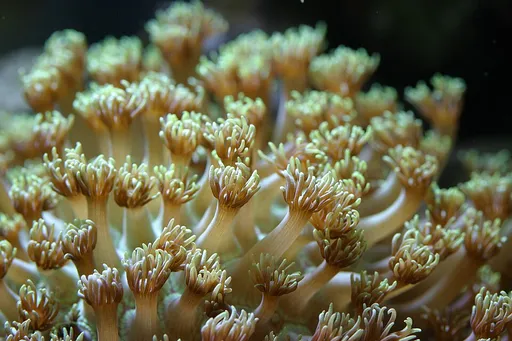 9.8 in (25 cm)11 gal (40 L)75–81°F (24–27°C)
Flowerpot coral
Goniopora
9.8 in (25 cm) · 11 gal (40 L)
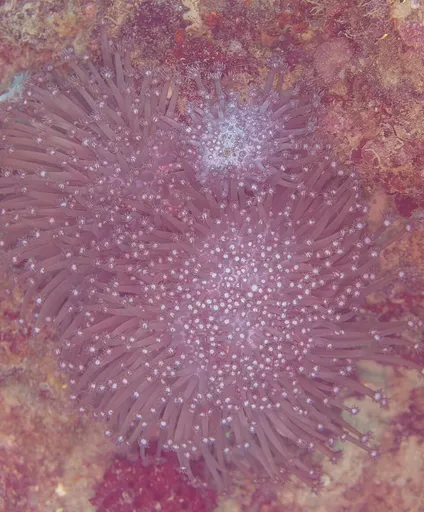 7.9 in (20 cm)26 gal (100 L)75–81°F (24–27°C)
Long-polyp flowerpot coral
Goniopora stokesi
7.9 in (20 cm) · 26 gal (100 L)
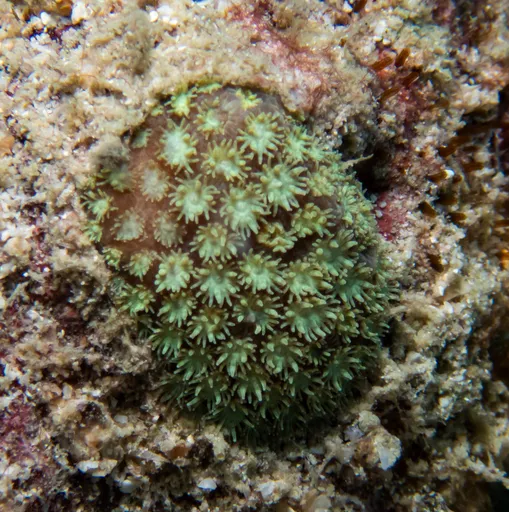 7.9 in (20 cm)11 gal (40 L)75–81°F (24–27°C)
Red flowerpot coral
Bernardpora stutchburyi
7.9 in (20 cm) · 11 gal (40 L)
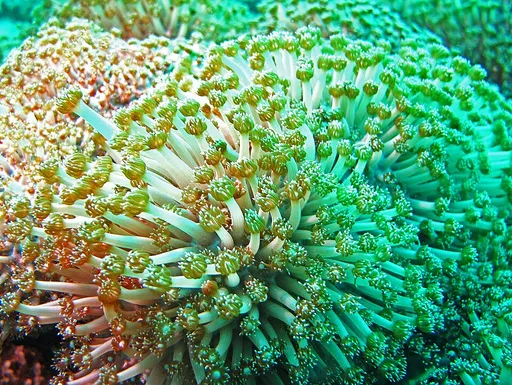 7.9 in (20 cm)26 gal (100 L)75–81°F (24–27°C)
Short-polyp flowerpot coral
Goniopora columna
7.9 in (20 cm) · 26 gal (100 L)
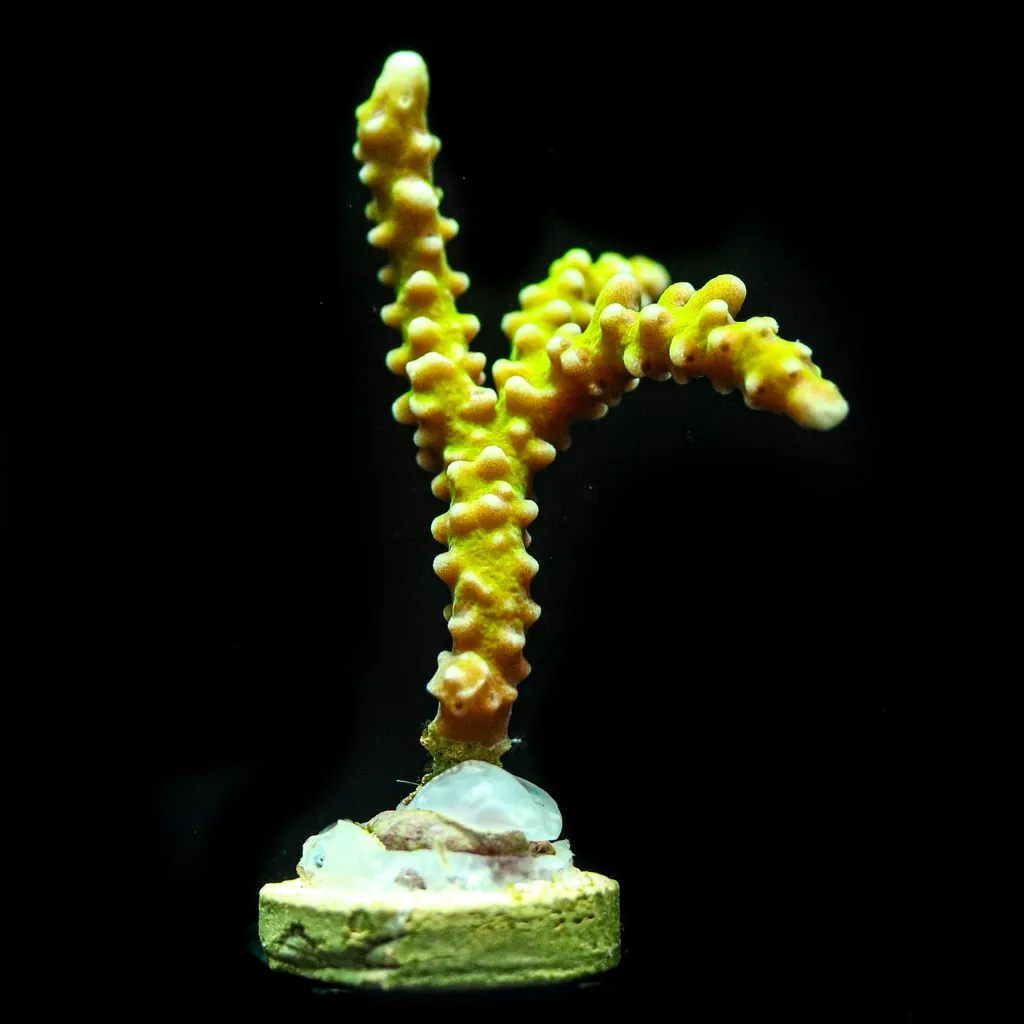 11.8 in (30 cm)26 gal (100 L)75–81°F (24–27°C)
Briar coral
Anacropora sp.
11.8 in (30 cm) · 26 gal (100 L)
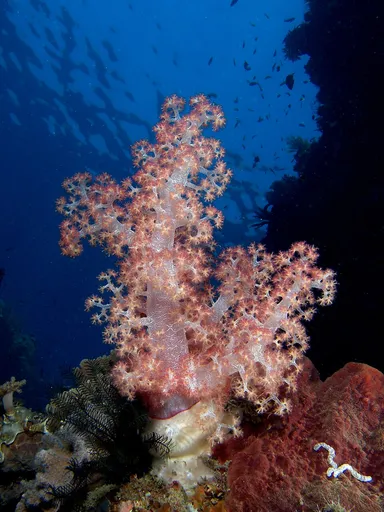 11.8 in (30 cm)11 gal (40 L)75–81°F (24–27°C)
Broccoli tree coral
Litophyton
11.8 in (30 cm) · 11 gal (40 L)