Rock flower anemone
Phymanthus crucifer
Also known as Beaded Anemone, Red Beaded Anemone, Flower Anemone, Rock Anemone
SaltwaterAnemone

Care at a glance
- Temperature
- 75–81°F
- 24–27°C
- pH
- 8.1–8.4
- Adult size
- 3.9 in
- 10 cm
- Minimum tank
- 20 gal
- 75 L
- Temperament
- Peaceful
- Social behavior
- Solitary
- Swim level
- Bottom
- Difficulty
- Medium
- Breeding
- No record
- Rarity
- Common
- Reef safe
- Reef safe with caution
- Family
- Phymanthidae
- Origin
- Caribbean Sea and West Indies
Overview
Give it moderate to strong lighting and gentle to moderate flow that carries food to it without battering the disc, plus occasional target feeding of mysis or chopped shrimp for the best color. It does not roam the way a bubble tip or carpet anemone does, but it can still sting a coral planted too close, and its tentacles carry a real punch for their size, so give neighboring corals a few inches of clearance and handle it with gloves. It is not a natural clownfish host; instead it partners with certain anemone shrimp and porcelain crabs, and is better thought of as a reef friendly color anemone than a host anemone. Acclimate it slowly and add it once the tank has been stable for a few months.
In the wild
Found across the Caribbean and West Indies, where it wedges its column into a crevice or buries it in sand between rocks with only the beaded, colorful oral disc left showing. It is one of the few true anemones that stays put once it has picked a spot, which makes tank placement easy: give it a stable perch on the lower to mid rockwork under moderate to strong light and it will typically root there for good. Unlike several of its Indo-Pacific relatives, it does not host clownfish.
Good to know
Phymanthus crucifer carries symbiotic zooxanthellae like other reef anemones and shows an unusually wide range of natural color morphs, from sandy tan and green to vivid red, orange, and purple, which is why the trade sells named ultra color forms. Colonies can also reproduce by pedal laceration, leaving small clone fragments behind at the base that grow into new anemones, so an established rock flower can slowly multiply on its own.
Did you know
Rock flower anemones are one of the few anemones widely propagated by coral farms rather than wild collected, and their color range is so broad that named morphs like Ultra Red or Ultra Rainbow are traded almost like designer coral frags.
Symbiotic relationships
Shrimp and crabs that live in anemones
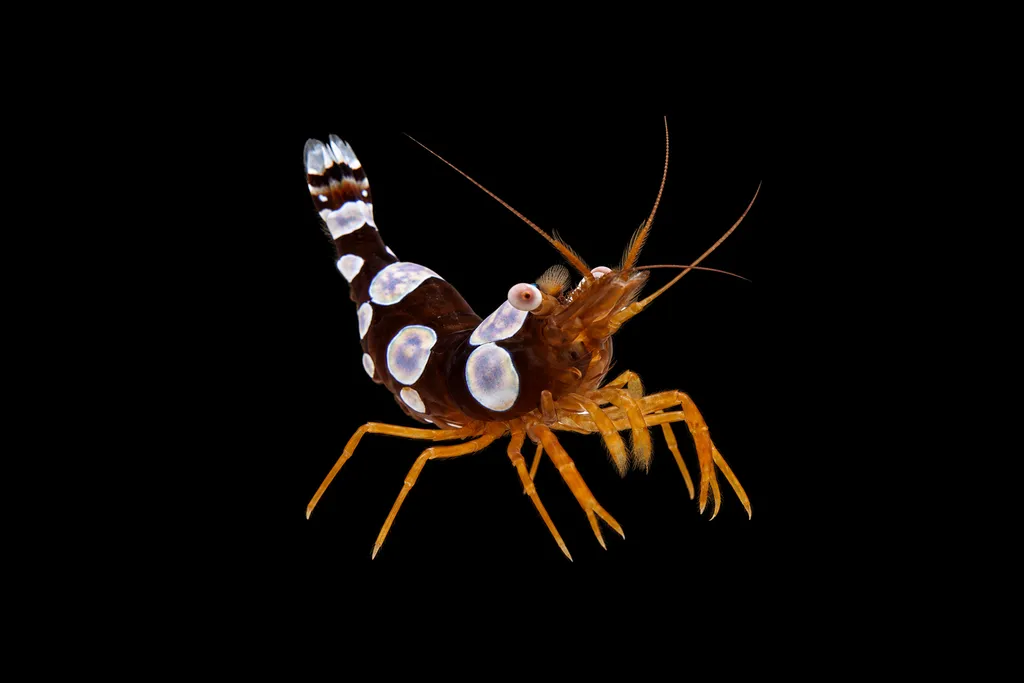
Several small crustaceans live where almost nothing else can: among the tentacles of an anemone. Sexy shrimp perch in the tentacles in a cluster, bobbing their tails in the display that named them. The white-spot anemone shrimp is near transparent apart from its spots and lives on carpet anemones. The porcelain anemone crab sits at the anemone's edge and filters plankton from the water with two fan-like arms. Pederson's cleaner shrimp lives in the Caribbean corkscrew anemone and cleans fish from there. In every case the anemone is a bodyguard: its sting keeps off the small fish that would eat the shrimp. The anemone gains little, and the white-spot shrimp will nibble its host's tentacles when it is hungry.
Give each of them its anemone. Sexy shrimp take a rock flower anemone, a bubble tip or a carpet. The white-spot shrimp and the porcelain crab want a carpet anemone or a long tentacle anemone, both of which need a mature tank at the tank size their profiles list. Pederson's shrimp wants a corkscrew anemone or a condy. Without a host they perch on a coral or hide in the rock and are picked off by any fish that eats shrimp, so they suit a peaceful nano reef. A clownfish will evict them from an anemone it has claimed.
Common questions
What size tank does a Rock flower anemone need?
A Rock flower anemone needs at least 20 gal (75 L). It spends most of its time in the bottom.
What temperature and pH does a Rock flower anemone need?
A Rock flower anemone is comfortable at 75–81°F (24–27°C) with a pH of 8.1–8.4.
How big does a Rock flower anemone get?
An adult Rock flower anemone reaches about 3.9 in (10 cm).
Related species
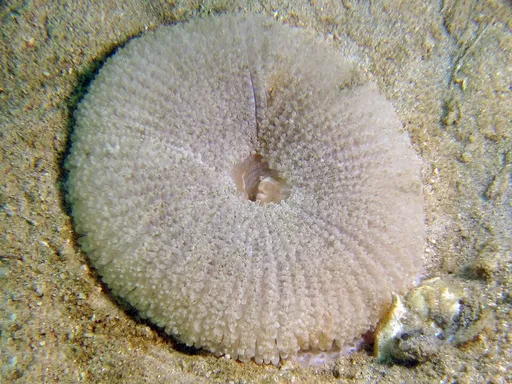 3.1 in (8 cm)20 gal (75 L)75–81°F (24–27°C)
Maxi-mini carpet anemone
Stichodactyla tapetum
3.1 in (8 cm) · 20 gal (75 L)
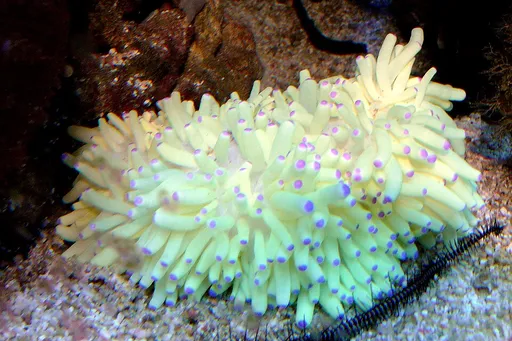 7.9 in (20 cm)40 gal (150 L)75–81°F (24–27°C)
Malu anemone
Heteractis malu
7.9 in (20 cm) · 40 gal (150 L)
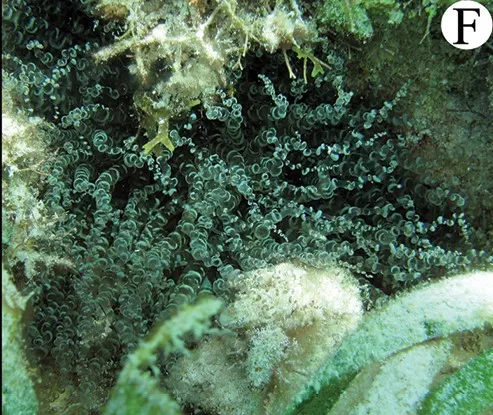 5.9 in (15 cm)20 gal (75 L)75–81°F (24–27°C)
Curlyque anemone
Bartholomea annulata
5.9 in (15 cm) · 20 gal (75 L)
 7.9 in (20 cm)20 gal (75 L)75–81°F (24–27°C)
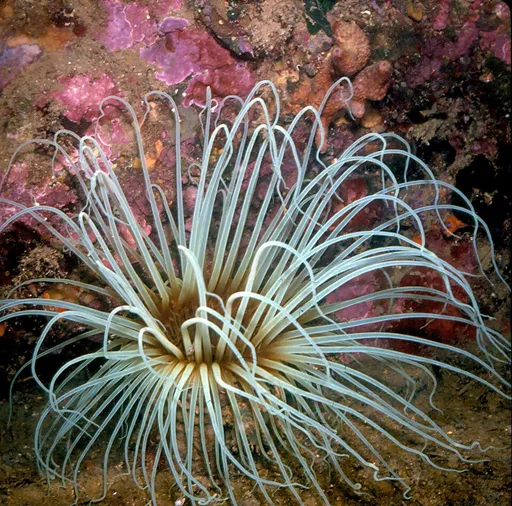
Tube anemone
Cerianthus sp.
7.9 in (20 cm) · 20 gal (75 L)