Pom-pom crab
Lybia tessellata
Also known as Boxer Crab, Boxing Crab, Cheerleader Crab
SaltwaterCrab
Care at a glance
- Temperature
- 75–81°F
- 24–27°C
- pH
- 8.1–8.4
- Adult size
- 1 in
- 2.5 cm
- Minimum tank
- 11 gal
- 40 L
- Temperament
- Peaceful
- Social behavior
- Solitary
- Swim level
- Bottom
- Difficulty
- Easy
- Breeding
- Hard
- Rarity
- Rare
- Reef safe
- Reef safe
- Family
- Xanthidae
- Origin
- Indo-Pacific reefs and rubble, including the waters around Indonesia, the Philippines, and the broader tropical Indo-Pacific
Overview
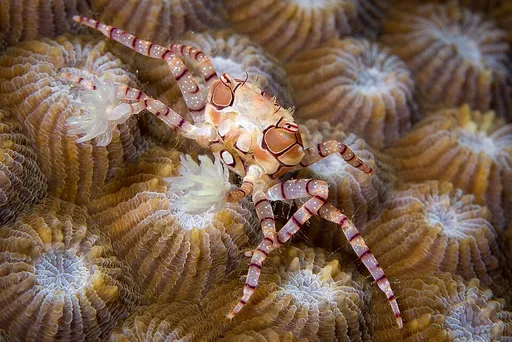
A peaceful, secretive nano-reef crab that poses no threat to corals or tankmates and is more likely to be bothered than to bother anything. Keep it in a calm tank without large aggressive fish or crabs that would eat it. Its held anemones make it look armed but they are used defensively, not to sting corals.
In the wild
A tiny, shy crab that spends daylight tucked in caves and crevices and comes out at night to forage. It thrives in nano to mid-size reefs with plenty of live rock, rubble, and hiding spots. Because it is so small it is easily outcompeted at feeding time, so target-feed small meaty foods a few times a week.
Good to know
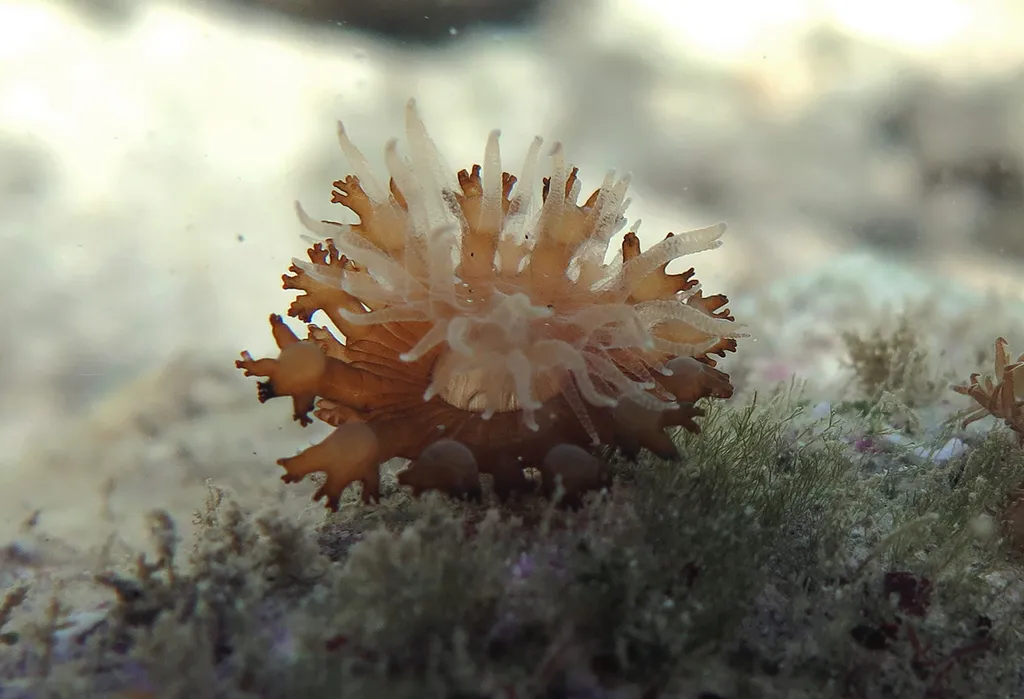
Lybia tessellata is a small crab in the family Xanthidae, growing to only about 2.5 cm across. It is famous for holding a small stinging sea anemone (typically Triactis or Bunodeopsis) in each claw and waving them like pom-poms, using them for both defense and to sweep up food. If it loses an anemone, it can split the remaining one in two so each claw is armed again. It cannot open food with those occupied claws, so it uses its walking legs to pass food to its mouth.
Did you know
It carries a live stinging anemone in each claw and waves them like boxing gloves or pom-poms, and if it drops one it can clone the survivor so both claws stay armed.
Symbiotic relationships
The boxer crab and its anemones
The boxer crab holds a tiny anemone in each claw and waves them at anything that comes close, the way a boxer holds up gloves. The anemones sting for the crab and mop up food particles, and the crab clips food from them to eat. Boxer crabs that lose one anemone have been filmed tearing the other in two, and both halves grow back into a whole anemone, so the crab is farming its weapons. The anemones seem to get nothing but a lifetime of being waved about.
A nano reef animal about an inch (2.5 cm) across that spends much of the day under rock. It is harmless to corals and fish and needs nothing special beyond stable water and no predators. The anemones arrive in its claws and need no care of their own; a crab sold as a pom-pom crab carries Triactis producta or, from the Red Sea, an Alicia. Do not confuse it with the freshwater pom pom crab in this catalog, which has fluffy claws and no anemones at all.
Common questions
What size tank does a Pom-pom crab need?
A Pom-pom crab needs at least 11 gal (40 L). It spends most of its time in the bottom.
What temperature and pH does a Pom-pom crab need?
A Pom-pom crab is comfortable at 75–81°F (24–27°C) with a pH of 8.1–8.4.
How big does a Pom-pom crab get?
An adult Pom-pom crab reaches about 1 in (2.5 cm).
Related species
- 1.2 in (3 cm)20 gal (75 L)72–81°F (22–27°C)
Strawberry crab
Neoliomera pubescens
1.2 in (3 cm) · 20 gal (75 L)
 0.8 in (2 cm)11 gal (40 L)72–82°F (22–28°C)
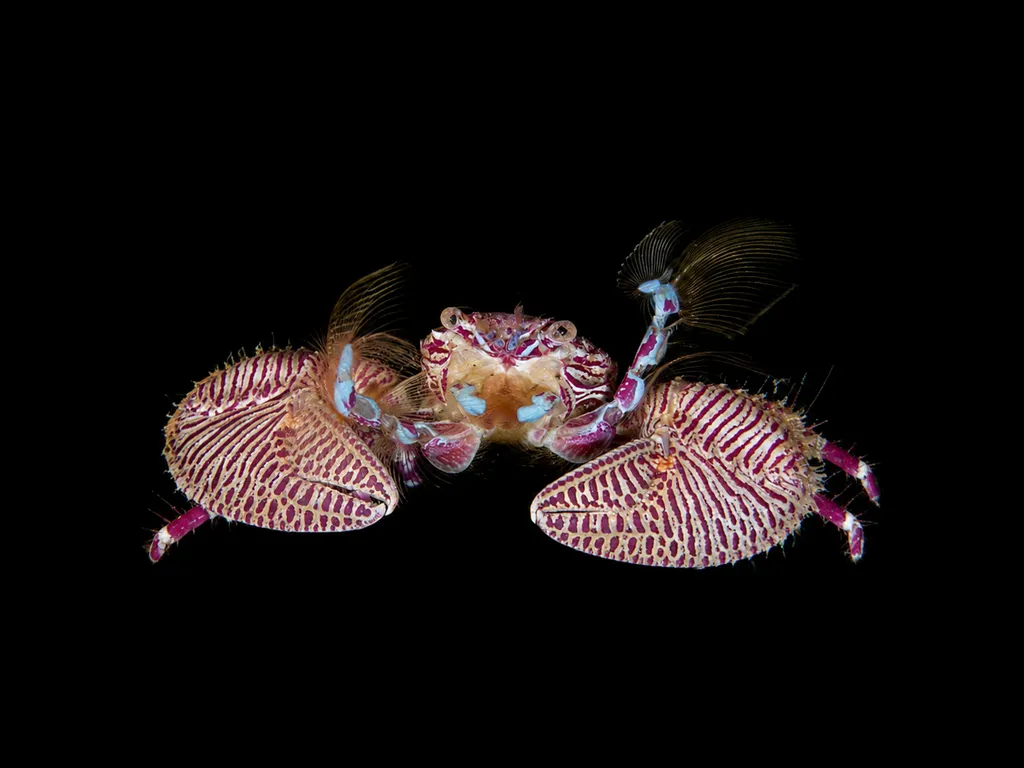
Purple zebra porcelain crab
Petrolisthes bolivarensis
0.8 in (2 cm) · 11 gal (40 L)
- 0.8 in (2 cm)26 gal (100 L)68–77°F (20–25°C)
Staghorn hermit crab
Manucomplanus varians
0.8 in (2 cm) · 26 gal (100 L)
 1 in (2.5 cm)11 gal (40 L)72–79°F (22–26°C)
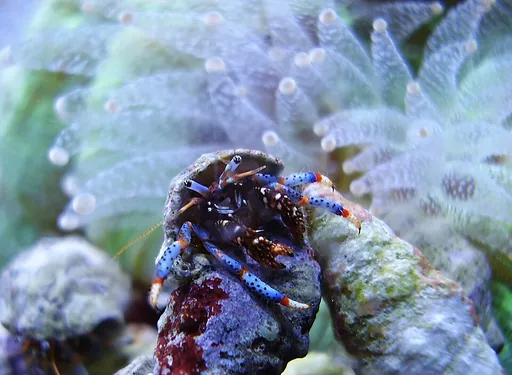
Blue-leg hermit crab
Clibanarius tricolor
1 in (2.5 cm) · 11 gal (40 L)
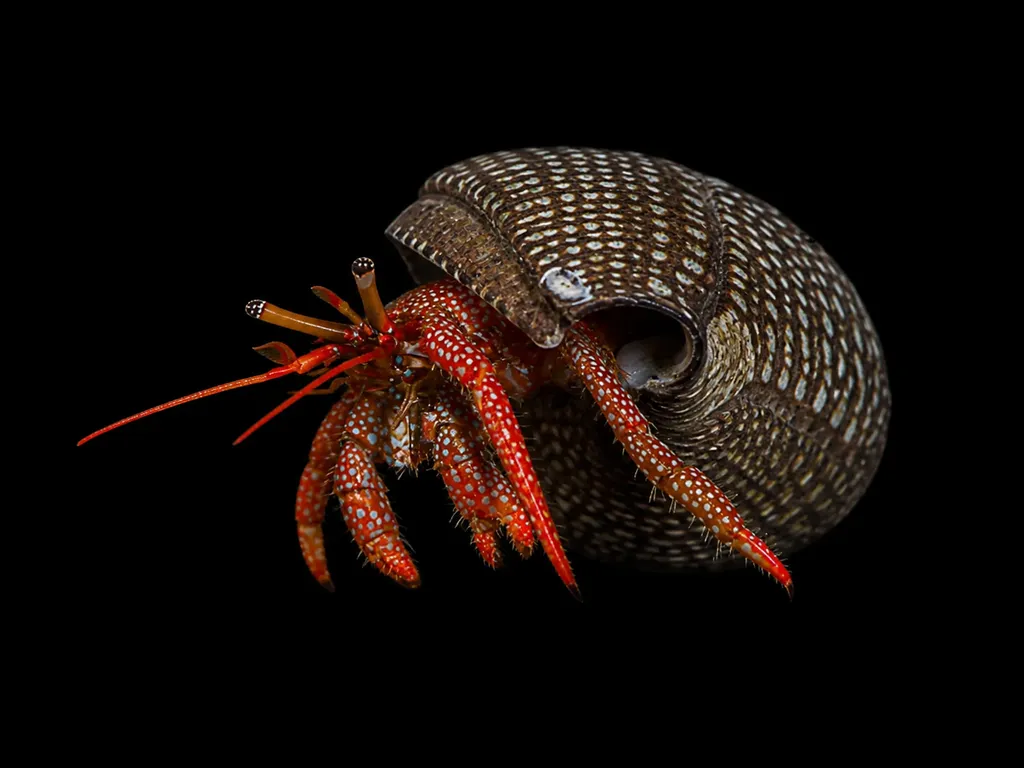 1 in (2.5 cm)11 gal (40 L)72–81°F (22–27°C)
Mexican red-leg hermit crab
Clibanarius digueti
1 in (2.5 cm) · 11 gal (40 L)
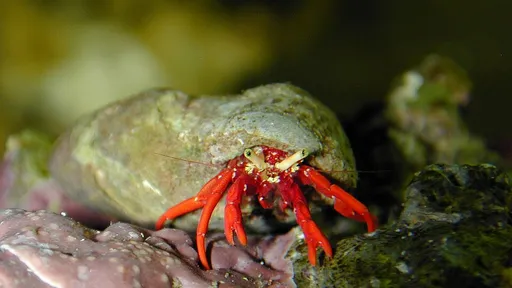 1.6 in (4 cm)11 gal (40 L)72–79°F (22–26°C)
Scarlet reef hermit crab
Paguristes cadenati
1.6 in (4 cm) · 11 gal (40 L)