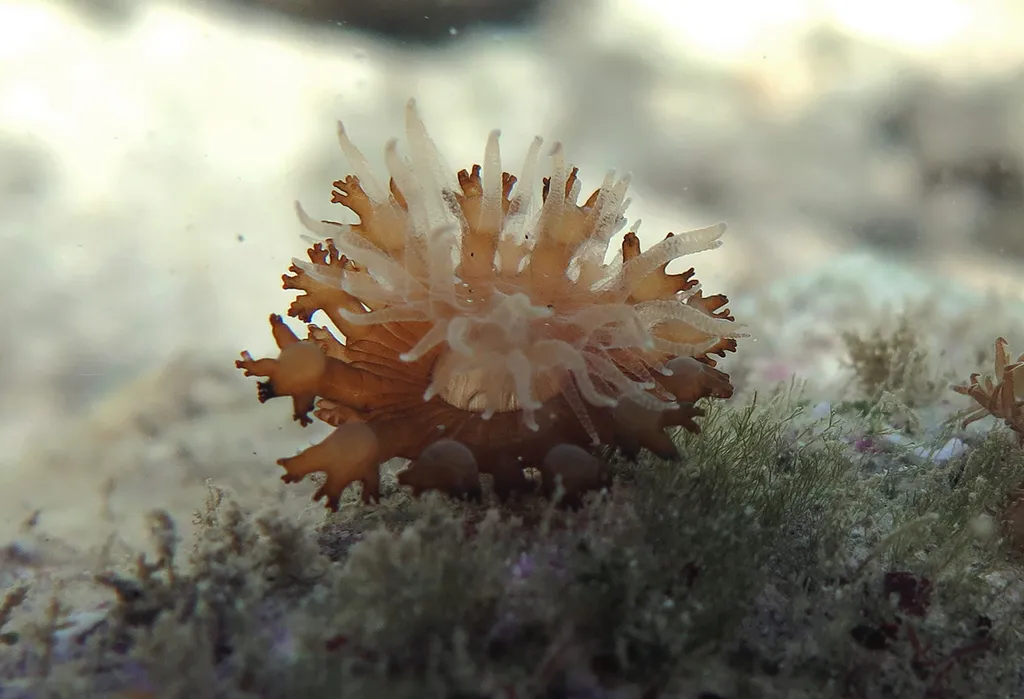
Red Sea boxer crab anemone
Alicia sp.
Also known as Alicia anemone, Boxer crab anemone
SaltwaterAnemone
Care at a glance
- Temperature
- 75–81°F
- 24–27°C
- pH
- 8.1–8.4
- Adult size
- 0.4 in
- 1 cm
- Minimum tank
- 11 gal
- 40 L
- Temperament
- Peaceful
- Social behavior
- Solitary
- Swim level
- Bottom
- Difficulty
- Difficult
- Breeding
- No record
- Rarity
- Very rare
- Reef safe
- Reef safe with caution
- Family
- Aliciidae
- Origin
- Northern Red Sea, known only from the claws of the Red Sea boxer crab Lybia leptochelis
Overview
It feeds on what the crab lets it keep and on its zooxanthellae, and it is waved at any fish or crab that comes too close. There is no separate care to give it: keep the crab well and the anemones come along. A crab sold as a pom-pom crab may carry this anemone or Triactis producta depending on where it was collected.
In the wild
Known from the northern Red Sea, where the boxer crab Lybia leptochelis carries one in each claw over shallow rubble and reef. Nobody has found this anemone living free; every specimen studied came out of a crab's claws. In an aquarium it exists only as part of a boxer crab, which means a nano reef with live rock, stable water and no fish or shrimp that would pull the crab's gloves off.
Good to know
The anemone belongs to the genus Alicia in the family Aliciidae and has not been described to species, so it is listed as Alicia sp. In the crab's claws it is kept to a few millimeters across, far below the size its relatives reach, because the crab takes most of its food. Researchers in Eilat filmed boxer crabs that had lost one anemone tearing the other in half, after which both halves regrew, and crabs stealing anemone fragments from each other; the anemones held by a group of crabs proved to be clones.
Did you know
Every one of these anemones ever examined was carried by a boxer crab, and the crabs propagate them by tearing them in half.
Symbiotic relationships
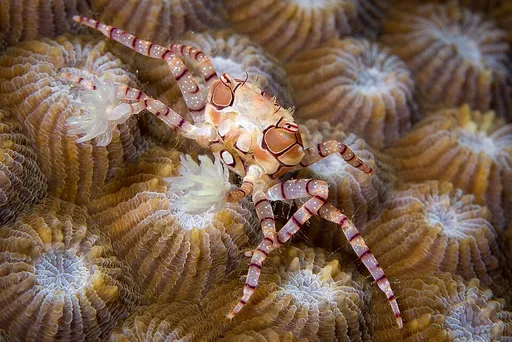
The boxer crab and its anemones
The boxer crab holds a tiny anemone in each claw and waves them at anything that comes close, the way a boxer holds up gloves. The anemones sting for the crab and mop up food particles, and the crab clips food from them to eat. Boxer crabs that lose one anemone have been filmed tearing the other in two, and both halves grow back into a whole anemone, so the crab is farming its weapons. The anemones seem to get nothing but a lifetime of being waved about.
A nano reef animal about an inch (2.5 cm) across that spends much of the day under rock. It is harmless to corals and fish and needs nothing special beyond stable water and no predators. The anemones arrive in its claws and need no care of their own; a crab sold as a pom-pom crab carries Triactis producta or, from the Red Sea, an Alicia. Do not confuse it with the freshwater pom pom crab in this catalog, which has fluffy claws and no anemones at all.
Common questions
What size tank does a Red Sea boxer crab anemone need?
A Red Sea boxer crab anemone needs at least 11 gal (40 L). It spends most of its time in the bottom.
What temperature and pH does a Red Sea boxer crab anemone need?
A Red Sea boxer crab anemone is comfortable at 75–81°F (24–27°C) with a pH of 8.1–8.4.
How big does a Red Sea boxer crab anemone get?
An adult Red Sea boxer crab anemone reaches about 0.4 in (1 cm).