Boxer crab anemone
Triactis producta
Also known as Triactis anemone, Pom-pom crab anemone
SaltwaterAnemone
Care at a glance
- Temperature
- 75–81°F
- 24–27°C
- pH
- 8.1–8.4
- Adult size
- 1.2 in
- 3 cm
- Minimum tank
- 11 gal
- 40 L
- Temperament
- Peaceful
- Social behavior
- Social
- Swim level
- Bottom
- Difficulty
- Medium
- Breeding
- Medium
- Rarity
- Rare
- Reef safe
- Reef safe with caution
- Family
- Aliciidae
- Origin
- Shallow reefs of the tropical Indo-Pacific, from the Red Sea and Mozambique to Hawaii and French Polynesia
Overview
Boxer crabs of the genus Lybia hold one in each claw and wave them at anything that comes close, and a crab that loses one tears the other in two so that each half grows back into a whole anemone. The crab keeps its anemones small by taking most of their food. On its own the anemone wants reef lighting, gentle flow, a piece of meaty food once a week and room, because it stings any coral it settles against. Keep bare skin away from it.
In the wild
Lives in shallow water across the tropical Indo-Pacific, from the Red Sea and Mozambique to Hawaii and French Polynesia, wedged into crevices and among the branches of stony corals. Free-living animals often sit in dense clusters that are probably clones. In an aquarium it arrives in the claws of a boxer crab far more often than on its own, and a crab-held one stays under 0.3 inches (8 mm) tall. Give it a nano reef with strong light, live rock and no fish or shrimp that pick at anemones.
Good to know
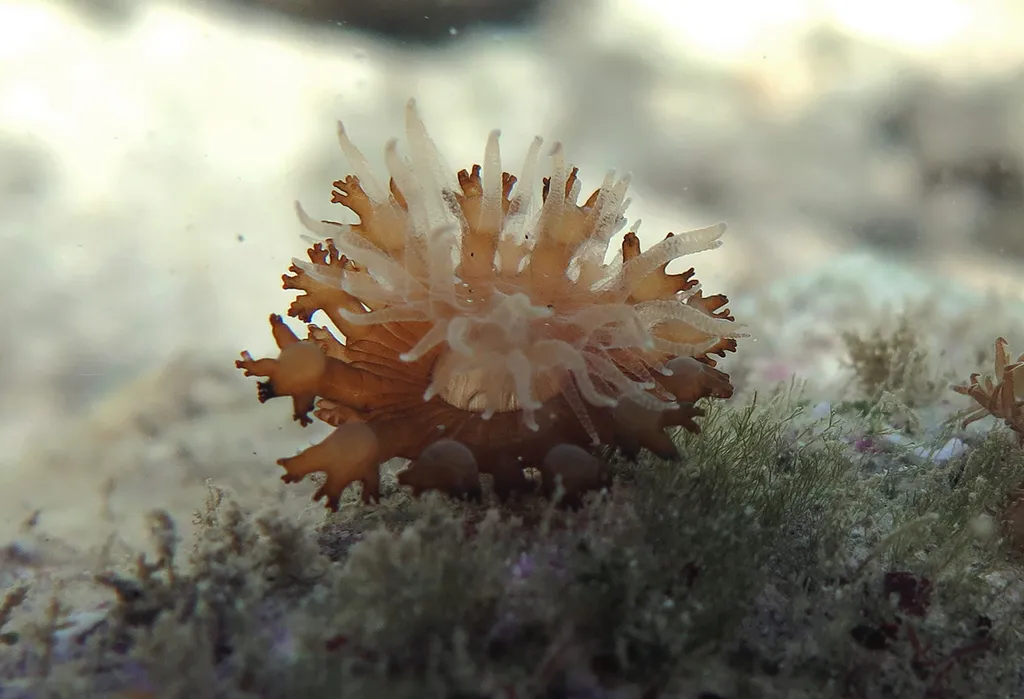
Triactis producta belongs to the family Aliciidae. A free-living animal has a base about 0.4 inches (1 cm) across, a column around 0.6 inches (1.5 cm) tall and some 50 long tentacles, with a ring of branching pseudotentacles part way up the column that holds its zooxanthellae. By day it retracts the tentacles and spreads the pseudotentacles to the light; at night it extends the tentacles to catch small invertebrates. Its sting is strong for an anemone this size, and a touch can leave a swollen, blistered lesion that lasts for weeks.
Did you know
It is the anemone the boxer crab wears as boxing gloves, and a crab that loses one splits the other in half to grow a new pair.
Symbiotic relationships
The boxer crab and its anemones
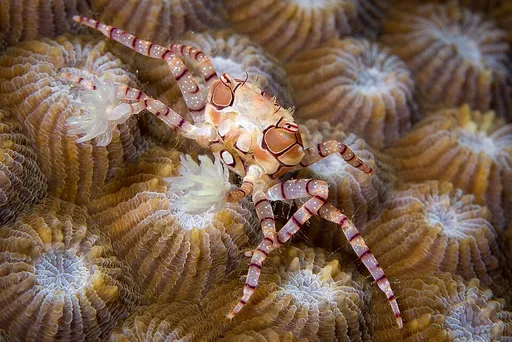
The boxer crab holds a tiny anemone in each claw and waves them at anything that comes close, the way a boxer holds up gloves. The anemones sting for the crab and mop up food particles, and the crab clips food from them to eat. Boxer crabs that lose one anemone have been filmed tearing the other in two, and both halves grow back into a whole anemone, so the crab is farming its weapons. The anemones seem to get nothing but a lifetime of being waved about.
A nano reef animal about an inch (2.5 cm) across that spends much of the day under rock. It is harmless to corals and fish and needs nothing special beyond stable water and no predators. The anemones arrive in its claws and need no care of their own; a crab sold as a pom-pom crab carries Triactis producta or, from the Red Sea, an Alicia. Do not confuse it with the freshwater pom pom crab in this catalog, which has fluffy claws and no anemones at all.
Common questions
What size tank does a Boxer crab anemone need?
A Boxer crab anemone needs at least 11 gal (40 L). It spends most of its time in the bottom.
What temperature and pH does a Boxer crab anemone need?
A Boxer crab anemone is comfortable at 75–81°F (24–27°C) with a pH of 8.1–8.4.
How big does a Boxer crab anemone get?
An adult Boxer crab anemone reaches about 1.2 in (3 cm).