Staghorn hermit crab
Manucomplanus varians
Also known as Antler staghorn hermit, Antler hermit crab, Staghorn hermit
SaltwaterCrab
Care at a glance
- Temperature
- 68–77°F
- 20–25°C
- pH
- 8.1–8.4
- Adult size
- 0.8 in
- 2 cm
- Minimum tank
- 26 gal
- 100 L
- Temperament
- Peaceful
- Social behavior
- Solitary
- Own kind
- One per tank
- Tankmates
- With caution
- Swim level
- Bottom
- Difficulty
- Difficult
- Breeding
- No record
- Rarity
- Rare
- Reef safe
- Reef safe with caution
- Family
- Paguridae
- Origin
- Eastern Pacific, Gulf of California to Panama
Overview
A peaceful bottom dweller that scavenges algae, detritus, and meaty leftovers and leaves fish and corals alone. It gets a reef safe with caution verdict anyway: the living shell stings and is stung by corals and anemones it brushes against, and the hydroid needs feeding that most reef tanks do not provide. Keep one per tank, since two fight and will abandon their hydrocoral homes for any ordinary shell you offer. Feed the crab dried seaweed and small meaty foods, and feed the hydrocoral daily with fine powdered or liquid plankton foods meant for non photosynthetic corals, under low light, and even then the hydrocoral often dies within months, leaving a plain hermit in a dead skeleton. It may not be able to right itself if it tips over, so keep it away from ledges and boisterous tank mates and check on it daily.
In the wild
The staghorn hermit crab comes from the eastern Pacific, from Magdalena Bay and the Gulf of California south to Panama, and most trade animals are trawled in the Sea of Cortez. It lives on mixed sand and rock bottoms from 6 to 183 m, so it sees cooler, dimmer water than a reef flat. Retailer pages that call it Indo-Pacific are wrong. Give it a mature tank of 100 liters or more with open sand, low to moderate light, gentle to moderate flow, and no corals or anemones where its living shell can bump them. Keep the water at 20 to 25 C and pH 8.1 to 8.4, a best guess from its depth range since no source gives a tested figure, and cooler is the safer side.
Good to know
Manucomplanus varians is a small pagurid hermit crab described by Benedict in 1892, and the crab itself is only about 1 to 2 cm of body (the San Diego Natural History Museum gives a 6 mm carapace), while retailers quote larger figures because they measure it with the shell. Its home is the remarkable part. The hydrocoral Janaria mirabilis, a colonial hydrozoan with a hard calcareous skeleton and photosynthetic zooxanthellae, settles on the snail shell the young crab is wearing, dissolves the shell away, and keeps growing into a branched antler shaped house up to about 5 cm across. The crab never has to change shells again; it seals the entrance with its claw and trims the doorway as the hydrocoral grows. Some shells are overgrown by bryozoans instead.
Did you know
This is a hermit crab that never moves house. Instead of trading up shells as it grows, it lets the hydrocoral Janaria mirabilis eat its snail shell away and build a growing antler shaped home around it, and the San Diego Natural History Museum notes the crab trims the entrance to fit as the colony grows. The price of a free home is a top heavy one: flipped onto its back, the crab often cannot get up again.
Common questions
What size tank does a Staghorn hermit crab need?
A Staghorn hermit crab needs at least 26 gal (100 L). It spends most of its time in the bottom.
What temperature and pH does a Staghorn hermit crab need?
A Staghorn hermit crab is comfortable at 68–77°F (20–25°C) with a pH of 8.1–8.4.
How big does a Staghorn hermit crab get?
An adult Staghorn hermit crab reaches about 0.8 in (2 cm).
Related species
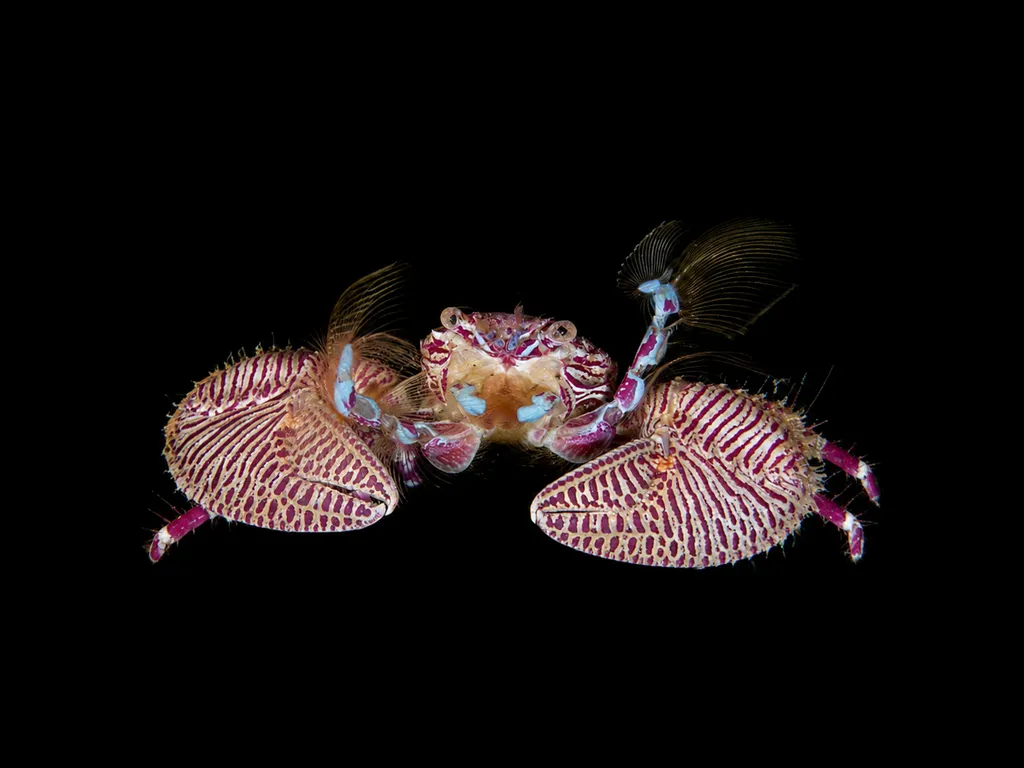 0.8 in (2 cm)11 gal (40 L)72–82°F (22–28°C)
Purple zebra porcelain crab
Petrolisthes bolivarensis
0.8 in (2 cm) · 11 gal (40 L)
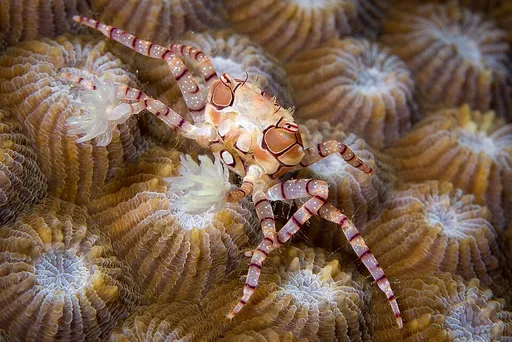 1 in (2.5 cm)11 gal (40 L)75–81°F (24–27°C)
Pom-pom crab
Lybia tessellata
1 in (2.5 cm) · 11 gal (40 L)
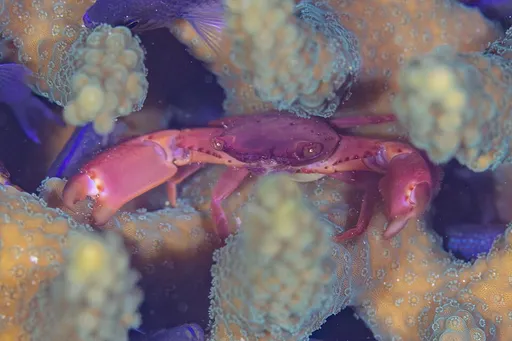 0.8 in (2 cm)11 gal (40 L)75–81°F (24–27°C)
Coral guard crab
Trapezia cymodoce
0.8 in (2 cm) · 11 gal (40 L)
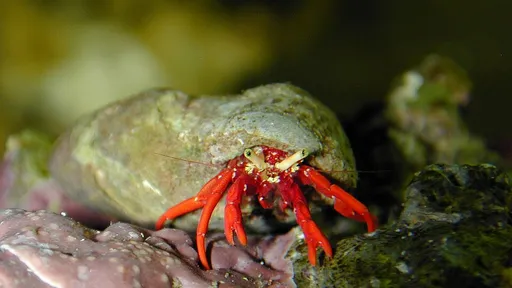 1.6 in (4 cm)11 gal (40 L)72–79°F (22–26°C)
Scarlet reef hermit crab
Paguristes cadenati
1.6 in (4 cm) · 11 gal (40 L)
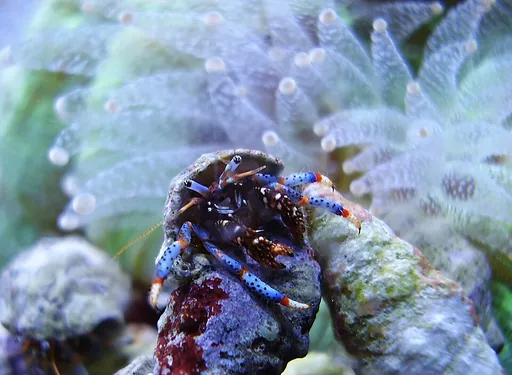 1 in (2.5 cm)11 gal (40 L)72–79°F (22–26°C)
Blue-leg hermit crab
Clibanarius tricolor
1 in (2.5 cm) · 11 gal (40 L)
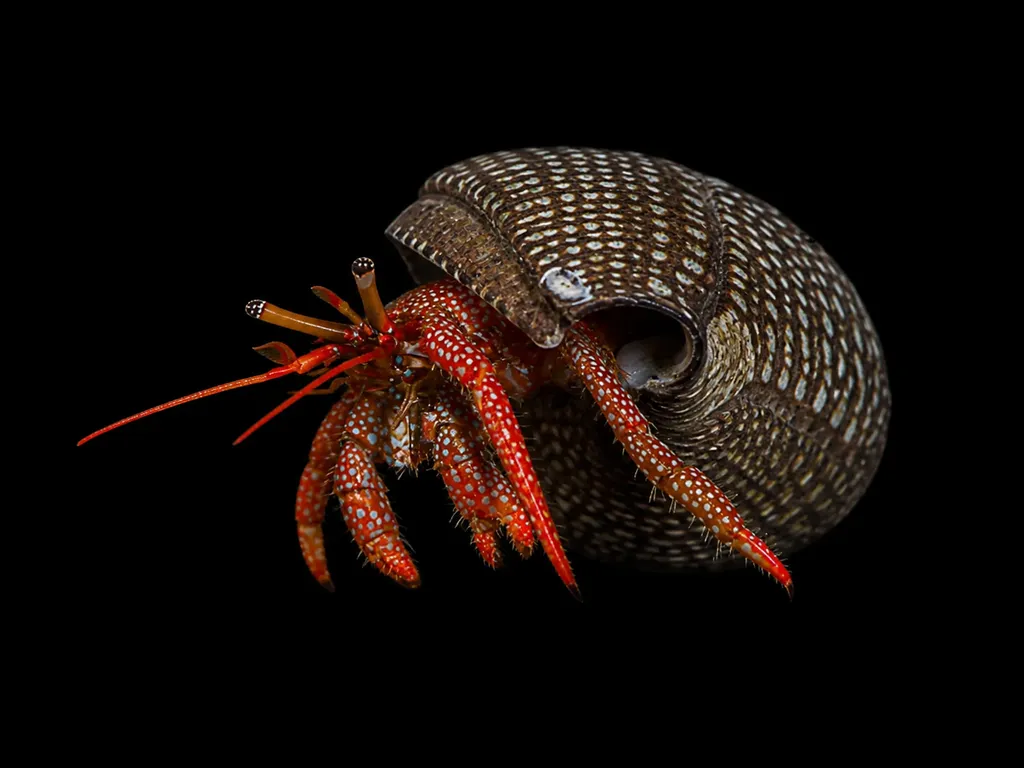 1 in (2.5 cm)11 gal (40 L)72–81°F (22–27°C)
Mexican red-leg hermit crab
Clibanarius digueti
1 in (2.5 cm) · 11 gal (40 L)