Condy anemone
Condylactis gigantea
Also known as Condylactis Anemone, Giant Caribbean Anemone, Haitian Pink-Tip Anemone, Golden Anemone
SaltwaterAnemone
Care at a glance
- Temperature
- 75–81°F
- 24–27°C
- pH
- 8.1–8.4
- Adult size
- 11.8 in
- 30 cm
- Minimum tank
- 40 gal
- 150 L
- Temperament
- Mostly peaceful
- Social behavior
- Solitary
- Tankmates
- With caution
- Swim level
- Bottom
- Difficulty
- Medium
- Breeding
- No record
- Rarity
- Very common
- Reef safe
- Reef safe with caution
- Family
- Actiniidae
- Origin
- Caribbean Sea and western Atlantic
Overview
Needs moderate to strong lighting and moderate flow, plus regular meaty feedings of chopped shrimp, silverside, or fish two or three times a week, since it hunts more actively than most photosynthetic anemones. It moves around on its pedal disc and carries a strong sting, so keep it well away from corals and shield any powerheads it could wander into. Despite being sold cheaply as a starter anemone, it is not a reliable clownfish host; a clownfish introduced to one may be accepted, ignored, or stung and killed, and the outcome is genuinely unpredictable, so do not count on this species to pair with a clownfish. It is, however, a natural partner for Pederson and other cleaner shrimp, arrow crabs, and emerald crabs. Acclimate it slowly into an established, stable tank.
In the wild
Common on shallow reef flats, seagrass beds, and rubble zones throughout the Caribbean and western Atlantic, usually with its column wedged into a rock crevice and its long, tapering tentacles fully extended to catch passing prey. In the aquarium it does best on the lower rockwork under moderate to strong light, with open space around it since it both moves and stings anything that brushes its tentacles. Unlike the Pacific host anemones, it does not reliably pair with clownfish.
Good to know
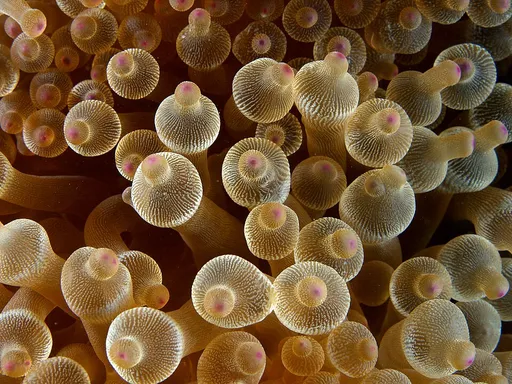
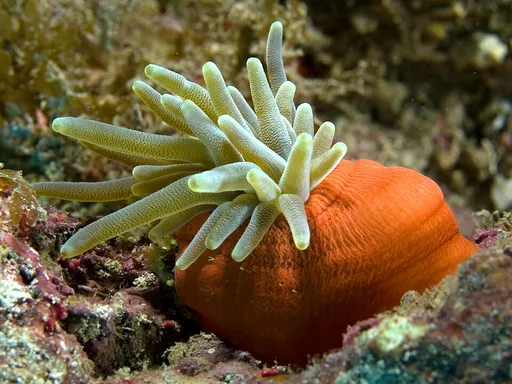
Condylactis gigantea gets its energy from a mix of symbiotic zooxanthellae and active predation. Its long, tapering tentacles end in a slightly swollen tip and come in a wide range of natural colors, including pink, purple, and green. Because it evolved on the opposite side of the world from every wild clownfish population, it never developed the relationship that lets a true host anemone's mucus coat protect a resident clownfish from its own sting.
Did you know
Condy anemones are inexpensive and hardy enough that pet stores have marketed them as a clownfish starter anemone for decades, even though real world results with clownfish are a coin flip; its actual wild partners are cleaner shrimp and crabs, not anemonefish.
Symbiotic relationships
Shrimp and crabs that live in anemones
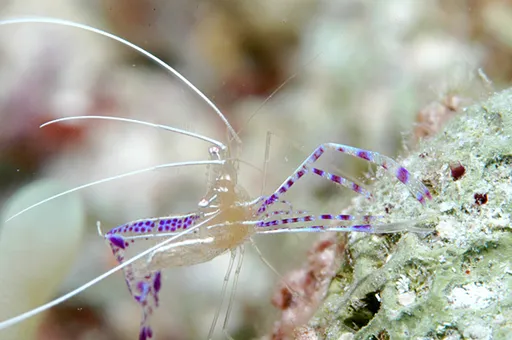
Several small crustaceans live where almost nothing else can: among the tentacles of an anemone. Sexy shrimp perch in the tentacles in a cluster, bobbing their tails in the display that named them. The white-spot anemone shrimp is near transparent apart from its spots and lives on carpet anemones. The porcelain anemone crab sits at the anemone's edge and filters plankton from the water with two fan-like arms. Pederson's cleaner shrimp lives in the Caribbean corkscrew anemone and cleans fish from there. In every case the anemone is a bodyguard: its sting keeps off the small fish that would eat the shrimp. The anemone gains little, and the white-spot shrimp will nibble its host's tentacles when it is hungry.
Give each of them its anemone. Sexy shrimp take a rock flower anemone, a bubble tip or a carpet. The white-spot shrimp and the porcelain crab want a carpet anemone or a long tentacle anemone, both of which need a mature tank at the tank size their profiles list. Pederson's shrimp wants a corkscrew anemone or a condy. Without a host they perch on a coral or hide in the rock and are picked off by any fish that eats shrimp, so they suit a peaceful nano reef. A clownfish will evict them from an anemone it has claimed.
Common questions
What size tank does a Condy anemone need?
A Condy anemone needs at least 40 gal (150 L). It spends most of its time in the bottom.
What temperature and pH does a Condy anemone need?
A Condy anemone is comfortable at 75–81°F (24–27°C) with a pH of 8.1–8.4.
How big does a Condy anemone get?
An adult Condy anemone reaches about 11.8 in (30 cm).