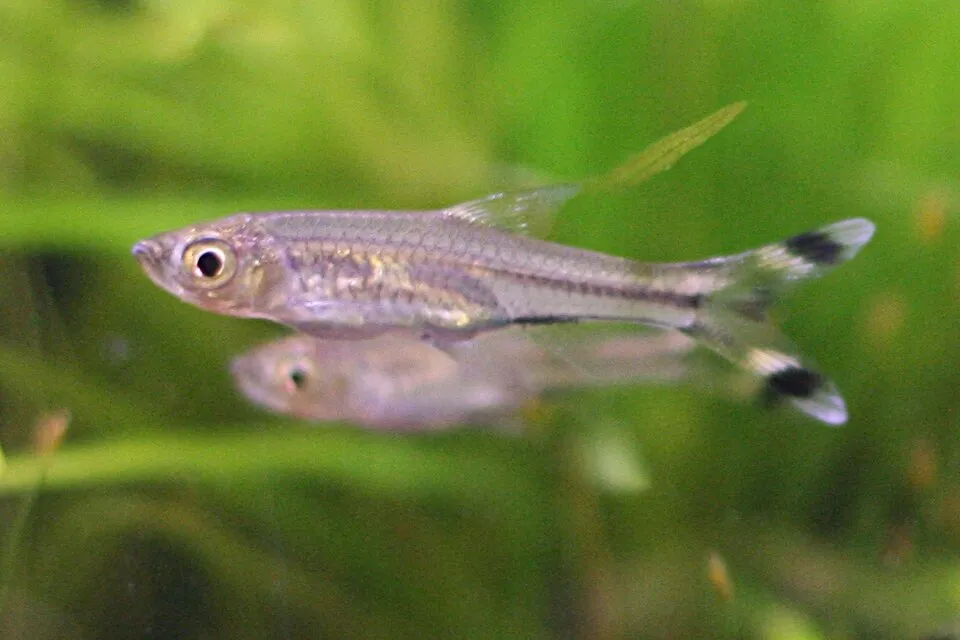
Scissortail rasbora
Rasbora trilineata
FreshwaterFish
Care at a glance
- Temperature
- 72–77°F
- 22–25°C
- pH
- 6.0–7.5
- Adult size
- 5.5 in
- 14 cm
- Minimum tank
- 45 gal
- 170 L
- Temperament
- Peaceful
- Social behavior
- Schooling
- Swim level
- Middle
- Difficulty
- Easy
- Breeding
- Hard
- Rarity
- Rare
- Family
- Cyprinidae
- Origin
- South East Asia
Overview
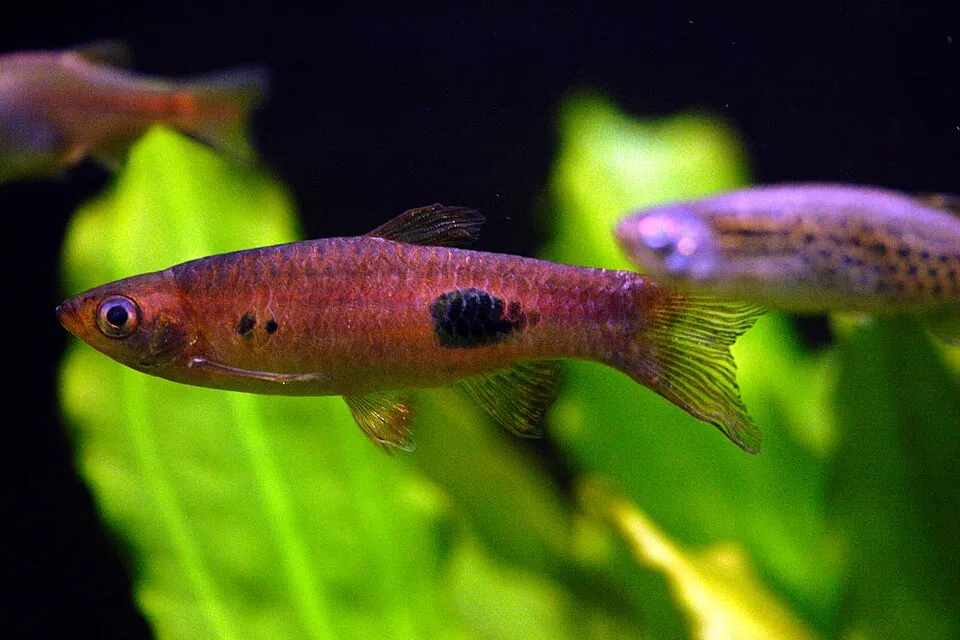
Scissortail rasboras are peaceful, active shoaling fish that should be kept in a group of at least six, and preferably more, so they swim boldly in the open rather than hanging back. They are strong swimmers of the middle water that grow larger than many rasboras, so they suit a spacious community with other calm, active fish of similar size. They are easy to feed, taking flake, pellets, and frozen or live foods. A secure lid helps, as active shoals can be startled into jumping. A tank around 170 liters or larger gives this sizable, energetic rasbora the length it needs.
In the wild
The scissortail rasbora is widespread across Southeast Asia, living in rivers, streams, and flooded areas that range from clear flowing water to softer forest streams. It is comfortable in warm water of about 22–25 C and a pH of 6.0–7.5. Set up a roomy tank with some current, a base of sand and gravel, and driftwood and rounded rock. Plant the sides and back and keep a long, open central lane, since this is an active fish that spends its day swimming and appreciates room to move.
Good to know
Rasbora trilineata is one of the larger members of the family Cyprinidae kept as a community fish, reaching around 14 cm. Its species name trilineata refers to the faint lines along its body, while its common name comes from the deeply forked tail marked with bold black and white bands. It is an egg scattering, non guarding spawner, and breeding it deliberately in the aquarium is difficult and rarely done at home.
Did you know
The scissortail earns its name from its deeply forked tail, whose black and white barred lobes open and close as the fish hovers and swims, flicking like the blades of a pair of scissors. That constant snipping motion makes even a still, hovering fish easy to spot in the tank.
Weekly picks
Tank mates
Scissortail rasbora is a peaceful, schooling species that keeps to the middle. These picks share a community profile with it, are safe together in both directions, and overlap on water type, temperature and pH.
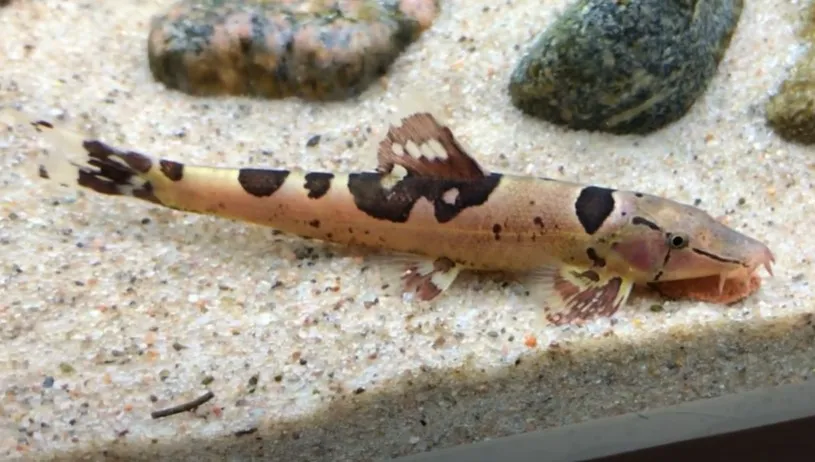
Saddle-back loach
Homaloptera orthogoniata
Freshwater4.3 in (11 cm) · 45 gal (170 L)68–77°F (20–25°C)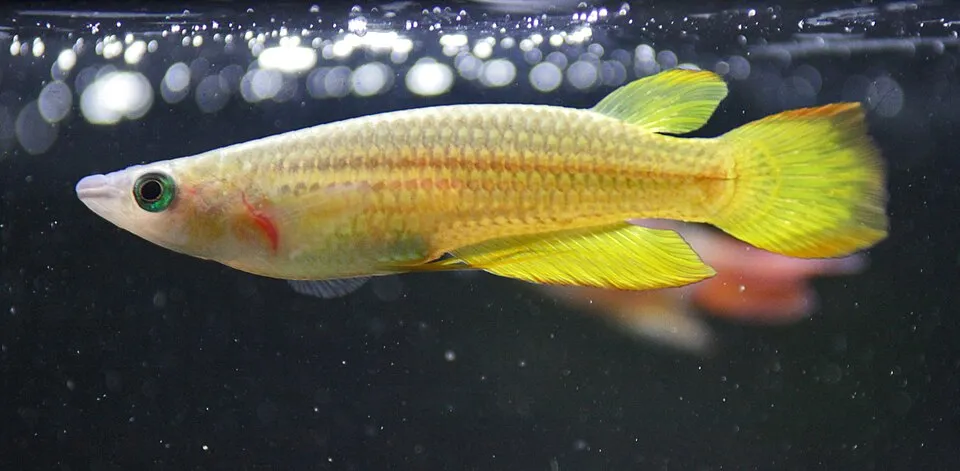
Striped panchax
Aplocheilus lineatus
Freshwater4.3 in (11 cm) · 30 gal (115 L)72–77°F (22–25°C)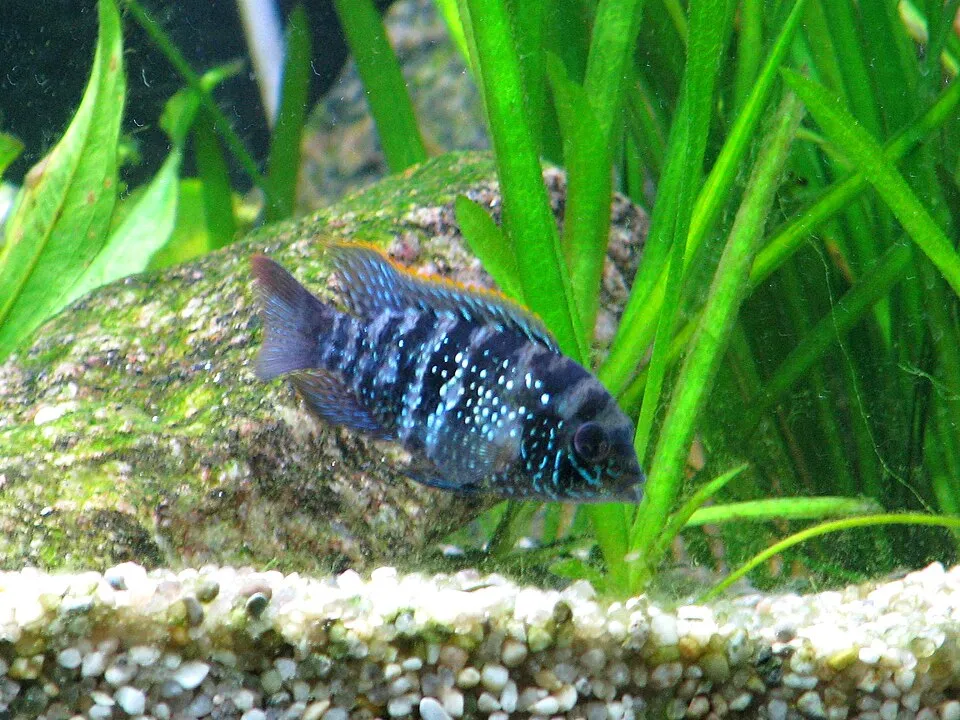
Blue acara
Andinoacara pulcher
Freshwater5.9 in (15 cm) · 42 gal (160 L)72–82°F (22–28°C)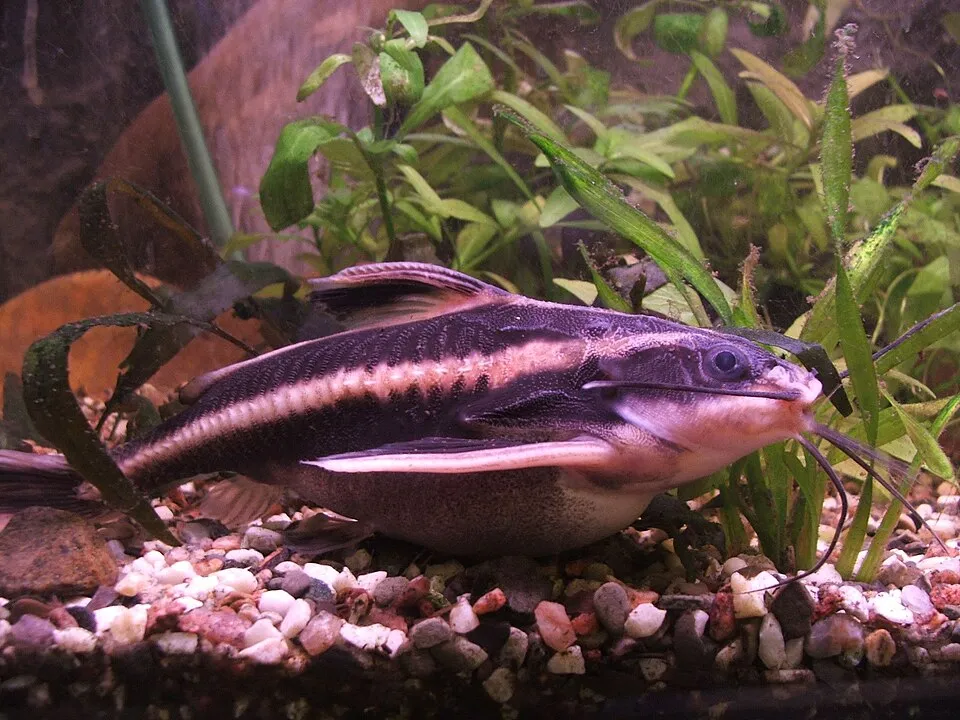
Striped raphael catfish
Platydoras armatulus
Freshwater8.7 in (22 cm) · 45 gal (170 L)75–86°F (24–30°C)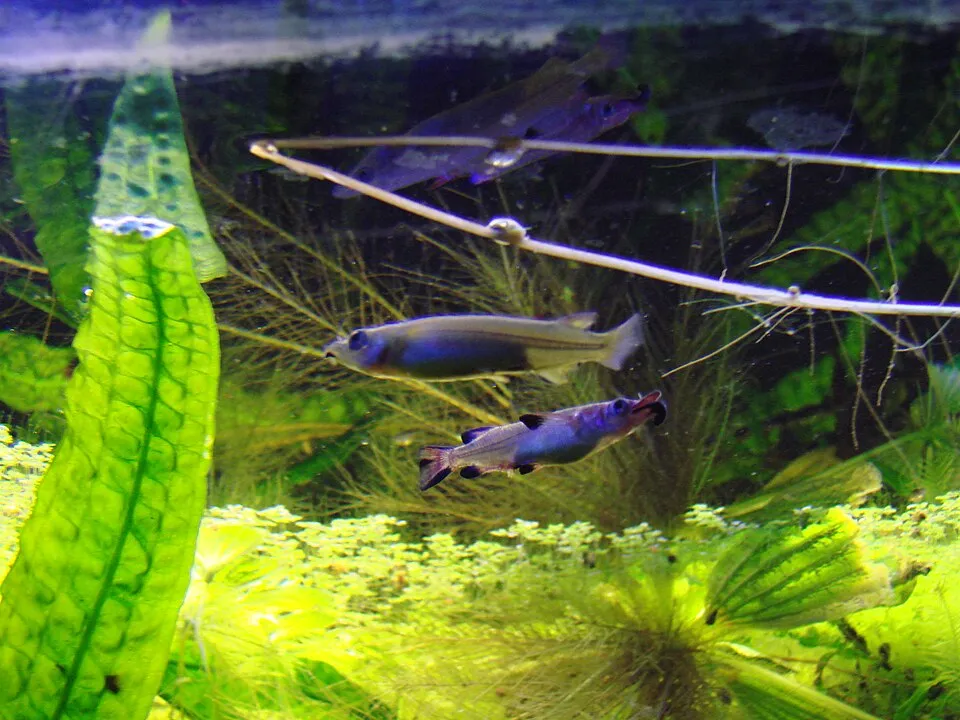
Celebes halfbeak
Nomorhamphus liemi
Freshwater3.5 in (9 cm) · 40 gal (150 L)68–77°F (20–25°C)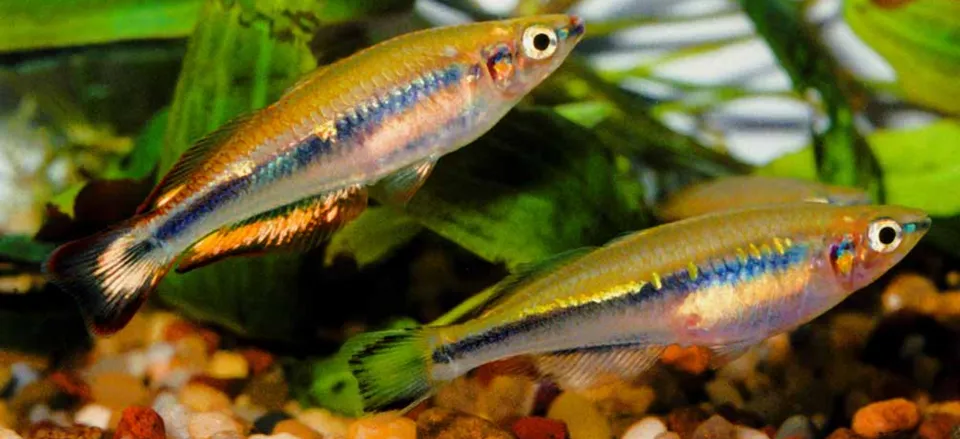
Madagascar rainbowfish
Bedotia madagascariensis
Freshwater3.3 in (8.5 cm) · 45 gal (170 L)73–90°F (23–32°C)
Common questions
What size tank does a Scissortail rasbora need?
A Scissortail rasbora needs at least 45 gal (170 L). It spends most of its time in the middle.
What temperature and pH does a Scissortail rasbora need?
A Scissortail rasbora is comfortable at 72–77°F (22–25°C) with a pH of 6.0–7.5.
How big does a Scissortail rasbora get?
An adult Scissortail rasbora reaches about 5.5 in (14 cm).
Does a Scissortail rasbora need a group?
Yes. A Scissortail rasbora is a schooling species and should be kept in a group, not singly.
Related species
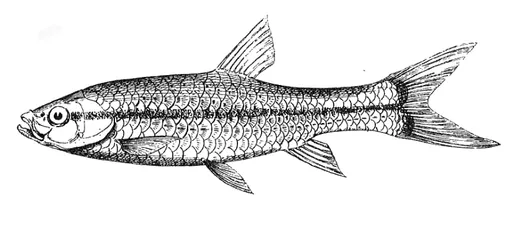 3.9 in (10 cm)32 gal (120 L)72–81°F (22–27°C)
Slender rasbora
Rasbora daniconius
3.9 in (10 cm) · 32 gal (120 L)
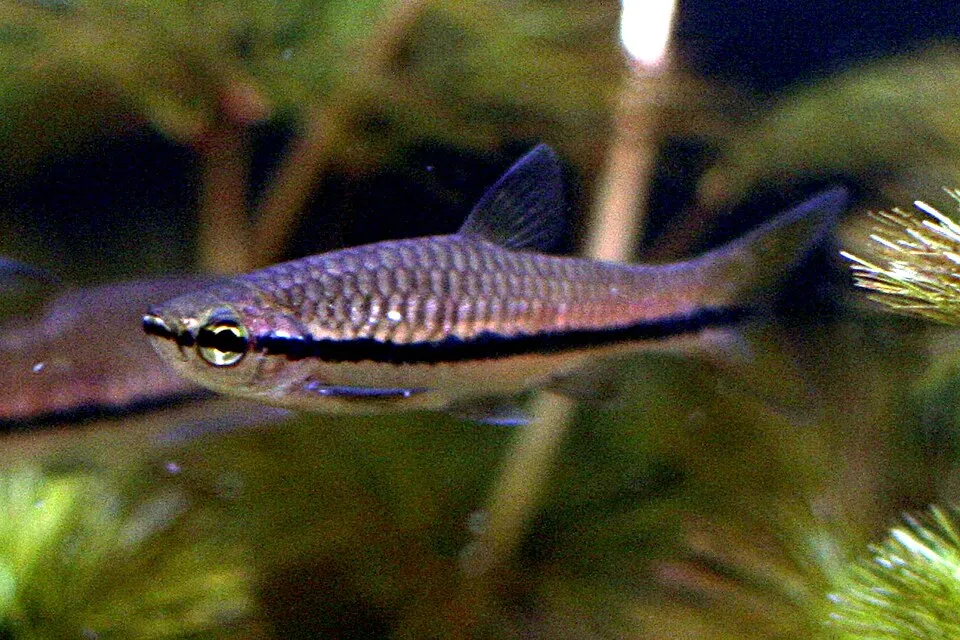 3.5 in (9 cm)20 gal (75 L)72–82°F (22–28°C)
Brilliant rasbora
Rasbora einthovenii
3.5 in (9 cm) · 20 gal (75 L)
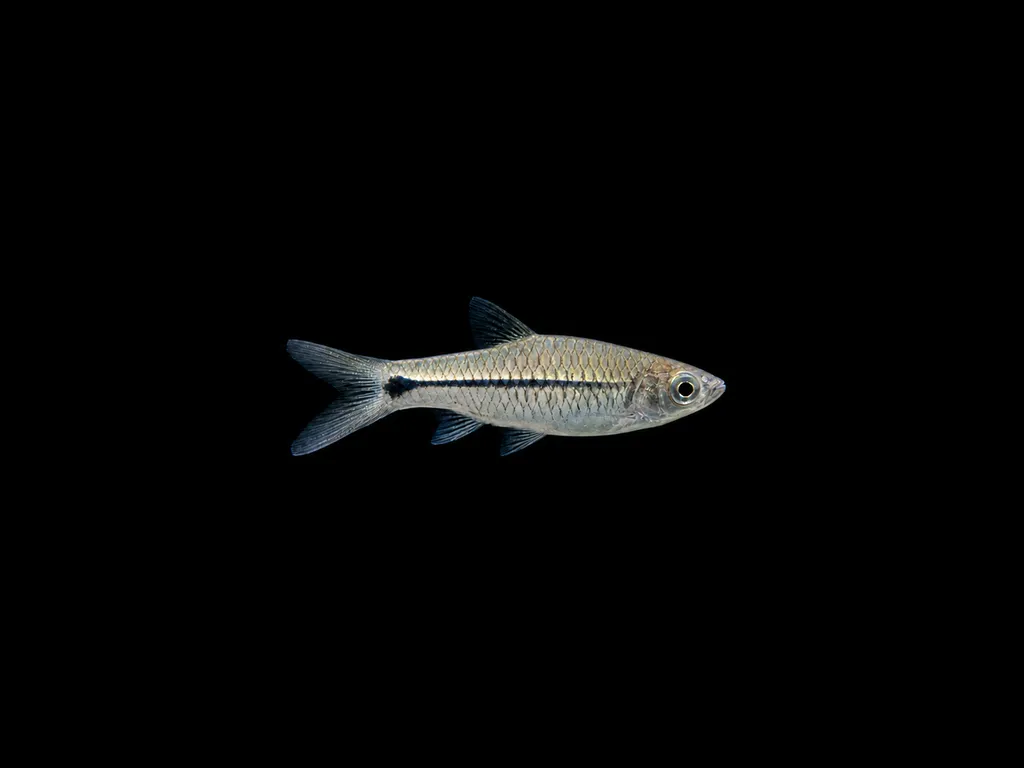 3.1 in (8 cm)32 gal (120 L)72–79°F (22–26°C)
Sidestripe rasbora
Rasbora paviana
3.1 in (8 cm) · 32 gal (120 L)
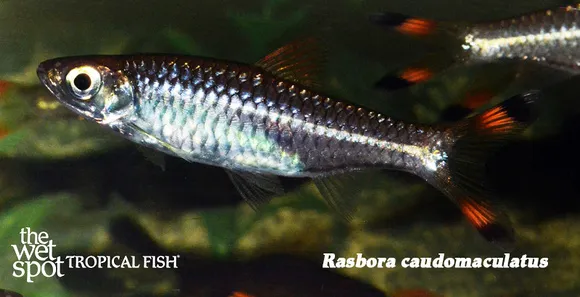 5.1 in (13 cm)53 gal (200 L)68–79°F (20–26°C)
Greater scissortail
Rasbora caudimaculata
5.1 in (13 cm) · 53 gal (200 L)
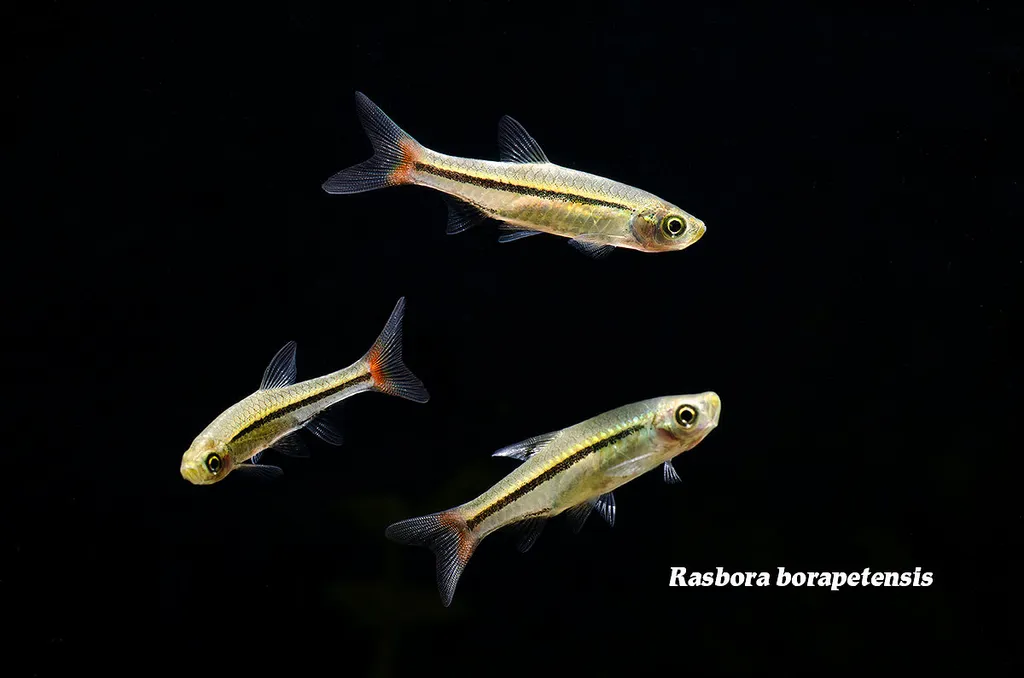 2.4 in (6 cm)18 gal (70 L)72–79°F (22–26°C)
Red-tailed rasbora
Rasbora borapetensis
2.4 in (6 cm) · 18 gal (70 L)
 3.9 in (10 cm)34 gal (130 L)73–82°F (23–28°C)
Clown rasbora
Rasbora kalochroma
3.9 in (10 cm) · 34 gal (130 L)