Clown rasbora
Rasbora kalochroma
FreshwaterFish
Care at a glance
- Temperature
- 73–82°F
- 23–28°C
- pH
- 6.0–7.5
- Adult size
- 3.9 in
- 10 cm
- Minimum tank
- 34 gal
- 130 L
- Temperament
- Mostly peaceful
- Social behavior
- Schooling
- Swim level
- Middle
- Difficulty
- Medium
- Breeding
- Hard
- Rarity
- Rare
- Family
- Cyprinidae
- Origin
- Malaysia, Borneo, Sumatra
Overview
Clown rasboras are best kept in a group of eight or more, though they shoal more loosely than most rasboras and adults often spread out and behave semi independently rather than moving as a tight ball. They swim in the middle water and are mostly peaceful, but a larger group settles them and spreads out any minor squabbling. House them with other calm species that enjoy soft, warm water, and avoid pushy or nippy tankmates. They appreciate meaty foods, so offer frozen and live bloodworm, daphnia, and brine shrimp alongside a good flake or micro pellet. Aim for a tank around 130 liters or larger.
In the wild
This rasbora is a blackwater specialist from Malaysia, Borneo, and Sumatra, living in shady, soft, acidic forest streams and peat swamps stained brown with tannins. It wants warm water of about 23–28 C and an acidic to neutral pH of 6.0–7.5, ideally toward the lower end. Set it up with a dark base, generous driftwood and leaf litter, and dim lighting broken by floating plants. Botanicals that release tannins help lower the pH gently and mimic the tea colored water where its deep red coloring looks its best.
Good to know
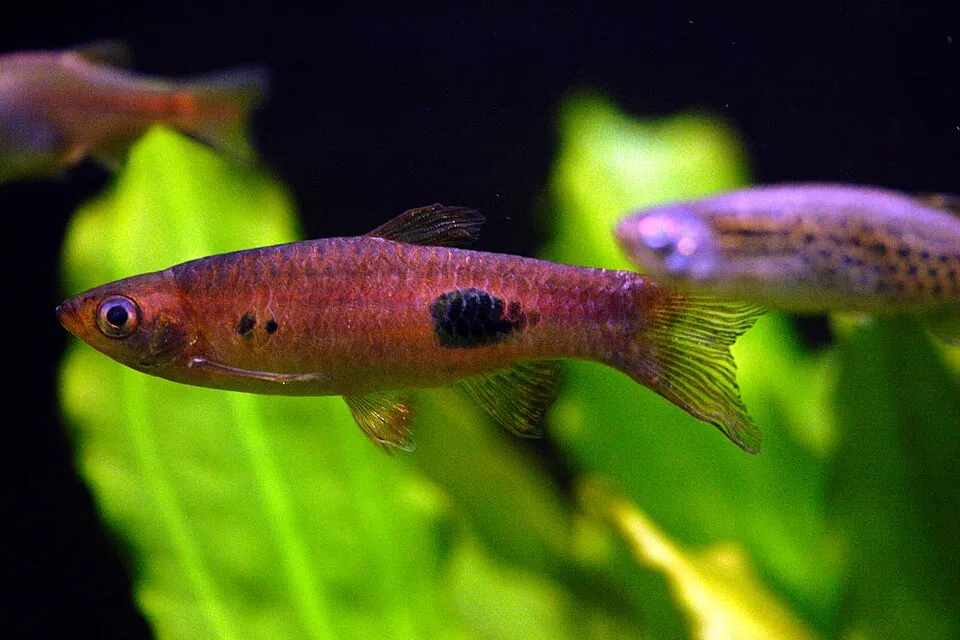
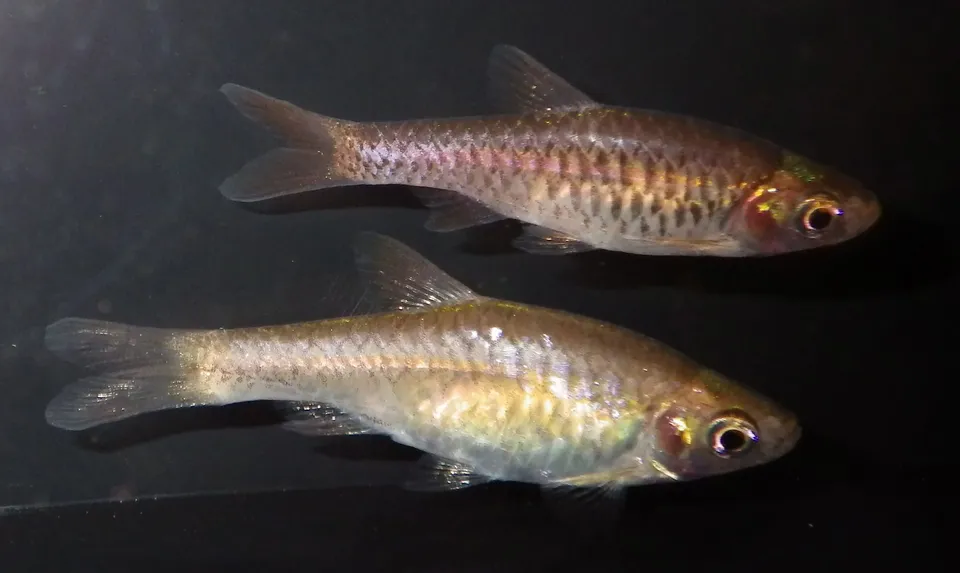
Rasbora kalochroma is a comparatively large, deep bodied rasbora in the family Cyprinidae, reaching about 10 cm. It is a solid cherry to brick red fish marked with two dark blotches on the flank, one behind the gill cover and one near the middle of the body. The species name kalochroma comes from Greek words meaning beautiful color. It is an egg scattering, non guarding spawner, and breeding it in aquaria is considered difficult and is rarely achieved, so nearly all stock is wild caught.
Did you know
The species name kalochroma translates from the Greek as beautiful color, a nod to the rich red the fish shows in soft, dark water. Unlike the tightly schooling harlequin rasbora it is related to, the clown rasbora tends to hold looser company and can act territorial toward its own kind as it matures.
Weekly picks
Tank mates
Clown rasbora is a mostly peaceful, schooling species that keeps to the middle. These picks share a community profile with it, are safe together in both directions, and overlap on water type, temperature and pH.
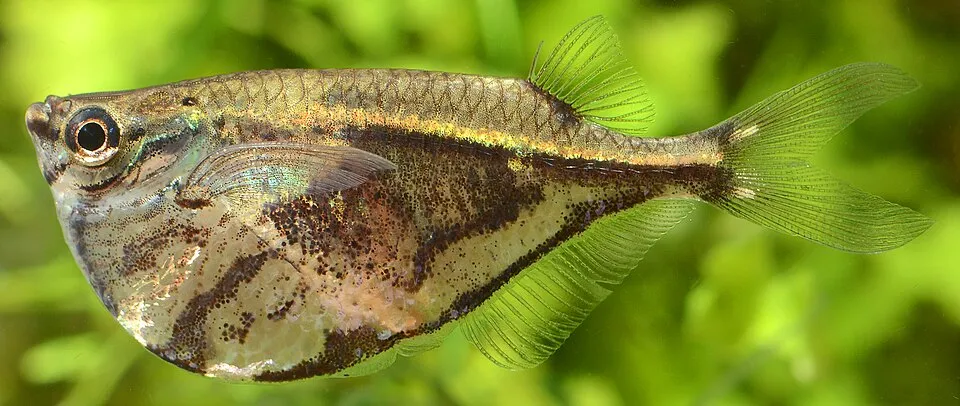
Marbled hatchetfish
Carnegiella strigata
Freshwater1.6 in (4 cm) · 32 gal (120 L)68–82°F (20–28°C)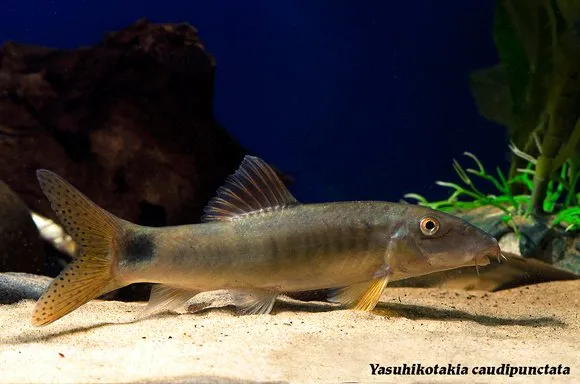
Spottail loach
Yasuhikotakia caudipunctata
Freshwater4.3 in (11 cm) · 37 gal (140 L)73–82°F (23–28°C)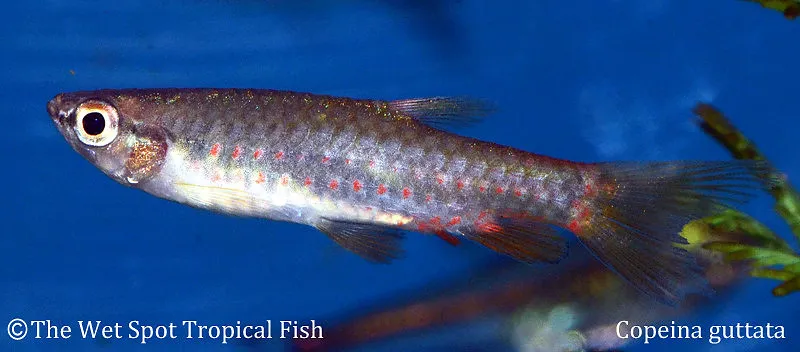
Red-spotted tetra
Copeina guttata
Freshwater3.9 in (10 cm) · 32 gal (120 L)73–82°F (23–28°C)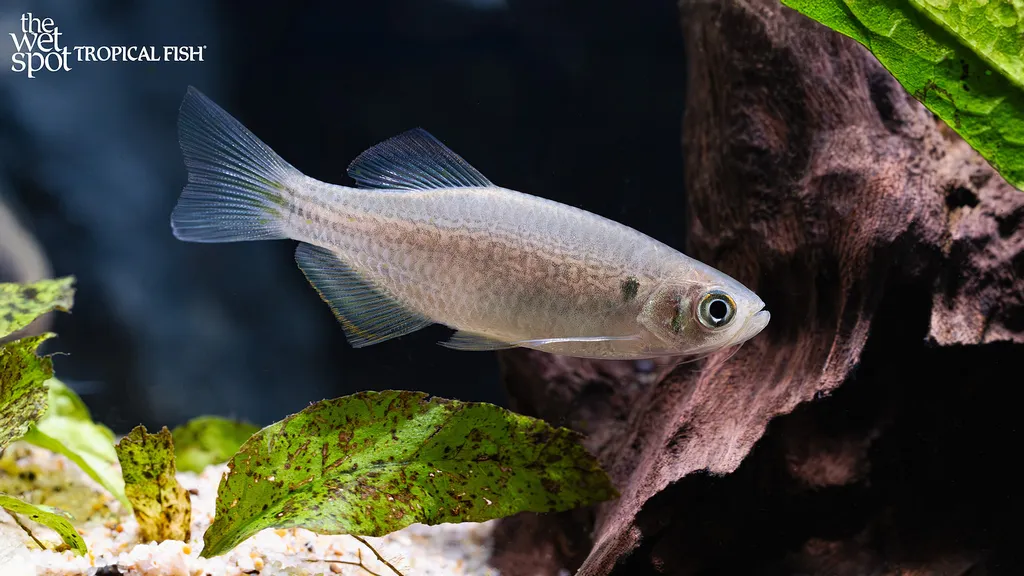
Moustached danio
Danio dangila
Freshwater5.1 in (13 cm) · 32 gal (120 L)68–79°F (20–26°C)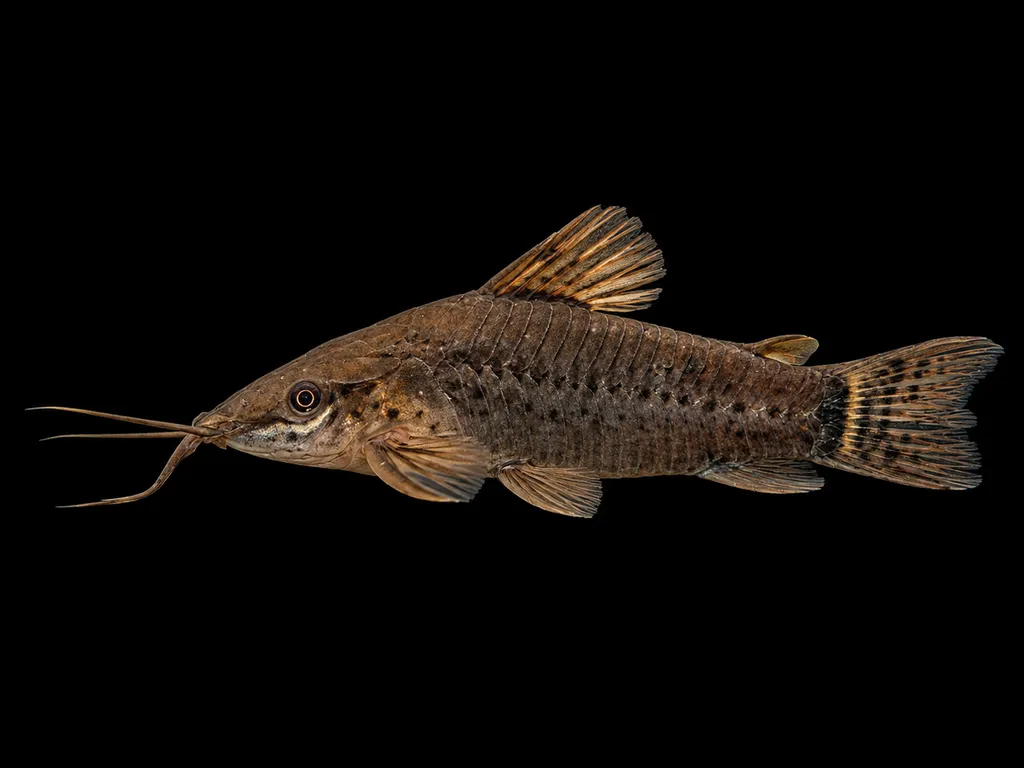
Panama hoplo
Hoplosternum punctatum
Freshwater3.1 in (8 cm) · 30 gal (115 L)72–79°F (22–26°C)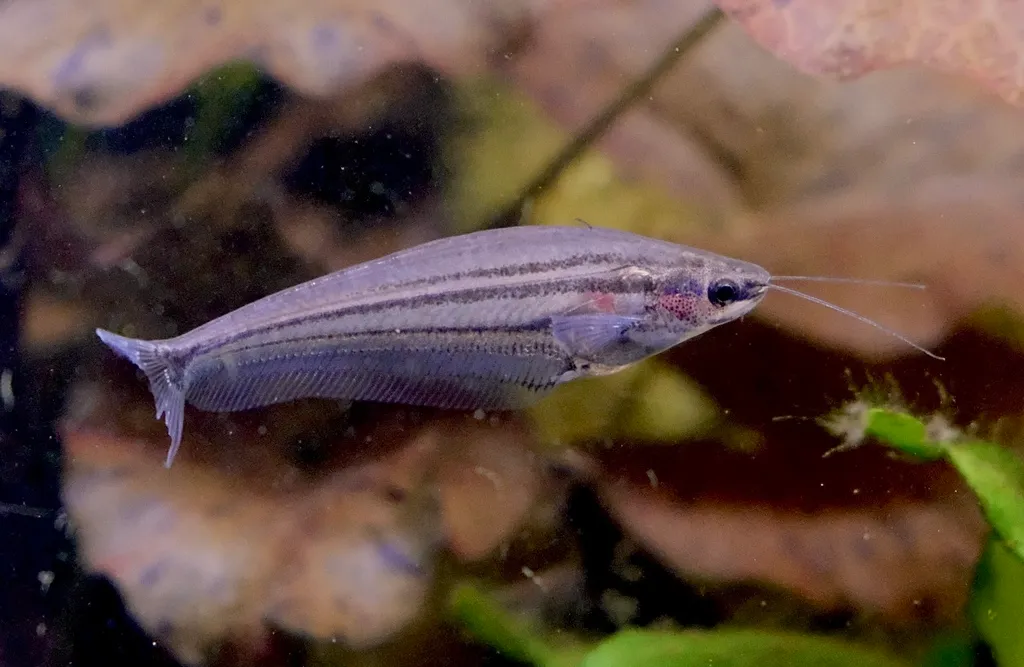
Striped glass catfish
Kryptopterus macrocephalus
Freshwater3.5 in (9 cm) · 36 gal (135 L)70–79°F (21–26°C)
Common questions
What size tank does a Clown rasbora need?
A Clown rasbora needs at least 34 gal (130 L). It spends most of its time in the middle.
What temperature and pH does a Clown rasbora need?
A Clown rasbora is comfortable at 73–82°F (23–28°C) with a pH of 6.0–7.5.
How big does a Clown rasbora get?
An adult Clown rasbora reaches about 3.9 in (10 cm).
Does a Clown rasbora need a group?
Yes. A Clown rasbora is a schooling species and should be kept in a group, not singly.
Related species
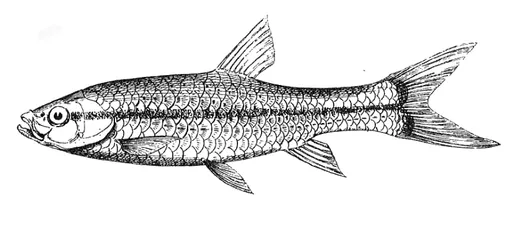 3.9 in (10 cm)32 gal (120 L)72–81°F (22–27°C)
Slender rasbora
Rasbora daniconius
3.9 in (10 cm) · 32 gal (120 L)
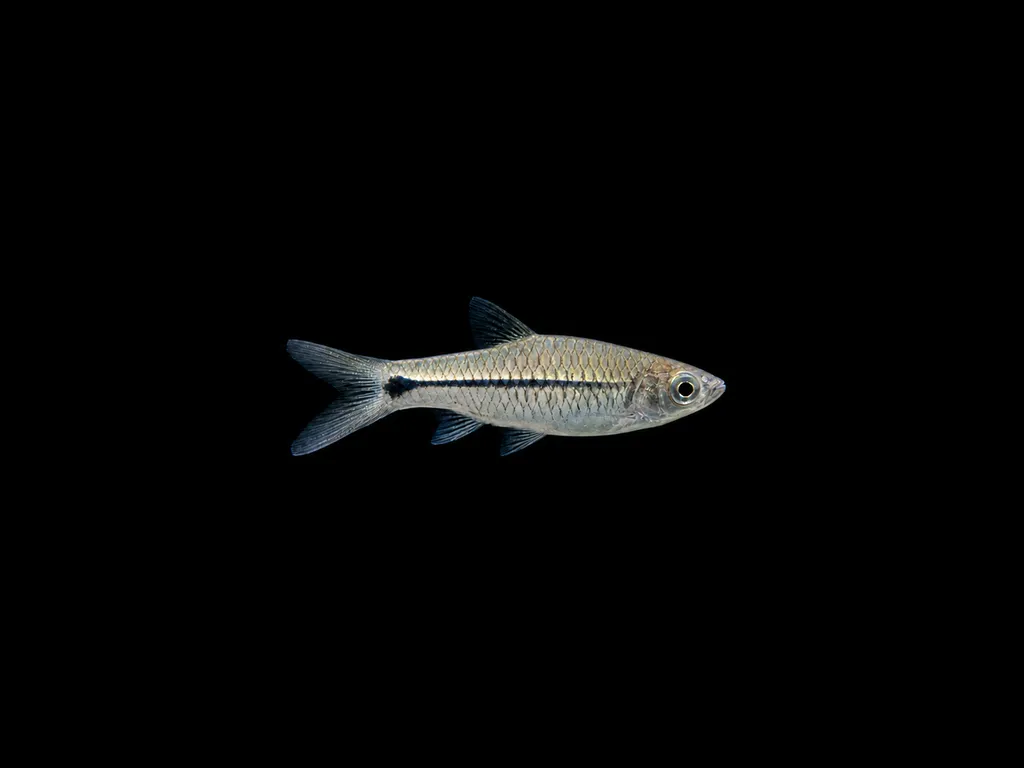
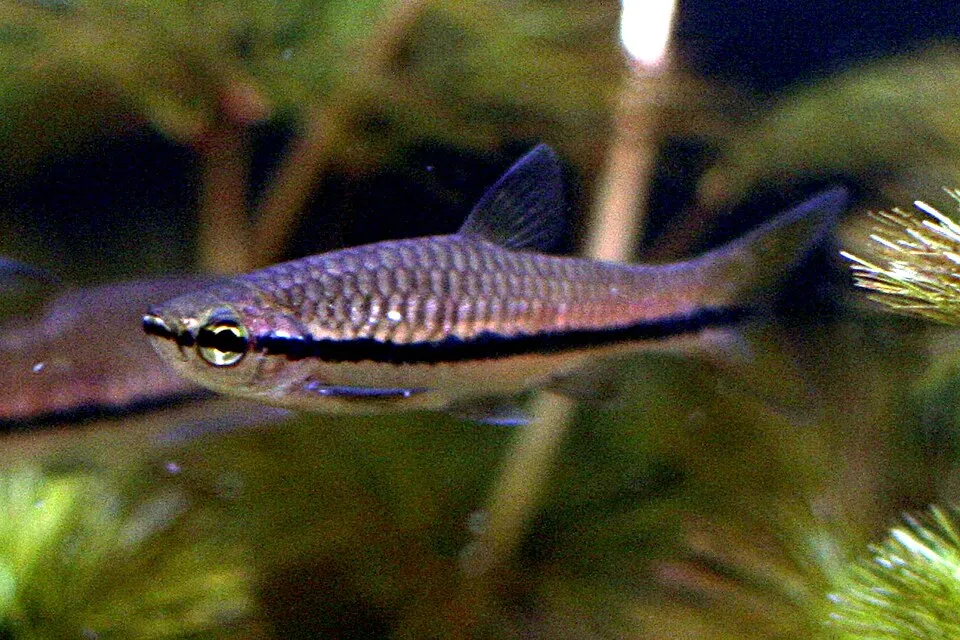 3.5 in (9 cm)20 gal (75 L)72–82°F (22–28°C)
Brilliant rasbora
Rasbora einthovenii
3.5 in (9 cm) · 20 gal (75 L)
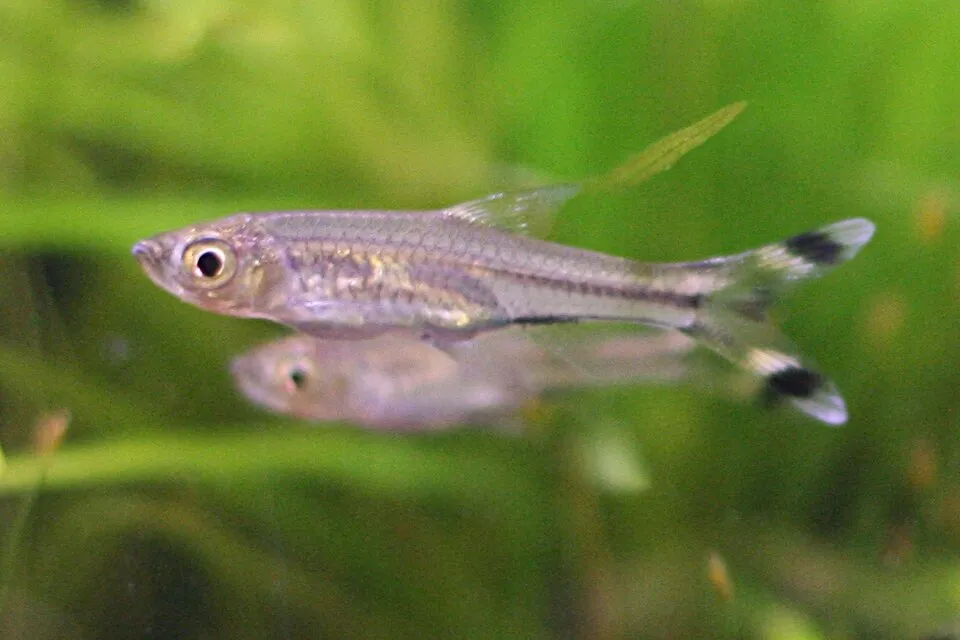
 3.1 in (8 cm)32 gal (120 L)72–79°F (22–26°C)
Sidestripe rasbora
Rasbora paviana
3.1 in (8 cm) · 32 gal (120 L)
 5.5 in (14 cm)45 gal (170 L)72–77°F (22–25°C)
Scissortail rasbora
Rasbora trilineata
5.5 in (14 cm) · 45 gal (170 L)
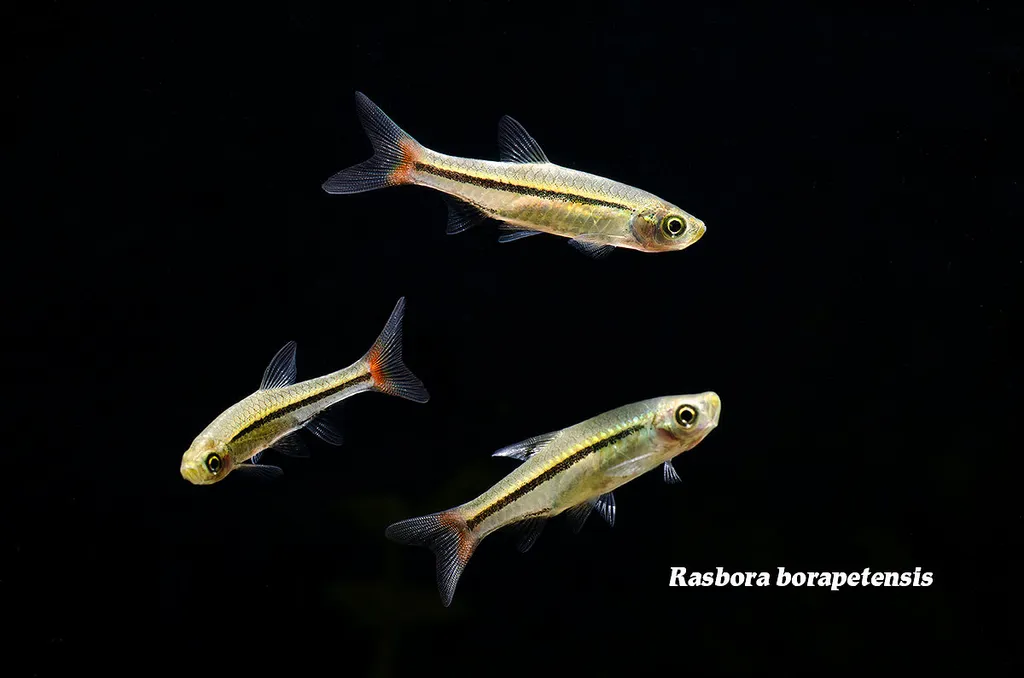 2.4 in (6 cm)18 gal (70 L)72–79°F (22–26°C)
Red-tailed rasbora
Rasbora borapetensis
2.4 in (6 cm) · 18 gal (70 L)
 1.8 in (4.5 cm)15 gal (55 L)73–79°F (23–26°C)
Volcano rasbora
Rasbora vulcanus
1.8 in (4.5 cm) · 15 gal (55 L)