Sidestripe rasbora
Rasbora paviana
Also known as Pavie's rasbora, Rasbora paviei, Pavei rasbora
FreshwaterFish
Care at a glance
- Temperature
- 72–79°F
- 22–26°C
- pH
- 6.0–7.5
- Adult size
- 3.1 in
- 8 cm
- Minimum tank
- 32 gal
- 120 L
- Temperament
- Peaceful
- Social behavior
- Schooling
- Swim level
- Middle
- Difficulty
- Easy
- Breeding
- Hard
- Rarity
- Common
- Family
- Cyprinidae
- Origin
- Widespread in streams, rivers, and pools across Thailand, Laos, Cambodia, and the northern Malay Peninsula.
Overview
The sidestripe rasbora is a hardy, undemanding shoaling fish for a roomy community tank. It is one of the easier larger rasboras to keep.
Did you know
The sidestripe rasbora is calm, hardy and always on the move, so it works well as a dither fish. It helps shy tank mates such as gouramis or dwarf cichlids feel safe enough to come out.
Caring for the sidestripe rasbora
Keep sidestripe rasboras in a group of at least eight, in a tank of 32 gal (120 L) or more. They are active swimmers that want length, and they shoal in open midwater.
They adapt to a fair range of conditions. Keep the water at 72 to 79°F (22 to 26°C) with a pH of 6.0 to 7.5, and soft to medium hardness. Feed flakes, micropellets, and frozen foods such as daphnia and bloodworm.
Sidestripe rasboras are very peaceful and suit larger community and soft-water tanks. Breeding them is hard.
Good to know
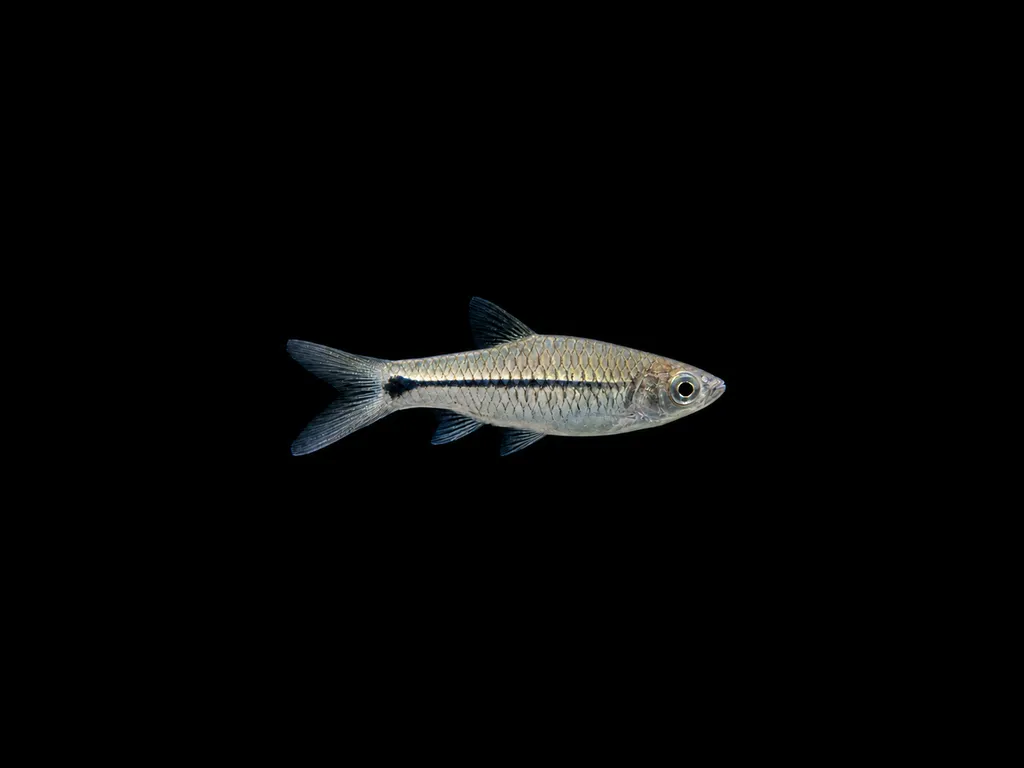
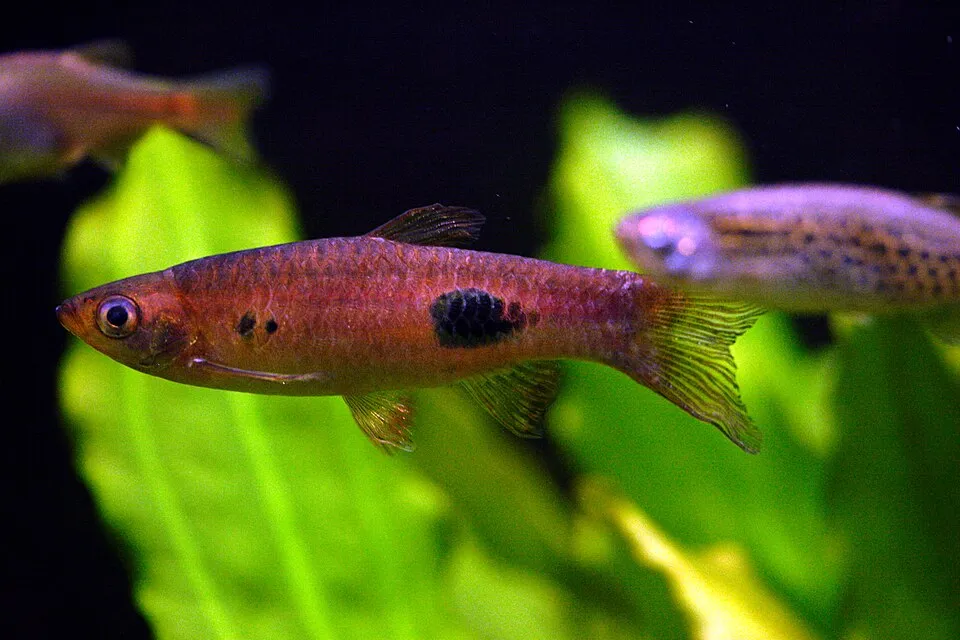
The sidestripe rasbora is very often sold under the invalid spelling Rasbora paviei, which Kottelat corrected to Rasbora paviana in 2005. It grows larger than most of the popular nano rasboras. A thin dark line runs along its flank and gives the fish its name.
In the wild
The sidestripe rasbora lives in both fast forest hill streams and slower lowland pools and rivers across mainland Southeast Asia. Its range takes in Thailand, Laos, Cambodia and the northern Malay Peninsula.
Weekly picks
Tank mates
The sidestripe rasbora is a peaceful, schooling species that keeps to the middle. These picks share a community profile with it, are safe together in both directions, and overlap on water type, temperature and pH.
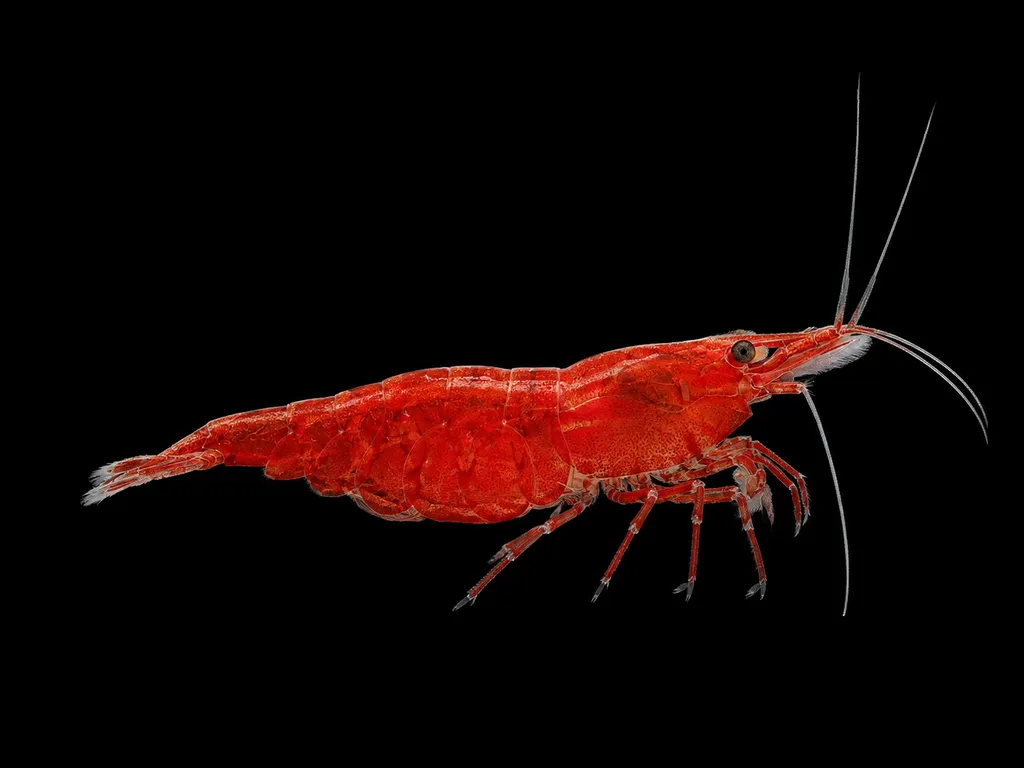
Neocaridina shrimp
Neocaridina davidi
Freshwater1.6 in (4 cm) · 5 gal (19 L)59–84°F (15–29°C)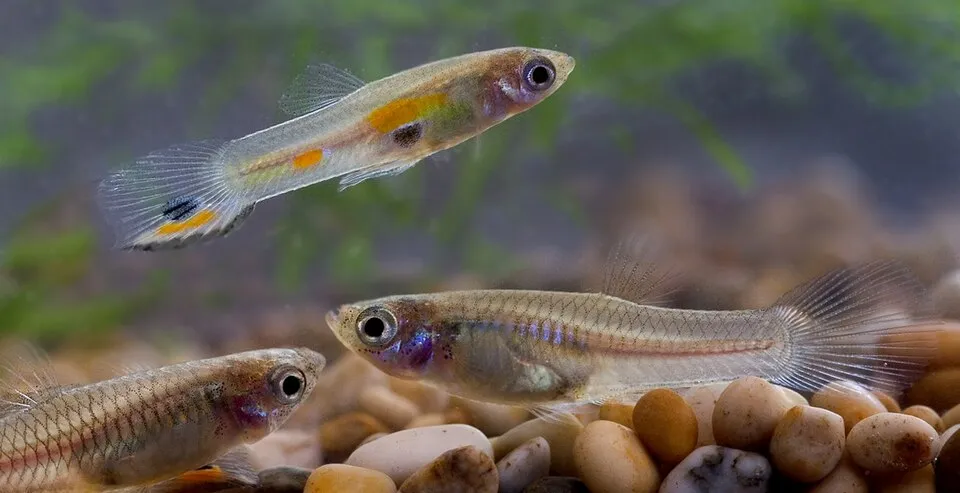
Guppy
Poecilia reticulata
FreshwaterBrackish2.4 in (6 cm) · 10 gal (38 L)64–82°F (18–28°C)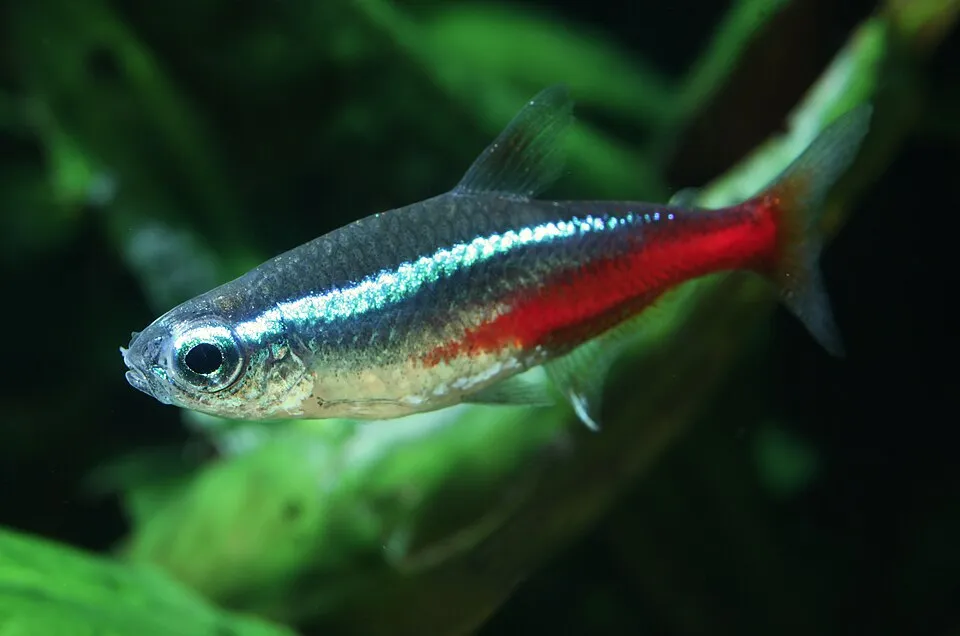
Neon tetra
Paracheirodon innesi
Freshwater1.5 in (3.8 cm) · 11 gal (40 L)70–77°F (21–25°C)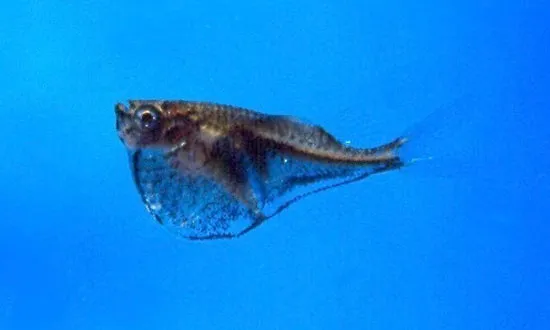
Blackwing hatchetfish
Carnegiella marthae
Freshwater1.4 in (3.5 cm) · 30 gal (115 L)68–82°F (20–28°C)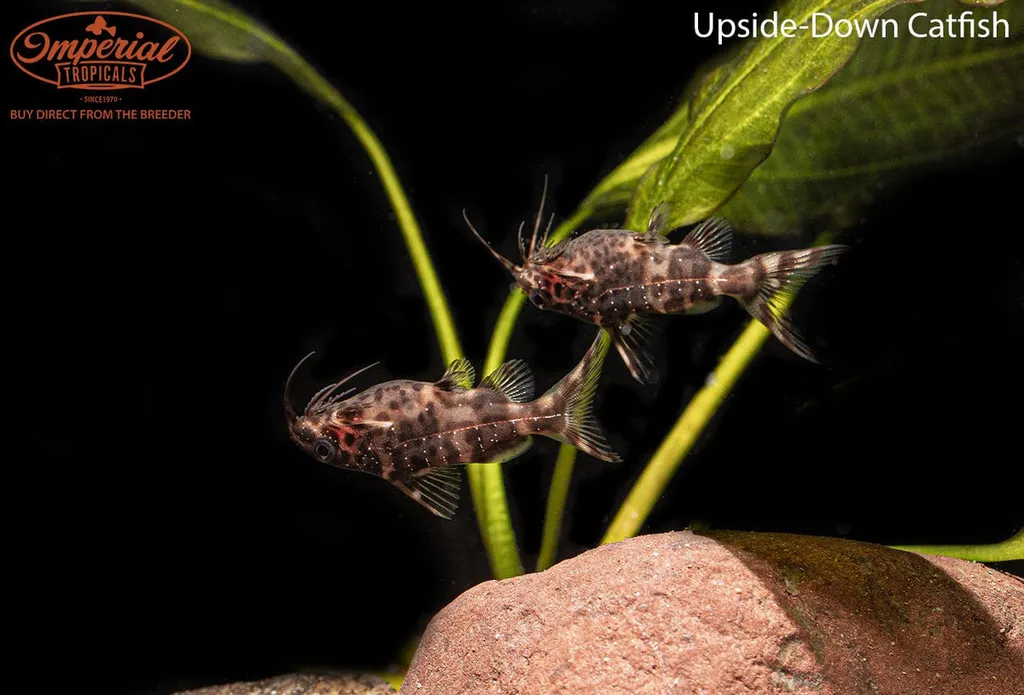
Upside-down catfish
Synodontis nigriventris
Freshwater3.9 in (10 cm) · 30 gal (115 L)75–82°F (24–28°C)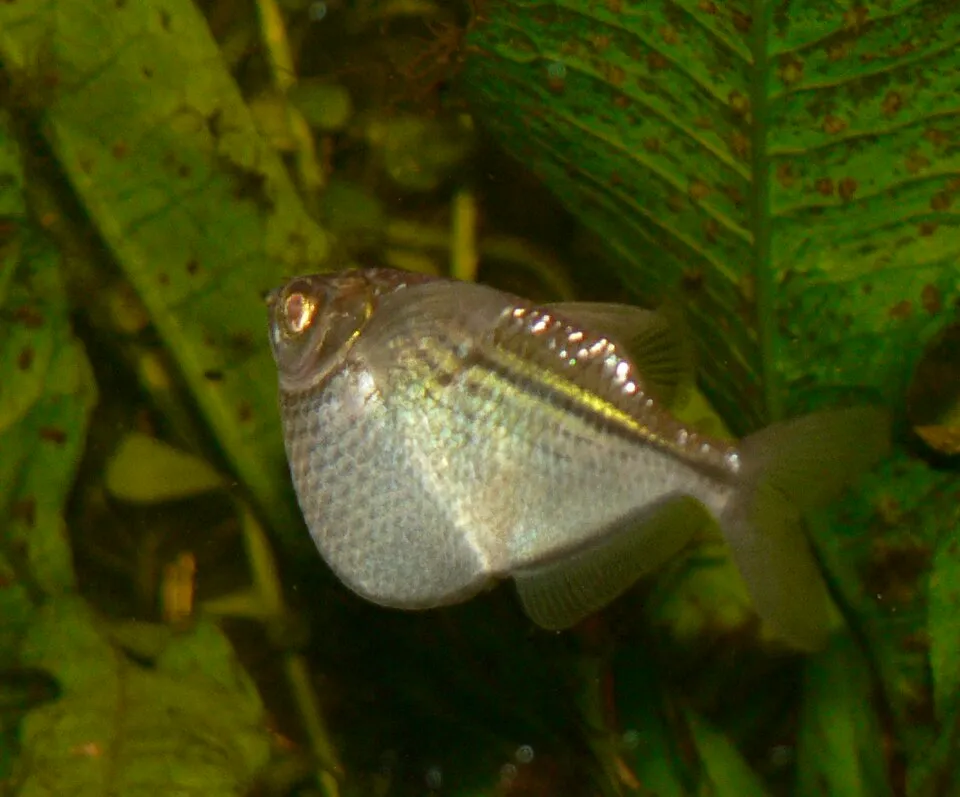
Common hatchetfish
Gasteropelecus sternicla
Freshwater1.6 in (4 cm) · 33 gal (125 L)68–82°F (20–28°C)
Common questions
What size tank does a sidestripe rasbora need?
A sidestripe rasbora needs at least 32 gal (120 L). It spends most of its time in the middle.
What temperature and pH does a sidestripe rasbora need?
A sidestripe rasbora is comfortable at 72–79°F (22–26°C) with a pH of 6.0–7.5.
What does a sidestripe rasbora eat?
A sidestripe rasbora eats flakes, micropellets, and frozen foods such as daphnia and bloodworm.
How big does a sidestripe rasbora get?
An adult sidestripe rasbora reaches about 3.1 in (8 cm).
Does a sidestripe rasbora need a group?
Yes. A sidestripe rasbora is a schooling species and should be kept in a group, not singly.
Related species
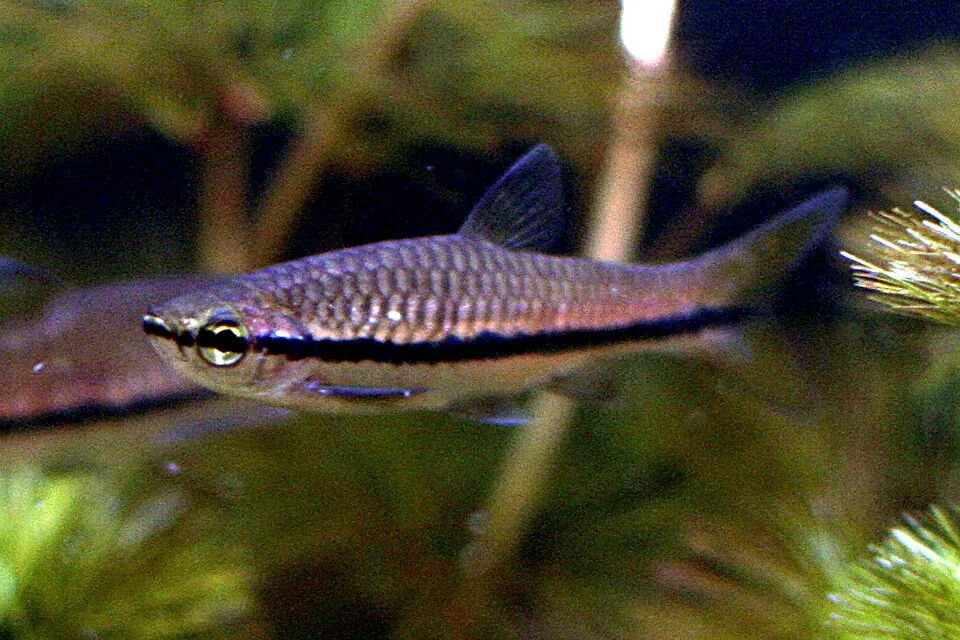 3.5 in (9 cm)29 gal (110 L)72–82°F (22–28°C)
Brilliant rasbora
Rasbora einthovenii
3.5 in (9 cm) · 29 gal (110 L)
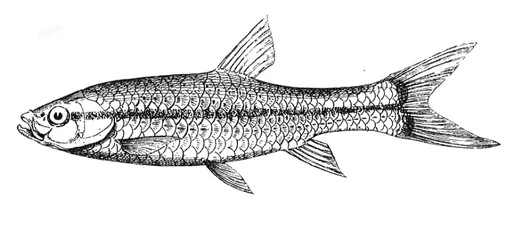 3.9 in (10 cm)32 gal (120 L)72–81°F (22–27°C)
Slender rasbora
Rasbora daniconius
3.9 in (10 cm) · 32 gal (120 L)
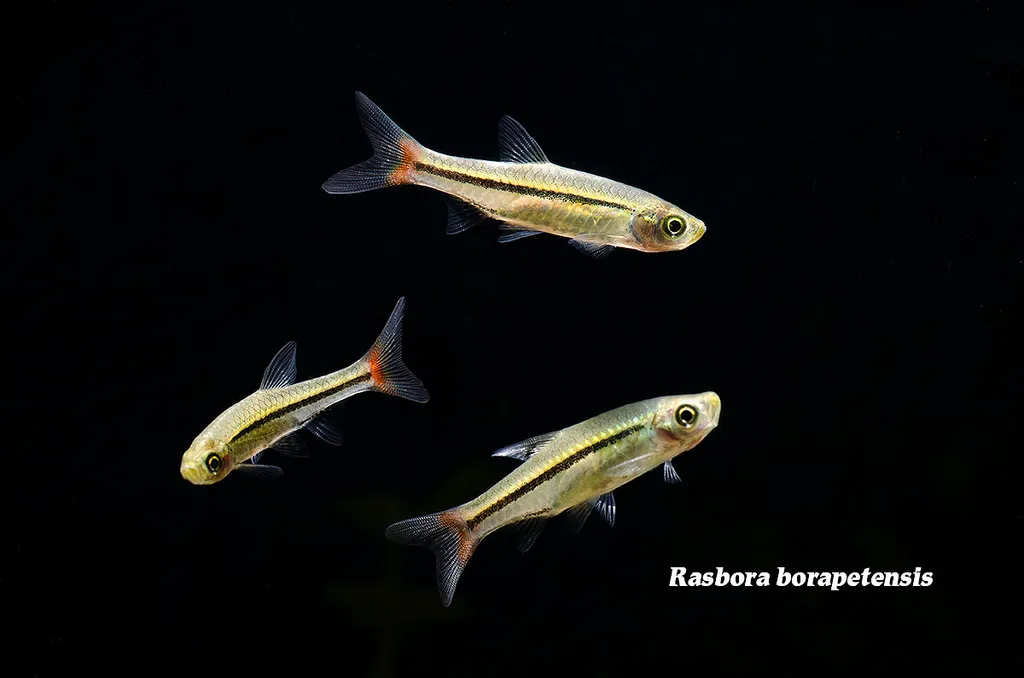 2.4 in (6 cm)18 gal (70 L)72–79°F (22–26°C)
Red-tailed rasbora
Rasbora borapetensis
2.4 in (6 cm) · 18 gal (70 L)
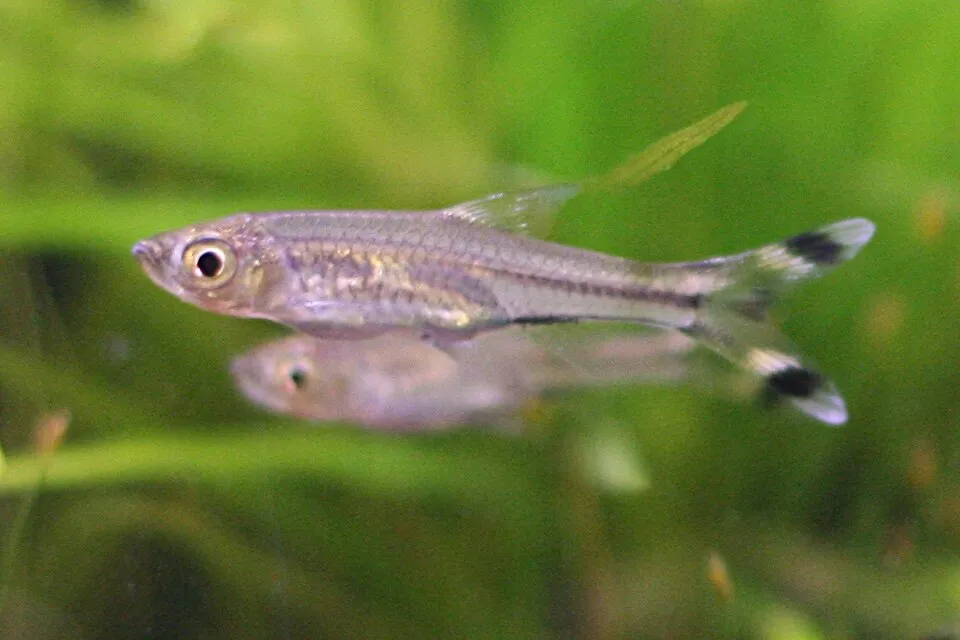 5.5 in (14 cm)45 gal (170 L)72–77°F (22–25°C)
Scissortail rasbora
Rasbora trilineata
5.5 in (14 cm) · 45 gal (170 L)
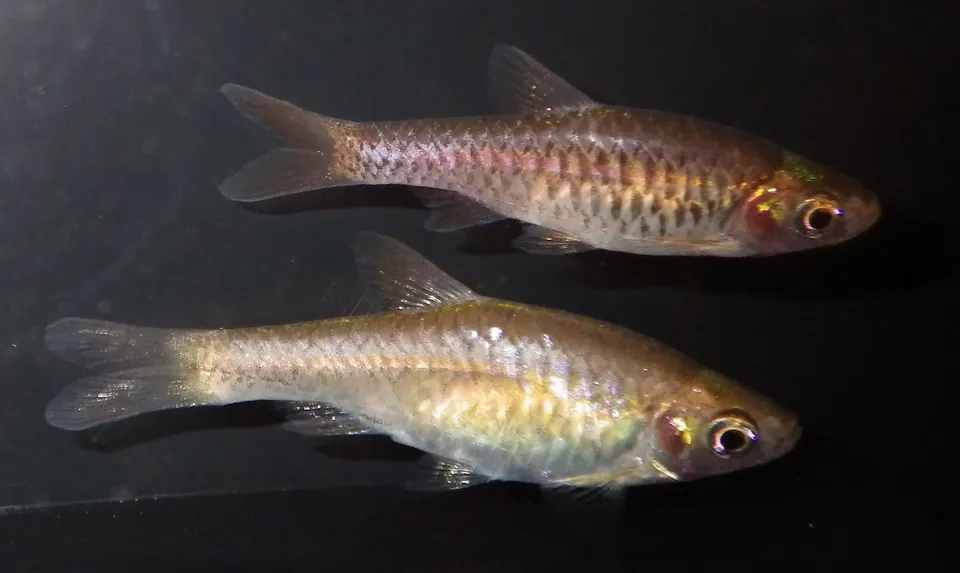 1.8 in (4.5 cm)15 gal (55 L)73–79°F (23–26°C)
Volcano rasbora
Rasbora vulcanus
1.8 in (4.5 cm) · 15 gal (55 L)
 3.9 in (10 cm)34 gal (130 L)73–82°F (23–28°C)
Clown rasbora
Rasbora kalochroma
3.9 in (10 cm) · 34 gal (130 L)