Sawbwa barb
Sawbwa resplendens
Also known as Rummynose Rasbora
FreshwaterFish
Care at a glance
- Temperature
- 68–75°F
- 20–24°C
- pH
- 7.0–8.0
- Adult size
- 1.2 in
- 3 cm
- Minimum tank
- 20 gal
- 75 L
- Temperament
- Mostly peaceful
- Social behavior
- Schooling
- Swim level
- Middle
- Difficulty
- Medium
- Breeding
- Medium
- Rarity
- Common
- Family
- Cyprinidae
- Origin
- Endemic to Lake Inle and its watershed, Shan State, eastern Myanmar
Overview
Keep them as a colony of at least 8 to 10 in a tank of 75 liters or larger, and skew the group heavily toward females, roughly four females per male or more, because males spar constantly for dominance and you want that aggression spread out. They are mostly peaceful toward other fish and sit in the middle of the water column, but they are shy and easily pushed off food by pushy tankmates, so pick small, calm company. Hold the water at 20 to 24 C with a pH of 7 to 8, since they will not spawn much above 25 C and a warm community tank does not suit them. Because the tank is unscaled and sensitive, run mature, stable, well oxygenated water. Feed small live and frozen foods like daphnia and brine shrimp, since they often refuse to color up or feed well on dried food alone.
In the wild
Sawbwa barbs are endemic to Lake Inle and its watershed in Shan State, eastern Myanmar, a high-altitude lake that runs cool, hard, and alkaline. That setting matters more than usual for this fish, so do not treat it like a soft, acidic blackwater species. Give them a heavily planted tank of at least 75 liters with a dark substrate and gentle flow. Keep the water moderately hard and on the neutral to alkaline side, with a pH of 7 to 8, and hold the temperature down at 20 to 24 C, since this is a subtropical fish that suffers in warm tropical setups.
Good to know
This is a tiny cyprinid in the family Cyprinidae, also sold as the Asian rummynose rasbora or naked microrasbora, and it reaches only about 3 cm. The body is effectively scaleless, which is where the "naked" name comes from, and that leaves it more sensitive to ammonia, poor water quality, and medications than most fish. It is an egg scatterer that deposits on the undersides of broad leaves, with breeding tied to high general hardness around 20 dGH or more.
Did you know
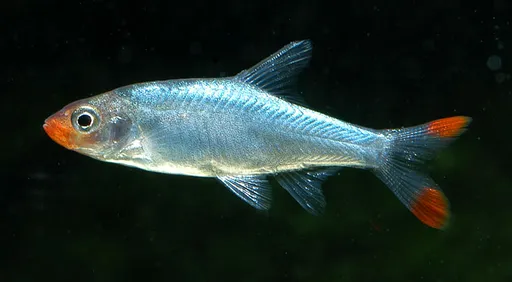
Despite being a barb by name, this fish is so small and so unlike a typical barb that the hobby keeps inventing new names for it, calling it a rummynose rasbora or a naked microrasbora instead. Breeding males turn bright, with a vivid orange-red nose and tail tips against a steely blue body, while females stay plain silver, which makes sexing the group and setting a female-heavy ratio easy to do by eye.
Weekly picks
Tank mates
Sawbwa barb is a mostly peaceful, schooling species that keeps to the middle. These picks share a community profile with it, are safe together in both directions, and overlap on water type, temperature and pH.
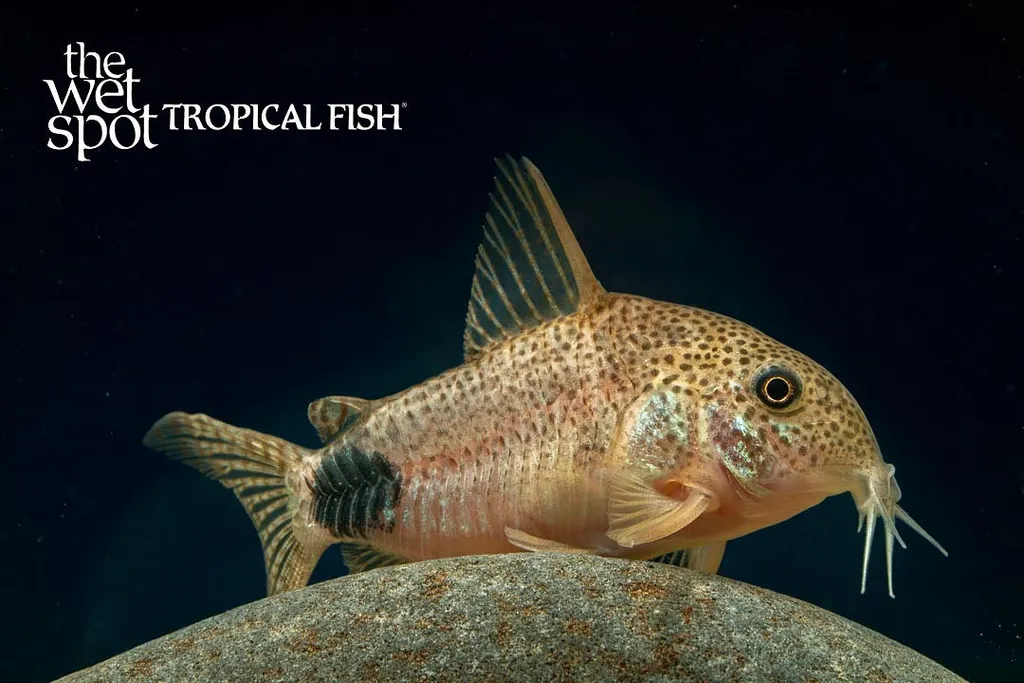
Tailspot cory
Hoplisoma caudimaculatum
Freshwater2 in (5 cm) · 20 gal (75 L)68–81°F (20–27°C)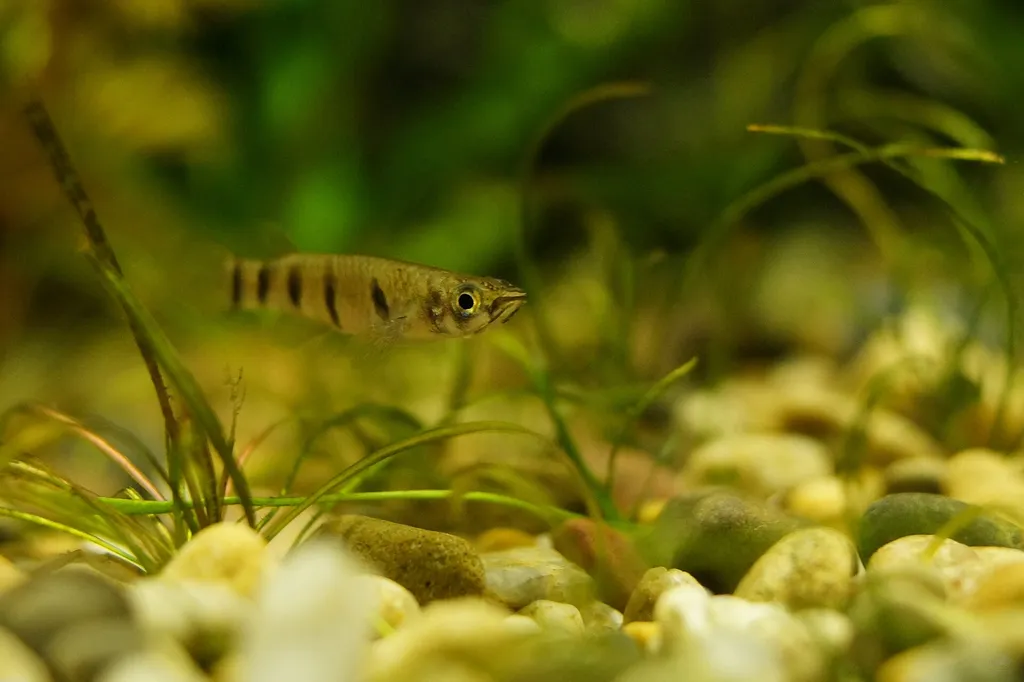
Red-chinned panchax
Epiplatys dageti
Freshwater1.8 in (4.5 cm) · 20 gal (75 L)70–75°F (21–24°C)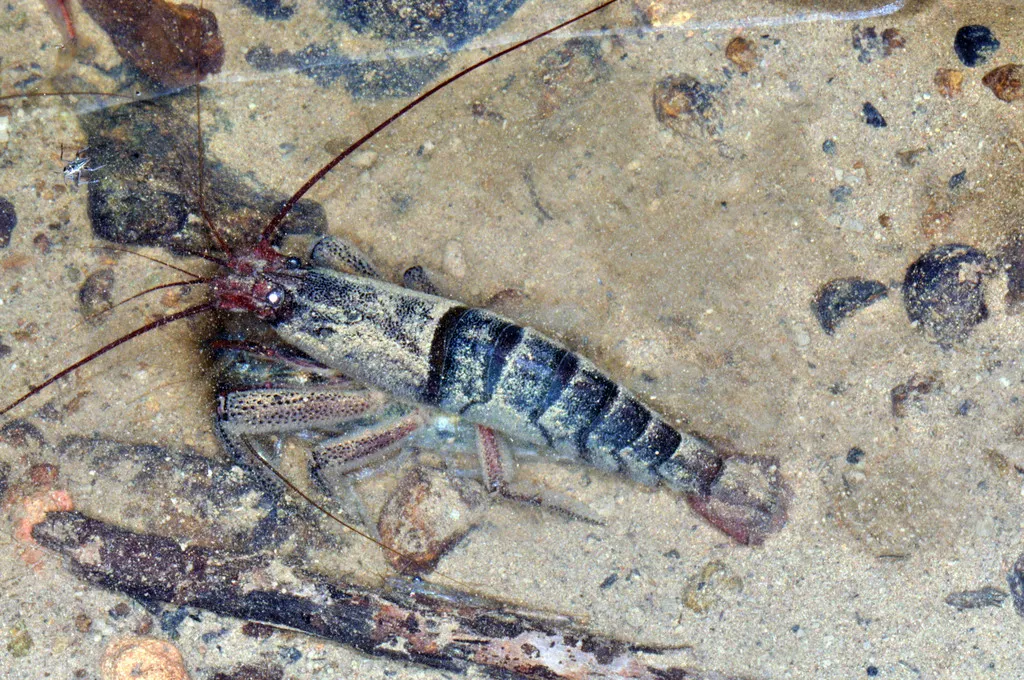
Marble wood shrimp
Atya scabra
Freshwater3.9 in (10 cm) · 20 gal (75 L)73–82°F (23–28°C)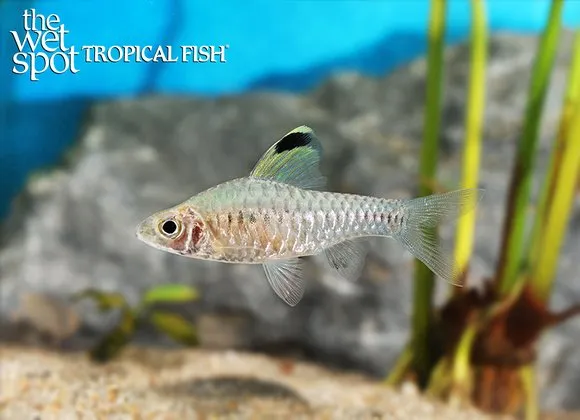
Cosuatis barb
Oreichthys cosuatis
Freshwater3.1 in (8 cm) · 20 gal (75 L)68–79°F (20–26°C)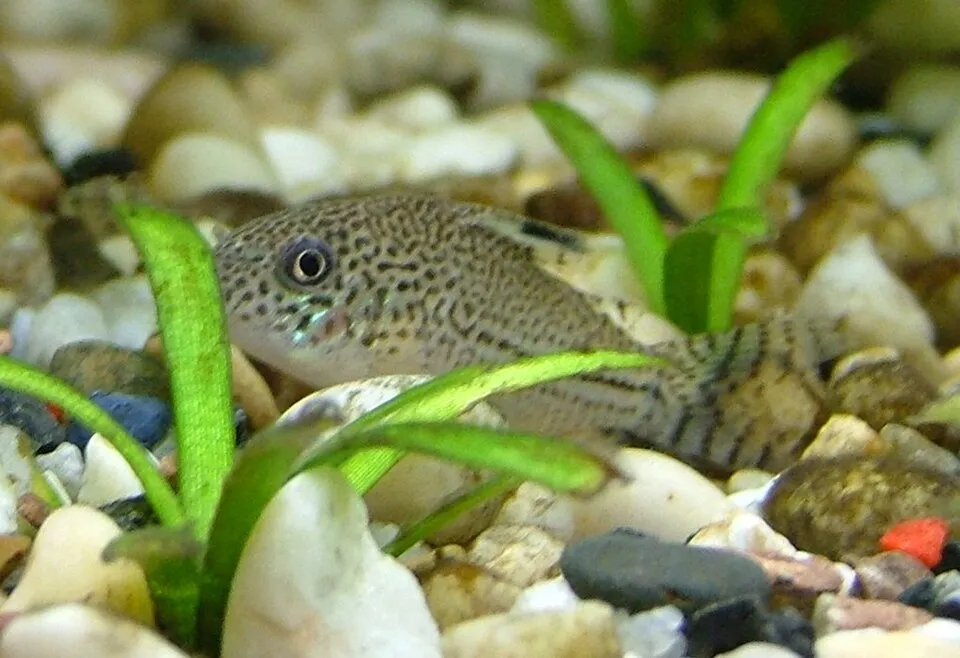
Julii cory
Hoplisoma julii
Freshwater2.2 in (5.5 cm) · 20 gal (75 L)68–79°F (20–26°C)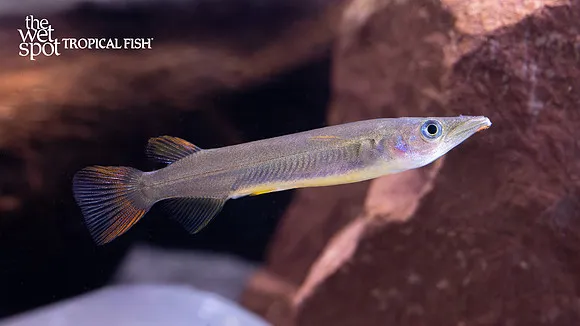
Rex halfbeak
Nomorhamphus rex
Freshwater2.2 in (5.5 cm) · 20 gal (75 L)72–79°F (22–26°C)
Common questions
What size tank does a Sawbwa barb need?
A Sawbwa barb needs at least 20 gal (75 L). It spends most of its time in the middle.
What temperature and pH does a Sawbwa barb need?
A Sawbwa barb is comfortable at 68–75°F (20–24°C) with a pH of 7.0–8.0.
How big does a Sawbwa barb get?
An adult Sawbwa barb reaches about 1.2 in (3 cm).
Does a Sawbwa barb need a group?
Yes. A Sawbwa barb is a schooling species and should be kept in a group, not singly.
Related species
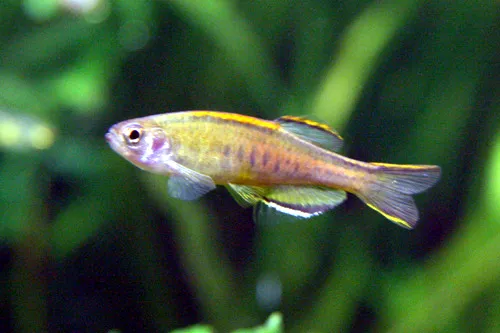 1.2 in (3 cm)20 gal (75 L)72–79°F (22–26°C)
Glowlight danio
Danio choprae
1.2 in (3 cm) · 20 gal (75 L)
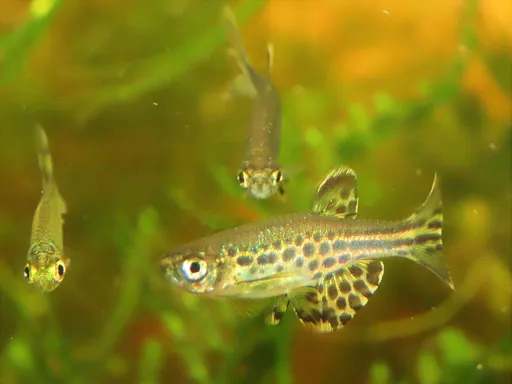 1.2 in (3 cm)11 gal (40 L)64–79°F (18–26°C)
Gold ring danio
Danio tinwini
1.2 in (3 cm) · 11 gal (40 L)
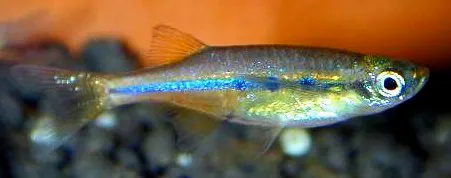 1.2 in (3 cm)13 gal (50 L)68–75°F (20–24°C)
Orange hatchet danio
Laubuka dadiburjori
1.2 in (3 cm) · 13 gal (50 L)
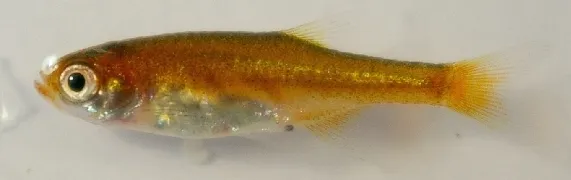 1.2 in (3 cm)12 gal (45 L)68–77°F (20–25°C)
Red dwarf rasbora
Microrasbora rubescens
1.2 in (3 cm) · 12 gal (45 L)
 1.2 in (3 cm)12 gal (45 L)64–73°F (18–23°C)
Vietnamese white cloud
Tanichthys micagemmae
1.2 in (3 cm) · 12 gal (45 L)
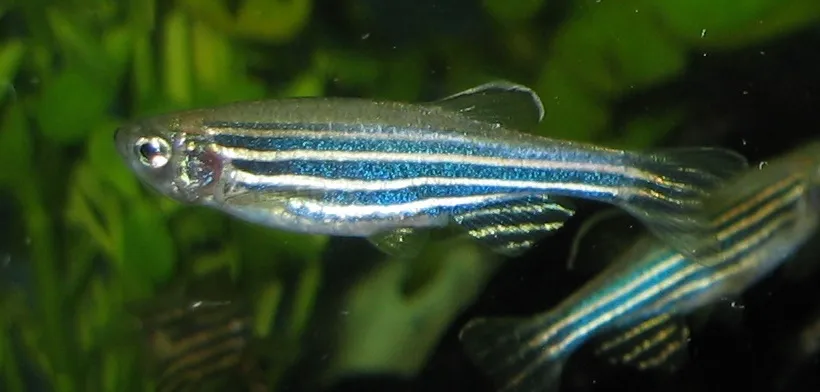 2 in (5 cm)15 gal (55 L)64–75°F (18–24°C)
Zebra danio
Danio rerio
2 in (5 cm) · 15 gal (55 L)