Railway barb
Acrossocheilus fasciatus
Also known as Banded stream barb
FreshwaterFish
Care at a glance
- Temperature
- 61–75°F
- 16–24°C
- pH
- 6.5–7.8
- Adult size
- 7.5 in
- 19 cm
- Minimum tank
- 79 gal
- 300 L
- Temperament
- Mostly peaceful
- Social behavior
- Schooling
- Swim level
- Middle
- Diet
- Omnivore
- Difficulty
- Medium
- Breeding
- No record
- Rarity
- Rare
- Family
- Cyprinidae
- Origin
- Coastal drainages of eastern China
Overview
The railway barb is a large, active coolwater barb that lives in shoals and needs a big, flowing tank. It is not a first fish, but a keeper with some experience can manage it.
Did you know
The railway barb also travels in the trade as the redfin torpedo barb. That name points to its muscular, current-built shape and the reddish wash its fins can take on in cool, well-oxygenated water.
Caring for the railway barb
Give a small group of railway barbs a tank of at least 79 gal (300 L), for the room and swimming distance they need. They hold the middle water and open swimming lanes, so give them length and steady current from a strong filter or powerhead. A river setup of smooth rounded stones, some larger boulders, and hardy plants or none at all suits them.
Keep them unheated to mildly warmed, at 61 to 75°F (16 to 24°C) and a pH of 6.5 to 7.8. Give them plenty of oxygen and flow, since brisk turnover keeps them colored up and settled. They are unfussy eaters, and sinking pellets, wafers, frozen bloodworm and brine shrimp, and some vegetable matter all go down well.
Keep a group of six or more rather than one or two, since single fish are restless and lose their nerve. They are mostly peaceful but boisterous, and they grow large. Pick robust, similarly sized tank mates that will not be bullied or outcompeted at feeding.
The railway barb is a seasonal, current-spawning fish, like its river relatives, rather than a tank breeder. Home breeding is essentially unrecorded.
Good to know
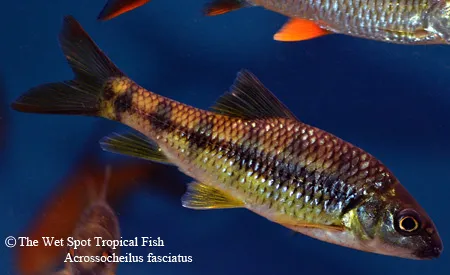
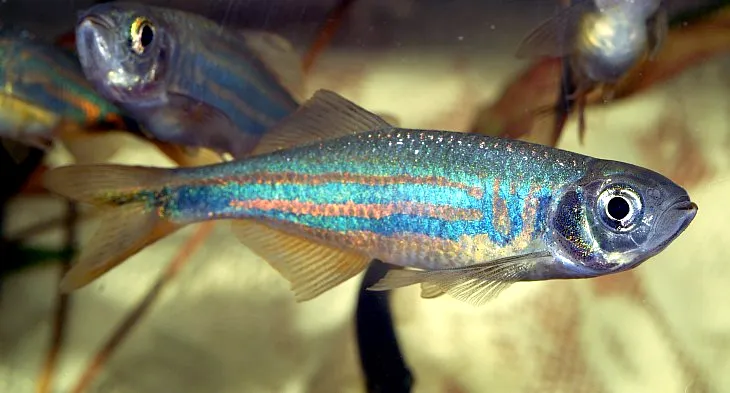
Acrossocheilus fasciatus is a member of the carp family, Cyprinidae. It matures at two to three years and lives four to five years. A row of dark vertical bars runs down its silvery flank, the marking the railway name plays on.
In the wild
The railway barb comes from quick, cool coastal streams and mountain rivers of eastern China. The water there runs clear over gravel and stone and never gets tropical-warm.
Weekly picks
Tank mates
The railway barb is a mostly peaceful, schooling species that keeps to the middle. These picks share a community profile with it, are safe together in both directions, and overlap on water type, temperature and pH.
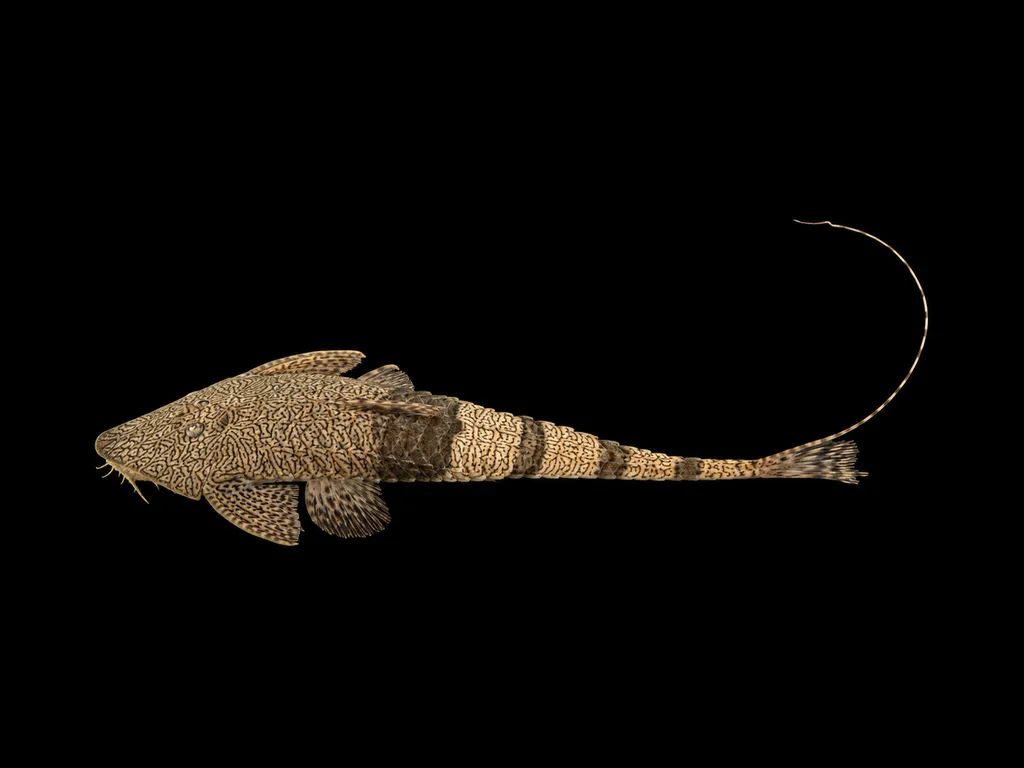
Chameleon whiptail
Pseudohemiodon apithanos
Freshwater6.7 in (17 cm) · 79 gal (300 L)75–82°F (24–28°C)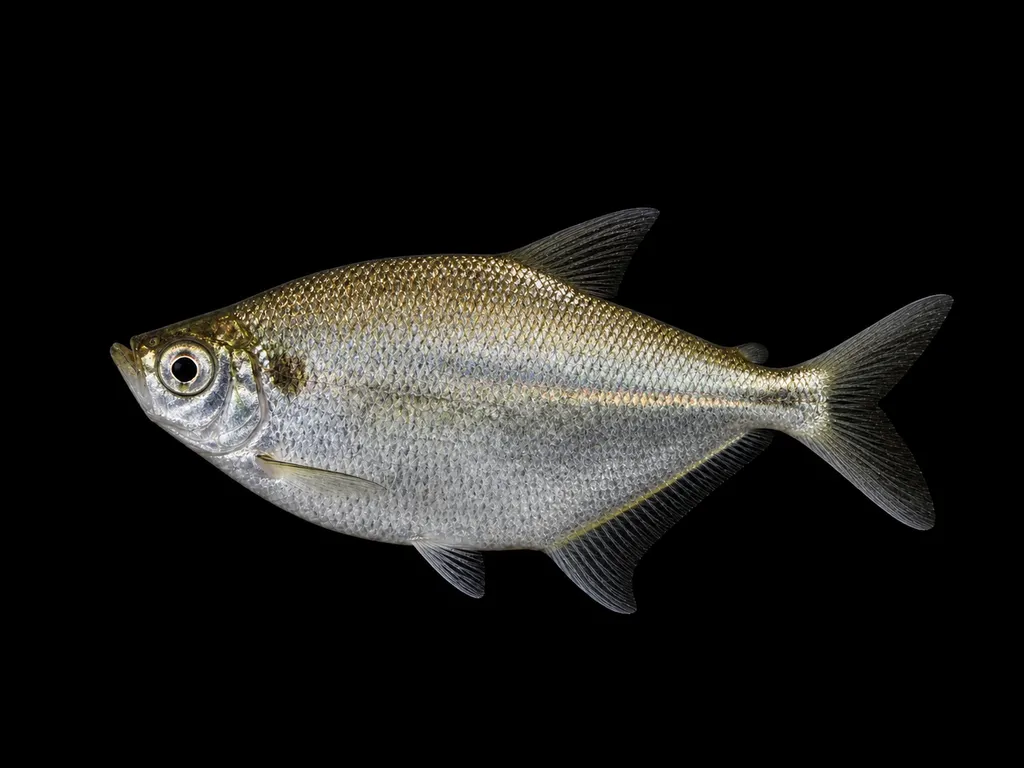
Giant river hatchetfish
Triportheus rotundatus
Freshwater9.8 in (25 cm) · 79 gal (300 L)73–82°F (23–28°C)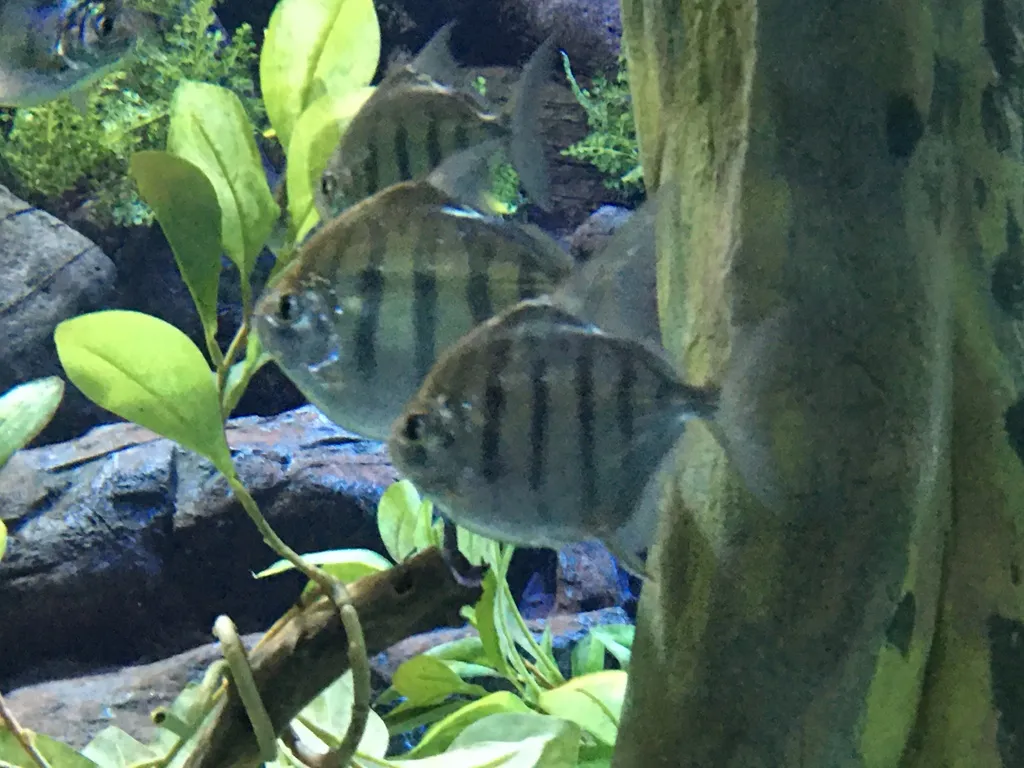
Banded silver dollar
Metynnis fasciatus
Freshwater3.9 in (10 cm) · 70 gal (265 L)75–82°F (24–28°C)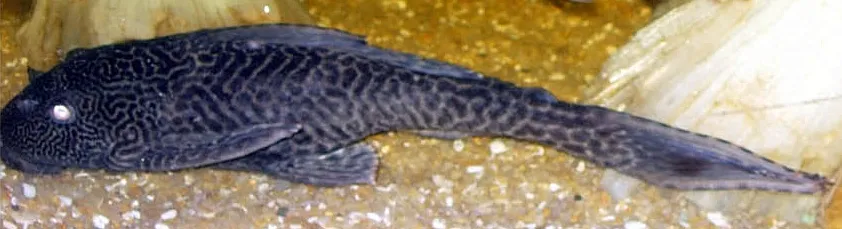
Spotted pleco
Hypostomus punctatus
Freshwater11.8 in (30 cm) · 79 gal (300 L)72–82°F (22–28°C)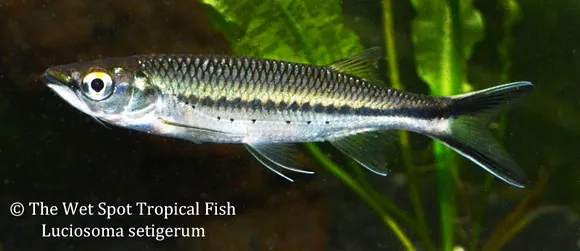
Apollo shark minnow
Luciosoma setigerum
Freshwater11.8 in (30 cm) · 106 gal (400 L)72–81°F (22–27°C)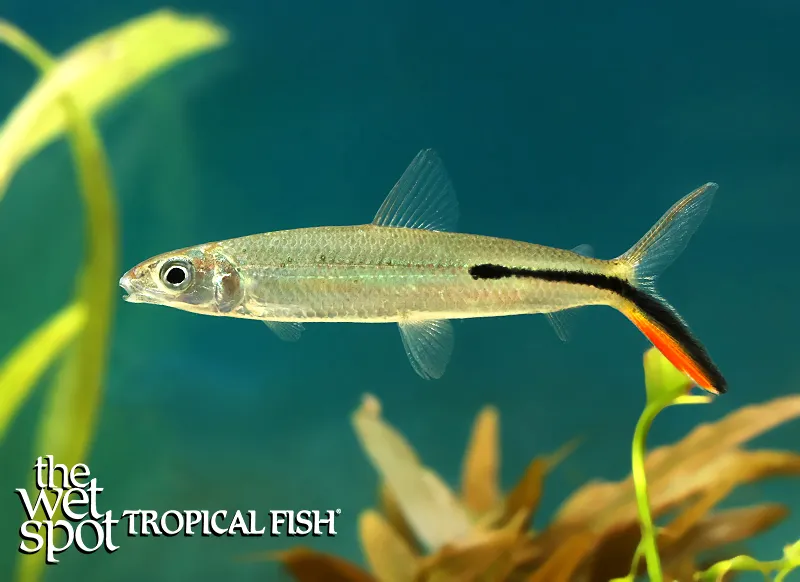
Slender hemiodus
Hemiodus gracilis
Freshwater7.1 in (18 cm) · 66 gal (250 L)73–82°F (23–28°C)
Common questions
What size tank does a railway barb need?
A railway barb needs at least 79 gal (300 L). It spends most of its time in the middle.
What temperature and pH does a railway barb need?
A railway barb is comfortable at 61–75°F (16–24°C) with a pH of 6.5–7.8.
What does a railway barb eat?
A railway barb is an unfussy eater. It takes sinking pellets, wafers, frozen bloodworm and brine shrimp, along with some vegetable matter.
How big does a railway barb get?
An adult railway barb reaches about 7.5 in (19 cm).
Does a railway barb need a group?
Yes. A railway barb is a schooling species and should be kept in a group, not singly.
How does a railway barb breed?
The railway barb is a seasonal spawner that breeds in current, like its river relatives. Breeding it in a home aquarium is essentially unrecorded.
Related species
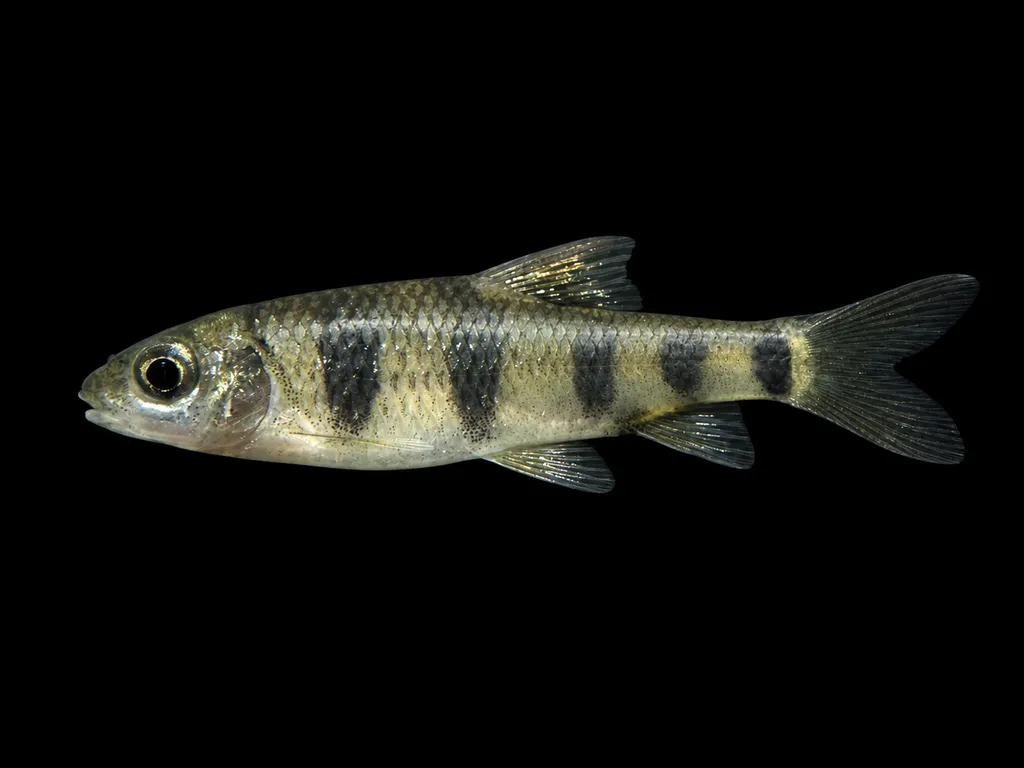 5.1 in (13 cm)53 gal (200 L)64–79°F (18–26°C)
Beijiang barb
Acrossocheilus beijiangensis
5.1 in (13 cm) · 53 gal (200 L)
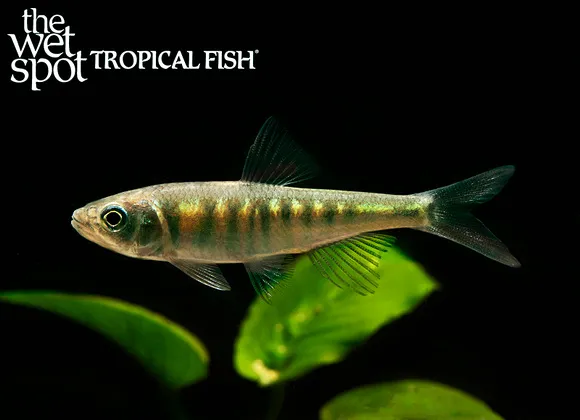 7.9 in (20 cm)79 gal (300 L)54–75°F (12–24°C)
Pale chub
Zacco platypus
7.9 in (20 cm) · 79 gal (300 L)
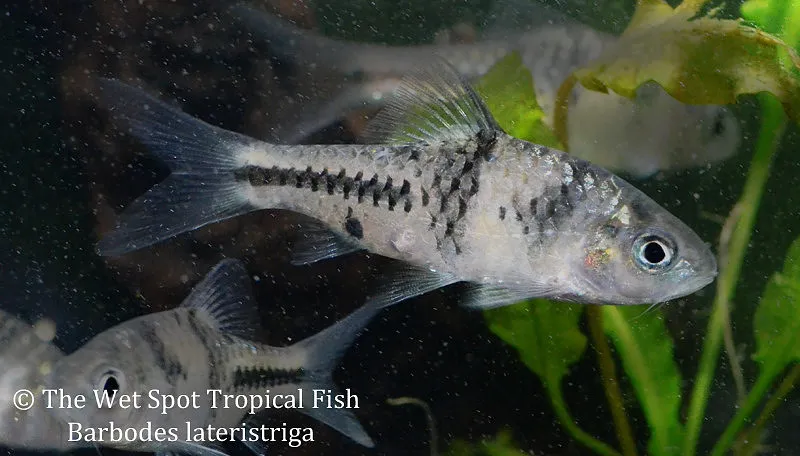 5.9 in (15 cm)74 gal (280 L)72–79°F (22–26°C)
Spanner barb
Barbodes lateristriga
5.9 in (15 cm) · 74 gal (280 L)
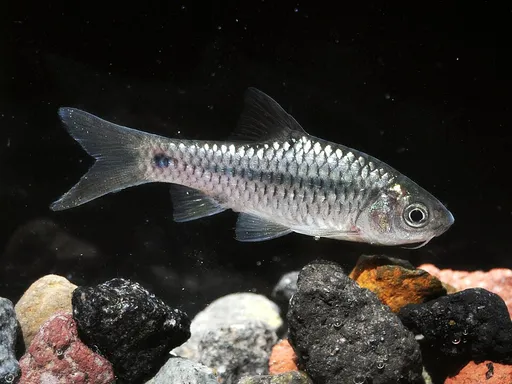 5.9 in (15 cm)63 gal (240 L)72–79°F (22–26°C)
Spotted barb
Barbodes binotatus
5.9 in (15 cm) · 63 gal (240 L)
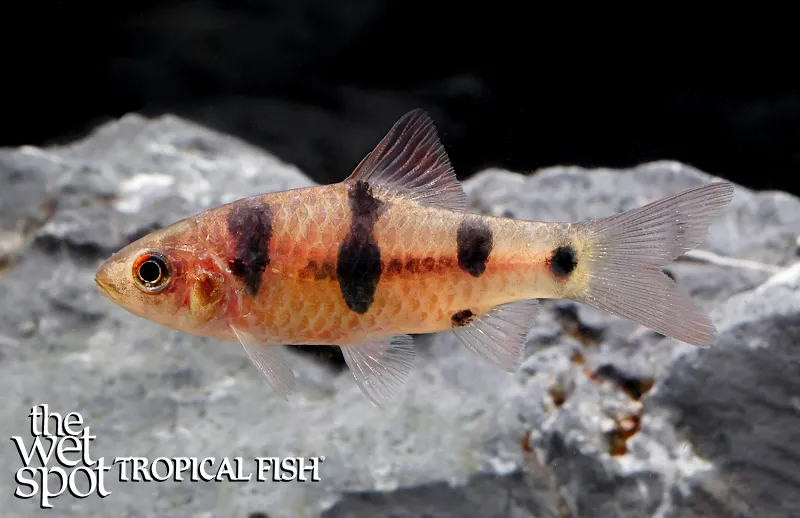 5.1 in (13 cm)53 gal (200 L)75–82°F (24–28°C)
Clown barb
Barbodes dunckeri
5.1 in (13 cm) · 53 gal (200 L)
 5.1 in (13 cm)48 gal (180 L)64–77°F (18–25°C)
Malabar danio
Devario malabaricus
5.1 in (13 cm) · 48 gal (180 L)