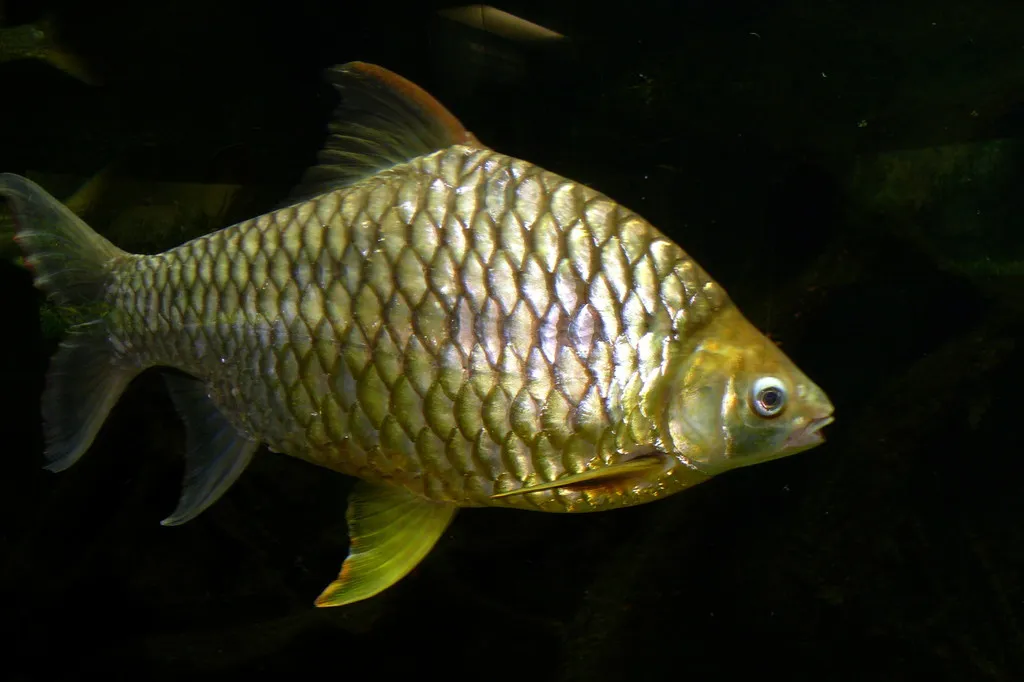
Lemon-fin barb
Hypsibarbus wetmorei
Also known as Golden belly barb, Wetmore's barb
FreshwaterFish
Care at a glance
- Temperature
- 72–82°F
- 22–28°C
- pH
- 6.0–7.5
- Adult size
- 9.8 in
- 25 cm
- Minimum tank
- 106 gal
- 400 L
- Temperament
- Peaceful
- Social behavior
- Schooling
- Swim level
- Middle
- Difficulty
- Easy
- Breeding
- No record
- Rarity
- Rare
- Family
- Cyprinidae
- Origin
- Mekong and Chao Phraya basins
Overview
The lemon-fin barb is a large, peaceful schooling barb for the open middle water of a big tank. It is easy to keep.
Did you know
The lemon-fin barb is a farmed food fish on Southeast Asian dinner tables. The same species is also a bright, deep-bodied show fish in the aquarium trade.
Caring for the lemon-fin barb
Plan on a school of at least six lemon-fin barbs, which are fast, restless cruisers. Give them a tank of 106 gal (400 L) or more, with length rather than height and a lot of open water. Add strong current, a sand or fine gravel bed and sturdy decor rather than delicate planting.
Keep the water at 72 to 82°F (22 to 28°C) with a pH of 6.0 to 7.5. The species adapts easily to a range of conditions.
Its diet leans heavily vegetable, so offer plenty of plant matter, algae wafers and greens alongside pellets and frozen foods. Expect it to sample soft plants.
Lemon-fin barbs are peaceful and safe with other big fish, but they outgrow and outpace small tank mates. Breeding is not documented in home tanks, though the species is spawned commercially.
Good to know
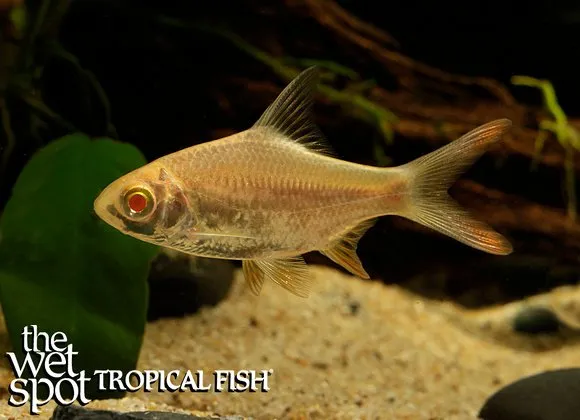
Hypsibarbus wetmorei is a deep-bodied barb in the carp family, Cyprinidae, related to the tinfoil barbs. Its genus name means high or deep barb. It is silvery gold, with the yellow-washed fins that give it its common name. It grows larger in the wild than in aquariums. It is raised in aquaculture, which is where many aquarium specimens originate.
In the wild
The lemon-fin barb schools in the large rivers of mainland Southeast Asia, in the Mae Klong, Mekong and Chao Phraya basins. It lives in open, flowing water.
Weekly picks
Tank mates
The lemon-fin barb is a peaceful, schooling species that keeps to the middle. These picks share a community profile with it, are safe together in both directions, and overlap on water type, temperature and pH.
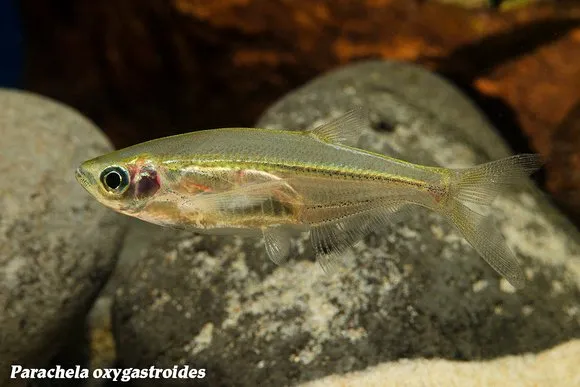
Asian glass hatchetfish
Parachela oxygastroides
Freshwater7.9 in (20 cm) · 79 gal (300 L)73–82°F (23–28°C)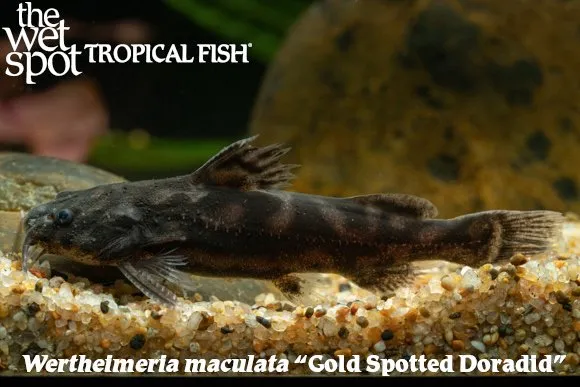
Gold-spotted doradid
Wertheimeria maculata
Freshwater11.8 in (30 cm) · 106 gal (400 L)68–79°F (20–26°C)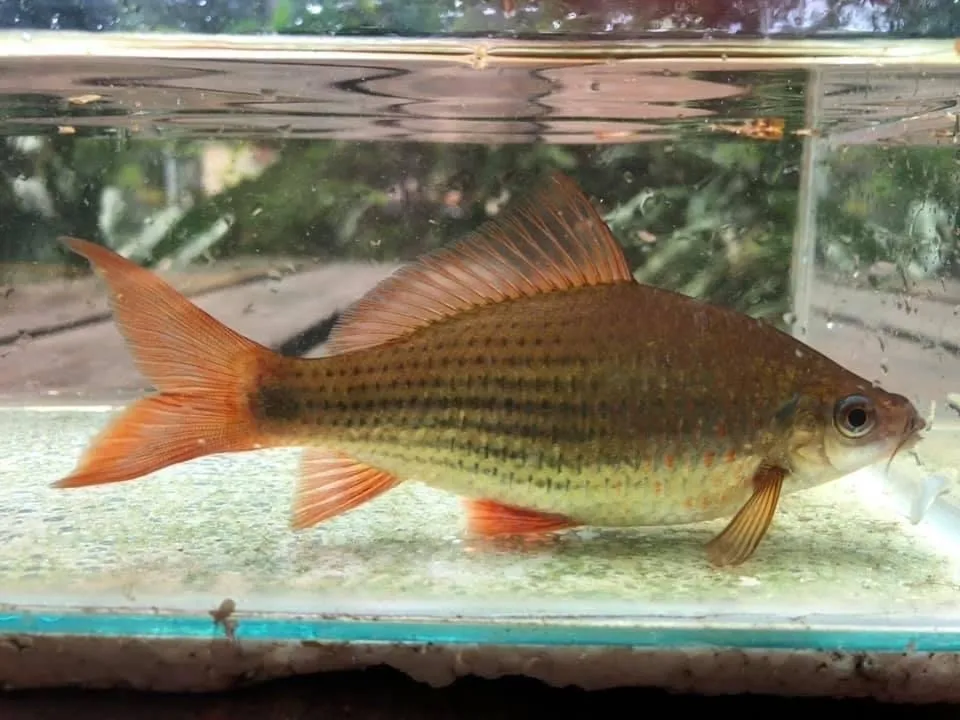
Hard-lipped barb
Osteochilus vittatus
Freshwater11.8 in (30 cm) · 106 gal (400 L)72–82°F (22–28°C)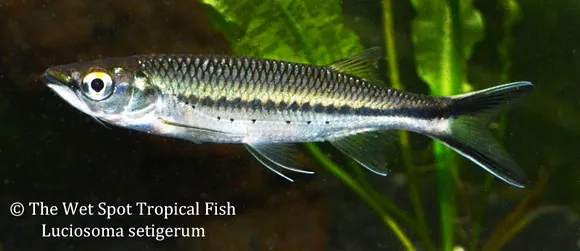
Apollo shark minnow
Luciosoma setigerum
Freshwater11.8 in (30 cm) · 106 gal (400 L)72–81°F (22–27°C)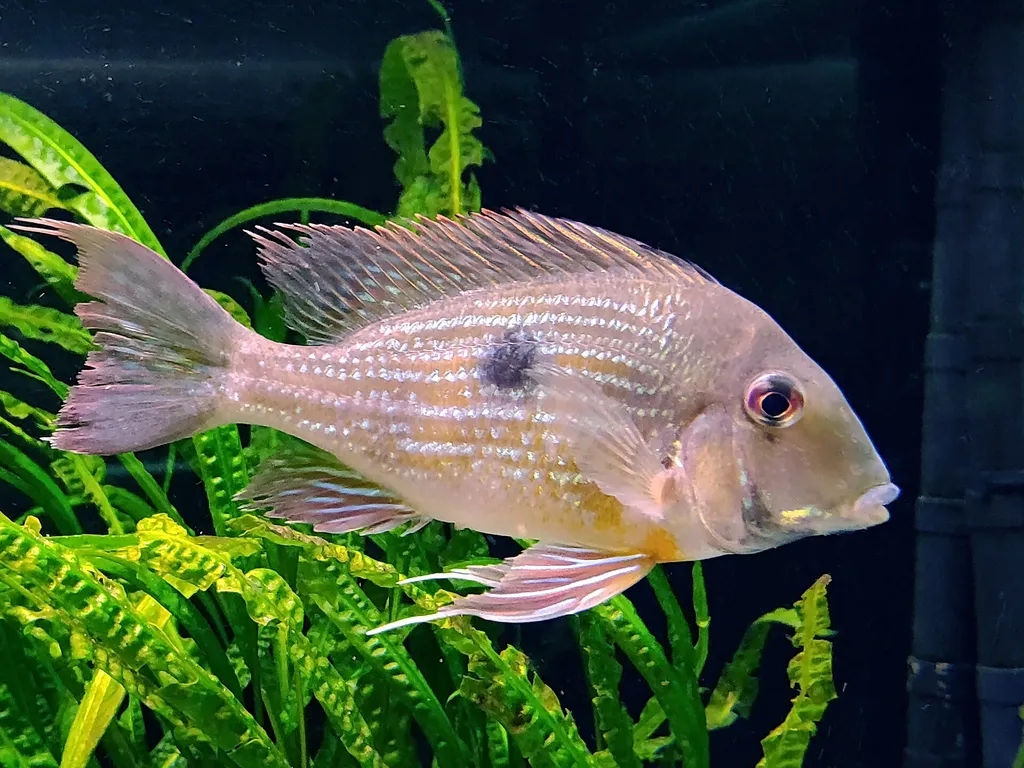
Brachybranchus eartheater
Geophagus brachybranchus
Freshwater6.7 in (17 cm) · 106 gal (400 L)77–84°F (25–29°C)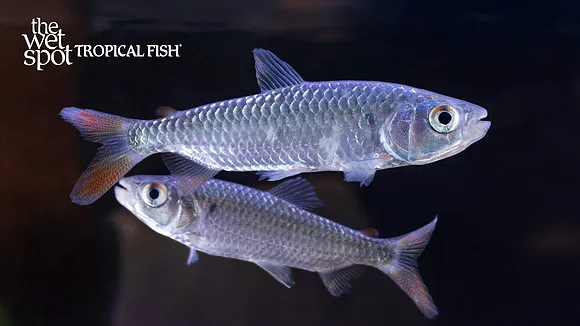
Nurse tetra
Brachyalestes nurse
Freshwater9.8 in (25 cm) · 106 gal (400 L)73–82°F (23–28°C)
Common questions
What size tank does a lemon-fin barb need?
A lemon-fin barb needs at least 106 gal (400 L). It spends most of its time in the middle.
What temperature and pH does a lemon-fin barb need?
A lemon-fin barb is comfortable at 72–82°F (22–28°C) with a pH of 6.0–7.5.
What does a lemon-fin barb eat?
A lemon-fin barb eats mostly vegetable foods, such as plant matter, algae wafers and greens, alongside pellets and frozen foods. It will also sample soft plants.
How big does a lemon-fin barb get?
An adult lemon-fin barb reaches about 9.8 in (25 cm).
Does a lemon-fin barb need a group?
Yes. A lemon-fin barb is a schooling species and should be kept in a group, not singly.
How does a lemon-fin barb breed?
The lemon-fin barb's breeding is not documented in home tanks, though the species is spawned commercially.
Related species
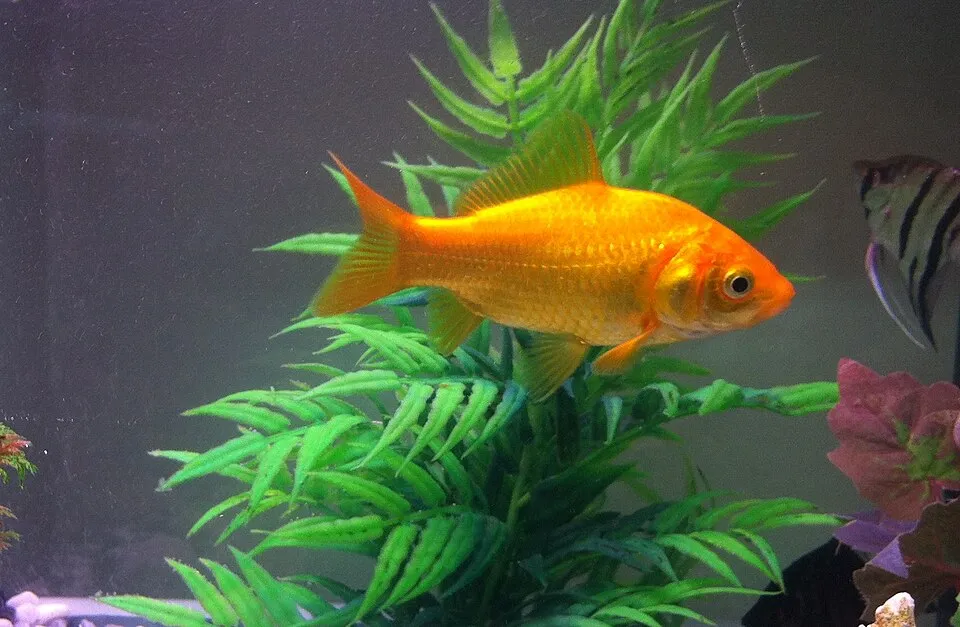 9.8 in (25 cm)50 gal (190 L)39–75°F (4–24°C)
Common goldfish
Carassius auratus
9.8 in (25 cm) · 50 gal (190 L)
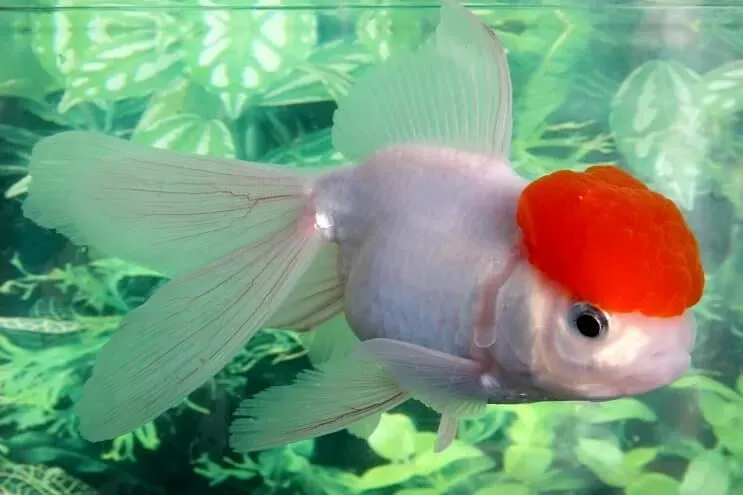 9.8 in (25 cm)30 gal (114 L)61–73°F (16–23°C)
Oranda
Carassius auratus
9.8 in (25 cm) · 30 gal (114 L)
 9.8 in (25 cm)106 gal (400 L)72–82°F (22–28°C)
Red-tailed tinfoil barb
Barbonymus altus
9.8 in (25 cm) · 106 gal (400 L)
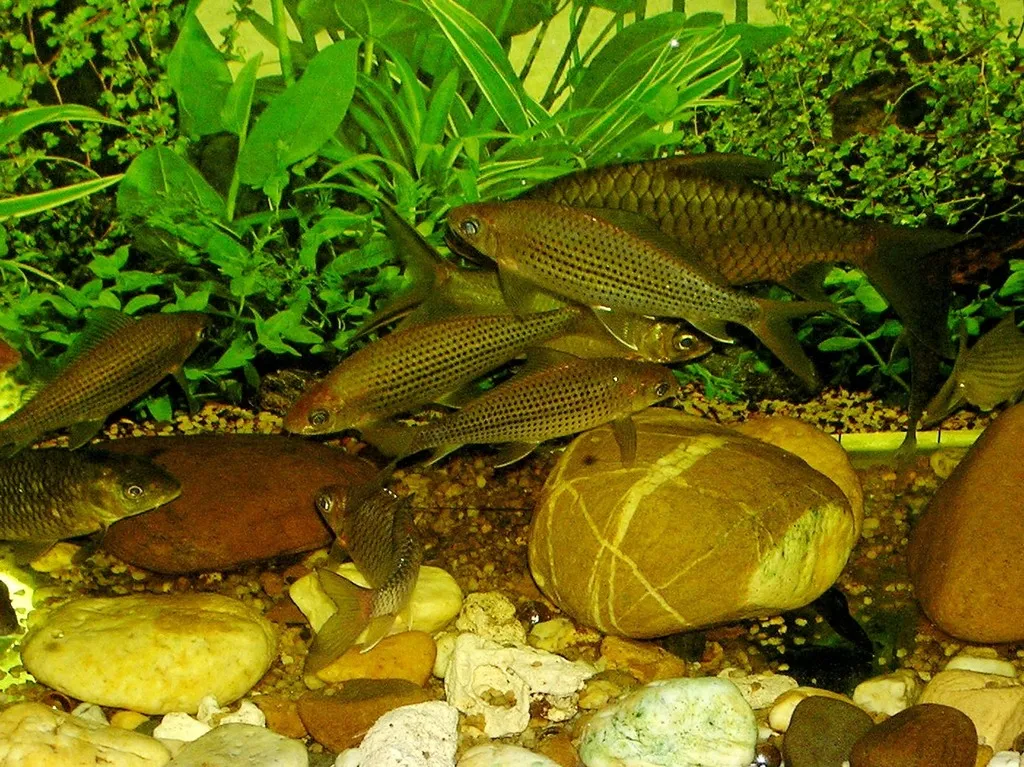 8.7 in (22 cm)66 gal (250 L)72–82°F (22–28°C)
Thinlip sharkminnow barb
Labiobarbus leptocheilus
8.7 in (22 cm) · 66 gal (250 L)
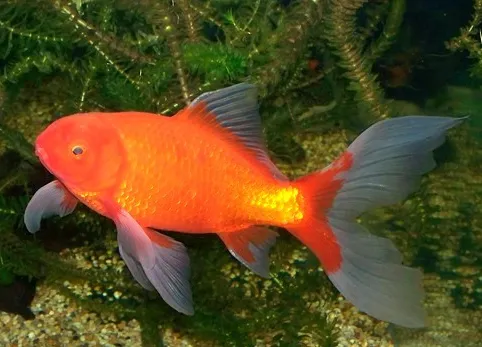 11.8 in (30 cm)50 gal (190 L)39–75°F (4–24°C)
Comet
Carassius auratus
11.8 in (30 cm) · 50 gal (190 L)
- 11.8 in (30 cm)106 gal (400 L)72–82°F (22–28°C)
Hard-lipped barb
Osteochilus vittatus
11.8 in (30 cm) · 106 gal (400 L)