Redcheek barb
Discherodontus ashmeadi
Also known as Ashmead's barb
FreshwaterFish
Care at a glance
- Temperature
- 72–81°F
- 22–27°C
- pH
- 6.0–7.5
- Adult size
- 5.4 in
- 13.6 cm
- Minimum tank
- 42 gal
- 160 L
- Temperament
- Peaceful
- Social behavior
- Schooling
- Swim level
- Middle
- Diet
- Omnivore
- Difficulty
- Medium
- Breeding
- No record
- Rarity
- Rare
- Family
- Cyprinidae
- Origin
- Mekong and Chao Phraya basins
Overview
The redcheek barb is a peaceful, current-loving shoaling barb for a river-style tank. It suits a keeper with some experience.
Did you know
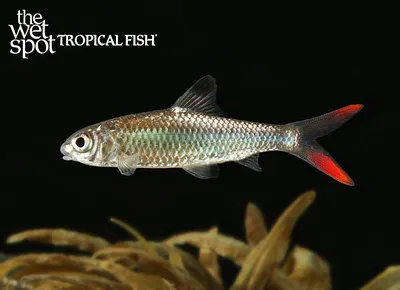
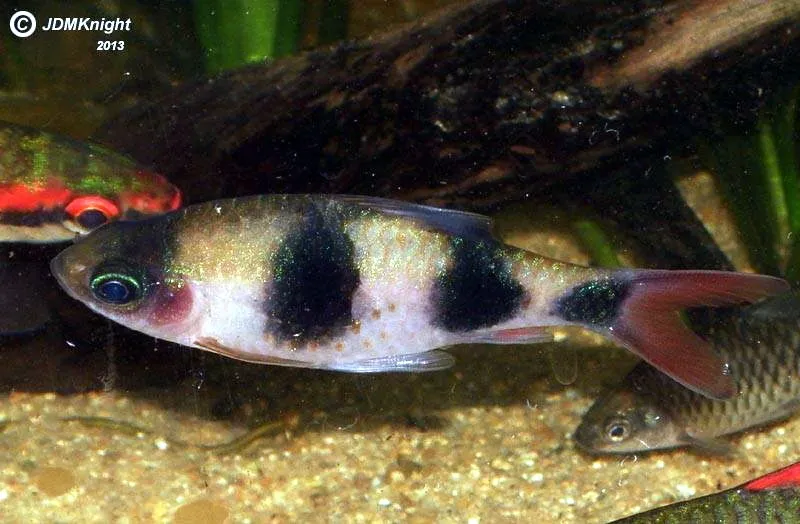
The redcheek barb's red cheek is a blush on the gill cover of an otherwise plain silver body. The blush is strongest on healthy adults in cool, fast, well-oxygenated water. It is also the quickest way to pick the species out of a mixed barb tank.
Caring for the redcheek barb
Keep redcheek barbs in a group of six or more, in a tank of at least 42 gal (160 L). That gives a starter group the length and flow it wants. They grow larger than they look as young shop fish.
Drive the tank with a strong filter or powerhead, since this current-loving barb needs water movement to look and behave its best. Build a river-style layout of smooth rocks and cobbles over a sand or fine-gravel floor, with open lanes between patches of rounded stone. Keep the water at 72 to 81°F (22 to 27°C) and a pH of 6.0 to 7.5. Hold nitrate low with regular water changes.
Feed them generously and with variety, using sinking pellets, wafers, frozen bloodworm and daphnia, and some vegetable matter. Redcheek barbs are peaceful and swim in the middle and lower-middle levels. They suit active but gentle tank mates that enjoy the same brisk, well-oxygenated water, such as other river barbs and loaches. Aquarium breeding is not on record for the species.
Good to know
Discherodontus ashmeadi belongs to the carp family, Cyprinidae, and was described by Fowler in 1937. It is a silver, fork-tailed river barb with dark tips to the tail lobes. It is also known as Ashmead's barb.
In the wild
The redcheek barb lives in clear, flowing brooks and rivers of Thailand and the lower Mekong region. It swims over beds of gravel and stone, where moderate to strong current keeps the water bright and oxygen-rich.
Weekly picks
Tank mates
The redcheek barb is a peaceful, schooling species that keeps to the middle. These picks share a community profile with it, are safe together in both directions, and overlap on water type, temperature and pH.
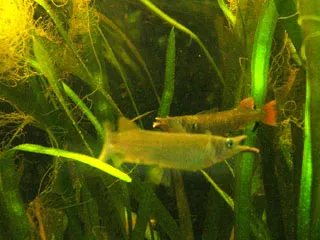
Redfin halfbeak
Nomorhamphus ebrardtii
Freshwater3.5 in (9 cm) · 29 gal (110 L)75–81°F (24–27°C)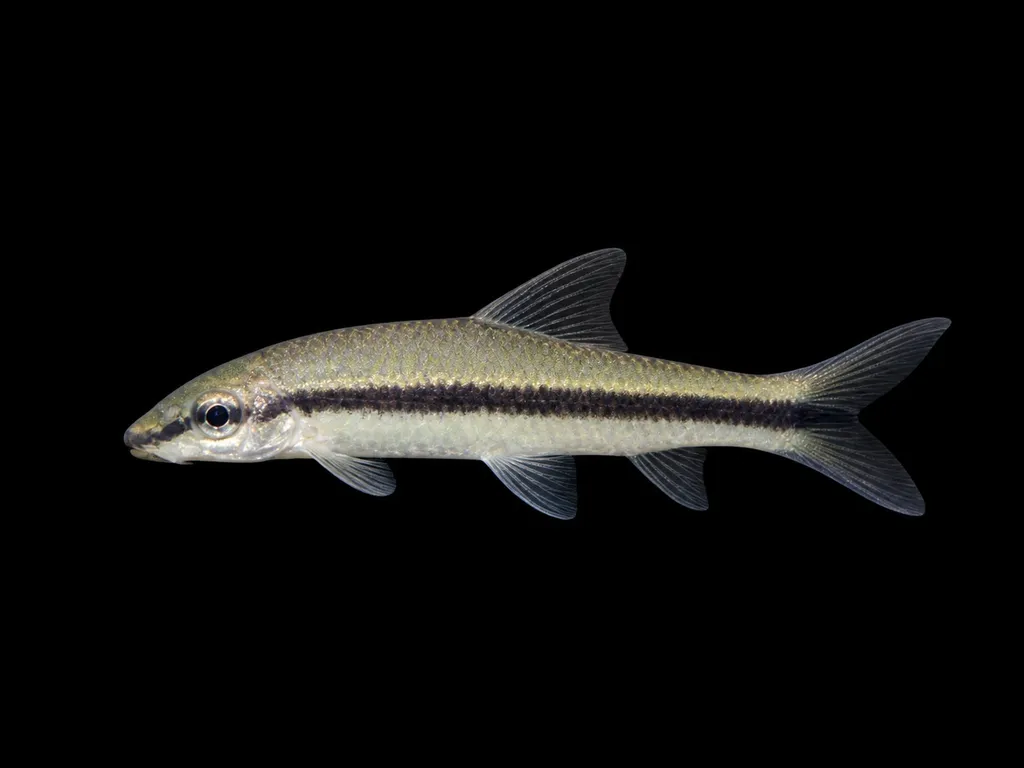
Borneo black-lobe algae eater
Crossocheilus nigriloba
Freshwater4.7 in (12 cm) · 42 gal (160 L)72–79°F (22–26°C)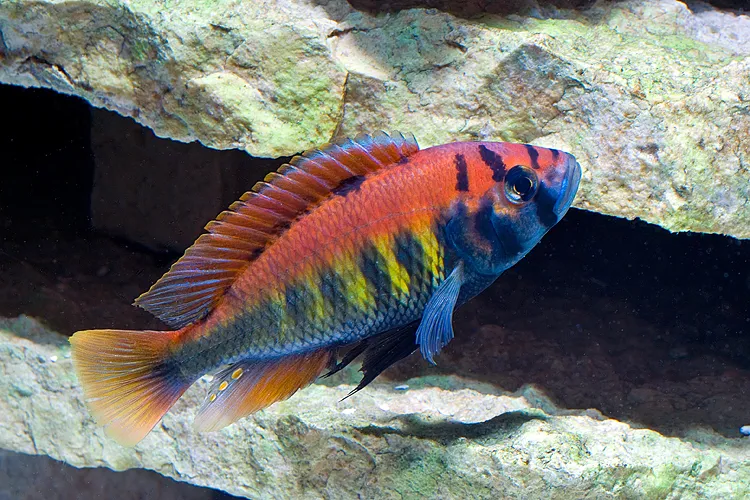
Flameback cichlid
Pundamilia nyererei
Freshwater3.5 in (9 cm) · 42 gal (160 L)73–81°F (23–27°C)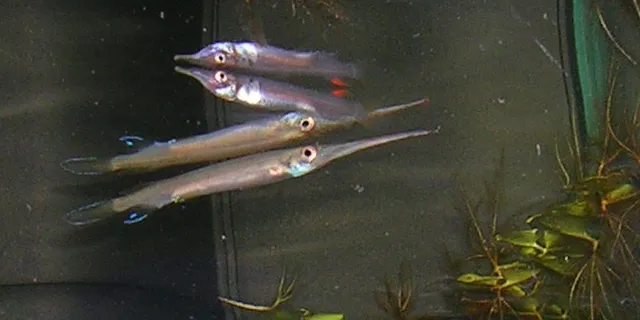
Forest halfbeak
Hemirhamphodon pogonognathus
Freshwater3.5 in (9 cm) · 34 gal (130 L)75–82°F (24–28°C)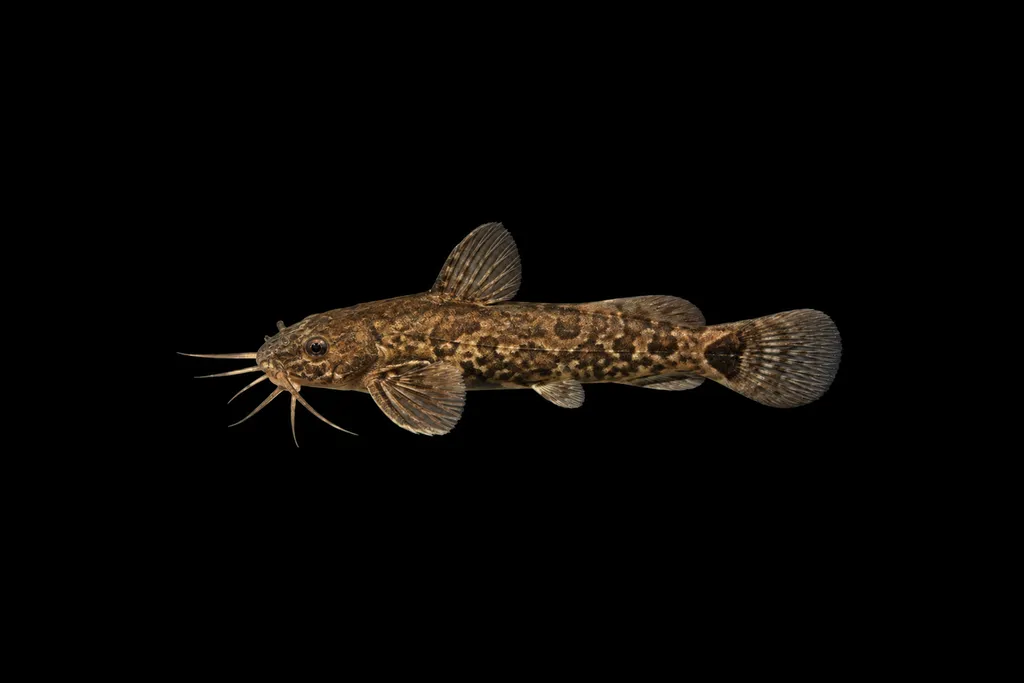
Blotched sisorid catfish
Glyptothorax macromaculatus
Freshwater6.3 in (16 cm) · 42 gal (160 L)68–79°F (20–26°C)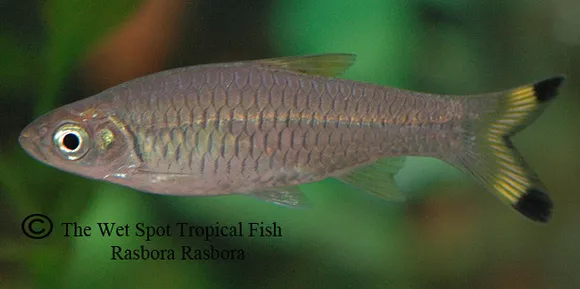
Gangetic scissortail rasbora
Rasbora rasbora
Freshwater5.1 in (13 cm) · 42 gal (160 L)72–81°F (22–27°C)
Common questions
What size tank does a redcheek barb need?
A redcheek barb needs at least 42 gal (160 L). It spends most of its time in the middle.
What temperature and pH does a redcheek barb need?
A redcheek barb is comfortable at 72–81°F (22–27°C) with a pH of 6.0–7.5.
What does a redcheek barb eat?
A redcheek barb eats sinking pellets, wafers, and frozen bloodworm and daphnia, along with some vegetable matter. Feed it generously and with variety.
How big does a redcheek barb get?
An adult redcheek barb reaches about 5.4 in (13.6 cm).
Does a redcheek barb need a group?
Yes. A redcheek barb is a schooling species and should be kept in a group, not singly.
Related species
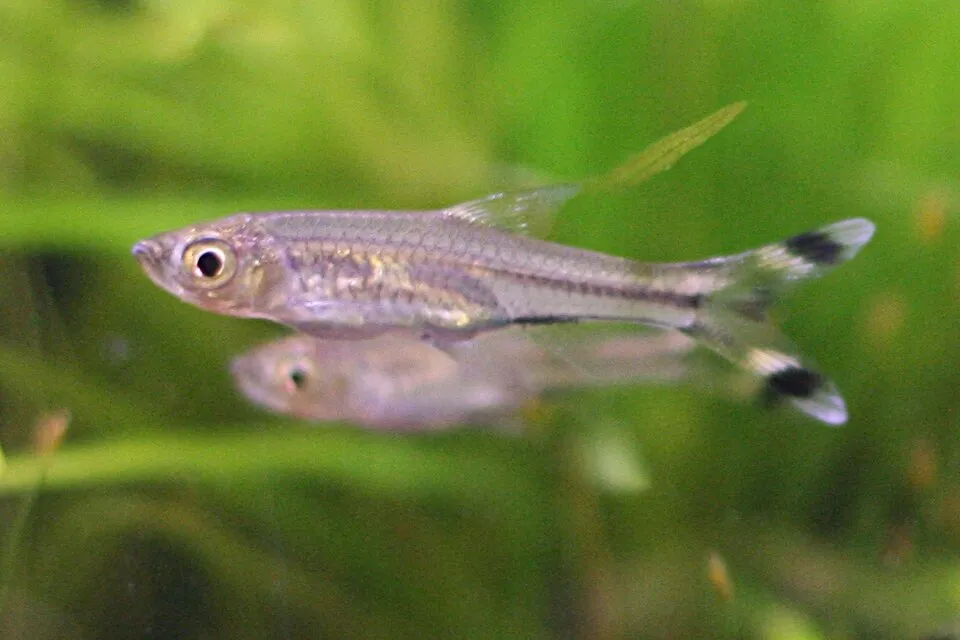 5.5 in (14 cm)45 gal (170 L)72–77°F (22–25°C)
Scissortail rasbora
Rasbora trilineata
5.5 in (14 cm) · 45 gal (170 L)
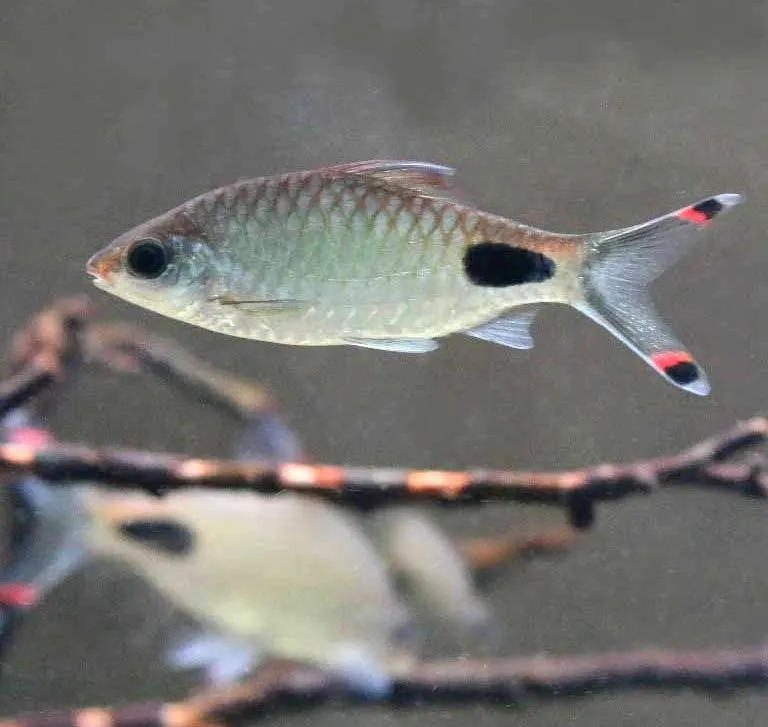 5.1 in (13 cm)53 gal (200 L)68–77°F (20–25°C)
Filament barb
Dawkinsia filamentosa
5.1 in (13 cm) · 53 gal (200 L)
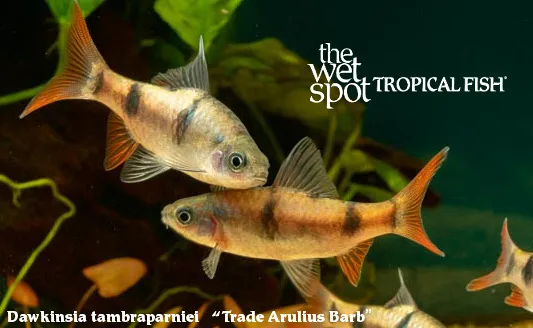 5.1 in (13 cm)42 gal (160 L)70–79°F (21–26°C)
Tambraparni barb
Dawkinsia tambraparniei
5.1 in (13 cm) · 42 gal (160 L)
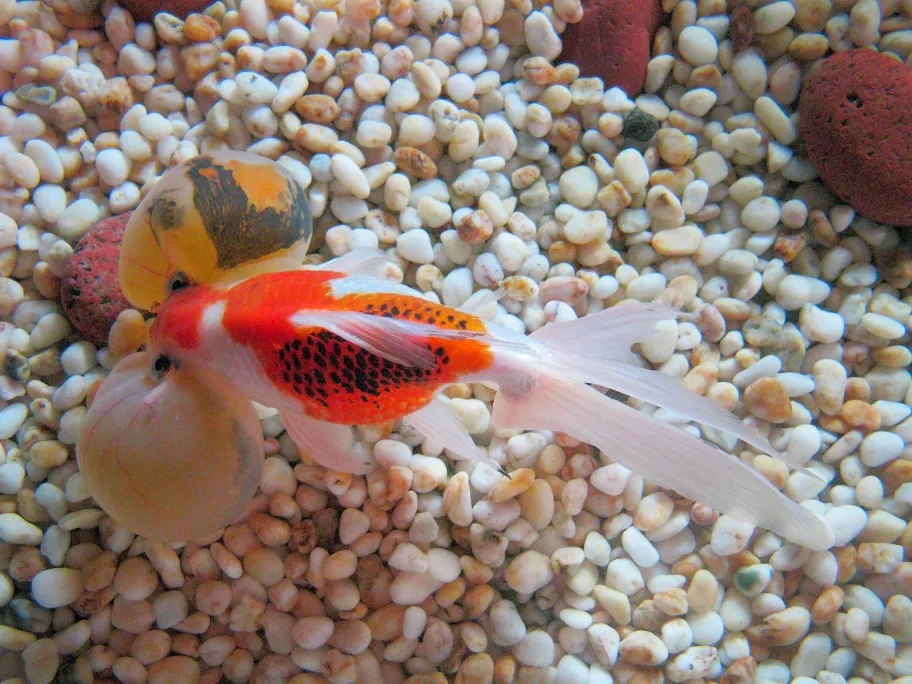 5.9 in (15 cm)20 gal (75 L)64–73°F (18–23°C)
Bubble eye
Carassius auratus
5.9 in (15 cm) · 20 gal (75 L)
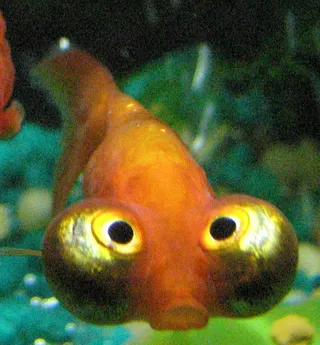 5.9 in (15 cm)20 gal (75 L)64–73°F (18–23°C)
Celestial eye
Carassius auratus
5.9 in (15 cm) · 20 gal (75 L)
 4.7 in (12 cm)37 gal (140 L)66–77°F (19–25°C)
Arulius barb
Dawkinsia arulius
4.7 in (12 cm) · 37 gal (140 L)