Dracula fish
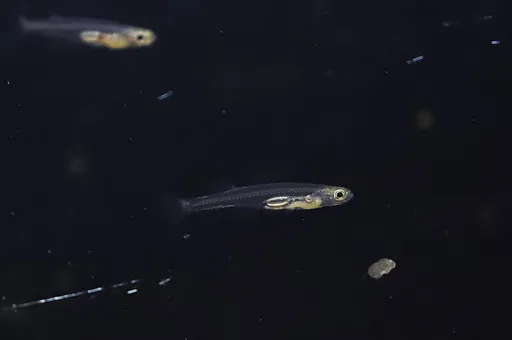
Danionella dracula
Also known as Dracula minnow, Dracula danio, Burmese green neon cypris
FreshwaterFish
Care at a glance
- Temperature
- 68–79°F
- 20–26°C
- pH
- 6.5–7.5
- Adult size
- 0.7 in
- 1.7 cm
- Minimum tank
- 11 gal
- 40 L
- Temperament
- Peaceful
- Social behavior
- Schooling
- Swim level
- Middle
- Difficulty
- Medium
- Breeding
- Medium
- Rarity
- Rare
- Family
- Cyprinidae
- Origin
- Known from a small area of clear forest streams in northern Myanmar.
Overview
Keep Danionella dracula in a group of at least ten in a mature tank of 40 litres or more at 20 to 26 C with a pH of 6.5 to 7.5 and soft water. Feed tiny foods such as baby brine shrimp, microworm, cyclops, and finely crushed flake. It is far too small for normal tankmates and does best in a quiet species tank or with dwarf shrimp. Gentle filtration and rock-steady water quality are essential.
In the wild
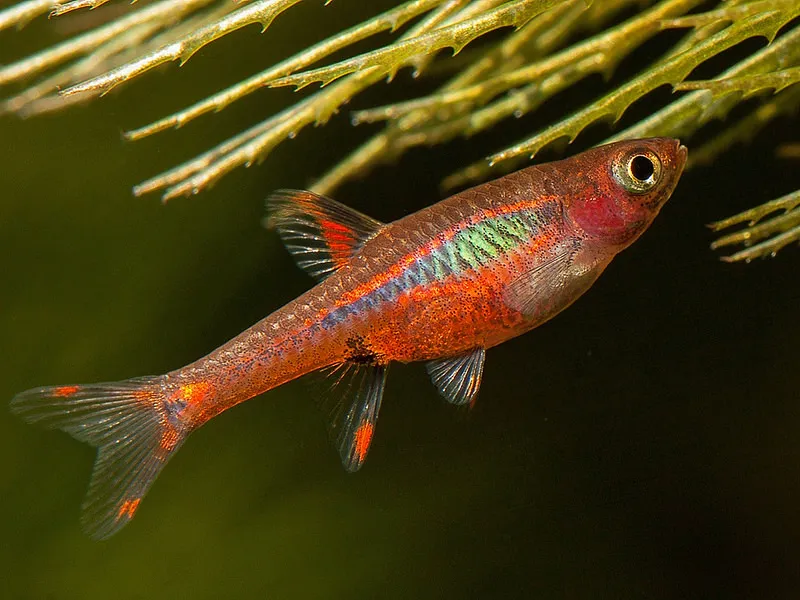
Danionella dracula is a tiny, translucent fish from a few clear streams in northern Myanmar. Like its relatives it keeps a larval-like, see-through body with the spine visible through the skin. It swims in small groups in open water and needs clean, stable, gently moving conditions. It is a delicate specialist rather than a beginner fish.
Good to know
Adult males grow fang-like points on the jaws, which is remarkable because the whole Danionella group otherwise lost its true teeth during its miniaturised evolution. These fangs are not real teeth, since they have no enamel or pulp, and males use them to spar with each other. The fish reaches only about 1.7 cm yet keeps this unique jaw armament, giving it the name dracula.
Did you know
It is one of the smallest vertebrates known to grow anything like teeth, and the males' clear fangs are visible right through their transparent heads.
Weekly picks
Tank mates
Dracula fish is a peaceful, schooling species that keeps to the middle. These picks share a community profile with it, are safe together in both directions, and overlap on water type, temperature and pH.
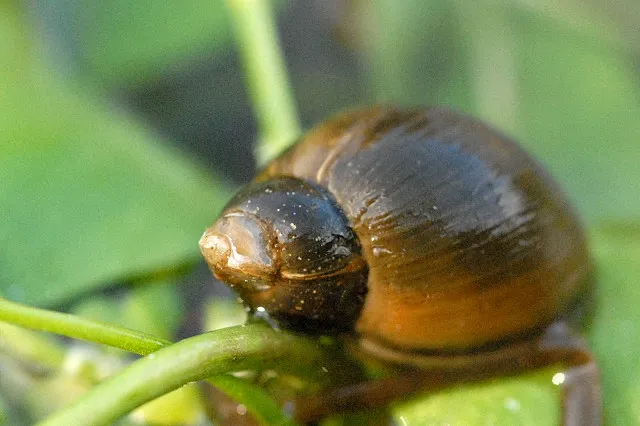
Wandering snail
Ampullaceana balthica
Freshwater0.8 in (2 cm) · 11 gal (40 L)50–84°F (10–29°C)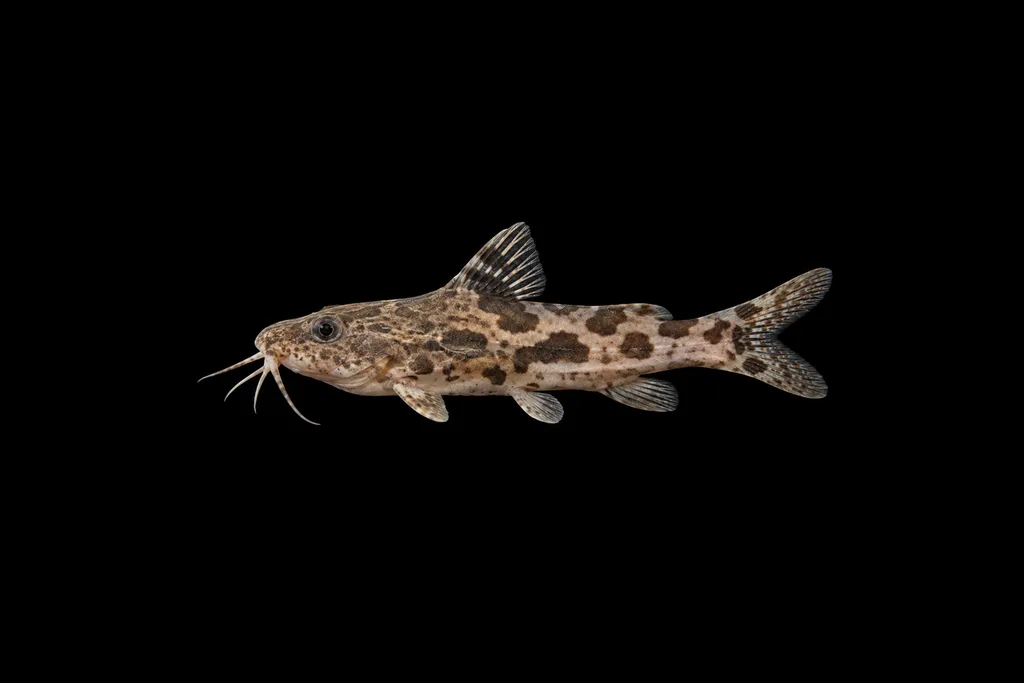
Harlequin moth catfish
Pseudolaguvia ribeiroi
Freshwater1.6 in (4 cm) · 11 gal (40 L)68–79°F (20–26°C)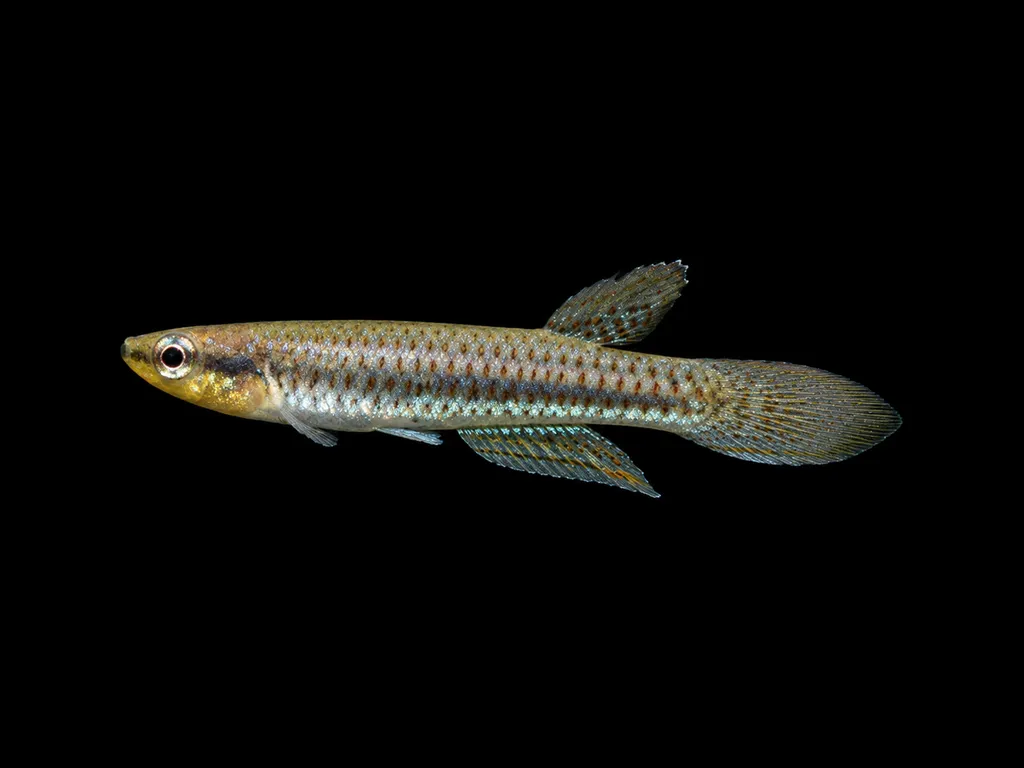
Dubois' panchax
Epiplatys duboisi
Freshwater1.4 in (3.5 cm) · 11 gal (40 L)68–77°F (20–25°C)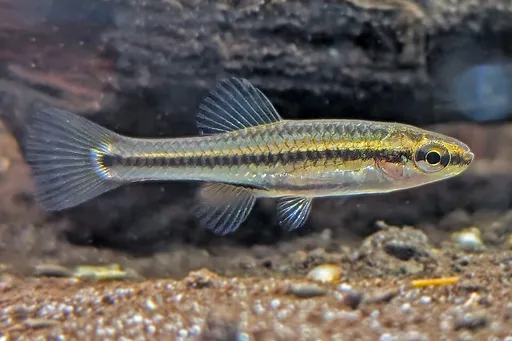
Bluefin killifish
Lucania goodei
Freshwater2 in (5 cm) · 11 gal (40 L)64–77°F (18–25°C)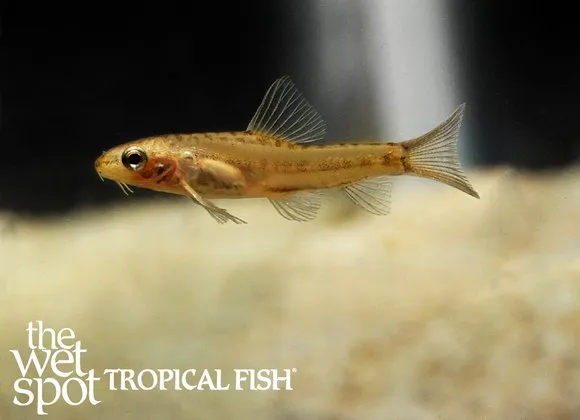
Mango loach
Physoschistura mango
Freshwater1 in (2.5 cm) · 11 gal (40 L)68–77°F (20–25°C)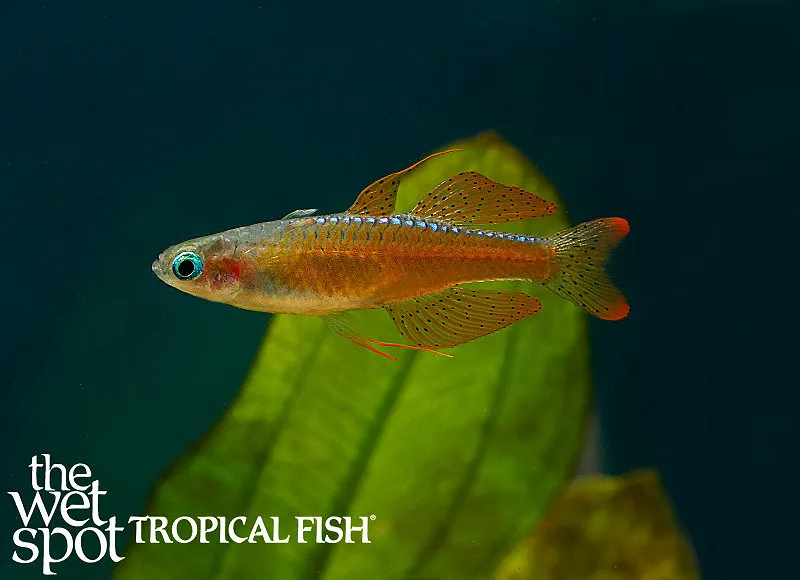
Red neon blue-eye
Pseudomugil luminatus
Freshwater1.4 in (3.5 cm) · 11 gal (40 L)72–81°F (22–27°C)
Common questions
What size tank does a Dracula fish need?
A Dracula fish needs at least 11 gal (40 L). It spends most of its time in the middle.
What temperature and pH does a Dracula fish need?
A Dracula fish is comfortable at 68–79°F (20–26°C) with a pH of 6.5–7.5.
How big does a Dracula fish get?
An adult Dracula fish reaches about 0.7 in (1.7 cm).
Does a Dracula fish need a group?
Yes. A Dracula fish is a schooling species and should be kept in a group, not singly.
Related species
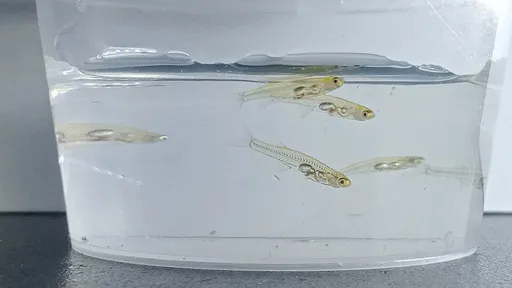 0.5 in (1.3 cm)8 gal (30 L)72–82°F (22–28°C)
Danionella cerebrum
0.5 in (1.3 cm) · 8 gal (30 L)
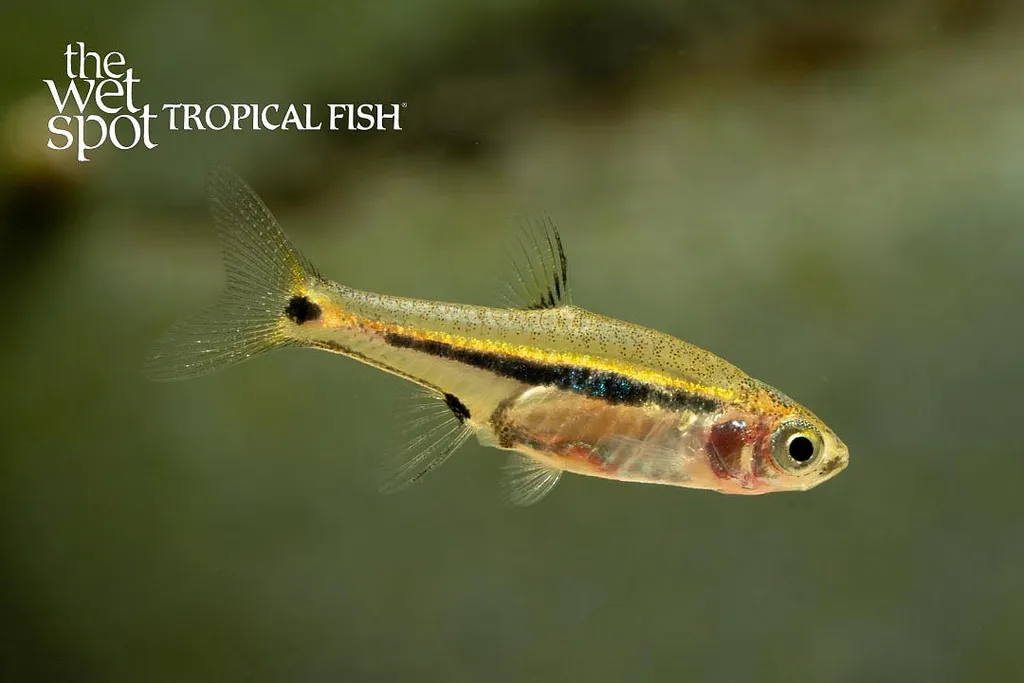 0.6 in (1.6 cm)11 gal (40 L)73–81°F (23–27°C)
Exclamation-point rasbora
Boraras urophthalmoides
0.6 in (1.6 cm) · 11 gal (40 L)
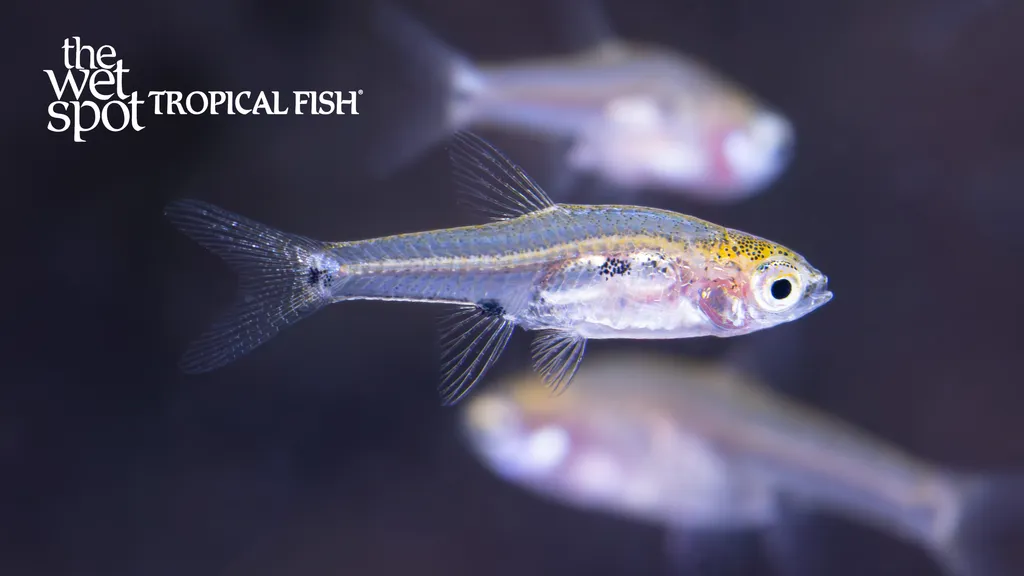 0.6 in (1.5 cm)8 gal (30 L)72–79°F (22–26°C)
Micro rasbora
Boraras micros
0.6 in (1.5 cm) · 8 gal (30 L)
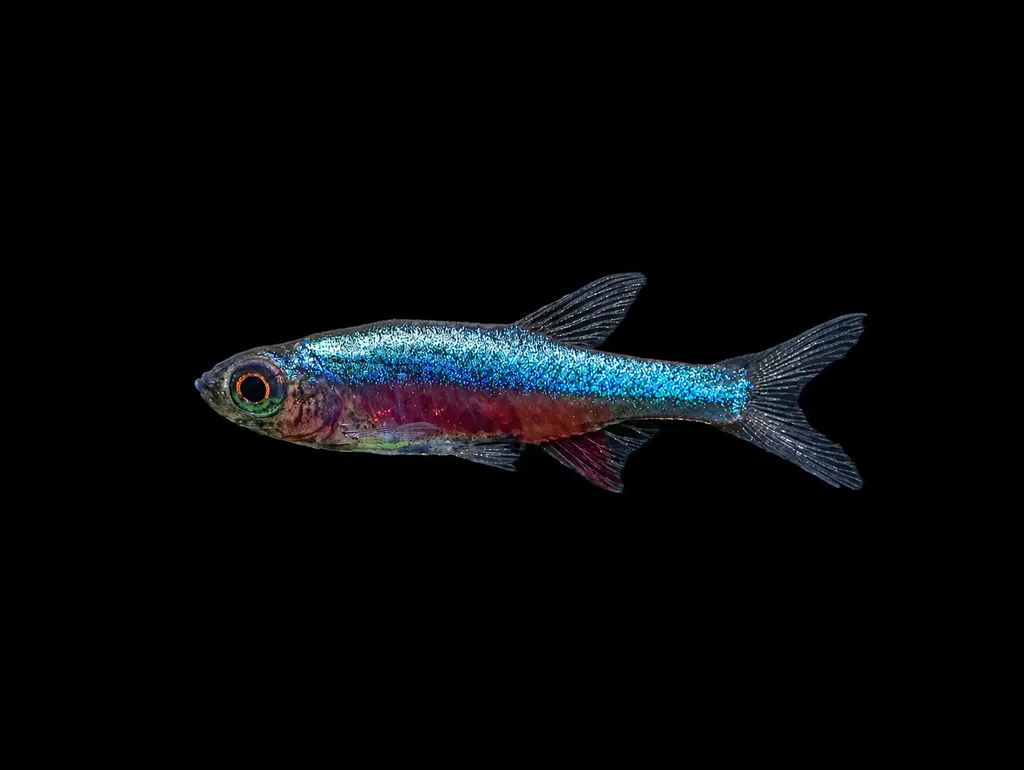 0.8 in (2 cm)12 gal (45 L)73–79°F (23–26°C)
Blue axelrodi rasbora
Sundadanio axelrodi
0.8 in (2 cm) · 12 gal (45 L)
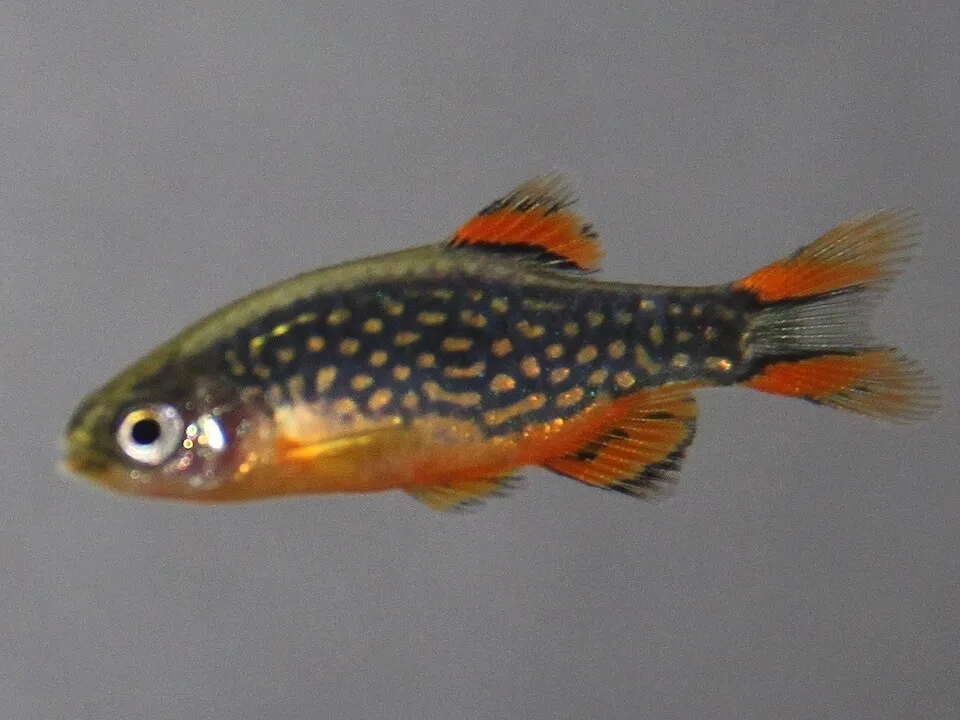 0.8 in (2 cm)9 gal (35 L)72–79°F (22–26°C)
Celestial Pearl danio
Danio margaritatus
0.8 in (2 cm) · 9 gal (35 L)
 0.8 in (2 cm)7 gal (25 L)72–82°F (22–28°C)
Chili rasbora
Boraras brigittae
0.8 in (2 cm) · 7 gal (25 L)