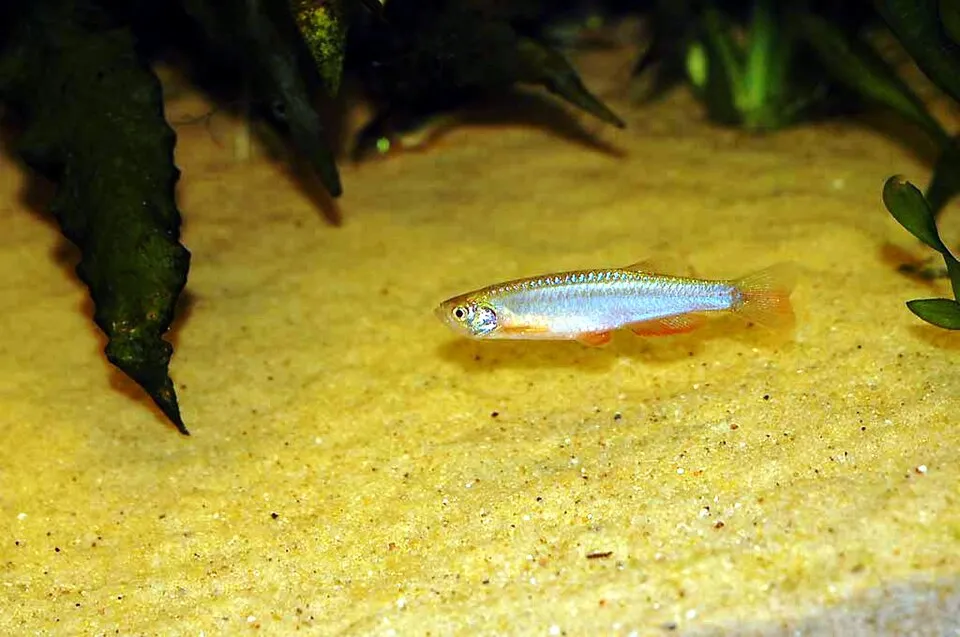
Fiveline bonylip barb
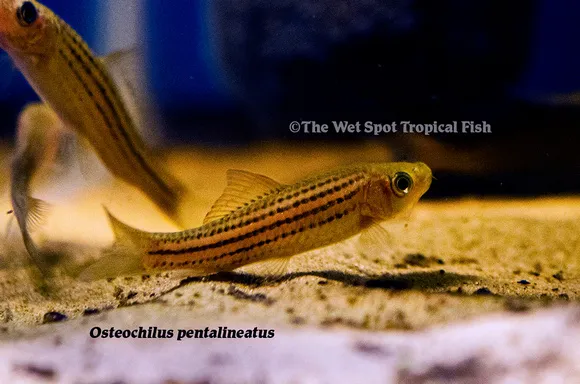
Osteochilus pentalineatus
Also known as Five-lined osteochilus, Borneo bonylipped barb
FreshwaterFish
Care at a glance
- Temperature
- 73–82°F
- 23–28°C
- pH
- 5.5–7.0
- Adult size
- 2.2 in
- 5.6 cm
- Minimum tank
- 53 gal
- 200 L
- Temperament
- Peaceful
- Social behavior
- Schooling
- Swim level
- Middle
- Difficulty
- Medium
- Breeding
- No record
- Rarity
- Rare
- Family
- Cyprinidae
- Origin
- Southern Borneo, Indonesia
Overview
The fiveline bonylip barb is a small, active schooling grazer for a long tank with steady flow. It suits a keeper with some experience.
Caring for the fiveline bonylip barb
Keep fiveline bonylip barbs in a group of at least six, and more if you can, so they stay bold. Though small, they are restless swimmers, so a longer tank of 53 gal (200 L) gives a group room to cruise. They swim in the middle and lower water.
Give them a sandy bottom, smooth stones and driftwood to graze, some leaf litter and steady, well-oxygenated flow. Soft water and a dim, planted layout help them show their stripes and settle in. Keep the water warm, at 73 to 82°F (23 to 28°C), with a pH on the acidic side, from 5.5 to 7.0.
They spend the day working surfaces for algae and biofilm, and their diet leans vegetable. Offer algae wafers and a spirulina-based food alongside sinking pellets and the occasional frozen treat.
Fiveline bonylip barbs are peaceful and suit a community of other calm, current-loving fish. Their breeding is not documented in aquariums.
Good to know
Osteochilus pentalineatus is a bonylip barb in the carp family, Cyprinidae, described by Maurice Kottelat in 1982. It is a modest grazer rather than the mid-size fish it is sometimes sold as.
In the wild
The fiveline bonylip barb comes from rivers and blackwater-edged streams of southern Borneo. Its home water is soft and often stained with tannins.
Weekly picks
Tank mates
The fiveline bonylip barb is a peaceful, schooling species that keeps to the middle. These picks share a community profile with it, are safe together in both directions, and overlap on water type, temperature and pH.
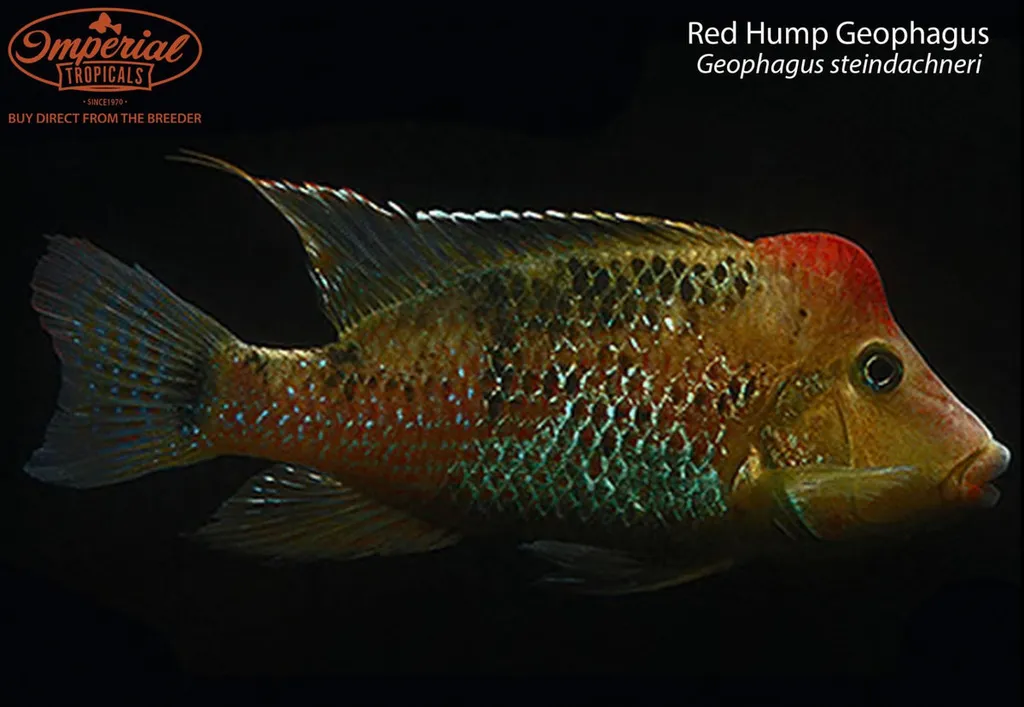
Red hump eartheater
Geophagus steindachneri
Freshwater5.9 in (15 cm) · 53 gal (200 L)72–82°F (22–28°C)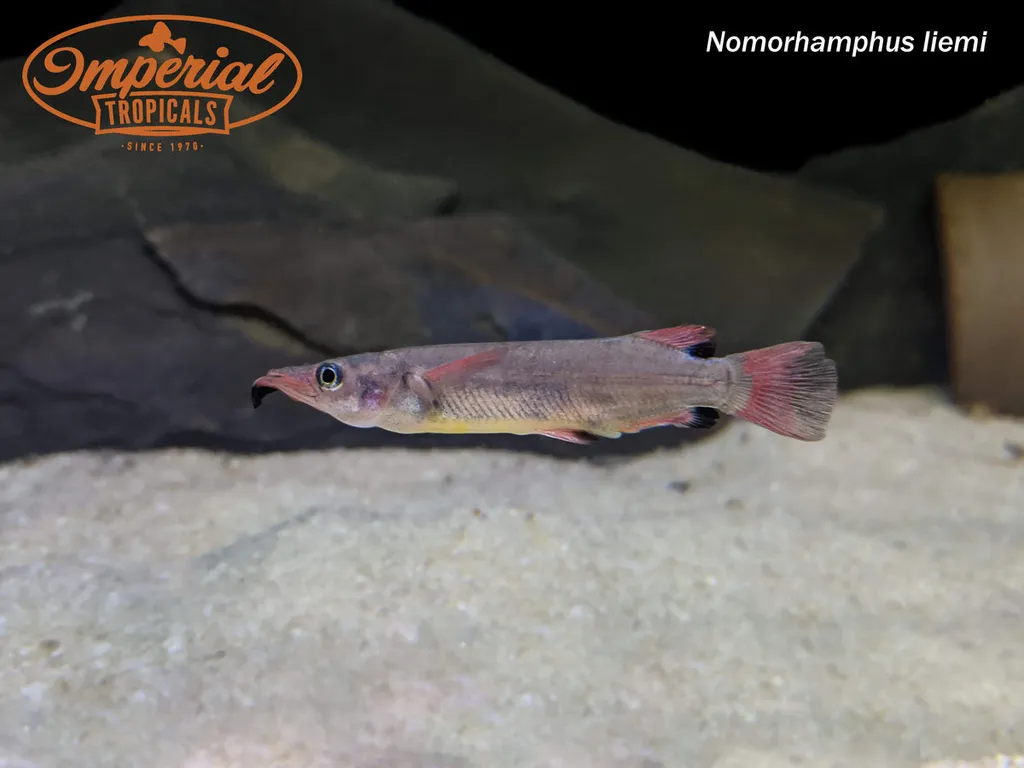
Celebes halfbeak
Nomorhamphus liemi
Freshwater3.5 in (9 cm) · 40 gal (150 L)68–77°F (20–25°C)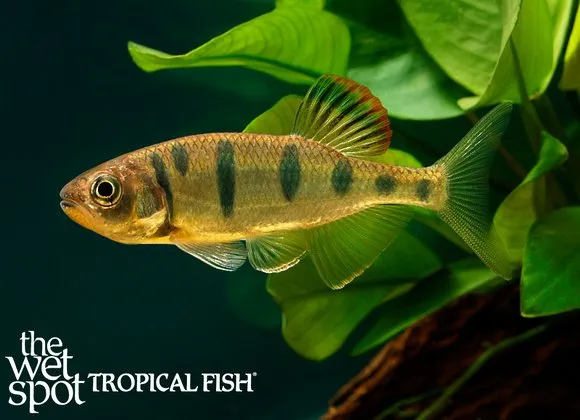
Jeweled baril
Opsarius pulchellus
Freshwater5.1 in (13 cm) · 53 gal (200 L)72–81°F (22–27°C)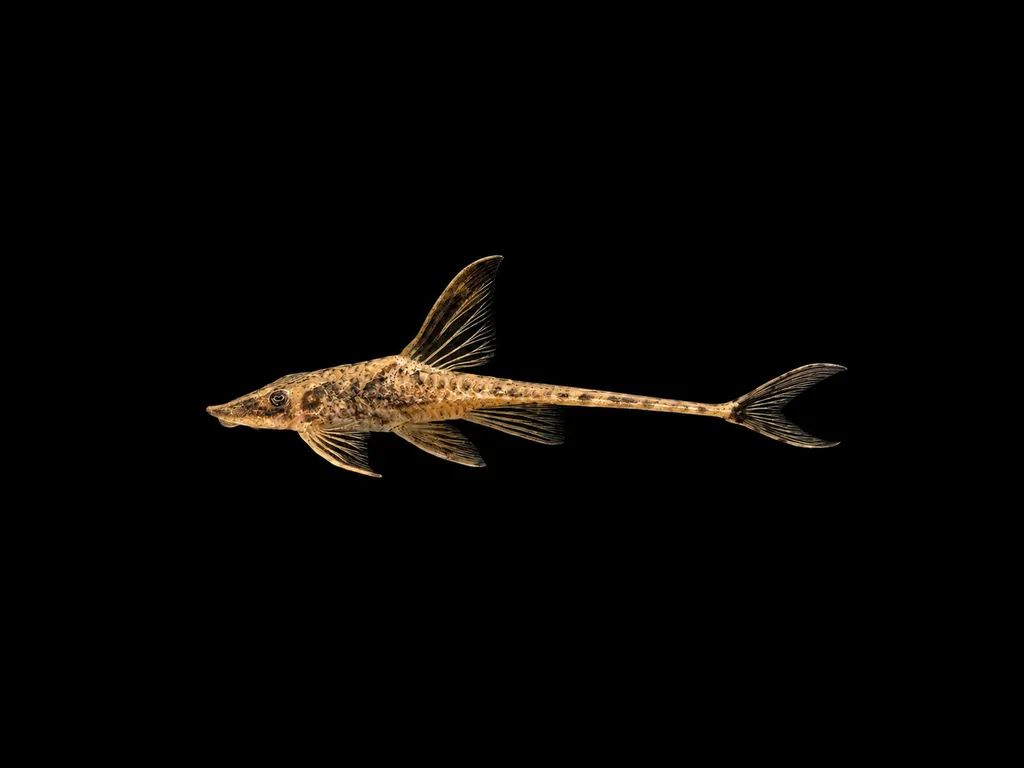
Tamana royal farlowella
Sturisomatichthys tamanae
Freshwater8.7 in (22 cm) · 53 gal (200 L)75–82°F (24–28°C)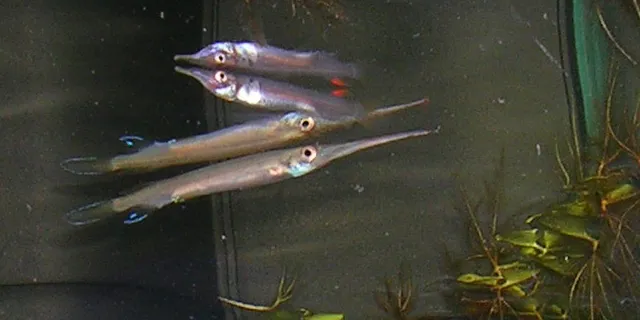
Forest halfbeak
Hemirhamphodon pogonognathus
Freshwater3.5 in (9 cm) · 34 gal (130 L)75–82°F (24–28°C)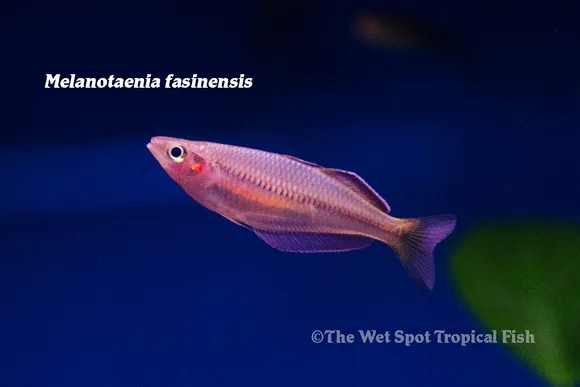
Fasin rainbowfish
Melanotaenia fasinensis
Freshwater5.4 in (13.8 cm) · 53 gal (200 L)75–84°F (24–29°C)
Common questions
What size tank does a fiveline bonylip barb need?
A fiveline bonylip barb needs at least 53 gal (200 L). It spends most of its time in the middle.
What temperature and pH does a fiveline bonylip barb need?
A fiveline bonylip barb is comfortable at 73–82°F (23–28°C) with a pH of 5.5–7.0.
What does a fiveline bonylip barb eat?
A fiveline bonylip barb grazes algae and biofilm, and its diet leans vegetable. Feed algae wafers and a spirulina-based food, with sinking pellets and the occasional frozen treat.
How big does a fiveline bonylip barb get?
An adult fiveline bonylip barb reaches about 2.2 in (5.6 cm).
Does a fiveline bonylip barb need a group?
Yes. A fiveline bonylip barb is a schooling species and should be kept in a group, not singly.
Related species
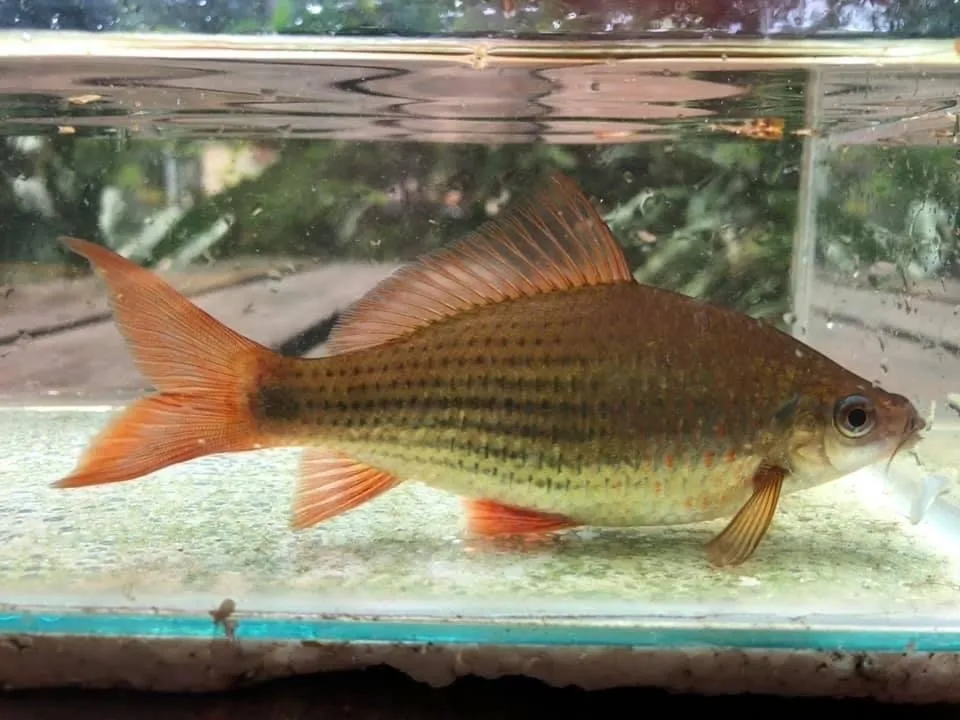 11.8 in (30 cm)106 gal (400 L)72–82°F (22–28°C)
Hard-lipped barb
Osteochilus vittatus
11.8 in (30 cm) · 106 gal (400 L)
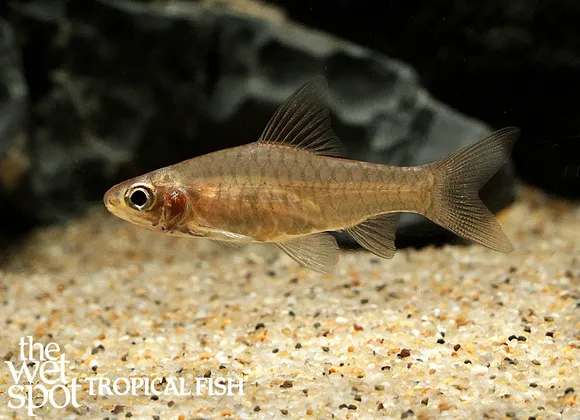 2.2 in (5.5 cm)14 gal (54 L)73–81°F (23–27°C)
Congo clipper barb
Clypeobarbus congicus
2.2 in (5.5 cm) · 14 gal (54 L)
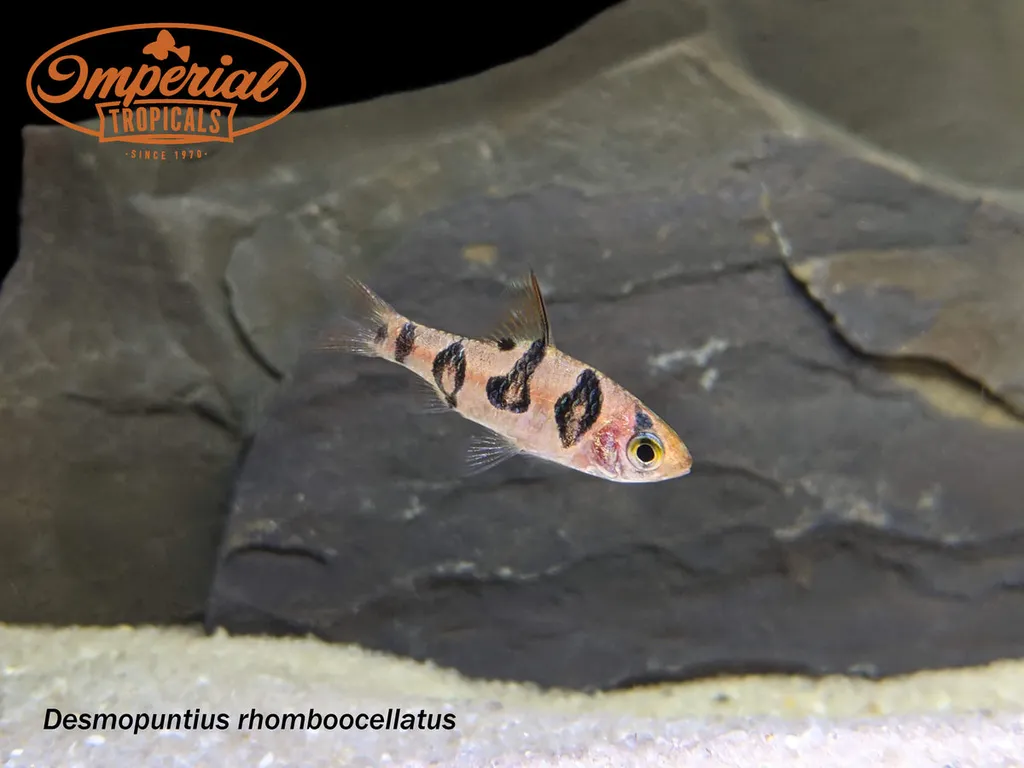 2.2 in (5.5 cm)20 gal (75 L)72–82°F (22–28°C)
Snakeskin barb
Desmopuntius rhomboocellatus
2.2 in (5.5 cm) · 20 gal (75 L)
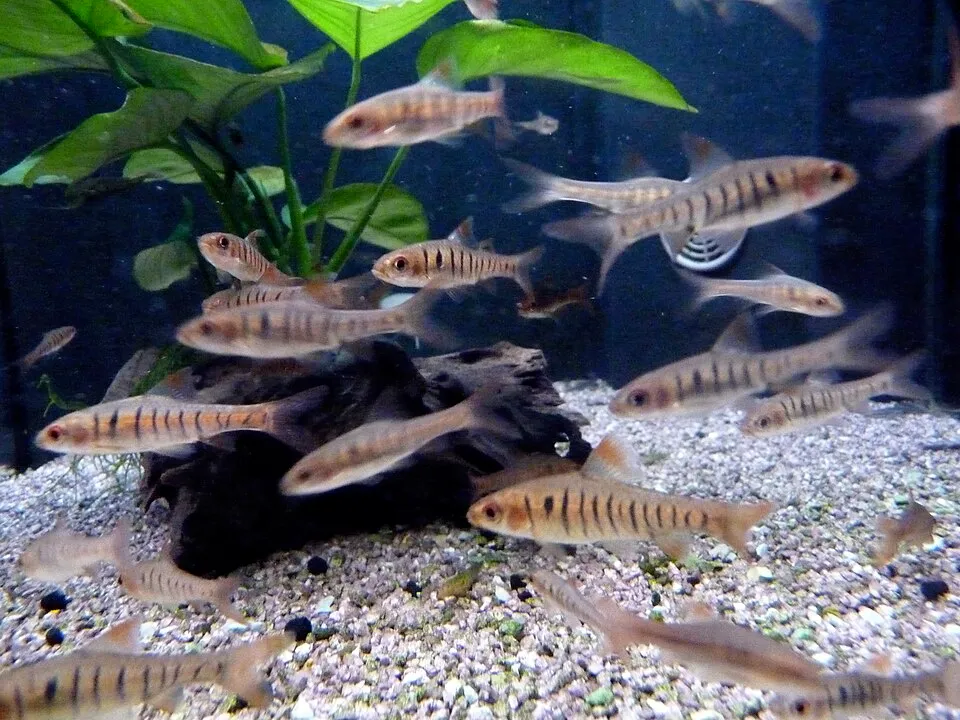 2.4 in (6 cm)20 gal (75 L)68–79°F (20–26°C)
African banded barb
Barbus fasciolatus
2.4 in (6 cm) · 20 gal (75 L)
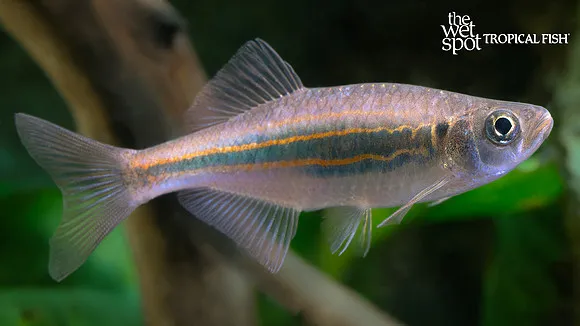 2.4 in (6 cm)16 gal (60 L)68–79°F (20–26°C)
Brittan's rasbora
Kottelatia brittani
2.4 in (6 cm) · 16 gal (60 L)
 2.4 in (6 cm)18 gal (70 L)61–77°F (16–25°C)
Pearl danio
Danio albolineatus
2.4 in (6 cm) · 18 gal (70 L)