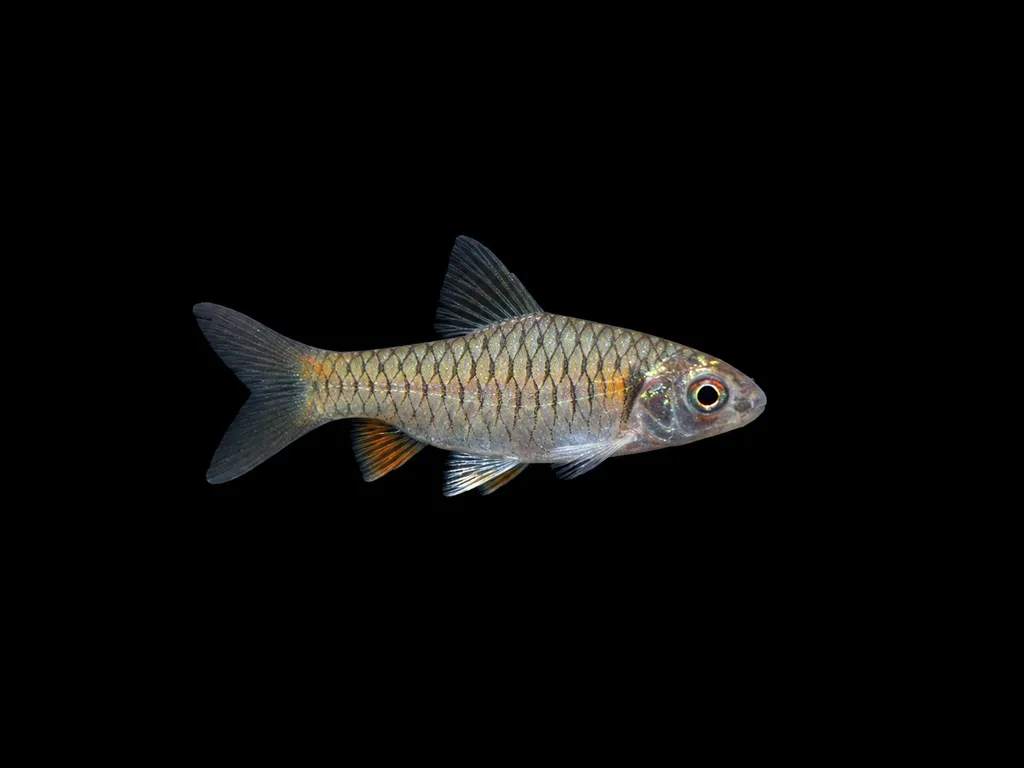
Pearl of the Congo barb
Clypeobarbus pleuropholis
Also known as Barbus pleuropholis, Side-scaled Congo barb
FreshwaterFish
Care at a glance
- Temperature
- 73–81°F
- 23–27°C
- pH
- 5.5–7.0
- Adult size
- 2 in
- 5 cm
- Minimum tank
- 14 gal
- 54 L
- Temperament
- Peaceful
- Social behavior
- Schooling
- Swim level
- Middle
- Difficulty
- Medium
- Breeding
- No record
- Rarity
- Rare
- Family
- Cyprinidae
- Origin
- Central Congo basin
Overview
The pearl of the Congo barb is a tiny, peaceful schooling barb for a dim, planted nano tank. It is best with a little experience.
Did you know
The pearl of the Congo barb's species name, pleuropholis, means flank-scale. It refers to the reflective side scales that flash like little pearls, which also give the fish its trade name.
Caring for the pearl of the Congo barb
Give a group of pearl of the Congo barbs a quiet, planted tank of at least 14 gal (54 L), with some botanical cover. Keep it dimly lit, with a dark substrate, driftwood, and leaf litter to stain the water and soften the light.
Keep the water soft and slightly acidic, at 73 to 81°F (23 to 27°C) and a pH of 5.5 to 7.0. Clean, gentle, mineral-poor water suits this delicate little fish. Its mouth is small, so feed powdered and micro flake foods, tiny sinking pellets, and small live or frozen foods such as cyclops.
Keep a group of at least eight in the middle water, where a shoal shows its shimmer best. They are peaceful and suit a gentle, Congo-themed nano community with other small, soft-water fish. Their aquarium breeding is not documented, though small barbs of this kind are egg scatterers.
Good to know
Clypeobarbus pleuropholis is a nano barb in the carp family, Cyprinidae, with a pale gold body.
In the wild
The pearl of the Congo barb comes from the soft, warm waters of the central Congo basin.
Weekly picks
Tank mates
The pearl of the Congo barb is a peaceful, schooling species that keeps to the middle. These picks share a community profile with it, are safe together in both directions, and overlap on water type, temperature and pH.
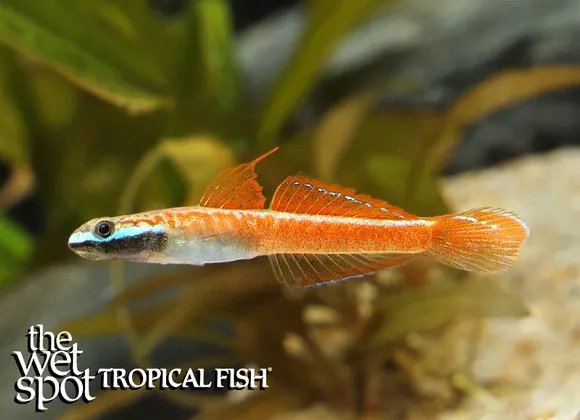
Annie's goby
Stiphodon annieae
Freshwater1.2 in (3 cm) · 14 gal (54 L)73–81°F (23–27°C)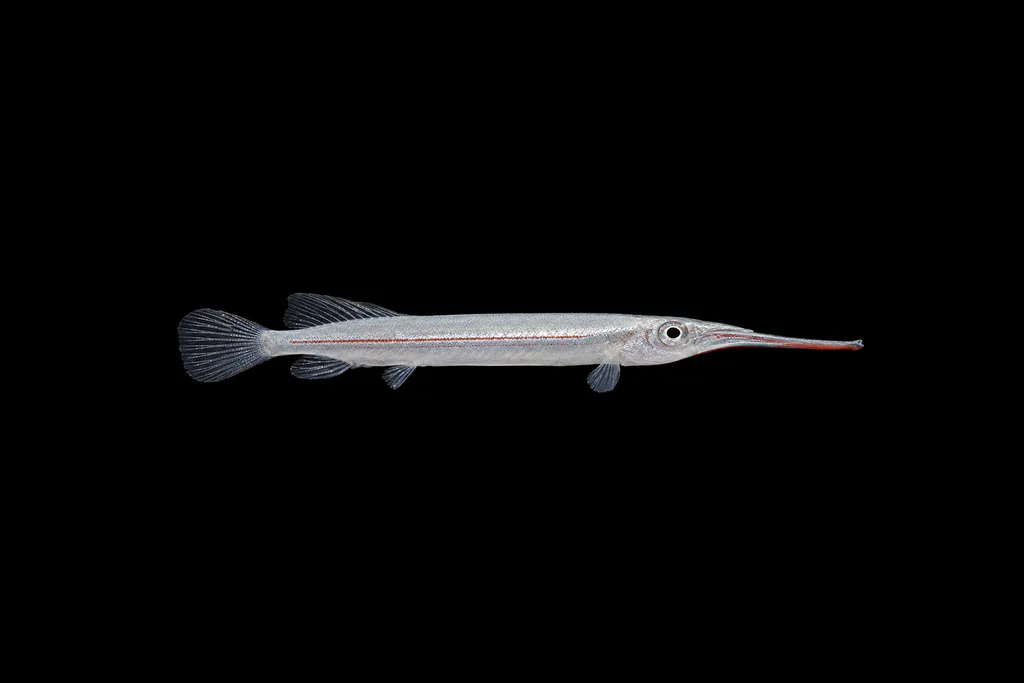
Fire halfbeak
Hemirhamphodon kapuasensis
Freshwater2.4 in (6 cm) · 14 gal (54 L)73–81°F (23–27°C)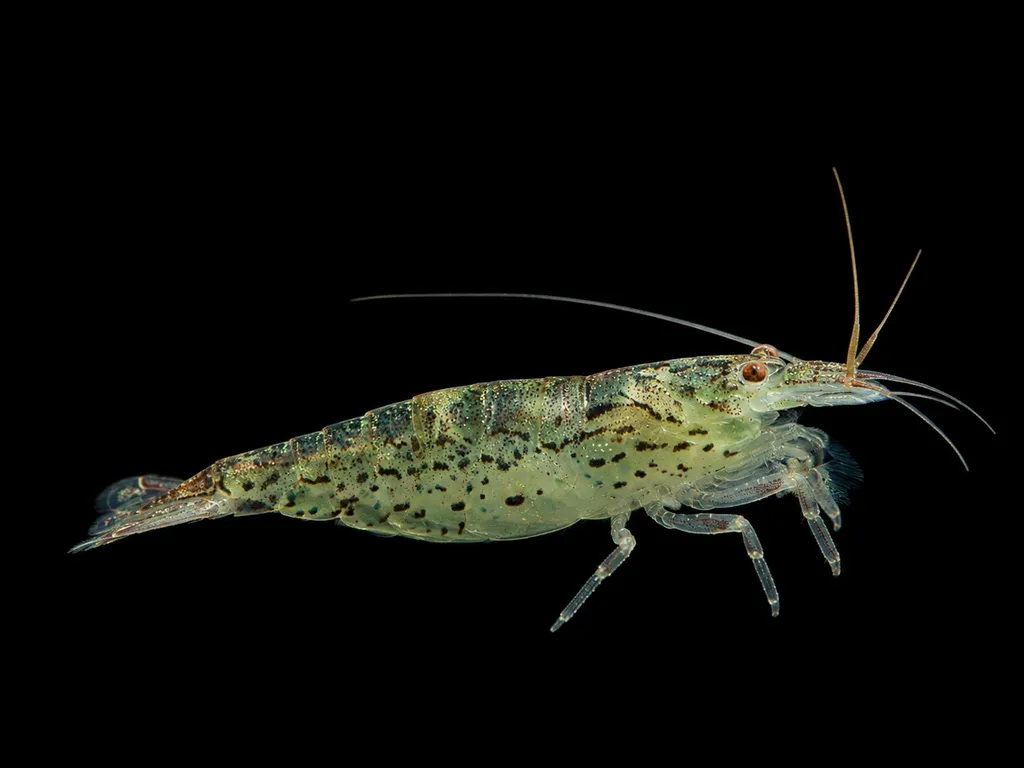
Green lace shrimp
Atyoida pilipes
Freshwater2.8 in (7 cm) · 14 gal (54 L)73–82°F (23–28°C)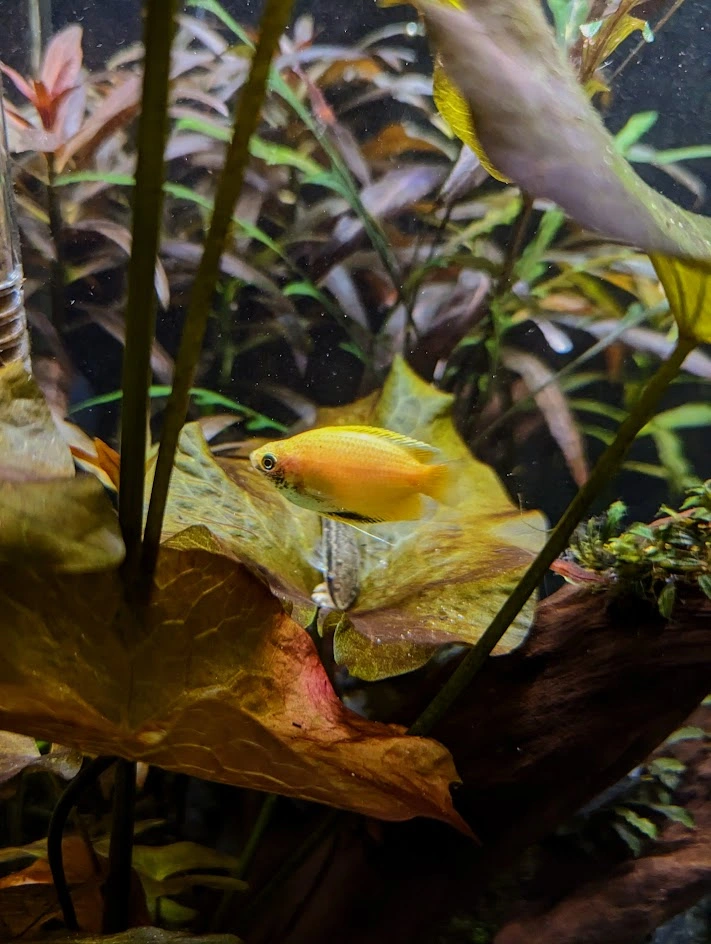
Honey gourami
Trichogaster chuna
Freshwater2 in (5 cm) · 14 gal (54 L)72–82°F (22–28°C)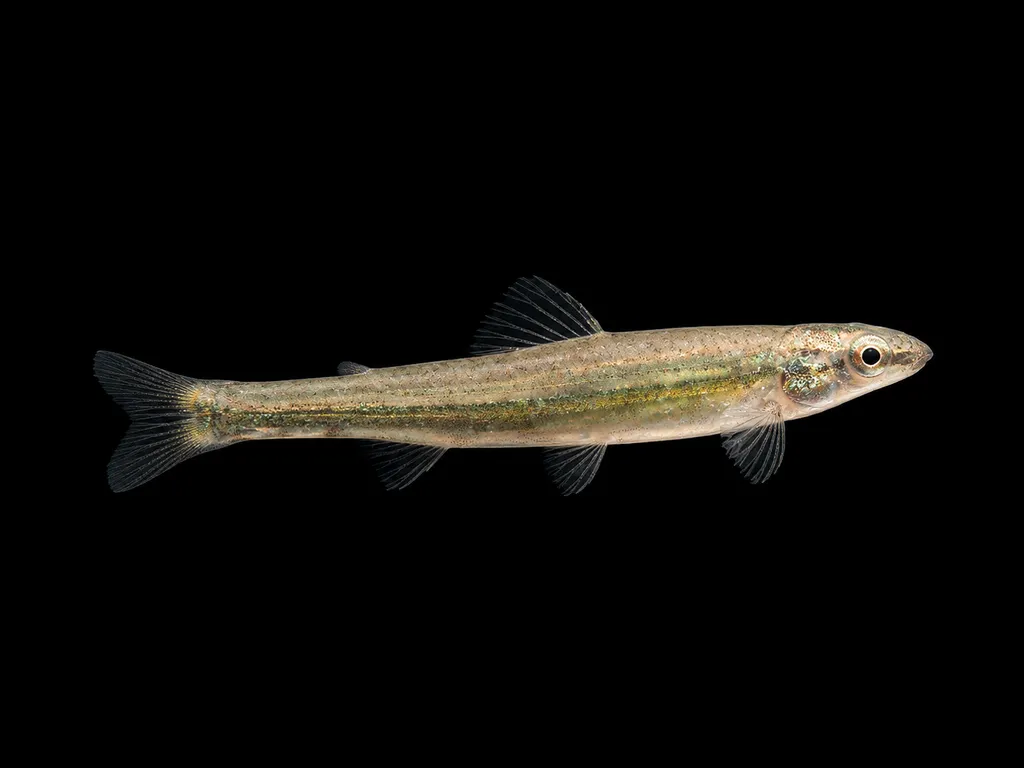
Elegant darter characin
Ammocryptocharax elegans
Freshwater1.6 in (4 cm) · 14 gal (54 L)73–81°F (23–27°C)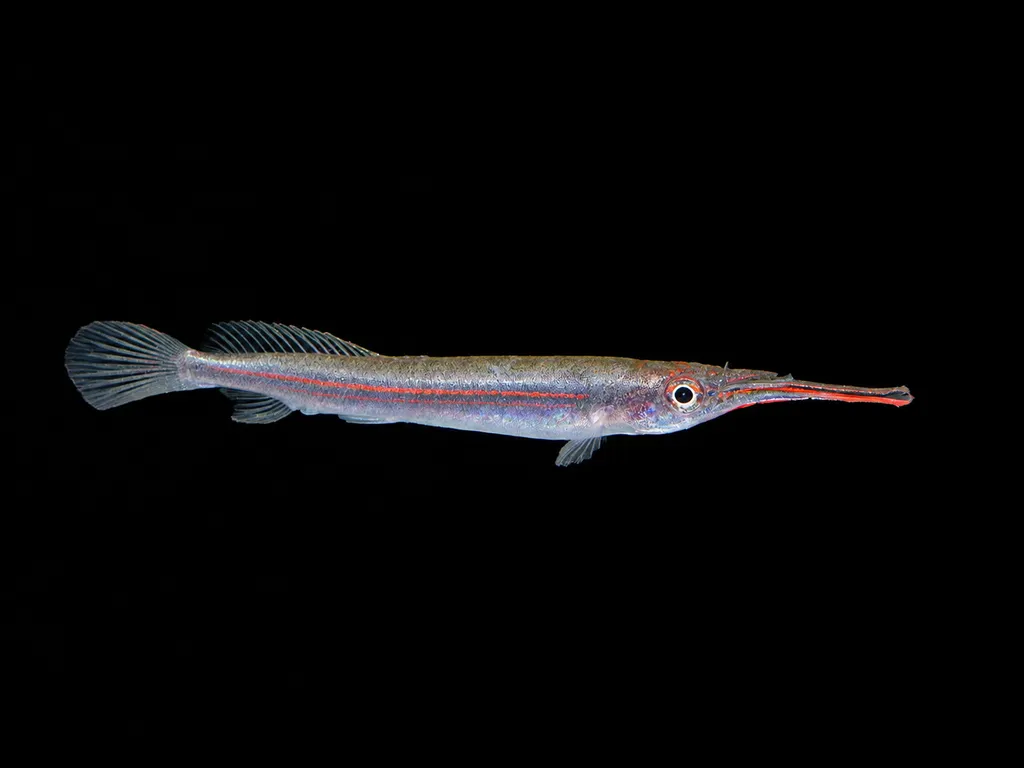
Red line halfbeak
Hemirhamphodon phaiosoma
Freshwater2.6 in (6.5 cm) · 14 gal (54 L)73–81°F (23–27°C)
Common questions
What size tank does a pearl of the Congo barb need?
A pearl of the Congo barb needs at least 14 gal (54 L). It spends most of its time in the middle.
What temperature and pH does a pearl of the Congo barb need?
A pearl of the Congo barb is comfortable at 73–81°F (23–27°C) with a pH of 5.5–7.0.
What does a pearl of the Congo barb eat?
A pearl of the Congo barb has a small mouth, so it eats powdered and micro flake foods and tiny sinking pellets. It also takes small live or frozen foods such as cyclops.
How big does a pearl of the Congo barb get?
An adult pearl of the Congo barb reaches about 2 in (5 cm).
Does a pearl of the Congo barb need a group?
Yes. A pearl of the Congo barb is a schooling species and should be kept in a group, not singly.
How does a pearl of the Congo barb breed?
The pearl of the Congo barb's breeding in aquariums is not documented. Small barbs of this kind are egg scatterers.
Related species
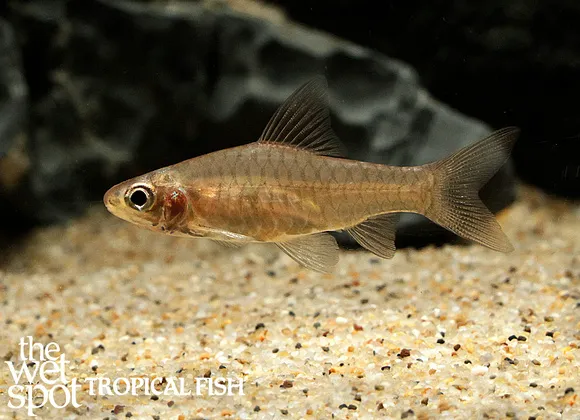 2.2 in (5.5 cm)14 gal (54 L)73–81°F (23–27°C)
Congo clipper barb
Clypeobarbus congicus
2.2 in (5.5 cm) · 14 gal (54 L)
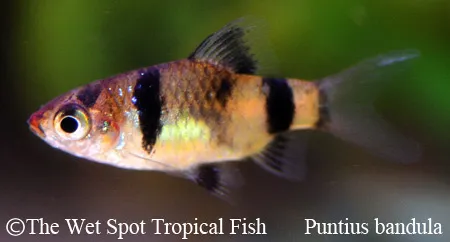 2 in (5 cm)20 gal (75 L)73–81°F (23–27°C)
Bandula barb
Pethia bandula
2 in (5 cm) · 20 gal (75 L)
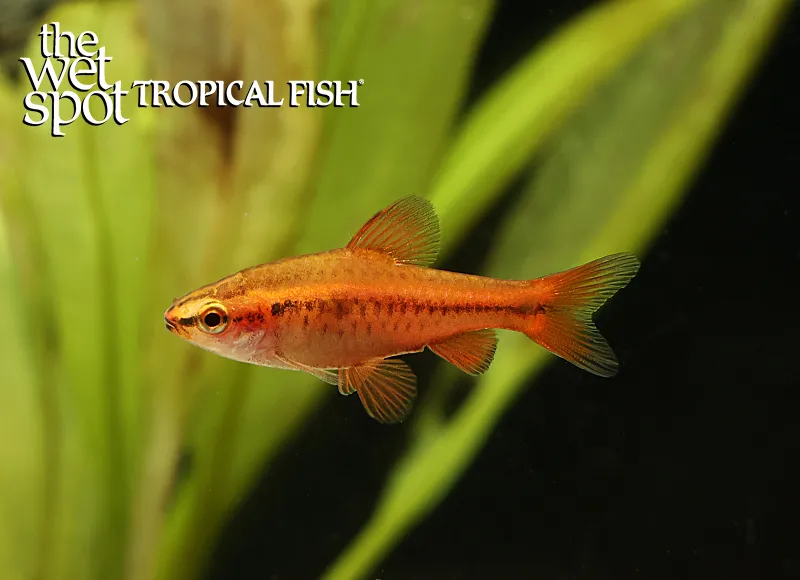 2 in (5 cm)14 gal (54 L)72–81°F (22–27°C)
Cherry barb
Rohanella titteya
2 in (5 cm) · 14 gal (54 L)
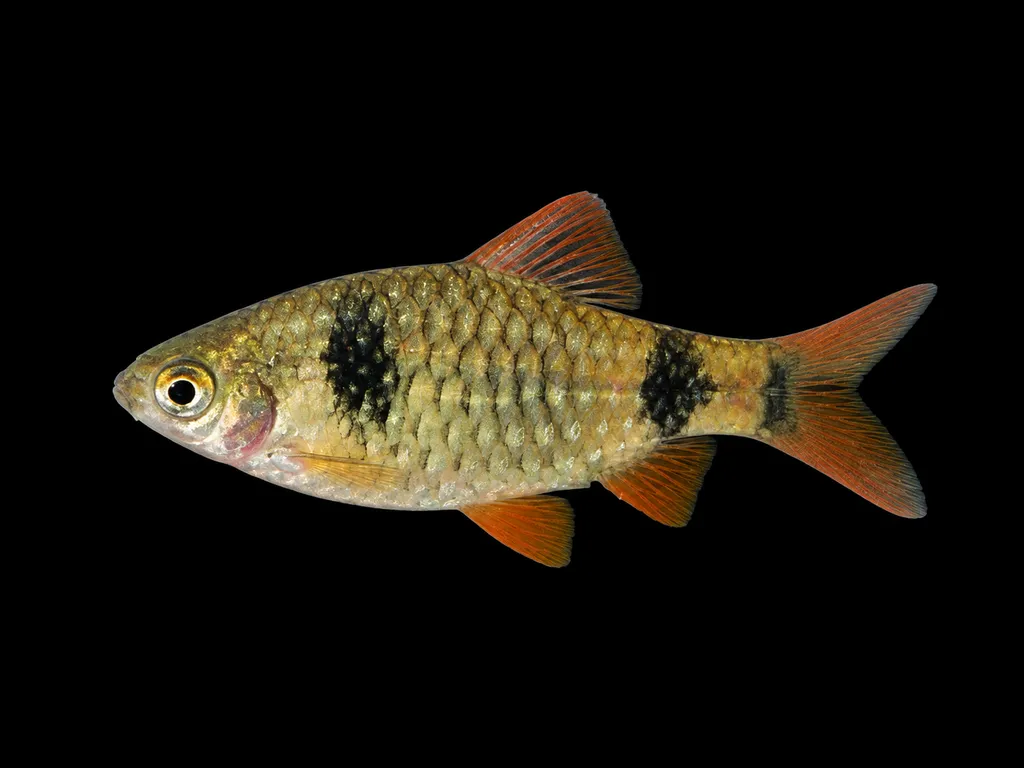 2 in (5 cm)16 gal (60 L)72–81°F (22–27°C)
Cuming's barb
Pethia cumingii
2 in (5 cm) · 16 gal (60 L)
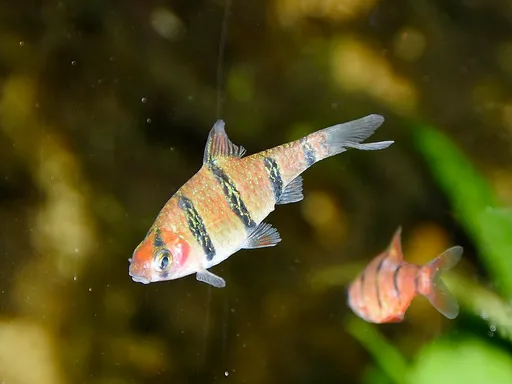 2 in (5 cm)20 gal (75 L)73–81°F (23–27°C)
Five-banded barb
Desmopuntius pentazona
2 in (5 cm) · 20 gal (75 L)
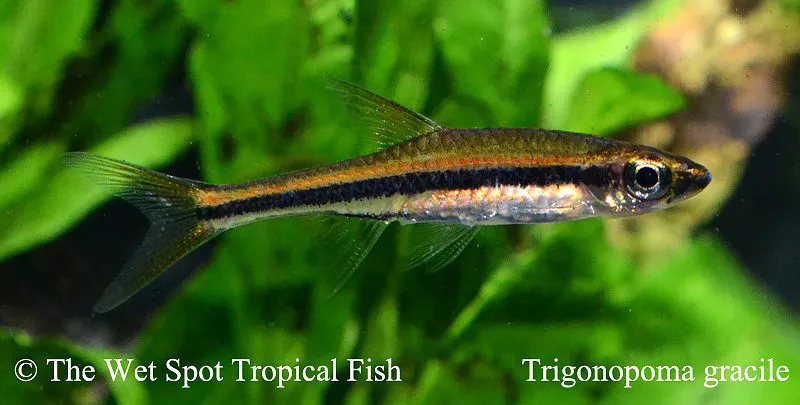 2 in (5 cm)16 gal (60 L)72–79°F (22–26°C)
Graceful rasbora
Trigonopoma gracile
2 in (5 cm) · 16 gal (60 L)