Variety of Angelfish
Silver zebra angelfish
Pterophyllum scalare
One of 9 varieties of Pterophyllum scalare · See all varieties →
FreshwaterFish
Varieties · Pterophyllum scalare
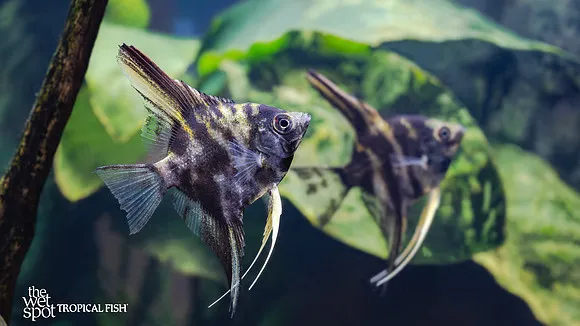
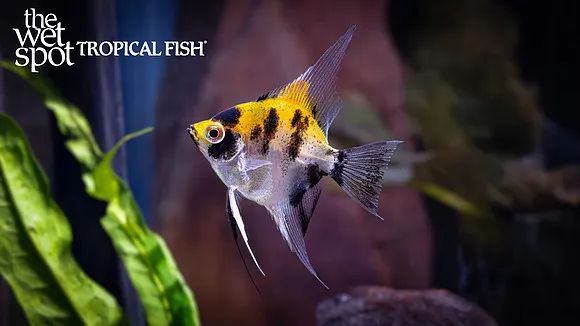
See all 9 →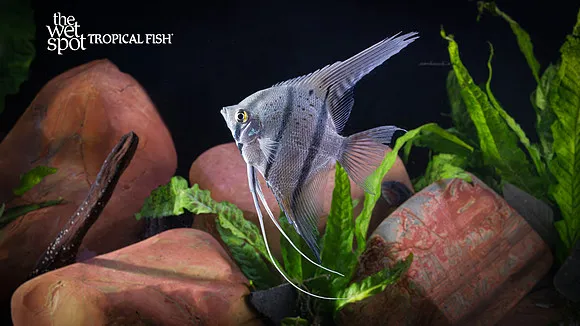
Care at a glance
- Temperature
- 75–86°F
- 24–30°C
- pH
- 6.0–7.5
- Adult size
- 5.9 in
- 15 cm
- Minimum tank
- 30 gal
- 115 L
- Temperament
- Mostly peaceful
- Social behavior
- Social
- Swim level
- Middle
- Difficulty
- Easy
- Breeding
- No record
- Rarity
- Very common
- Family
- Cichlidae
Overview
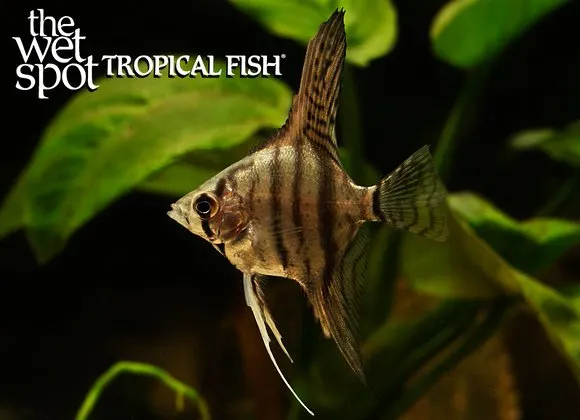
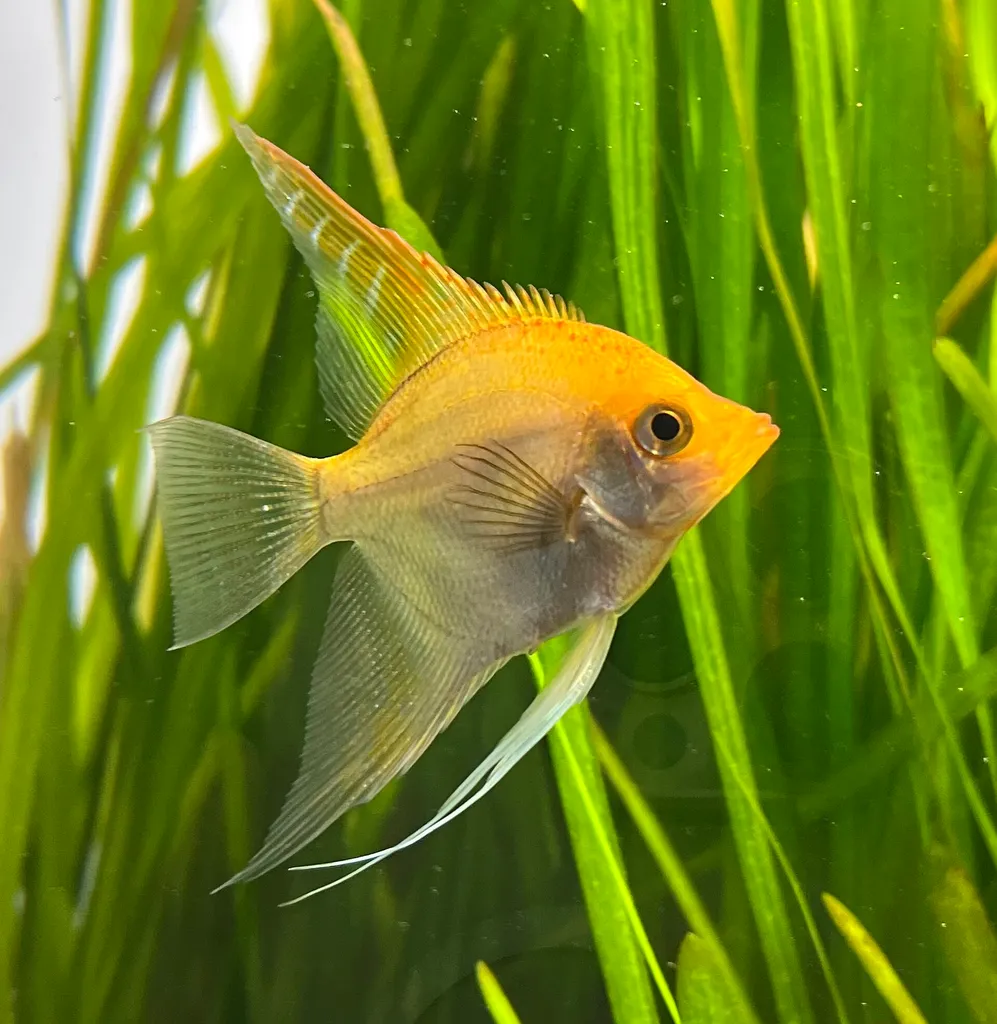
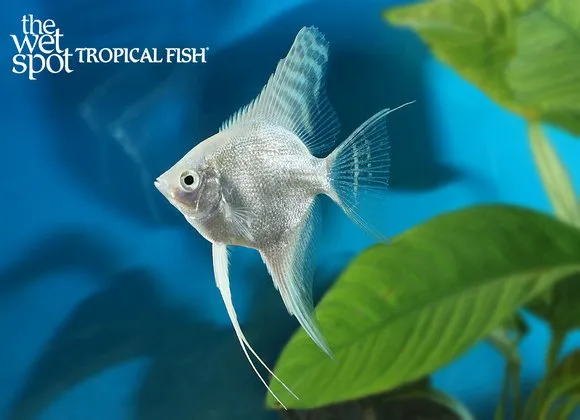
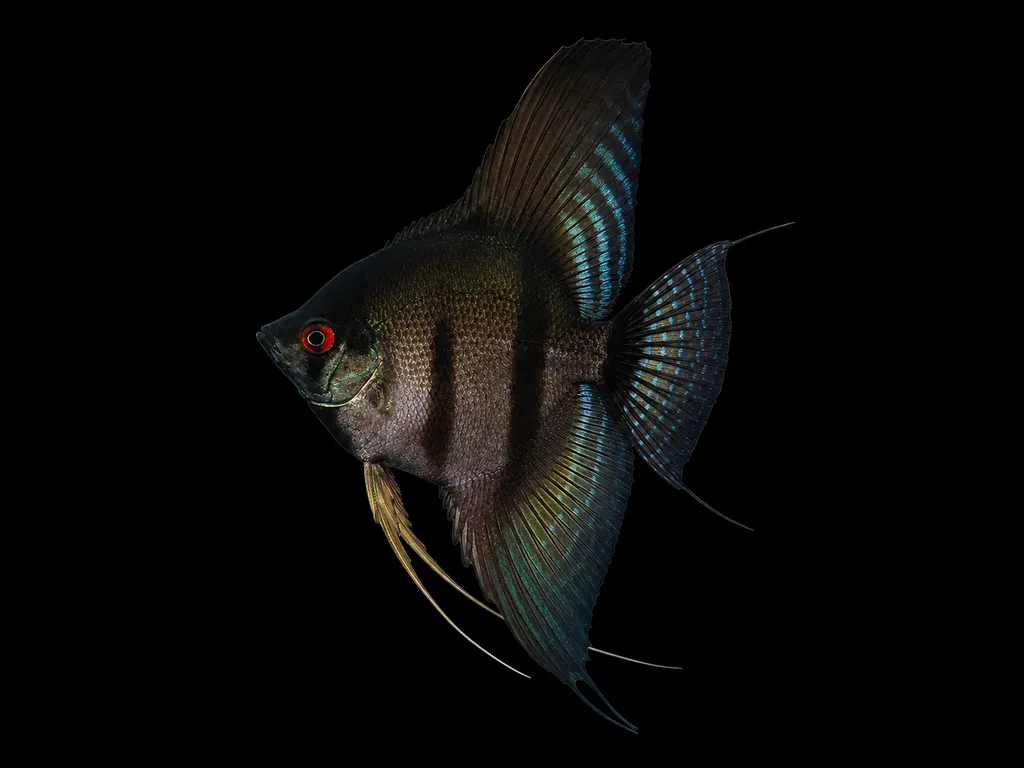
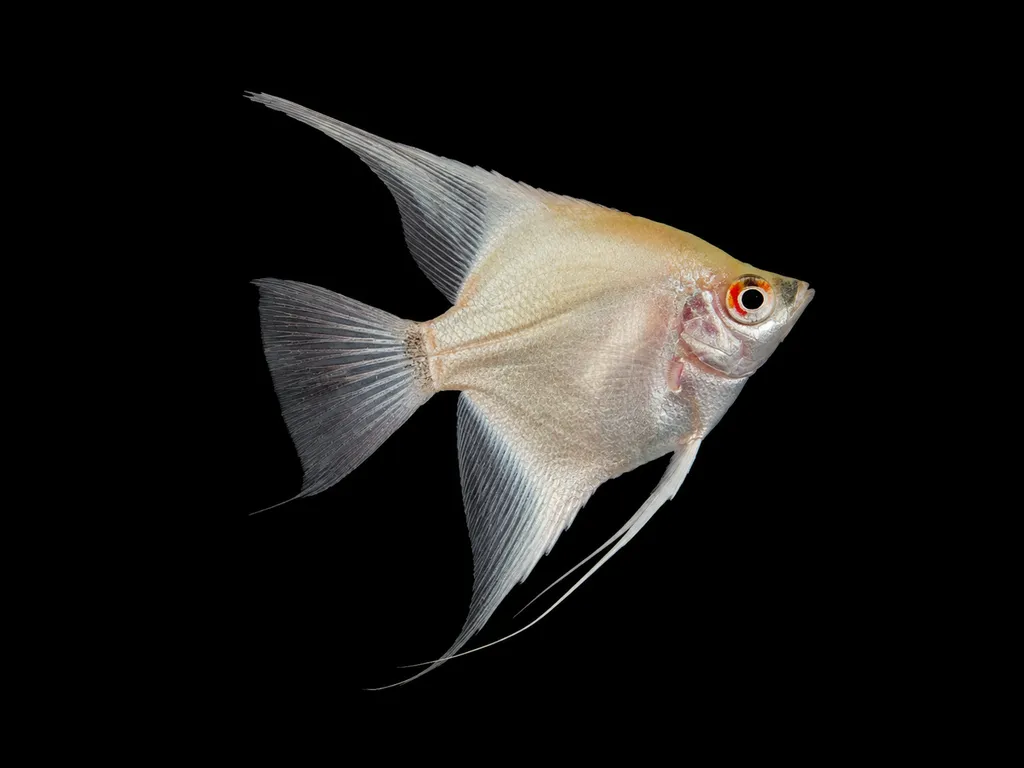
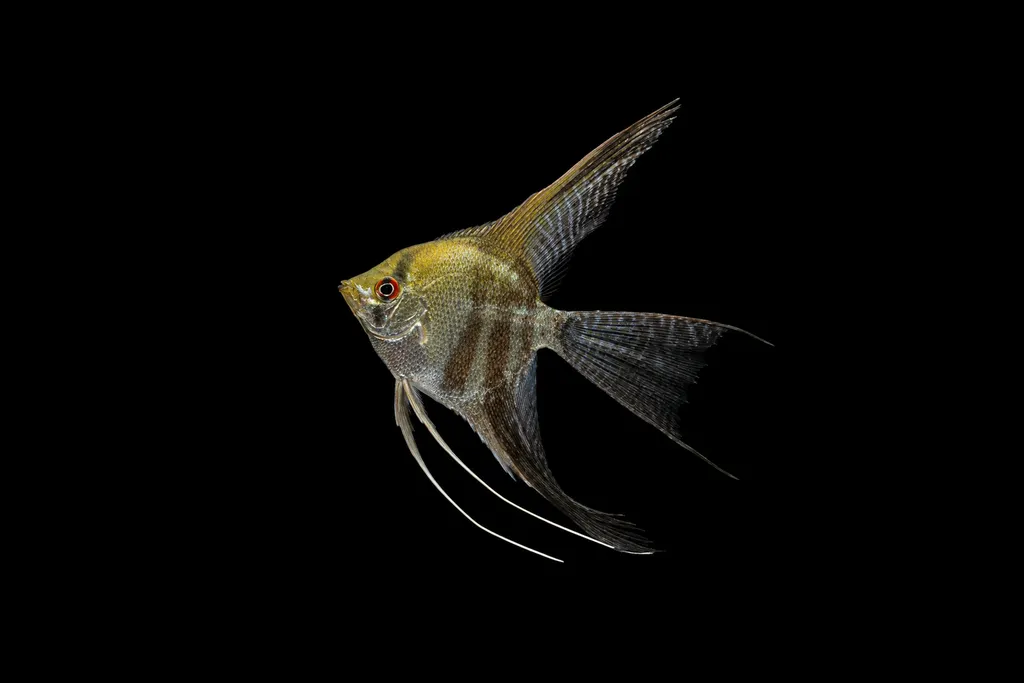
The extra body bar is the whole difference at a glance, and the striping carries on into the dorsal and anal fins. Count bars when you buy: a zebra shows more than a silver of the same age, with three to five on the body on top of the one through the eye. Stock varies because single dose and double dose fish are both sold as Zebra.
In the wild
Zebra is a hobby mutation of the ordinary silver and does not occur in wild angelfish. Its gene sits at the same locus as stripeless, the gene behind blushing and koi fish, which is why no angelfish is ever both zebra and blushing. Joanne Norton worked out how it combines with the other genes in Combinations of Zebra and Dark with Other Genes, published in FAMA in August 1982.
Good to know
Zebra is dominant and an allele of stripeless, so a single dose (Z/+) already shows the extra barring. Crossed to a silver it passes to about half the fry, and single and double dose fish are hard to separate by eye, though Norton reports the double dose slows growth and throws more runts. It also stacks onto other genes rather than replacing them, which is where named combinations such as zebra lace come from.
Did you know
Zebra and stripeless are two versions of the same gene, so a fish has room for at most two of them between the pair. That makes some advertised combinations genuinely impossible: there is no such thing as a zebra blushing angelfish.
Weekly picks
Tank mates
Silver zebra angelfish is a mostly peaceful, social species that keeps to the middle. These picks share a community profile with it, are safe together in both directions, and overlap on water type, temperature and pH.
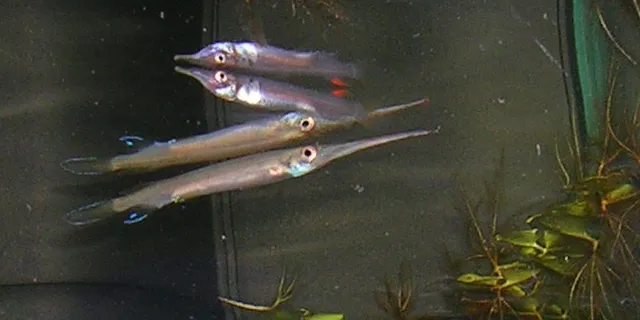
Forest halfbeak
Hemirhamphodon pogonognathus
Freshwater3.5 in (9 cm) · 34 gal (130 L)75–82°F (24–28°C)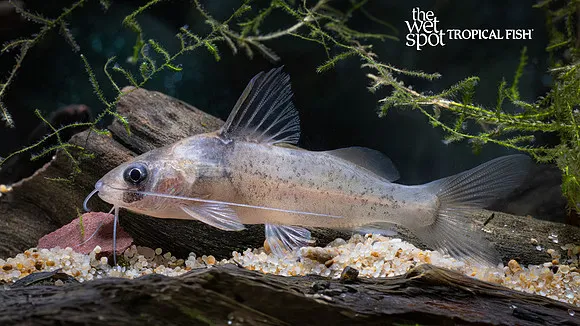
Imitator catfish
Brachyrhamdia imitator
Freshwater2.2 in (5.5 cm) · 30 gal (112 L)73–82°F (23–28°C)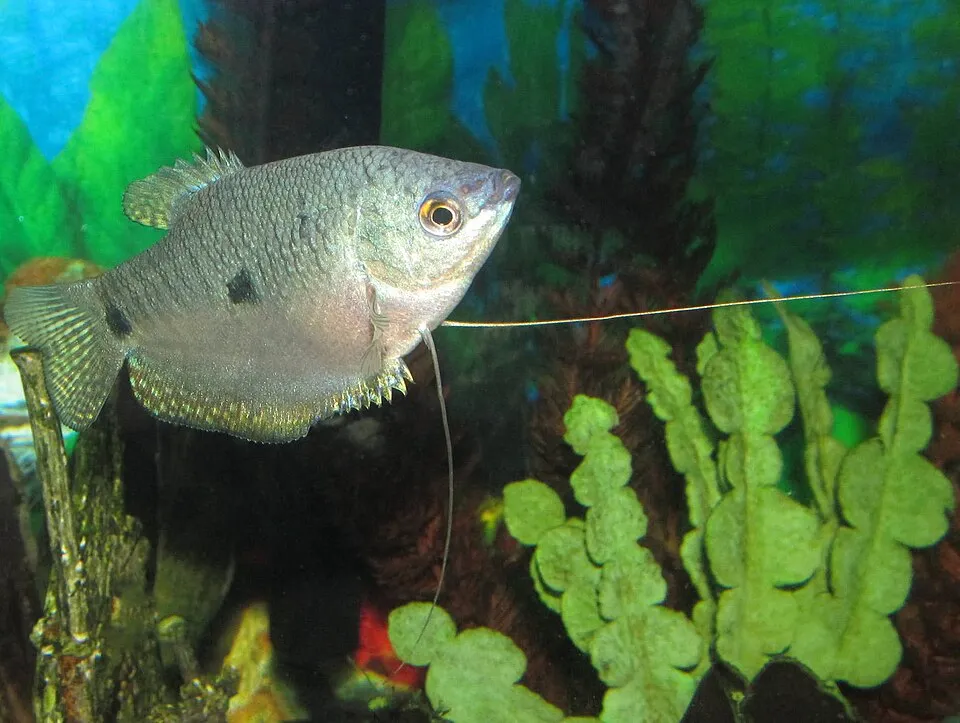
Three spot gourami
Trichopodus trichopterus
Freshwater5.1 in (13 cm) · 30 gal (115 L)75–86°F (24–30°C)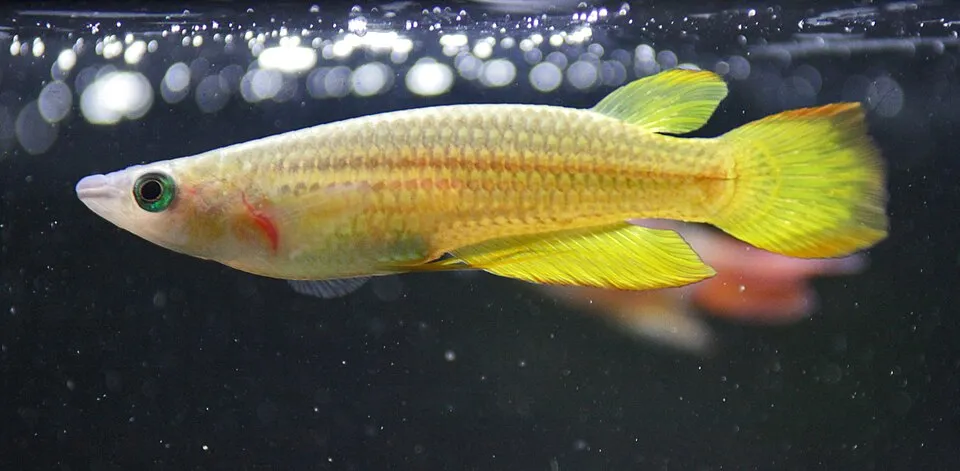
Striped panchax
Aplocheilus lineatus
Freshwater4.3 in (11 cm) · 30 gal (115 L)72–77°F (22–25°C)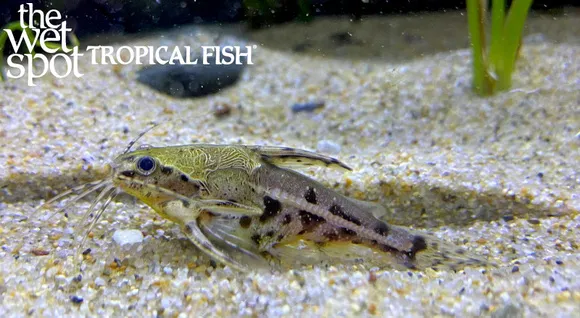
Marbled talking catfish
Amblydoras nauticus
Freshwater4.3 in (11 cm) · 30 gal (112 L)73–82°F (23–28°C)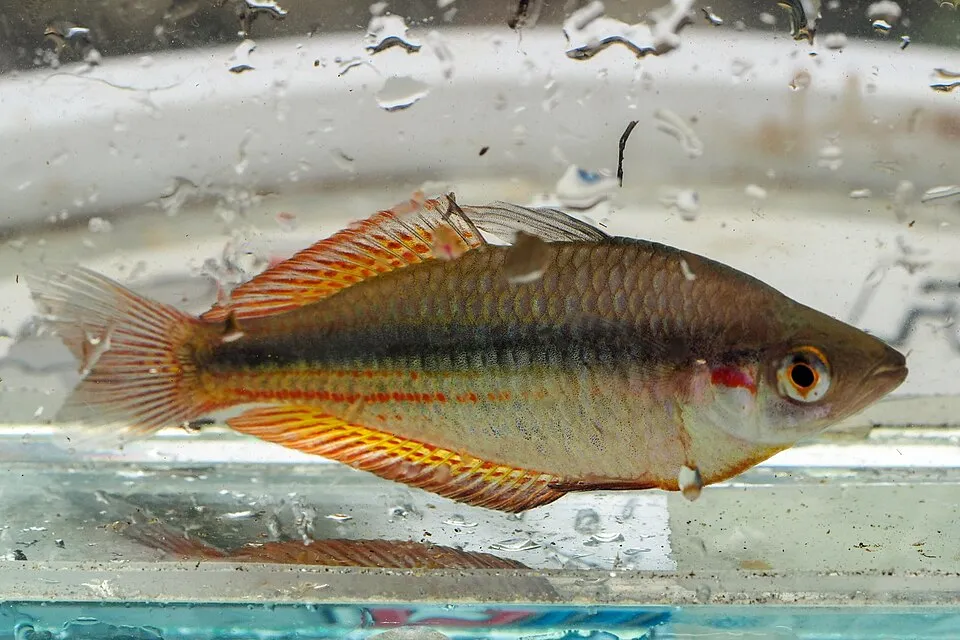
Duboulayi's rainbowfish
Melanotaenia duboulayi
Freshwater4.7 in (12 cm) · 30 gal (115 L)64–82°F (18–28°C)
Common questions
Is a Silver zebra angelfish a different species from the Angelfish?
No. A Silver zebra angelfish is a variety of the Angelfish, Pterophyllum scalare, and it wants the same tank, water and food as the species.
What size tank does a Silver zebra angelfish need?
A Silver zebra angelfish needs at least 30 gal (115 L). It spends most of its time in the middle.
How big does a Silver zebra angelfish get?
An adult Silver zebra angelfish reaches about 5.9 in (15 cm).
Related species
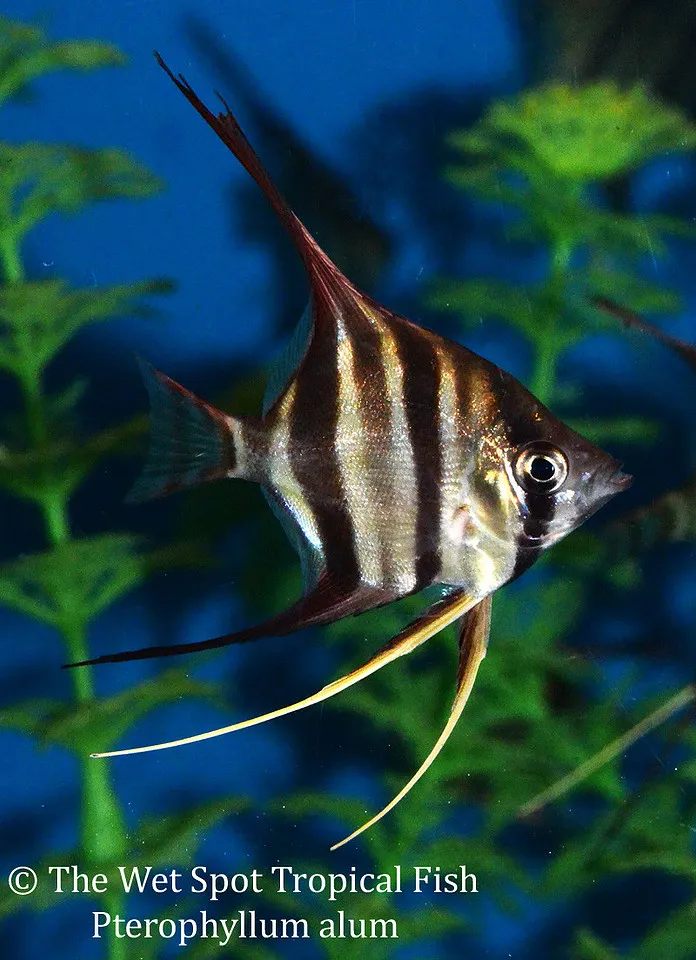 7.1 in (18 cm)45 gal (170 L)79–90°F (26–32°C)
Altum angelfish
Pterophyllum altum
7.1 in (18 cm) · 45 gal (170 L)
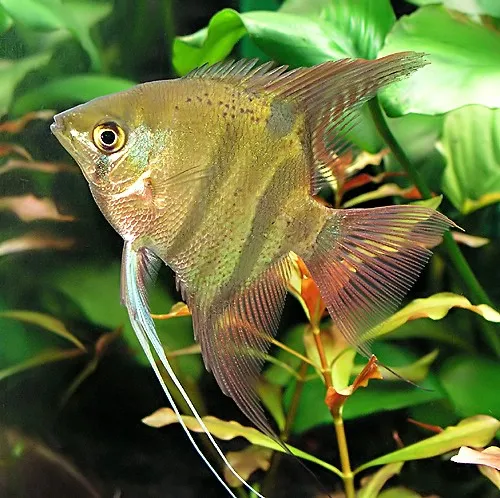 3.9 in (10 cm)30 gal (115 L)72–84°F (22–29°C)
Roman nose angelfish
Pterophyllum leopoldi
3.9 in (10 cm) · 30 gal (115 L)
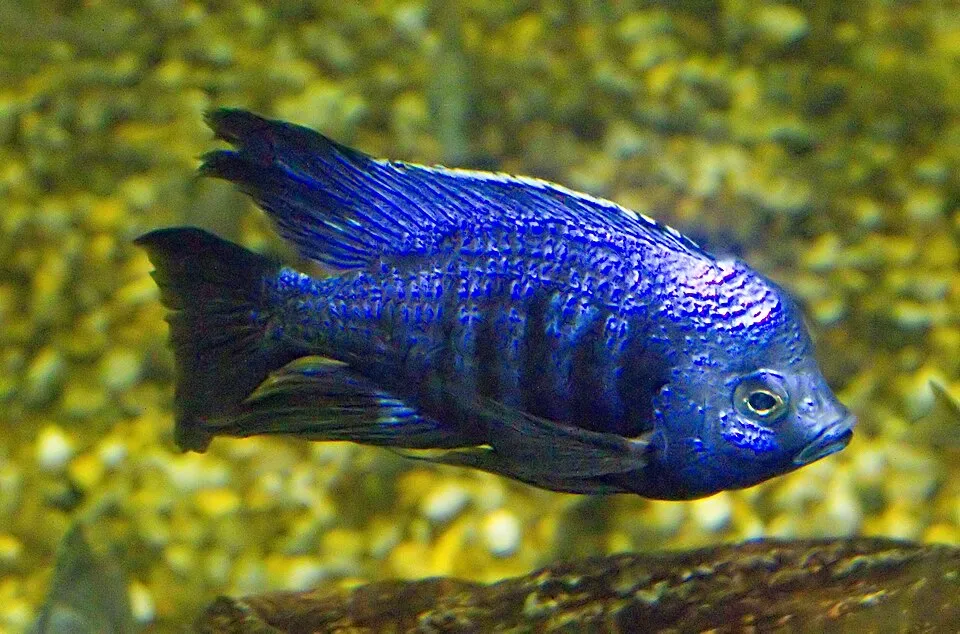 5.9 in (15 cm)79 gal (300 L)77–82°F (25–28°C)
Azureus
Copadichromis azureus
5.9 in (15 cm) · 79 gal (300 L)
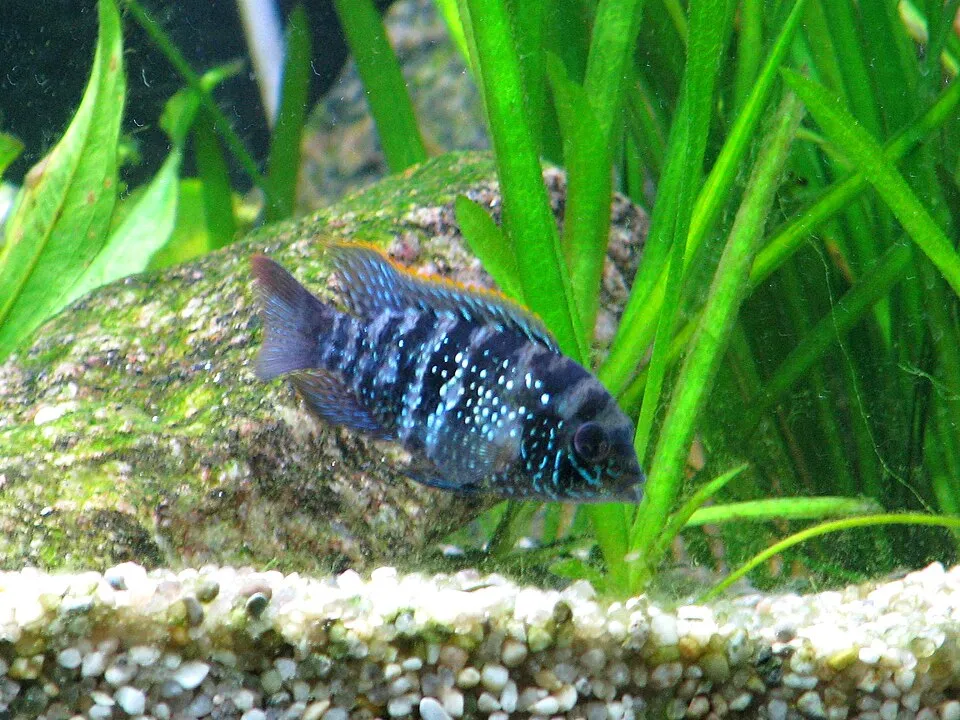 5.9 in (15 cm)42 gal (160 L)72–82°F (22–28°C)
Blue acara
Andinoacara pulcher
5.9 in (15 cm) · 42 gal (160 L)
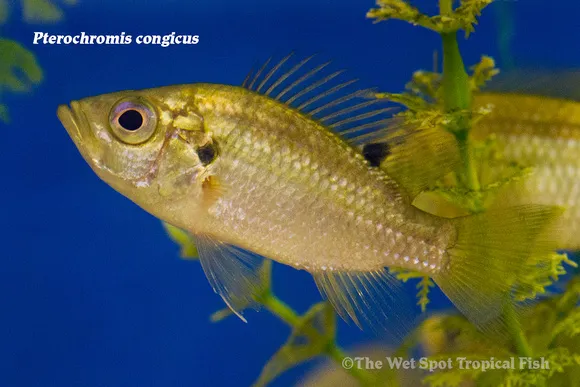 5.9 in (15 cm)79 gal (300 L)73–82°F (23–28°C)
Congicus pterochromis
Pterochromis congicus
5.9 in (15 cm) · 79 gal (300 L)
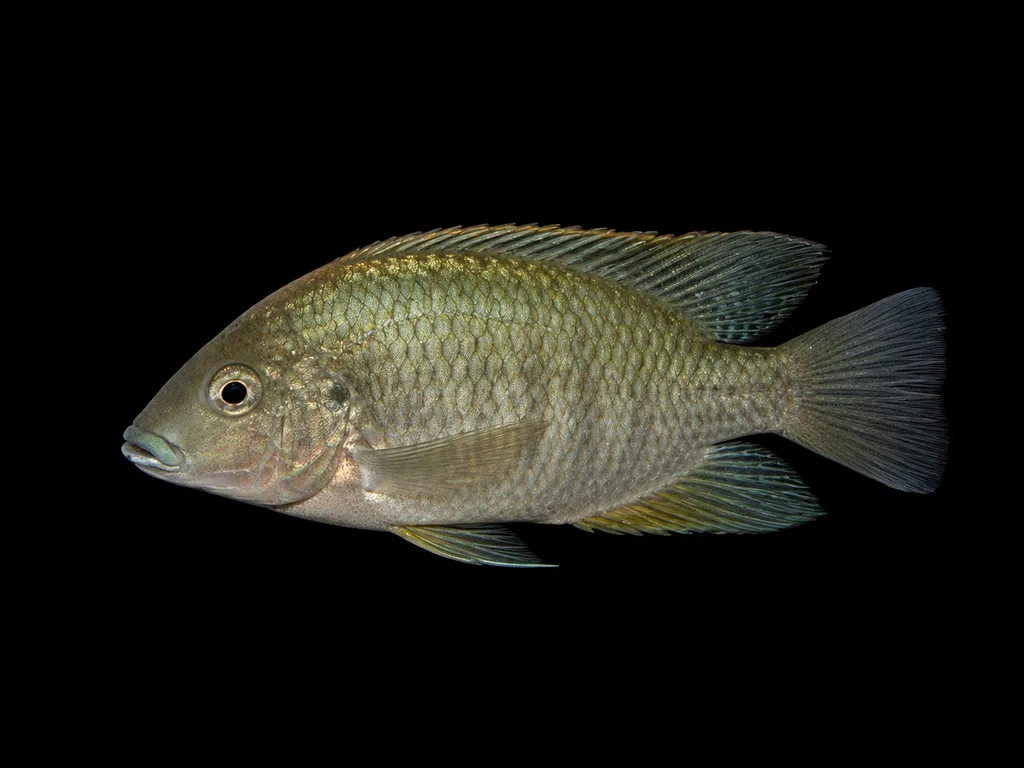 5.9 in (15 cm)66 gal (250 L)73–81°F (23–27°C)
Deepwater coptodon
Coptodon bythobates
5.9 in (15 cm) · 66 gal (250 L)