Variety of Angelfish
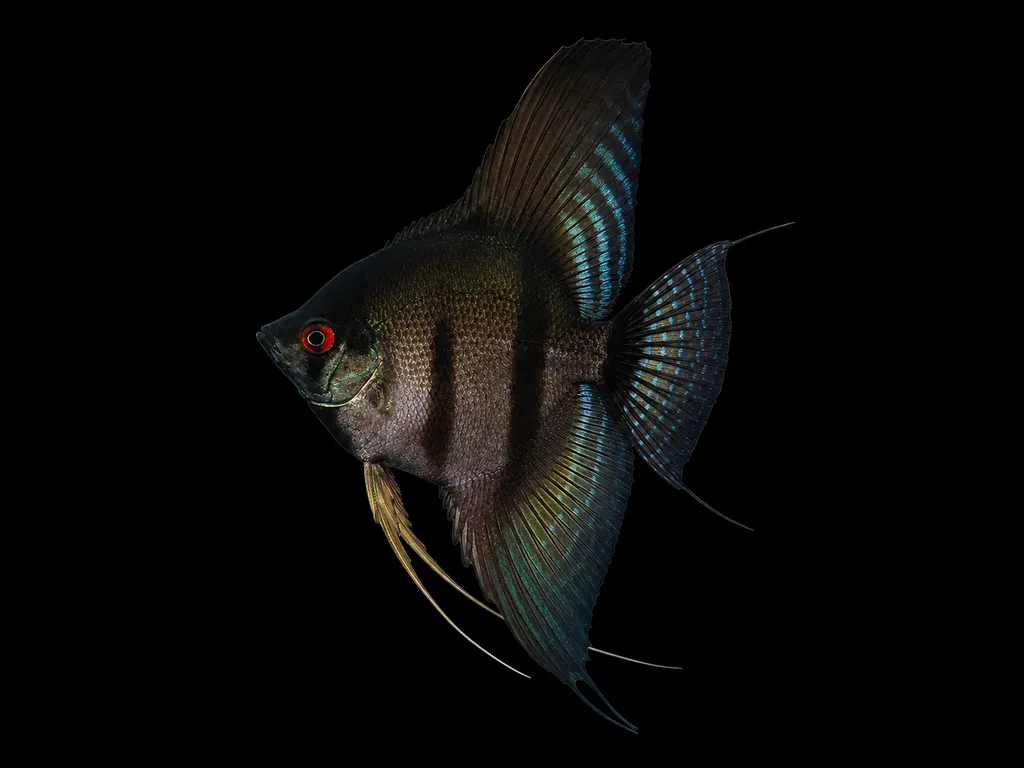
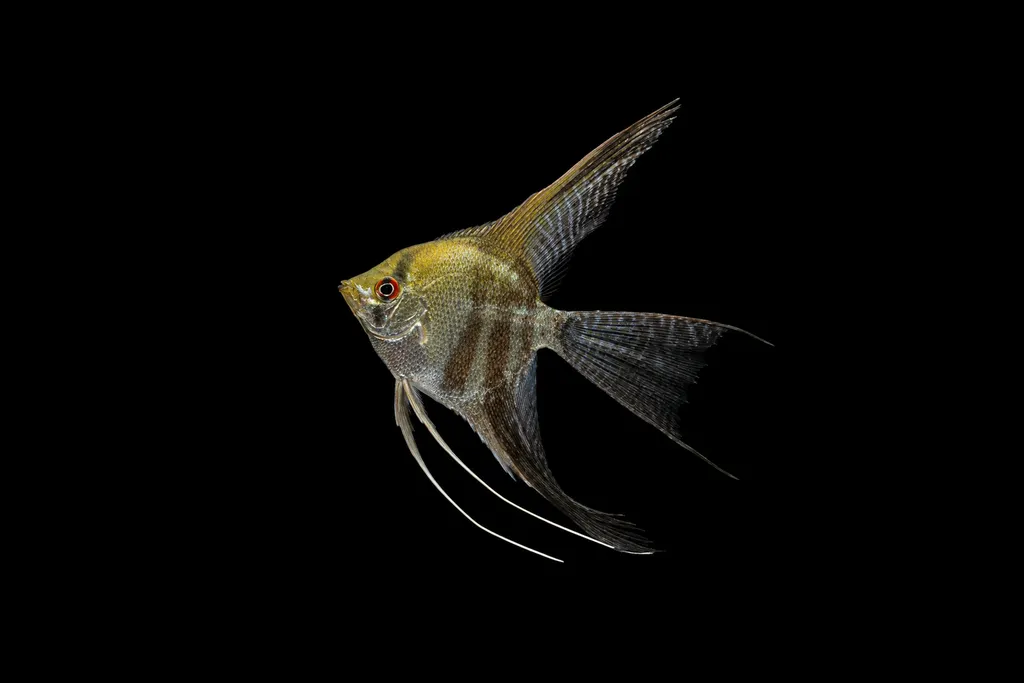
Black lace angelfish
Pterophyllum scalare
One of 9 varieties of Pterophyllum scalare · See all varieties →
FreshwaterFish
Varieties · Pterophyllum scalare
See all 9 →
Care at a glance
- Temperature
- 75–86°F
- 24–30°C
- pH
- 6.0–7.5
- Adult size
- 5.9 in
- 15 cm
- Minimum tank
- 30 gal
- 115 L
- Temperament
- Mostly peaceful
- Social behavior
- Social
- Swim level
- Middle
- Difficulty
- Easy
- Breeding
- No record
- Rarity
- Very common
- Family
- Cichlidae
Overview
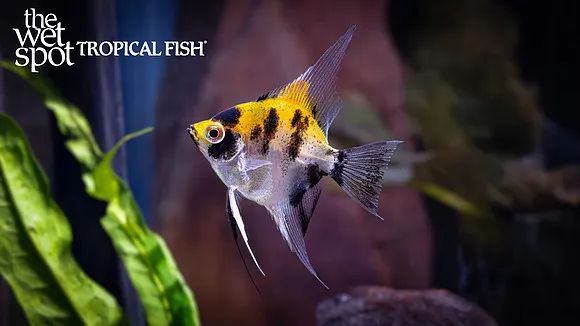
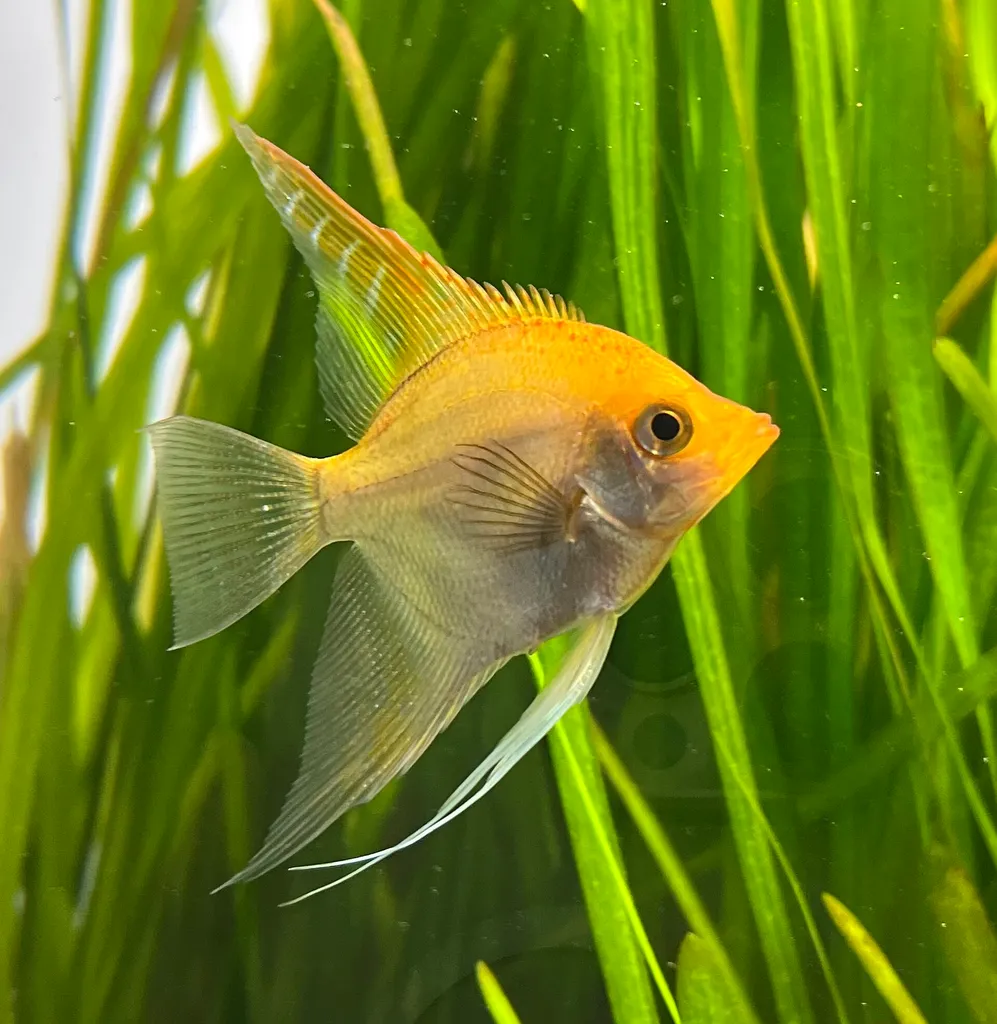
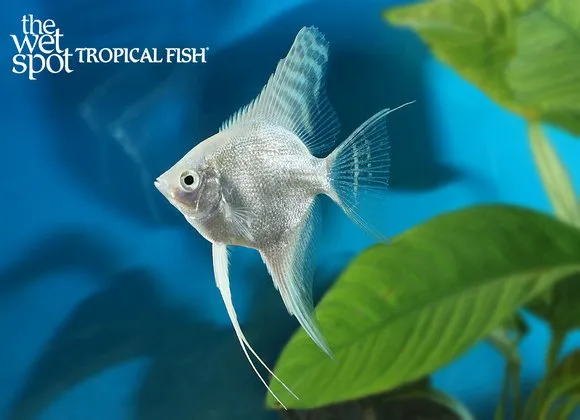
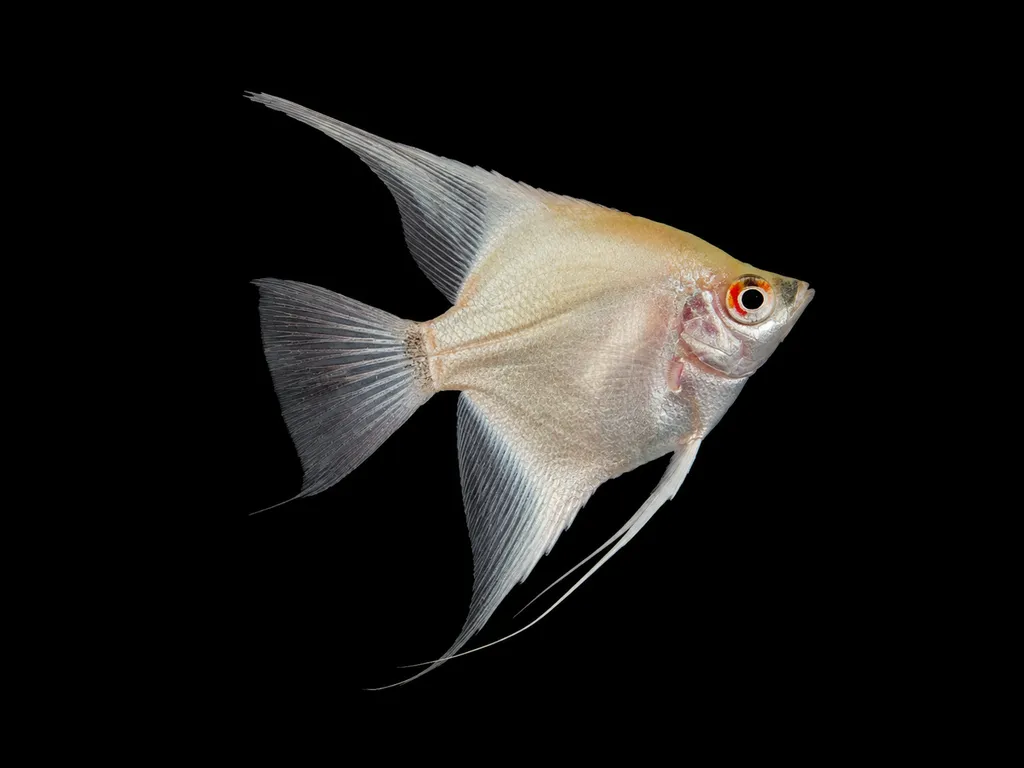
A black lace is a silver with more black in it: wider, darker bars and fine dark veining through the fins that gives the form its name. In a crowded tank it is easy to mistake for a plain silver, so check the fins first. Shops also use lace loosely in compound names such as zebra lace, so read the whole tag rather than the last word.
In the wild
Black lace is a single dose of the dark gene laid over the wild pattern, and it is not a wild fish. The mutation is old: Joanne Norton records the first black angelfish being obtained from black lace parents in the 1950s. Which breeder first fixed the lace form is not recorded, so its exact origin is uncertain.
Good to know
Dark is incompletely dominant, so one dose (D/+) gives black lace and two doses (D/D) give a solid black fish. Two lace parents produce roughly a quarter black, half black lace and a quarter silver. Norton describes the double dose fish as low in vigor, slow growing and prone to high fry mortality, a penalty the single dose lace fish does not carry.
Did you know
Black lace is the reason solid black angelfish exist at all. The first blacks came out of lace spawns in the 1950s, and Norton advised breeders to keep the more vigorous single dose lace fish as stock rather than the blacks themselves.
Weekly picks
Tank mates
Black lace angelfish is a mostly peaceful, social species that keeps to the middle. These picks share a community profile with it, are safe together in both directions, and overlap on water type, temperature and pH.
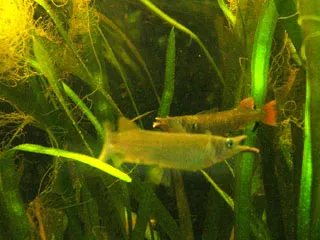
Redfin halfbeak
Nomorhamphus ebrardtii
Freshwater3.5 in (9 cm) · 29 gal (110 L)75–81°F (24–27°C)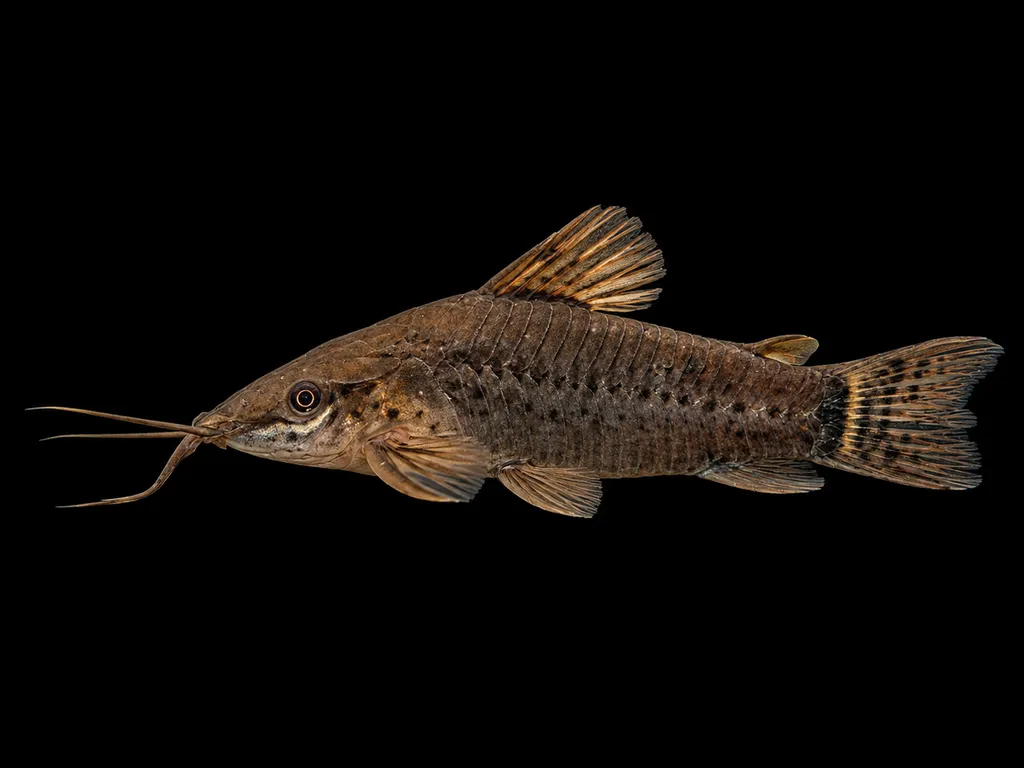
Panama hoplo
Hoplosternum punctatum
Freshwater3.1 in (8 cm) · 30 gal (115 L)72–79°F (22–26°C)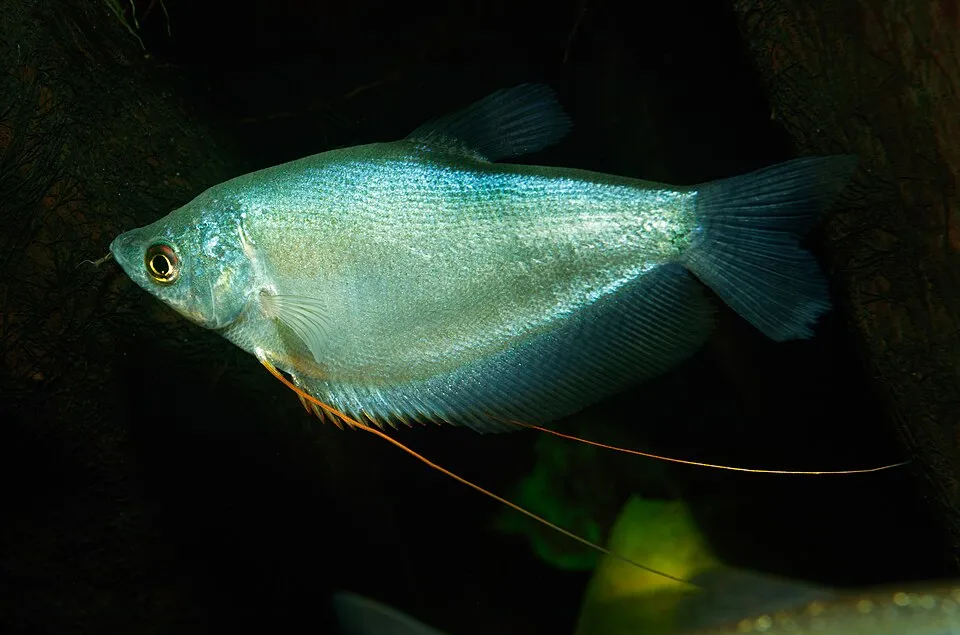
Moonlight gourami
Trichopodus microlepis
Freshwater5.9 in (15 cm) · 30 gal (115 L)77–86°F (25–30°C)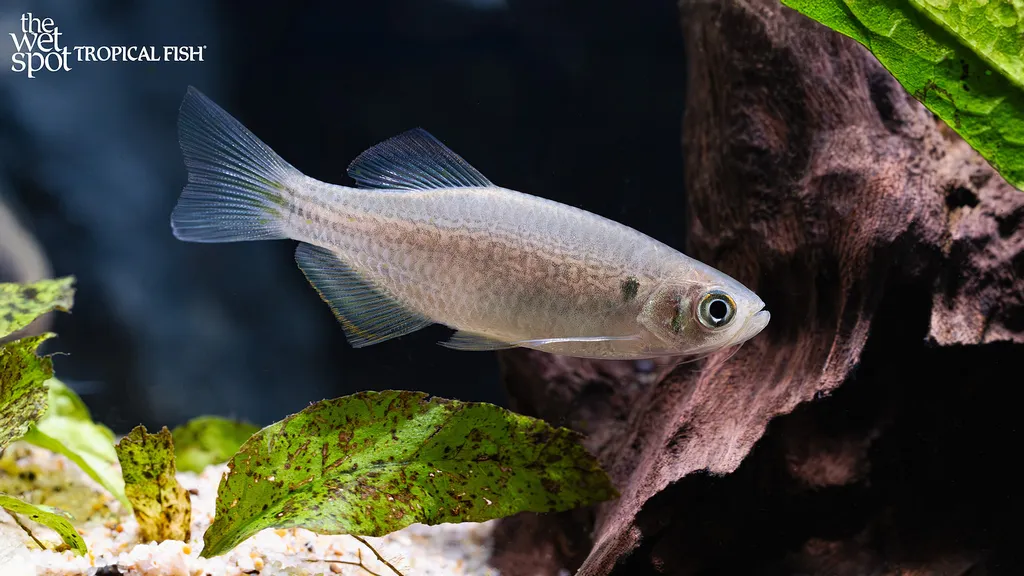
Moustached danio
Danio dangila
Freshwater5.1 in (13 cm) · 32 gal (120 L)68–79°F (20–26°C)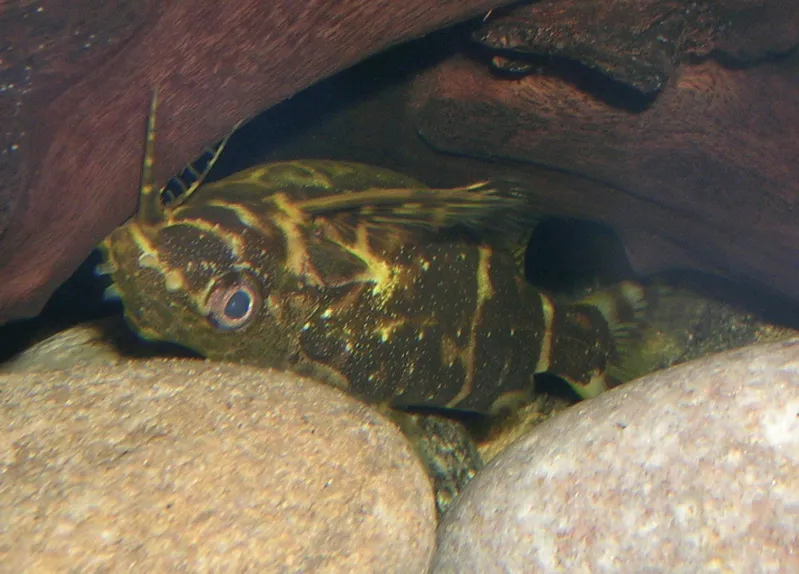
Upside-down catfish
Synodontis nigriventris
Freshwater3.9 in (10 cm) · 30 gal (115 L)75–82°F (24–28°C)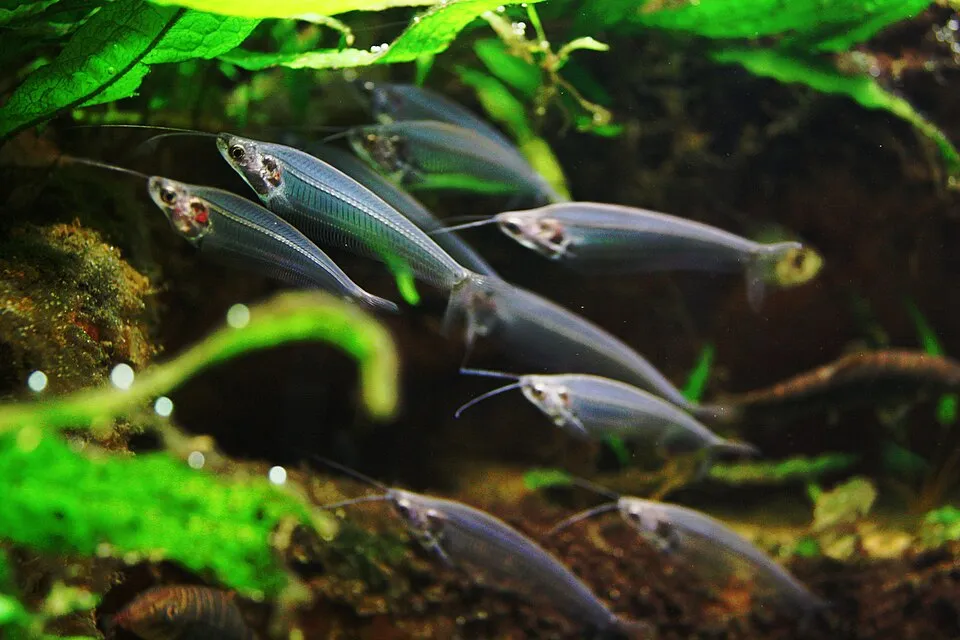
Glass catfish
Kryptopterus vitreolus
Freshwater2.8 in (7 cm) · 30 gal (115 L)70–79°F (21–26°C)
Common questions
Is a Black lace angelfish a different species from the Angelfish?
No. A Black lace angelfish is a variety of the Angelfish, Pterophyllum scalare, and it wants the same tank, water and food as the species.
What size tank does a Black lace angelfish need?
A Black lace angelfish needs at least 30 gal (115 L). It spends most of its time in the middle.
How big does a Black lace angelfish get?
An adult Black lace angelfish reaches about 5.9 in (15 cm).
Related species
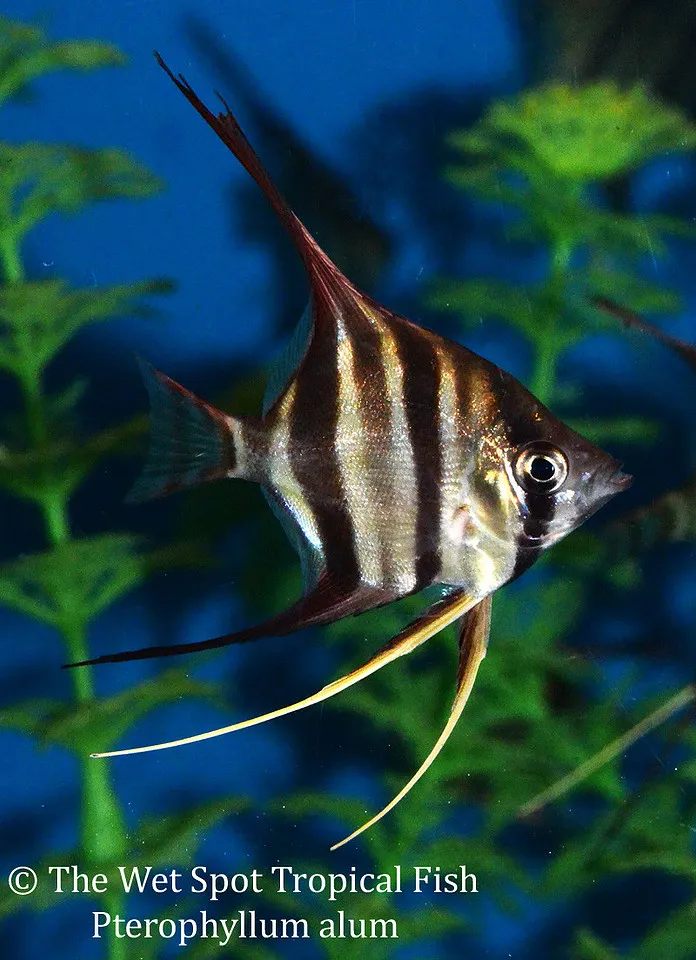 7.1 in (18 cm)45 gal (170 L)79–90°F (26–32°C)
Altum angelfish
Pterophyllum altum
7.1 in (18 cm) · 45 gal (170 L)
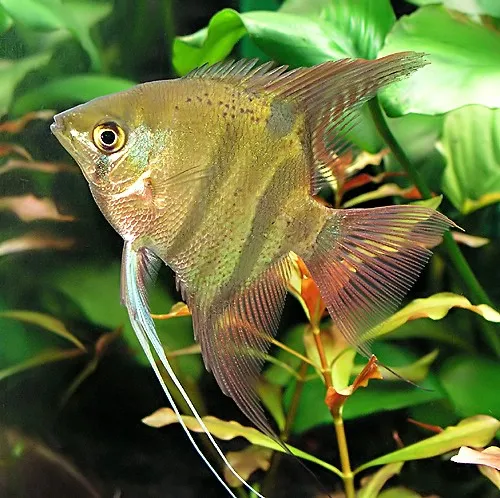 3.9 in (10 cm)30 gal (115 L)72–84°F (22–29°C)
Roman nose angelfish
Pterophyllum leopoldi
3.9 in (10 cm) · 30 gal (115 L)
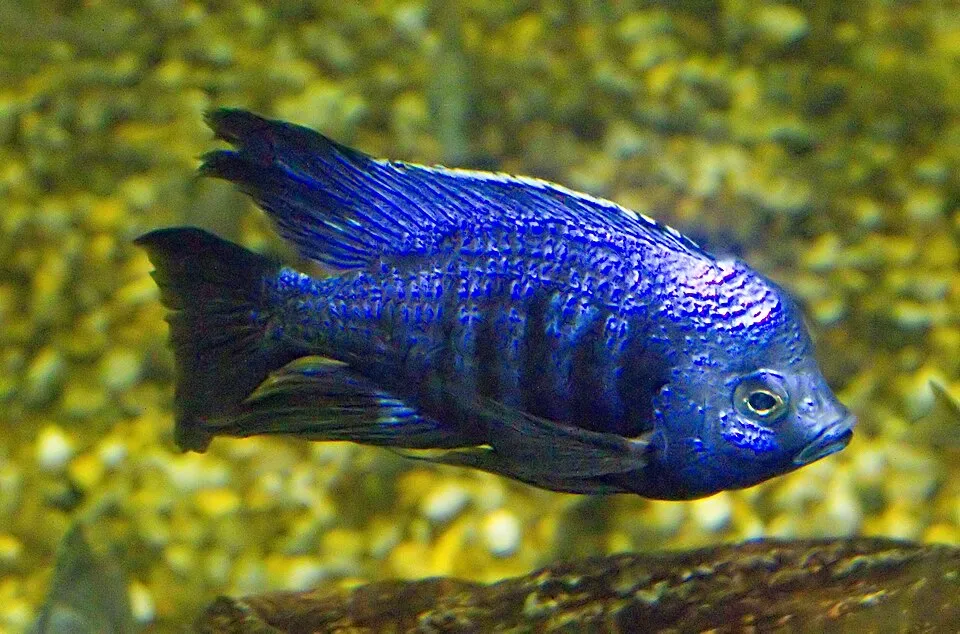 5.9 in (15 cm)79 gal (300 L)77–82°F (25–28°C)
Azureus
Copadichromis azureus
5.9 in (15 cm) · 79 gal (300 L)
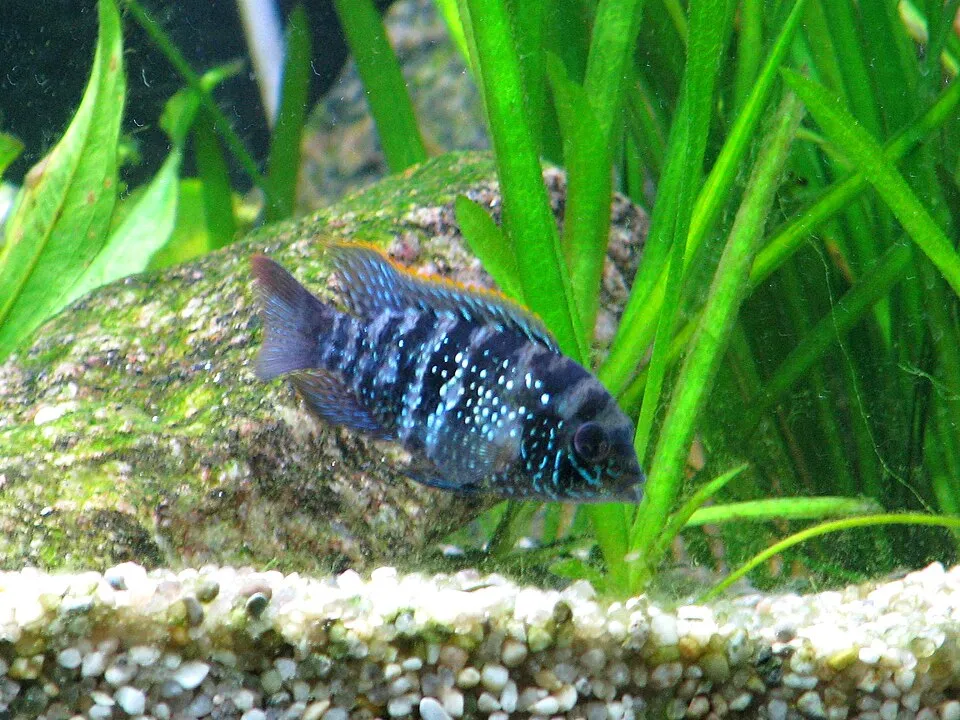 5.9 in (15 cm)42 gal (160 L)72–82°F (22–28°C)
Blue acara
Andinoacara pulcher
5.9 in (15 cm) · 42 gal (160 L)
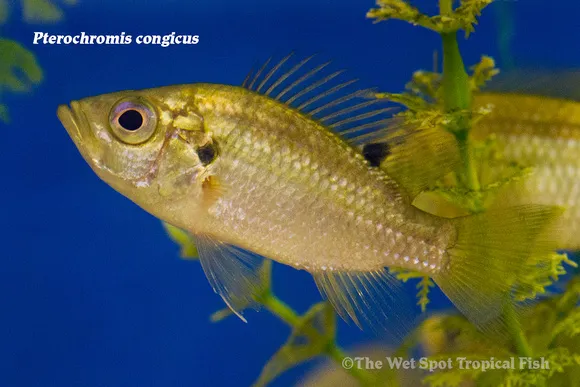 5.9 in (15 cm)79 gal (300 L)73–82°F (23–28°C)
Congicus pterochromis
Pterochromis congicus
5.9 in (15 cm) · 79 gal (300 L)
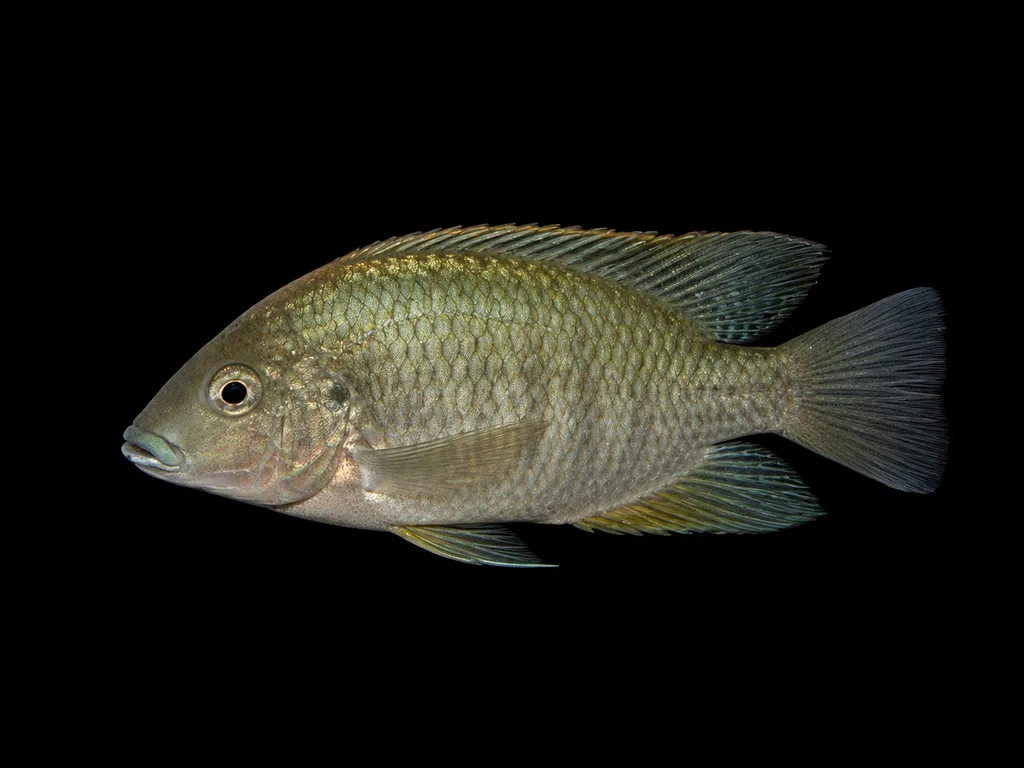 5.9 in (15 cm)66 gal (250 L)73–81°F (23–27°C)
Deepwater coptodon
Coptodon bythobates
5.9 in (15 cm) · 66 gal (250 L)