Variety of Angelfish
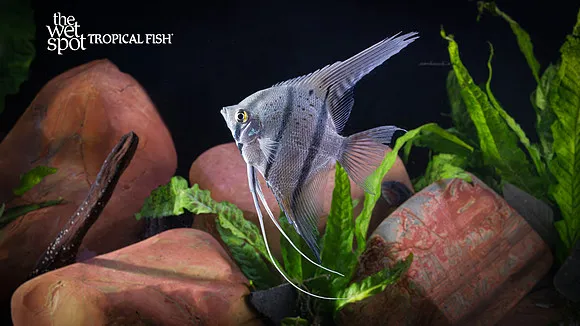
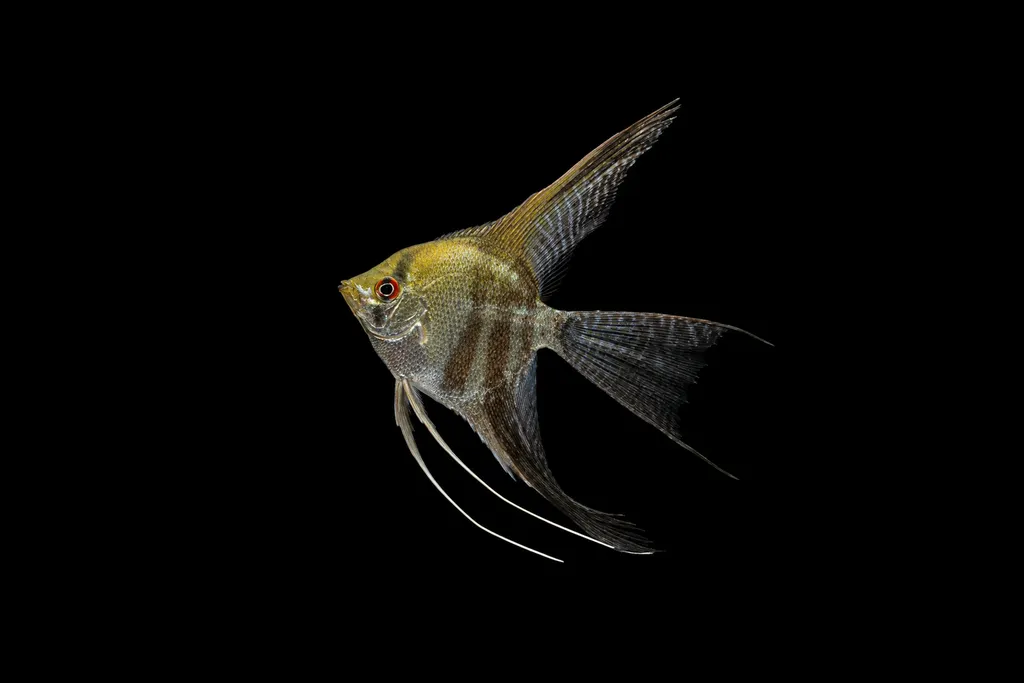
Silver angelfish
Pterophyllum scalare
One of 9 varieties of Pterophyllum scalare · See all varieties →
FreshwaterFish
Varieties · Pterophyllum scalare
See all 9 →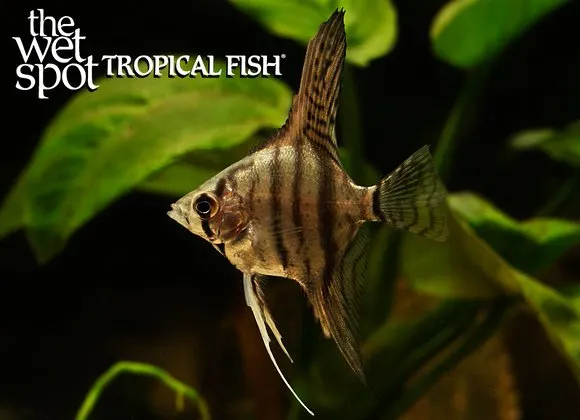
Care at a glance
- Temperature
- 75–86°F
- 24–30°C
- pH
- 6.0–7.5
- Adult size
- 5.9 in
- 15 cm
- Minimum tank
- 30 gal
- 115 L
- Temperament
- Mostly peaceful
- Social behavior
- Social
- Swim level
- Middle
- Difficulty
- Easy
- Breeding
- No record
- Rarity
- Very common
- Family
- Cichlidae
- Origin
- South America
Overview
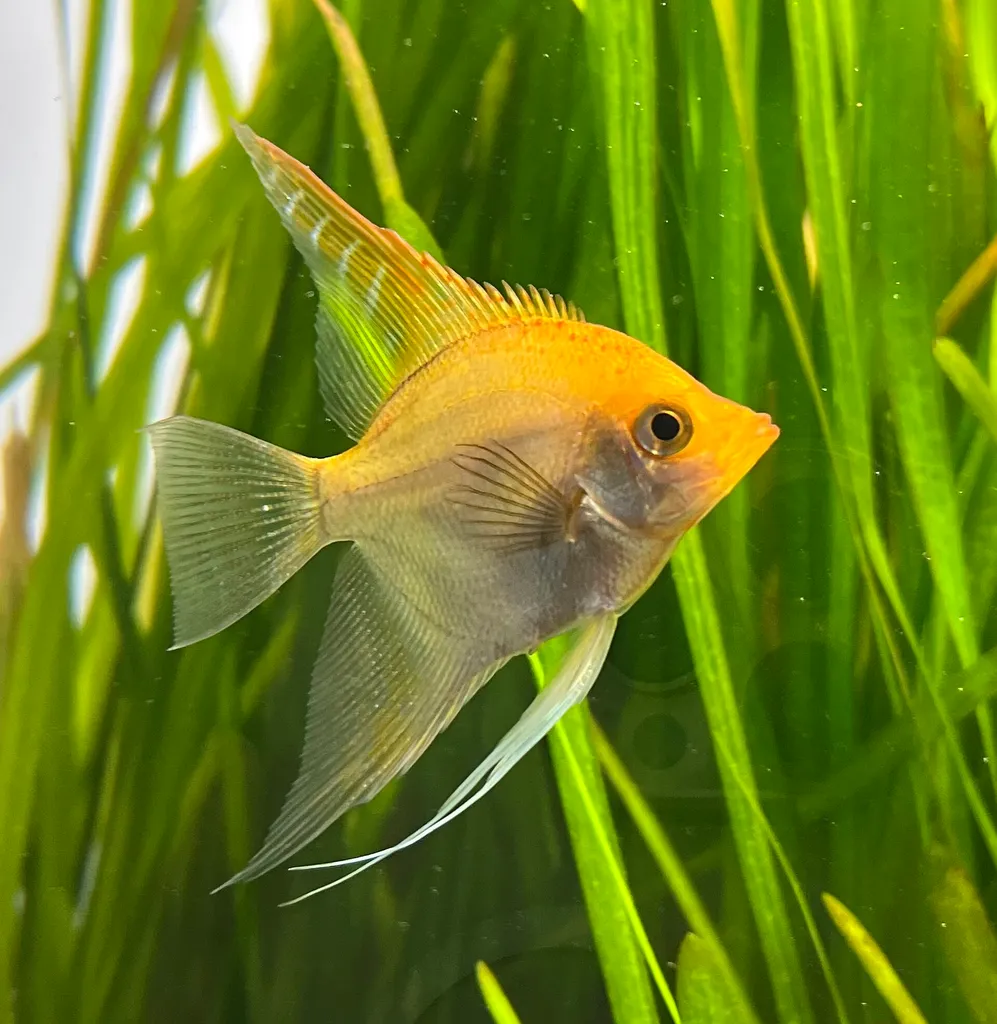
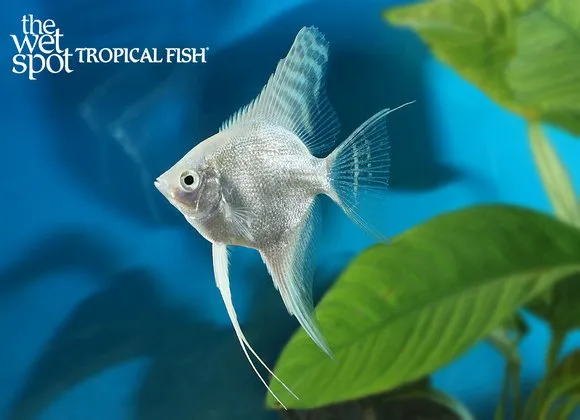
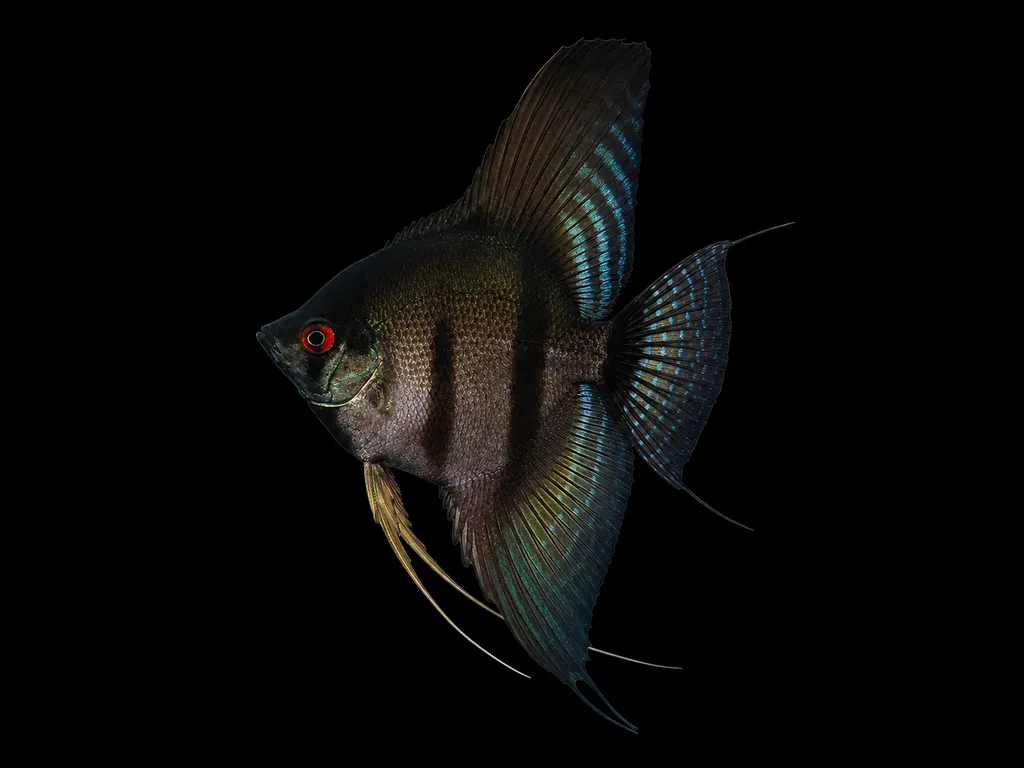
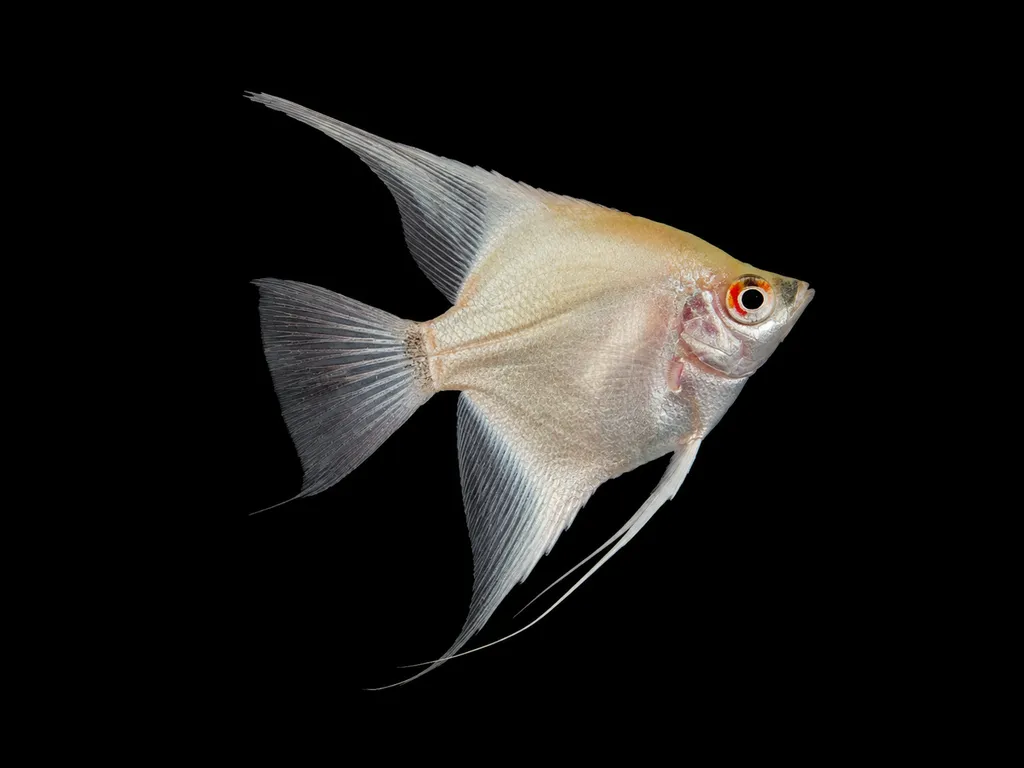
Silver is the plain fish every other variety is graded against, and shops list it as Silver or simply Angelfish. Quality is judged on even bars, a clean back edge to the dorsal fin, and long unbroken ventral filaments. A tank bred silver can still carry hidden recessives such as gold or pearlscale, so a pair of silvers sometimes throws fry that look nothing like the parents.
In the wild
Silver is the wild pattern rather than a bred form, so it is the one look on this list that also swims in South America. Nearly every silver in a shop is hatchery raised, from stock kept in tanks for decades. Wild caught fish do reach the trade, but they are usually sold under a collection locality rather than as Silver.
Good to know
In angelfish genetics the silver is wild type, written +/+ at each of the loci the color forms change. It has no color mutation to pass on, so silver crossed to a single dose form splits the spawn evenly: silver by black lace gives about half of each. Silvers can still carry recessive alleles like new gold or pearl without showing any sign of them.
Did you know
The dark bars are not fixed markings. An angelfish can drop them almost completely when it sleeps, sulks or squares up to another fish, so a silver that has just been netted often looks washed out for a few minutes.
Weekly picks
Tank mates
Silver angelfish is a mostly peaceful, social species that keeps to the middle. These picks share a community profile with it, are safe together in both directions, and overlap on water type, temperature and pH.
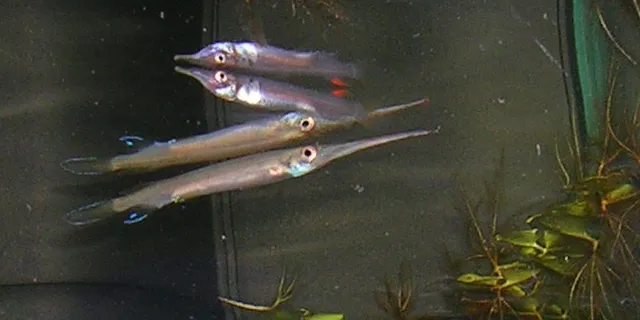
Forest halfbeak
Hemirhamphodon pogonognathus
Freshwater3.5 in (9 cm) · 34 gal (130 L)75–82°F (24–28°C)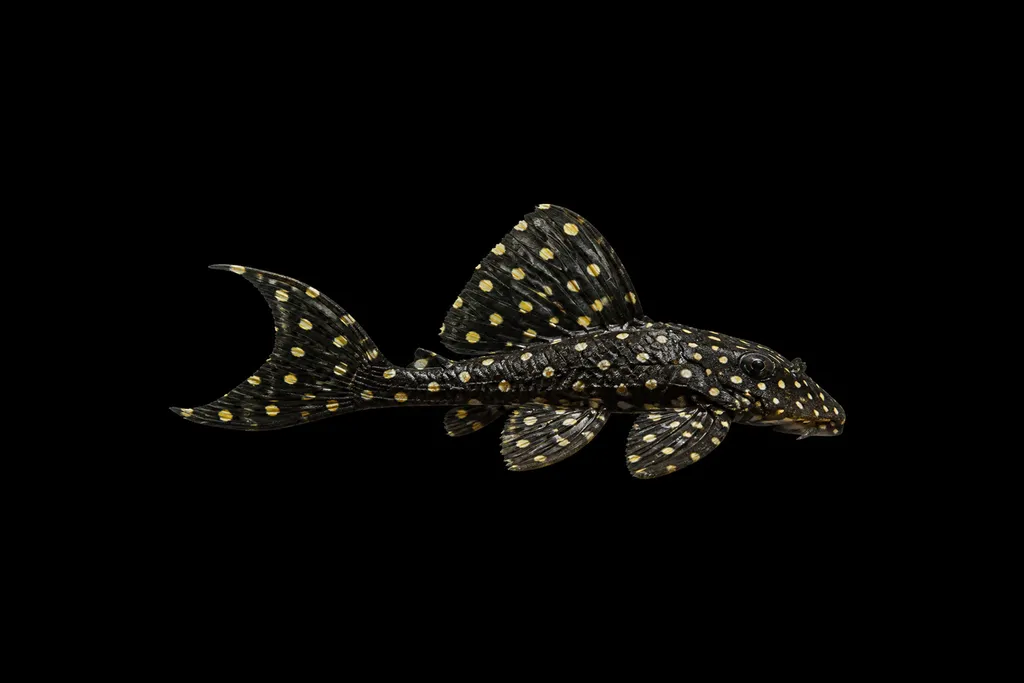
Orinoco angel pleco (L201)
Hypancistrus sp. L201
Freshwater5.9 in (15 cm) · 30 gal (115 L)79–86°F (26–30°C)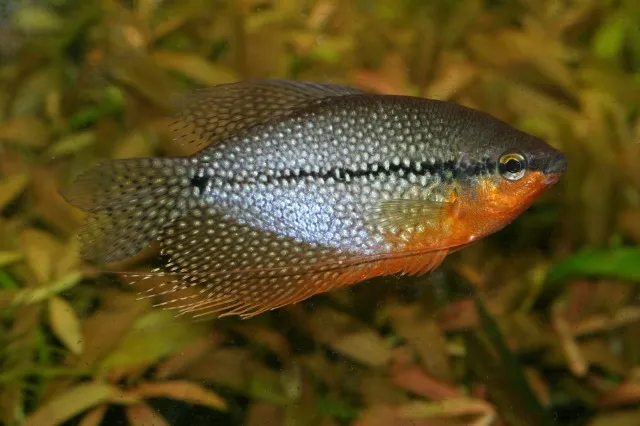
Pearl gourami
Trichopodus leerii
Freshwater4.7 in (12 cm) · 30 gal (115 L)75–86°F (24–30°C)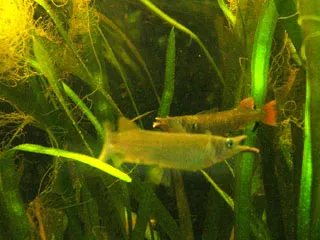
Redfin halfbeak
Nomorhamphus ebrardtii
Freshwater3.5 in (9 cm) · 29 gal (110 L)75–81°F (24–27°C)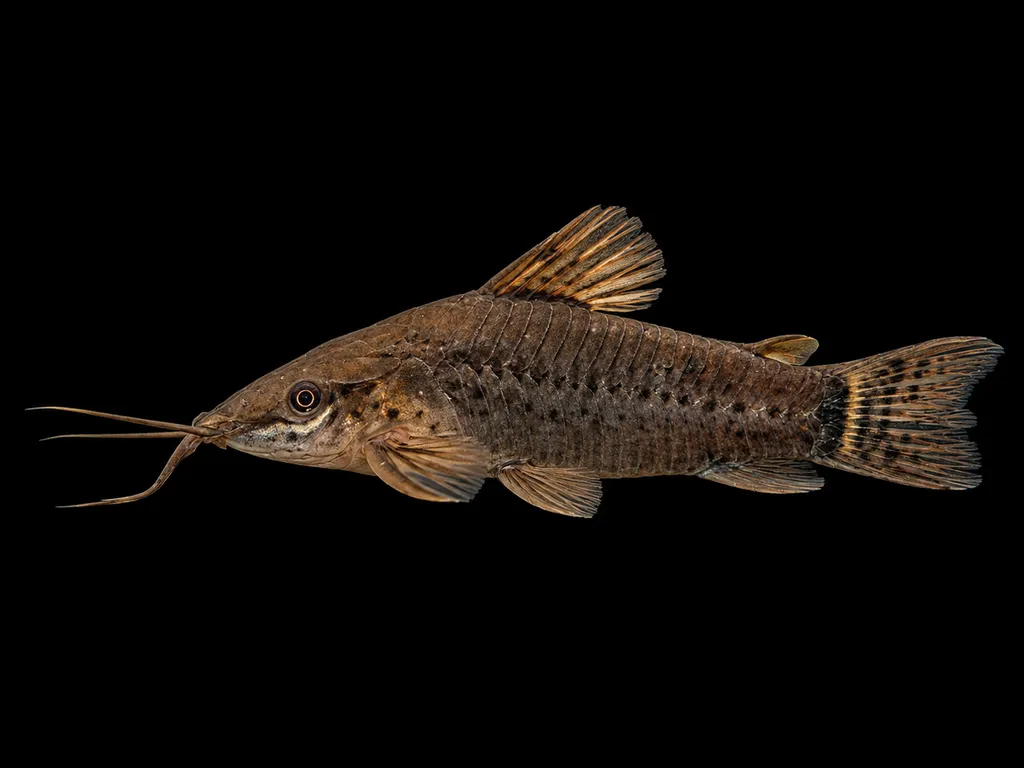
Panama hoplo
Hoplosternum punctatum
Freshwater3.1 in (8 cm) · 30 gal (115 L)72–79°F (22–26°C)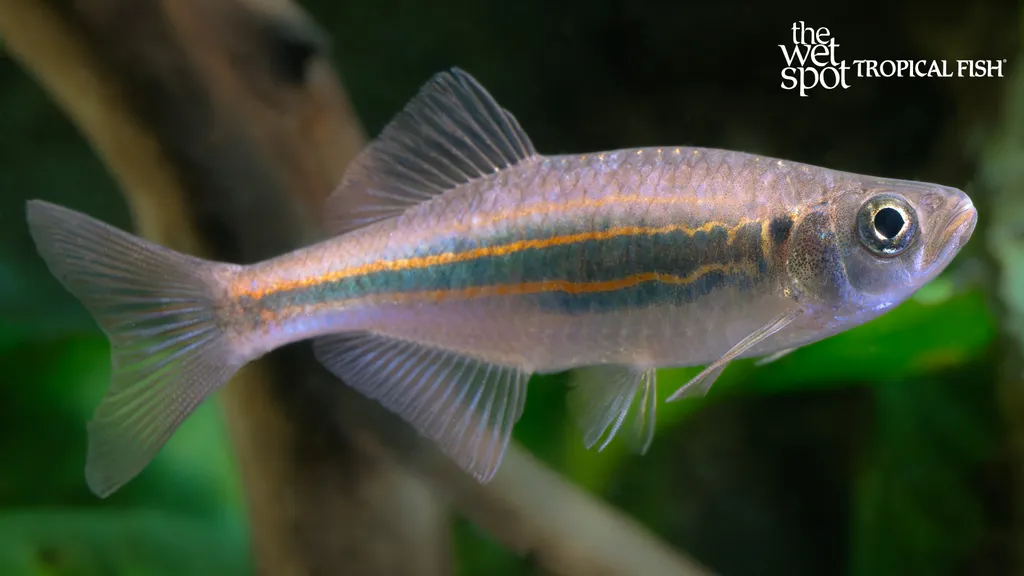
Queen danio
Devario regina
Freshwater3.1 in (8 cm) · 30 gal (115 L)68–79°F (20–26°C)
Common questions
Is a Silver angelfish a different species from the Angelfish?
No. A Silver angelfish is a variety of the Angelfish, Pterophyllum scalare, and it wants the same tank, water and food as the species.
What size tank does a Silver angelfish need?
A Silver angelfish needs at least 30 gal (115 L). It spends most of its time in the middle.
How big does a Silver angelfish get?
An adult Silver angelfish reaches about 5.9 in (15 cm).
Related species
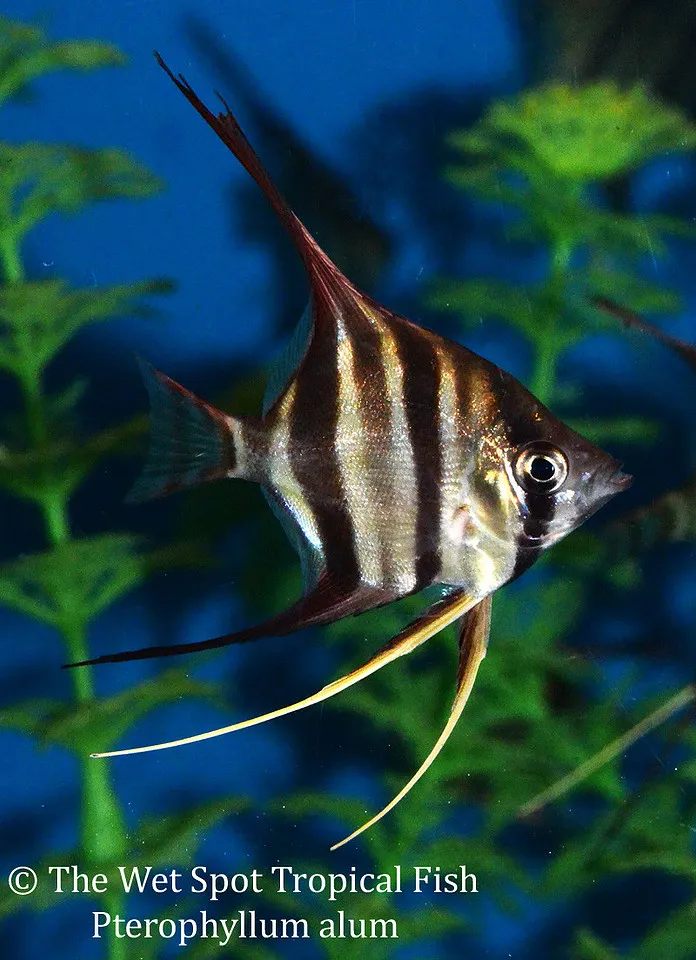 7.1 in (18 cm)45 gal (170 L)79–90°F (26–32°C)
Altum angelfish
Pterophyllum altum
7.1 in (18 cm) · 45 gal (170 L)
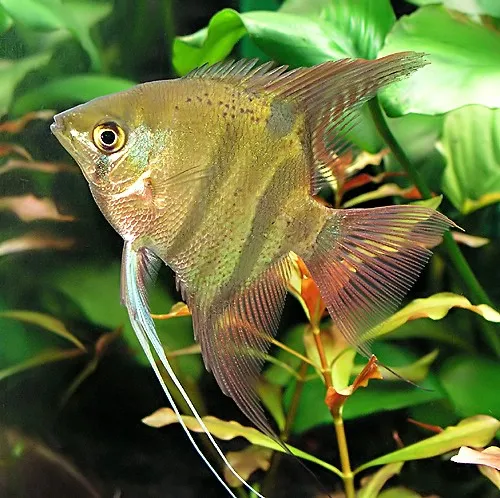 3.9 in (10 cm)30 gal (115 L)72–84°F (22–29°C)
Roman nose angelfish
Pterophyllum leopoldi
3.9 in (10 cm) · 30 gal (115 L)
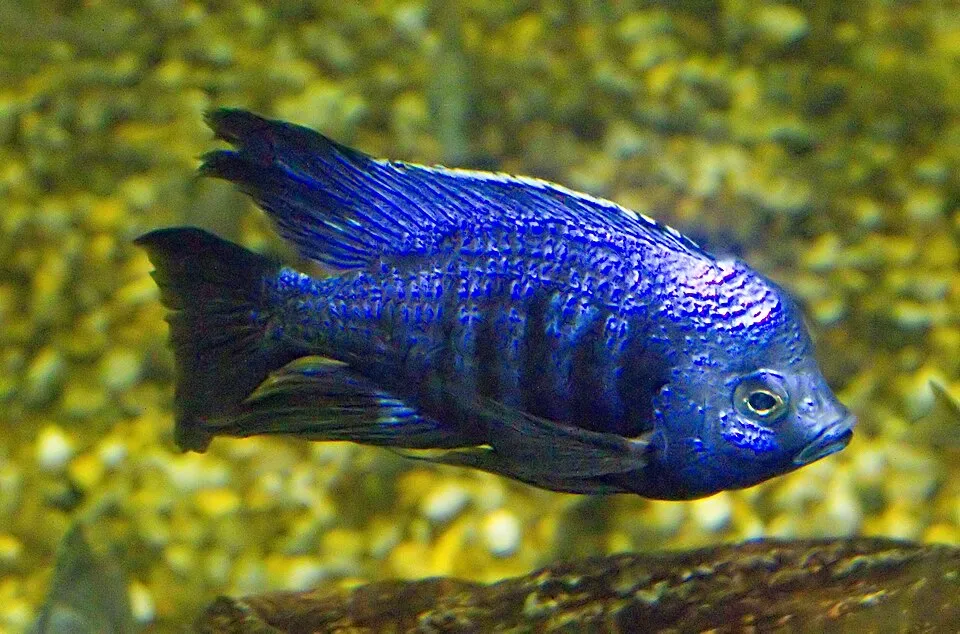 5.9 in (15 cm)79 gal (300 L)77–82°F (25–28°C)
Azureus
Copadichromis azureus
5.9 in (15 cm) · 79 gal (300 L)
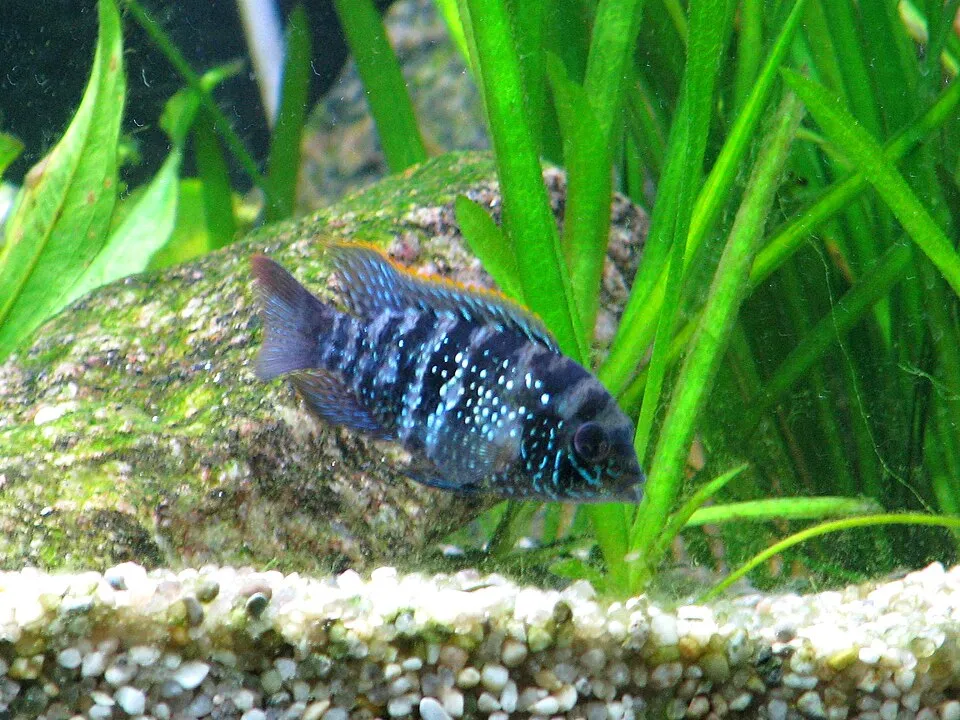 5.9 in (15 cm)42 gal (160 L)72–82°F (22–28°C)
Blue acara
Andinoacara pulcher
5.9 in (15 cm) · 42 gal (160 L)
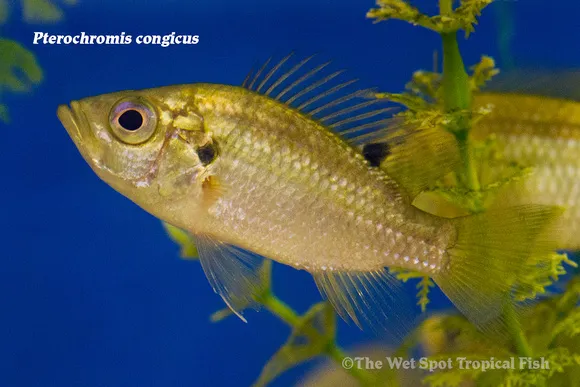 5.9 in (15 cm)79 gal (300 L)73–82°F (23–28°C)
Congicus pterochromis
Pterochromis congicus
5.9 in (15 cm) · 79 gal (300 L)
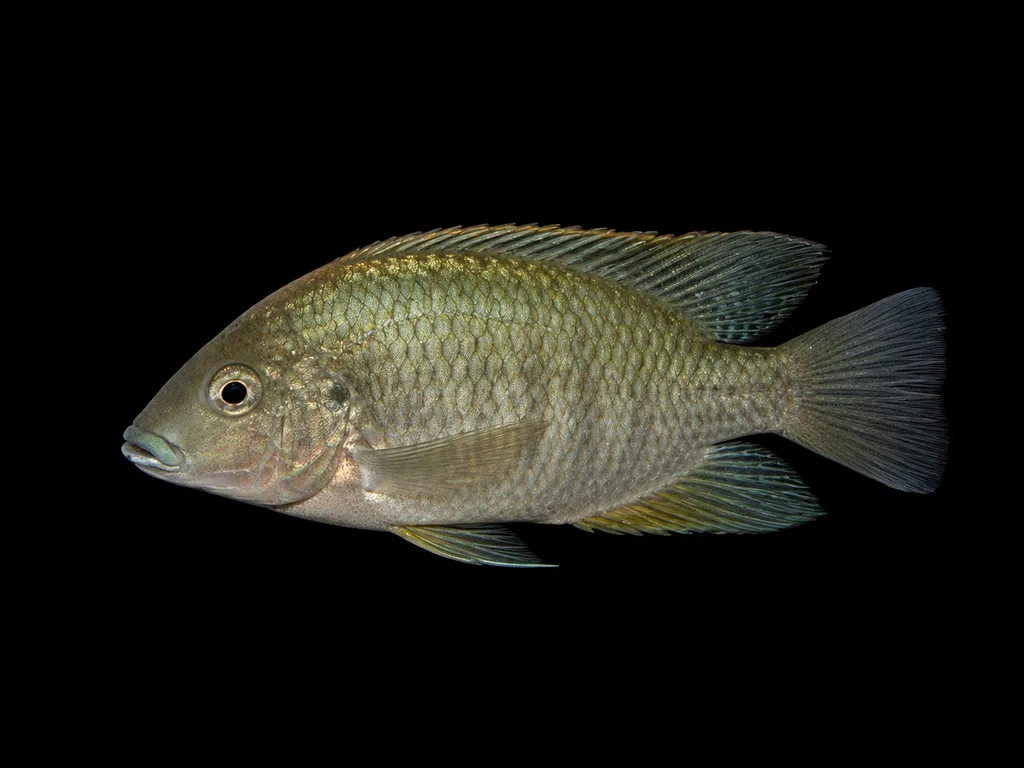 5.9 in (15 cm)66 gal (250 L)73–81°F (23–27°C)
Deepwater coptodon
Coptodon bythobates
5.9 in (15 cm) · 66 gal (250 L)