Variety of Angelfish
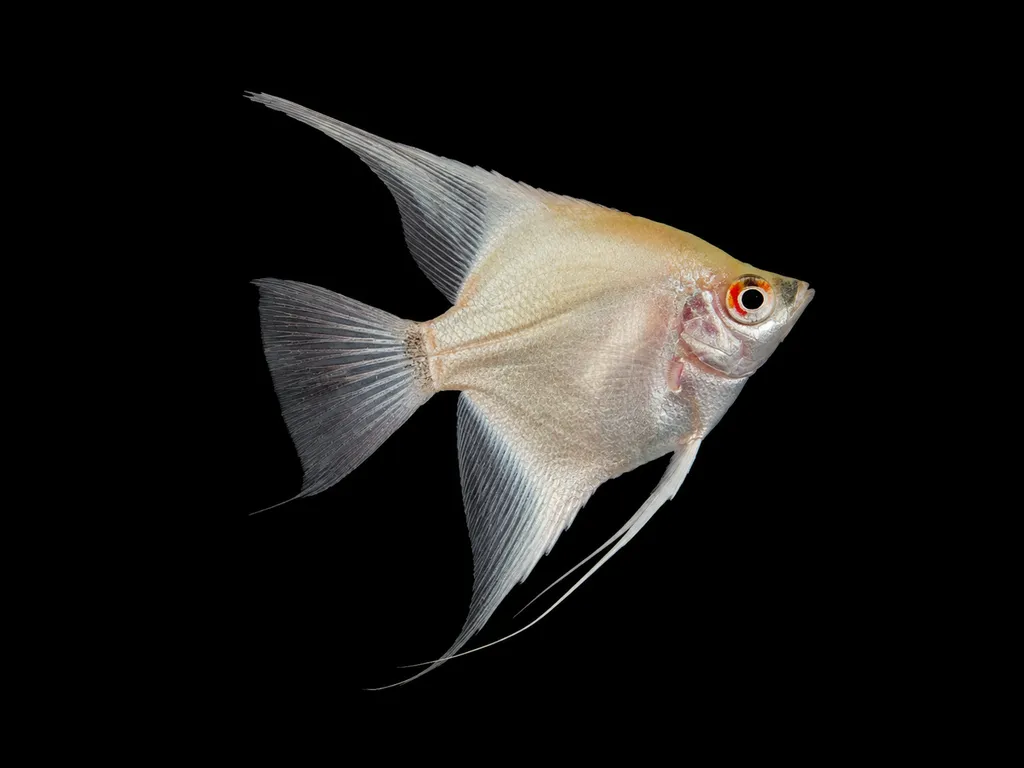
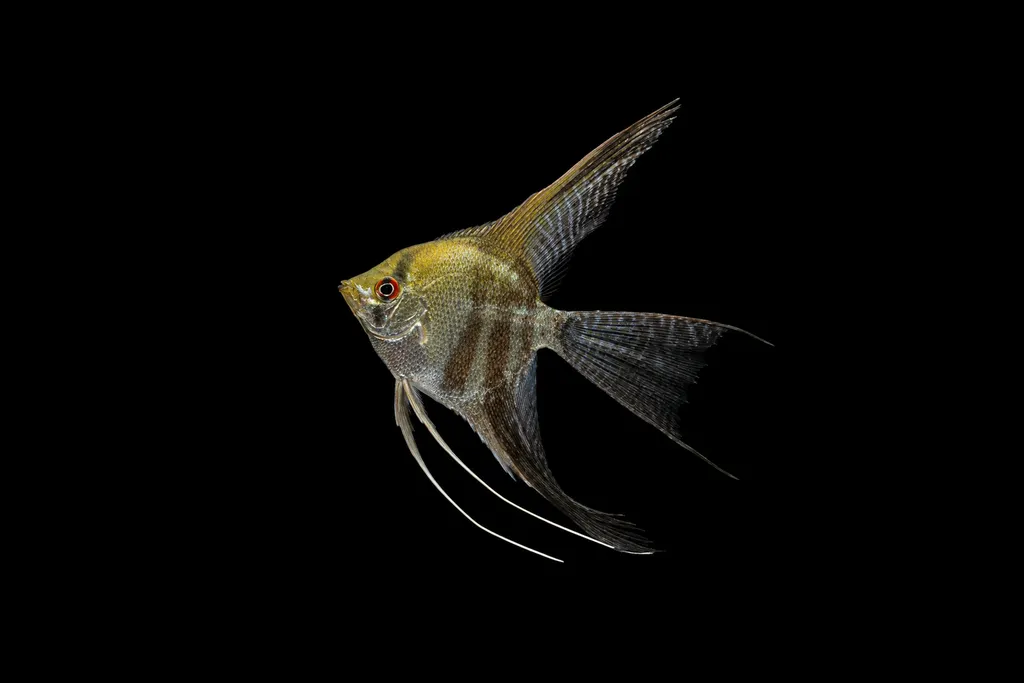
Blushing angelfish
Pterophyllum scalare
One of 9 varieties of Pterophyllum scalare · See all varieties →
FreshwaterFish
Varieties · Pterophyllum scalare
See all 9 →
Care at a glance
- Temperature
- 75–86°F
- 24–30°C
- pH
- 6.0–7.5
- Adult size
- 5.9 in
- 15 cm
- Minimum tank
- 30 gal
- 115 L
- Temperament
- Mostly peaceful
- Social behavior
- Social
- Swim level
- Middle
- Difficulty
- Easy
- Breeding
- No record
- Rarity
- Very common
- Family
- Cichlidae
Overview
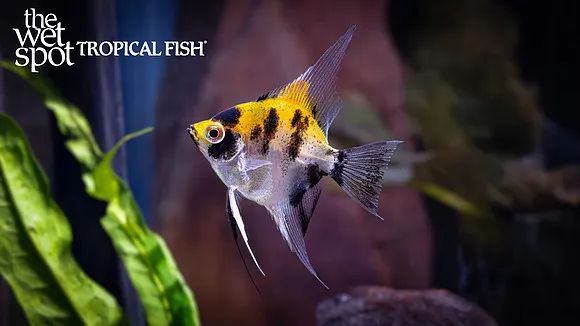
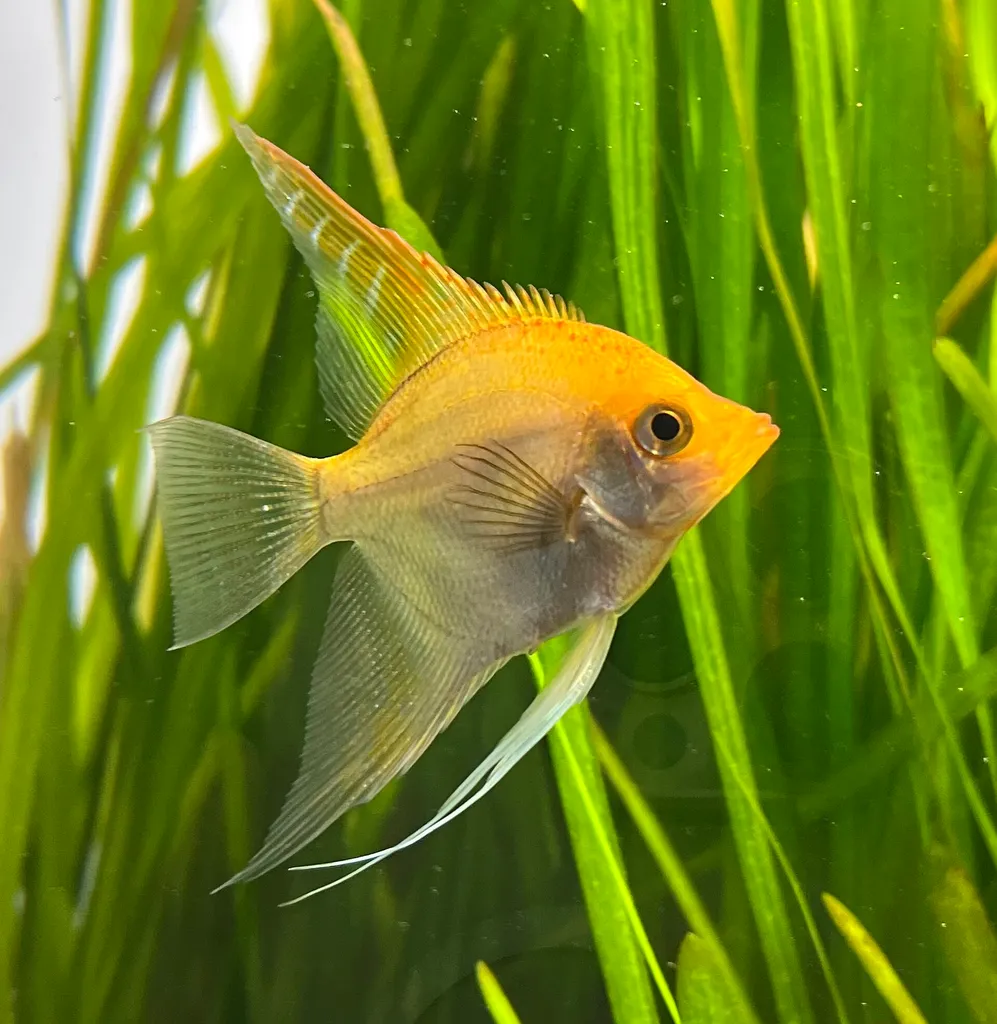
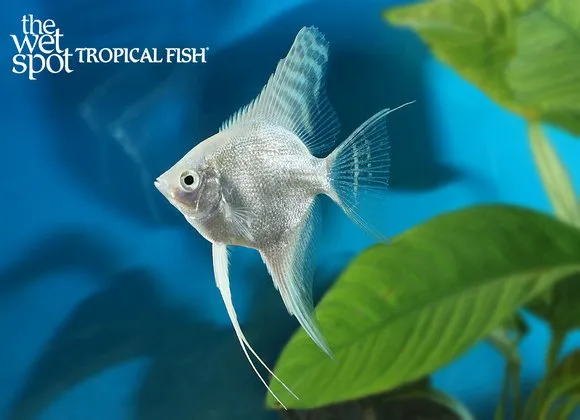
A blushing angelfish is largely clear silver white with a pink patch behind each eye where the gill cover lets the gills show through. The pink is strongest in young fish and often fades as the gill plate turns opaque with age, so an adult sold as Blushing may no longer blush. Adults also pick up scattered silvery guanine patches on the body, which is normal for the form rather than a flaw.
In the wild
Blushing is a double dose of the stripeless gene, a hobby mutation with no wild equivalent. Stripeless shares a locus with zebra, so a blushing fish can never also be a zebra. When and where the stripeless mutation first appeared is not recorded in the hobby literature, which makes blushing a line of uncertain origin.
Good to know
Stripeless shows intermediate inheritance: one dose gives the ghost, which keeps incomplete bars, and two doses (S/S) give the blushing fish. The double dose leaves the gill cover translucent, so the red of freshly oxygenated blood in the gills shows through as pink. That same transparency is what lets koi and the other stripeless based forms show the color stored underneath.
Did you know
The blush is not pigment at all. It is blood in the gills seen through a gill cover that stays translucent, which is why the pink retreats as the fish matures and the plate turns opaque.
Weekly picks
Tank mates
Blushing angelfish is a mostly peaceful, social species that keeps to the middle. These picks share a community profile with it, are safe together in both directions, and overlap on water type, temperature and pH.
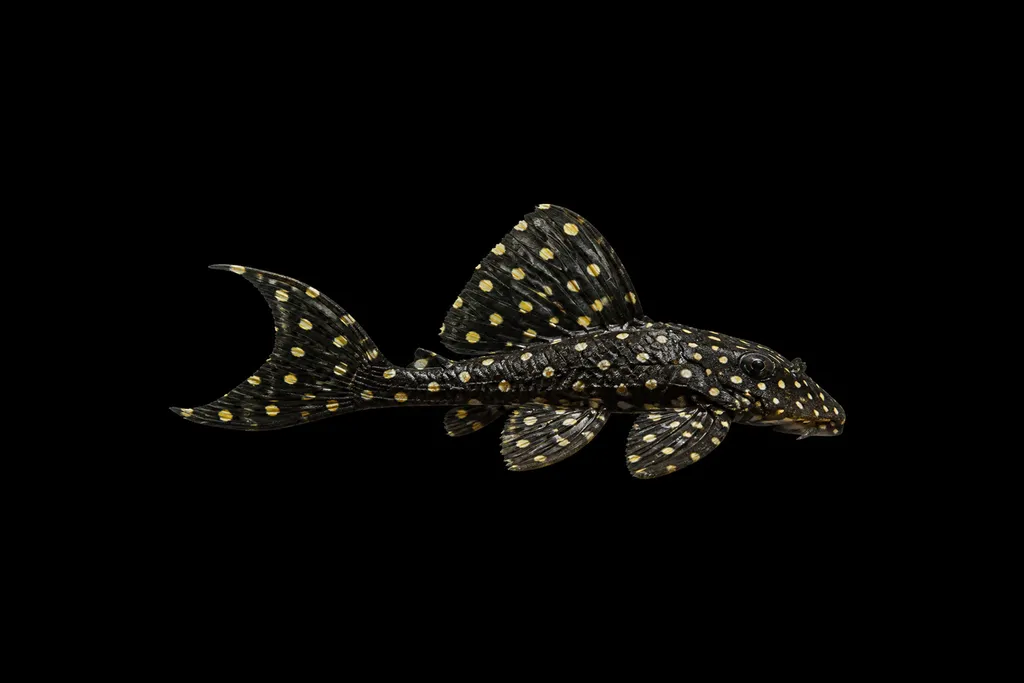
Orinoco angel pleco (L201)
Hypancistrus sp. L201
Freshwater5.9 in (15 cm) · 30 gal (115 L)79–86°F (26–30°C)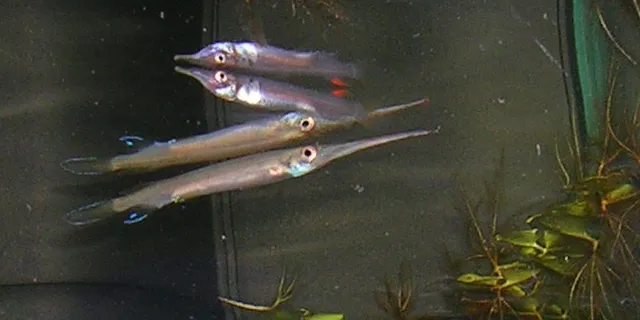
Forest halfbeak
Hemirhamphodon pogonognathus
Freshwater3.5 in (9 cm) · 34 gal (130 L)75–82°F (24–28°C)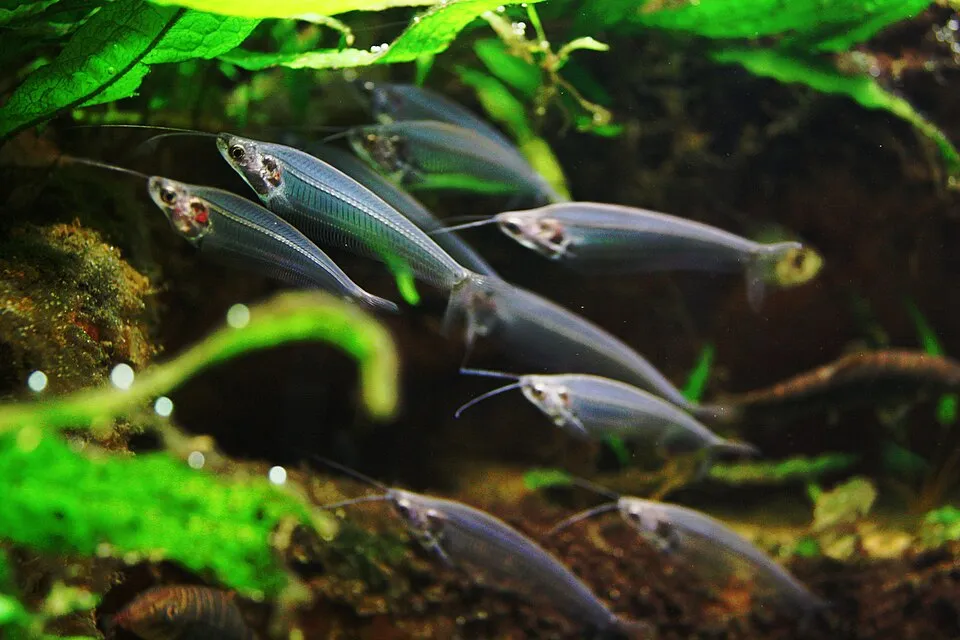
Glass catfish
Kryptopterus vitreolus
Freshwater2.8 in (7 cm) · 30 gal (115 L)70–79°F (21–26°C)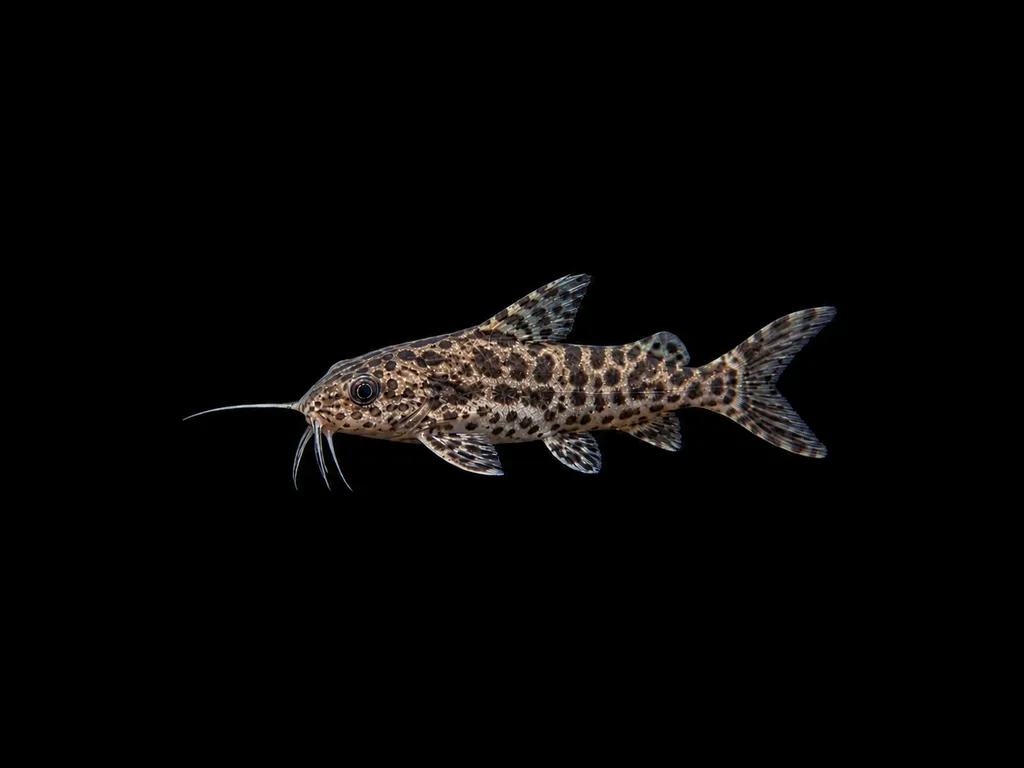
Bugeye squeaker
Synodontis contractus
Freshwater3.9 in (10 cm) · 30 gal (114 L)72–79°F (22–26°C)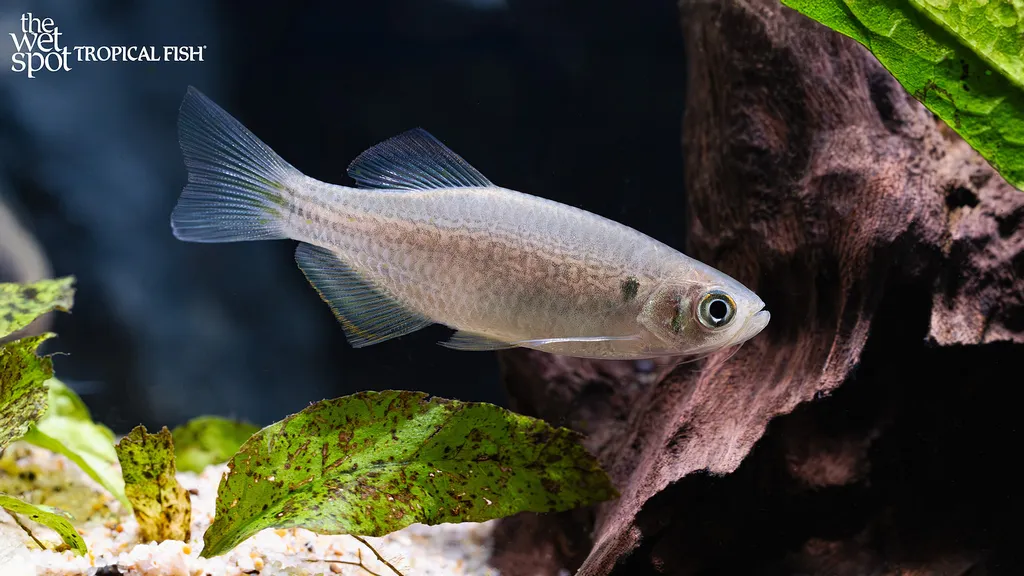
Moustached danio
Danio dangila
Freshwater5.1 in (13 cm) · 32 gal (120 L)68–79°F (20–26°C)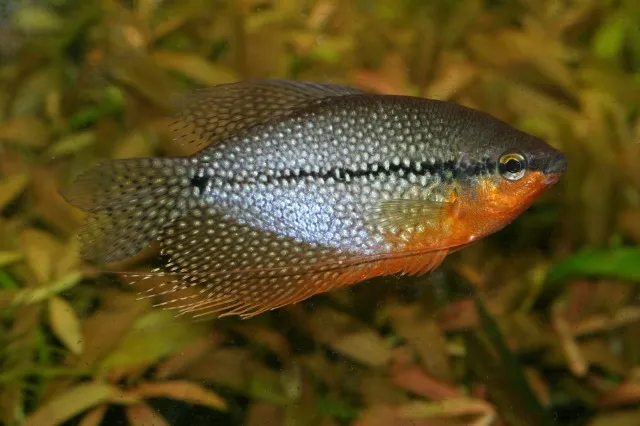
Pearl gourami
Trichopodus leerii
Freshwater4.7 in (12 cm) · 30 gal (115 L)75–86°F (24–30°C)
Common questions
Is a Blushing angelfish a different species from the Angelfish?
No. A Blushing angelfish is a variety of the Angelfish, Pterophyllum scalare, and it wants the same tank, water and food as the species.
What size tank does a Blushing angelfish need?
A Blushing angelfish needs at least 30 gal (115 L). It spends most of its time in the middle.
How big does a Blushing angelfish get?
An adult Blushing angelfish reaches about 5.9 in (15 cm).
Related species
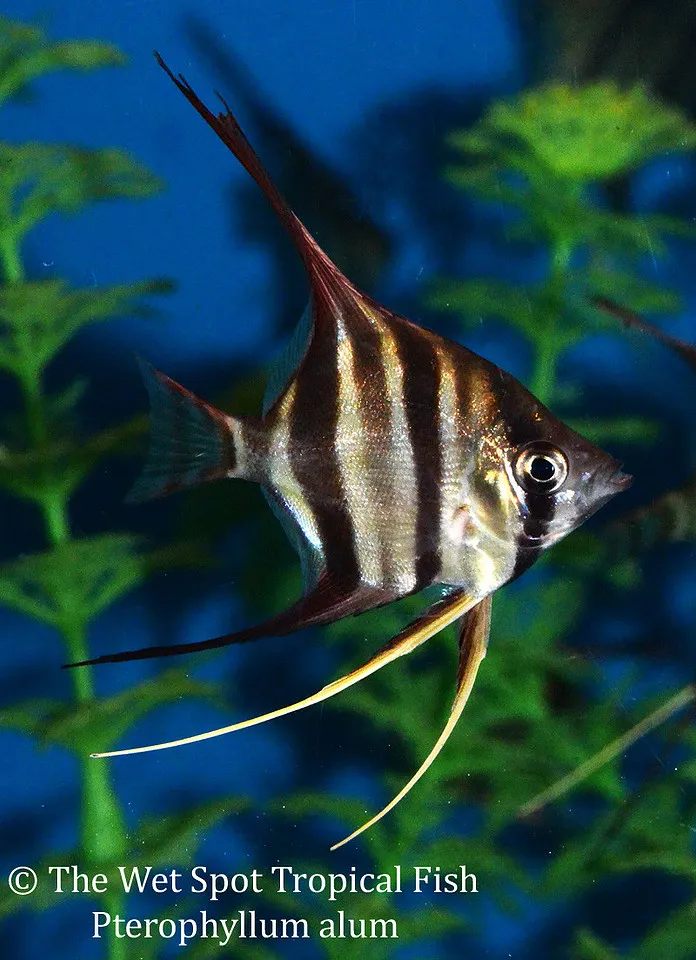 7.1 in (18 cm)45 gal (170 L)79–90°F (26–32°C)
Altum angelfish
Pterophyllum altum
7.1 in (18 cm) · 45 gal (170 L)
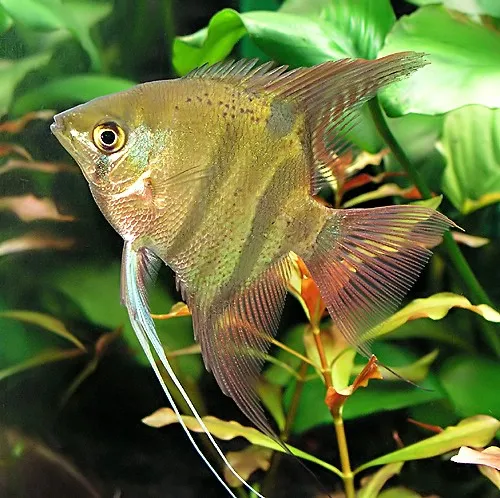 3.9 in (10 cm)30 gal (115 L)72–84°F (22–29°C)
Roman nose angelfish
Pterophyllum leopoldi
3.9 in (10 cm) · 30 gal (115 L)
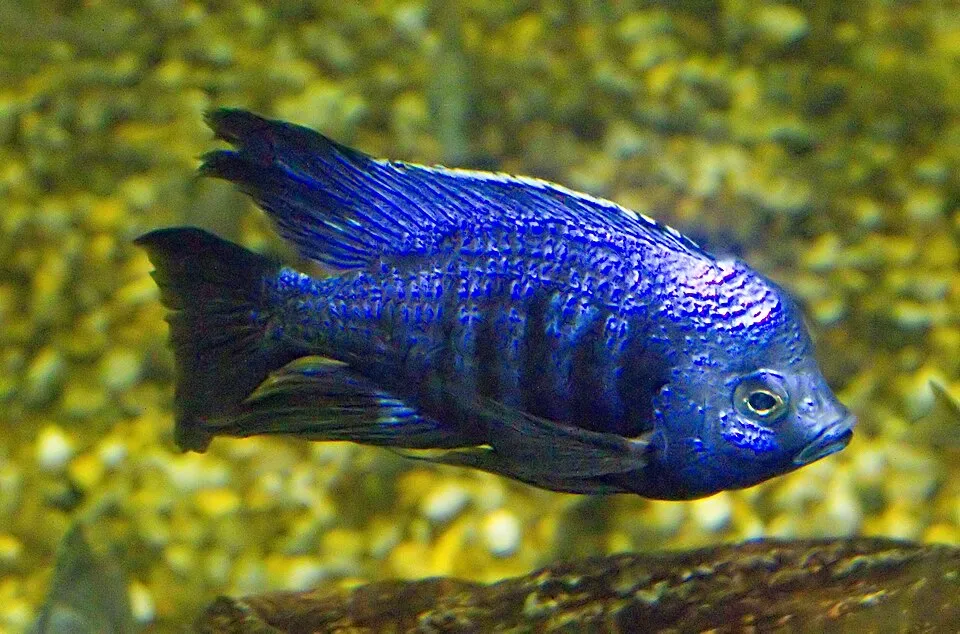 5.9 in (15 cm)79 gal (300 L)77–82°F (25–28°C)
Azureus
Copadichromis azureus
5.9 in (15 cm) · 79 gal (300 L)
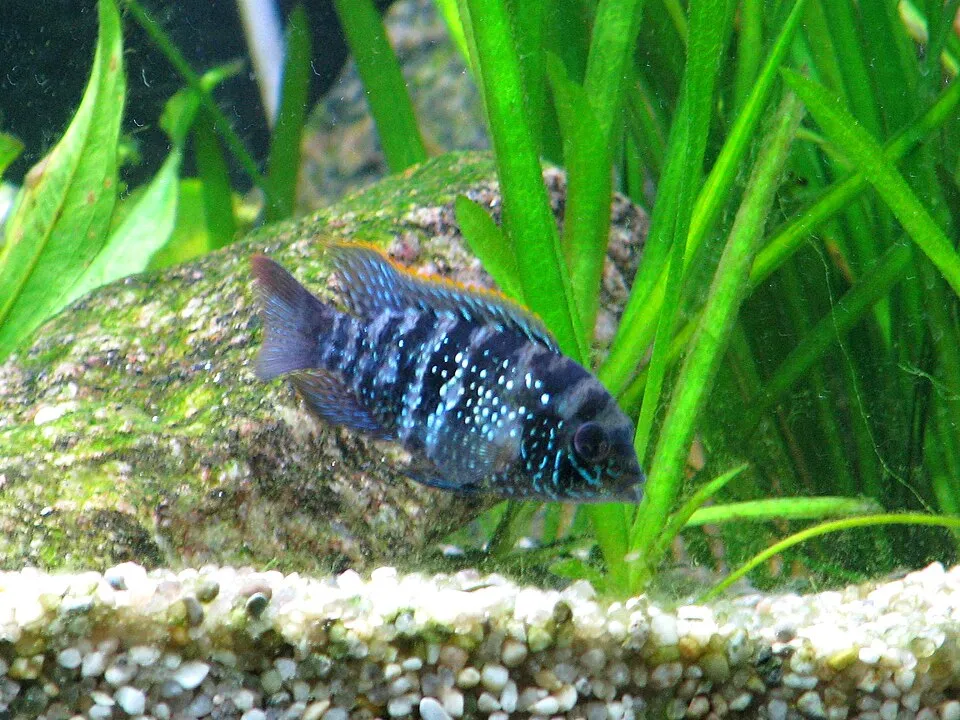 5.9 in (15 cm)42 gal (160 L)72–82°F (22–28°C)
Blue acara
Andinoacara pulcher
5.9 in (15 cm) · 42 gal (160 L)
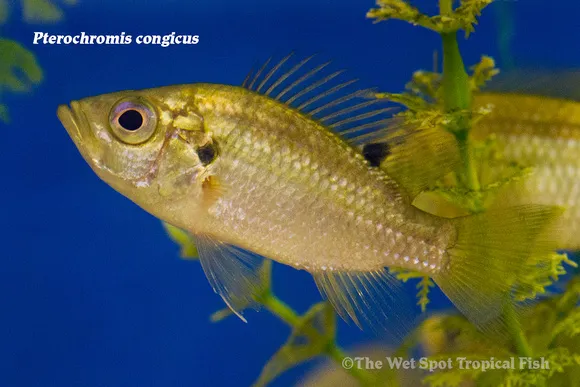 5.9 in (15 cm)79 gal (300 L)73–82°F (23–28°C)
Congicus pterochromis
Pterochromis congicus
5.9 in (15 cm) · 79 gal (300 L)
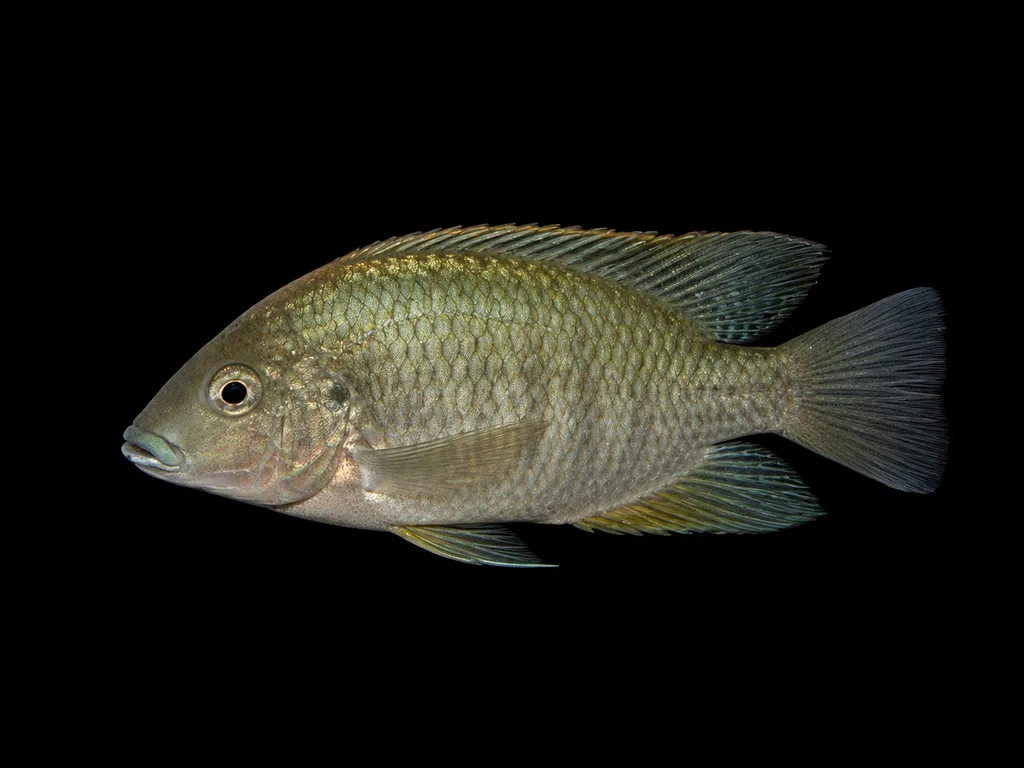 5.9 in (15 cm)66 gal (250 L)73–81°F (23–27°C)
Deepwater coptodon
Coptodon bythobates
5.9 in (15 cm) · 66 gal (250 L)