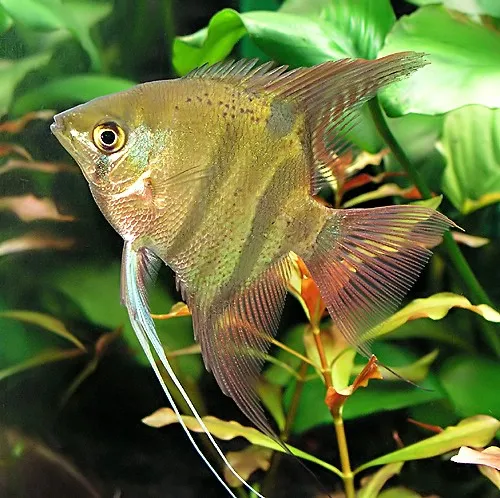
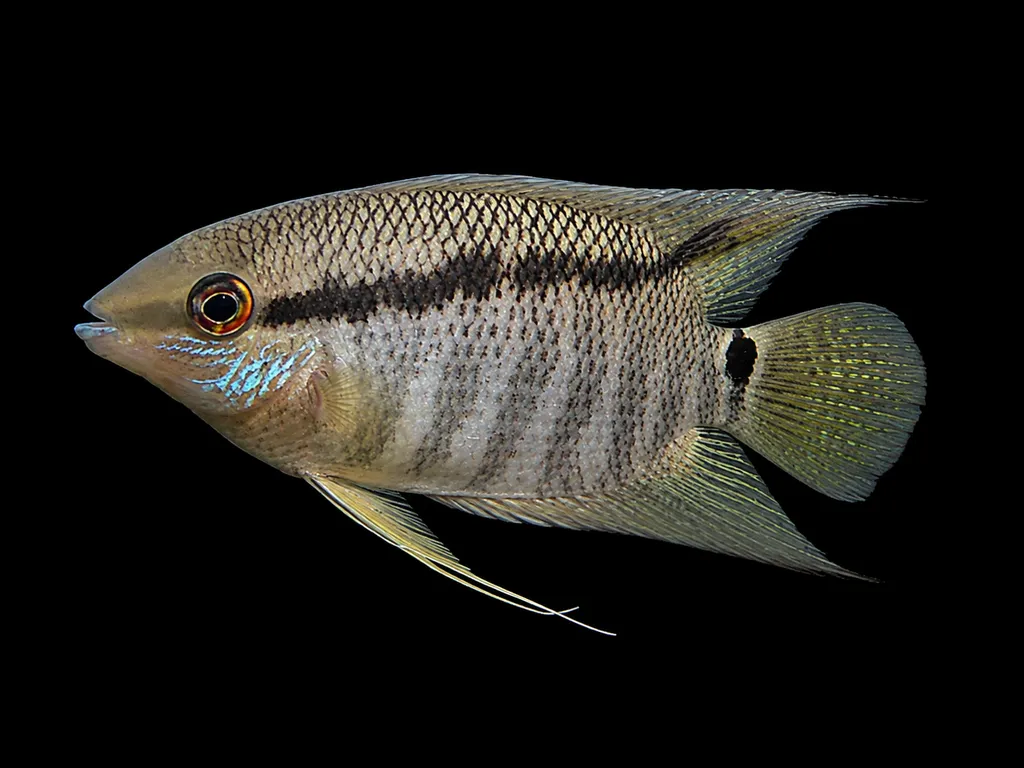
Roman nose angelfish
Pterophyllum leopoldi
Also known as Long Nose Angelfish
FreshwaterFish
Care at a glance
- Temperature
- 72–84°F
- 22–29°C
- pH
- 6.0–7.2
- Adult size
- 3.9 in
- 10 cm
- Minimum tank
- 30 gal
- 115 L
- Temperament
- Mostly peaceful
- Social behavior
- Shoaling
- Swim level
- Middle
- Difficulty
- Medium
- Breeding
- No record
- Rarity
- Rare
- Family
- Cichlidae
- Origin
- Brazil, Guyana
Overview
The Roman nose angelfish is the smallest of the wild angelfish and, while regarded as the feistiest of the group, it is generally peaceful in a community and best kept in a school of six or more. Keeping a group spreads out the squabbling that occurs between individuals, especially as pairs form, and lets the fish settle into a natural order. It leaves most other tankmates alone, though very small fish and shrimp may be eaten, so pair it with mid-sized tetras, rasboras and peaceful catfish. Like other angelfish it appreciates height, tall plants and vertical driftwood to break up sight lines. Feed a varied diet of flake or micro pellet with frozen and live foods such as bloodworm and brine shrimp. A tank of at least 115 liters gives a small group room.
In the wild
The Roman nose angelfish comes from the Amazon in Brazil and the Guyana region, living among submerged wood, roots and plants in slow, warm, softly acidic waters. To recreate this, keep the tank warm at 22 to 29 C with a pH of 6.0 to 7.2 in soft to neutral water. Tall plants, vertical driftwood and some floating cover suit its deep body and give it the vertical structure angelfish favor. Leaf litter and gentle filtration help mimic the shaded, tannin-tinted backwaters it comes from and keep the fish relaxed enough to show its silver-and-black barring.
Good to know
Pterophyllum leopoldi is a member of the cichlid family, Cichlidae, and is the smallest of the three wild angelfish species, reaching around 10 cm in overall length. It can be told from the more common angelfish by its straight forehead, which lacks the notch above the eyes, and by a dark blotch where the dorsal fin meets the body. Like other angelfish it is an open spawner that lays rows of eggs on a cleaned vertical surface such as a leaf or piece of wood, with both parents guarding the eggs and fry.
Did you know
The Roman nose angelfish is set apart from other angelfish by the smooth, straight profile of its forehead, which lacks the notch or dip above the eye seen in the common angelfish. That distinctive nose line is the source of its name.
Weekly picks
Tank mates
Roman nose angelfish is a mostly peaceful, shoaling species that keeps to the middle. These picks share a community profile with it, are safe together in both directions, and overlap on water type, temperature and pH.
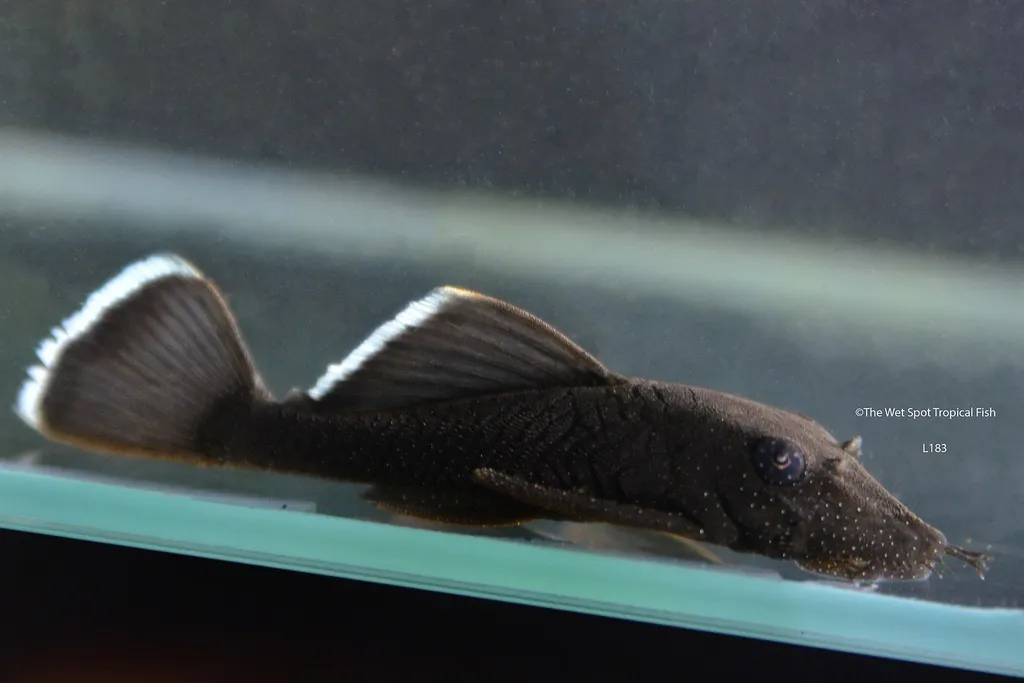
Starlight bristlenose pleco (L183)
Ancistrus dolichopterus
Freshwater5.5 in (14 cm) · 30 gal (115 L)79–84°F (26–29°C)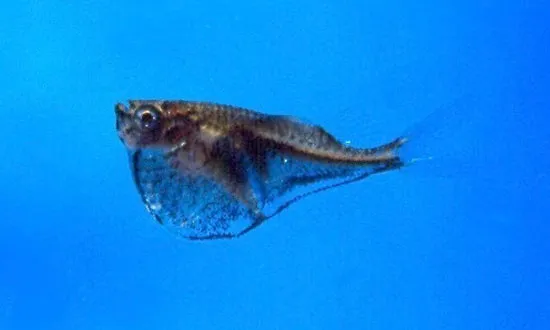
Blackwing hatchetfish
Carnegiella marthae
Freshwater1.4 in (3.5 cm) · 30 gal (115 L)68–82°F (20–28°C)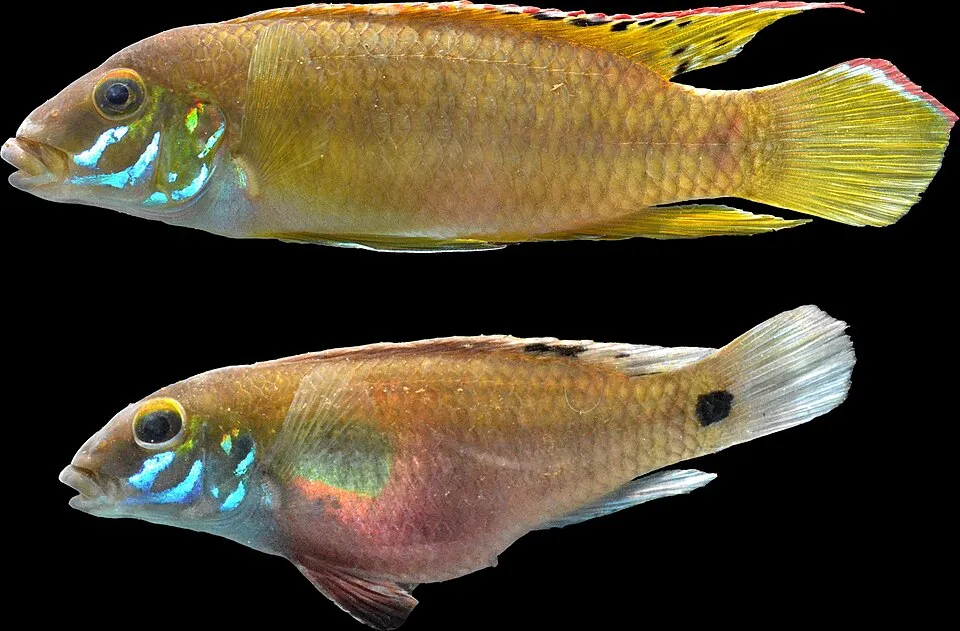
Yellow kribensis
Wallaceochromis humilis
Freshwater4.9 in (12.5 cm) · 30 gal (115 L)75–81°F (24–27°C)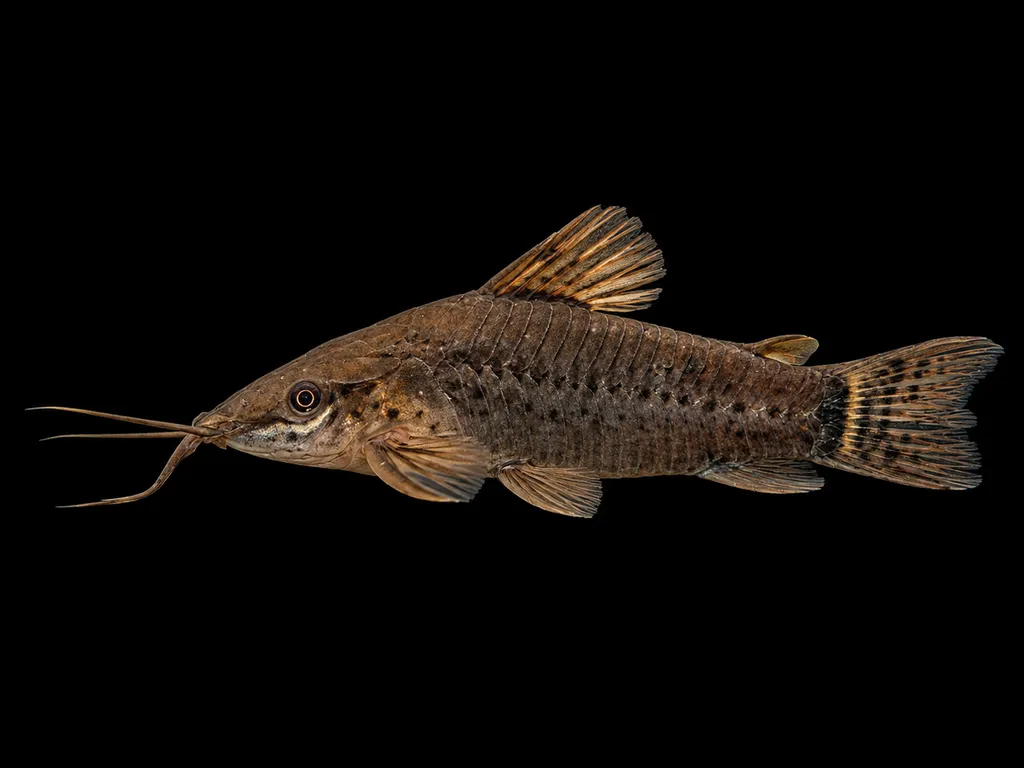
Panama hoplo
Hoplosternum punctatum
Freshwater3.1 in (8 cm) · 30 gal (115 L)72–79°F (22–26°C)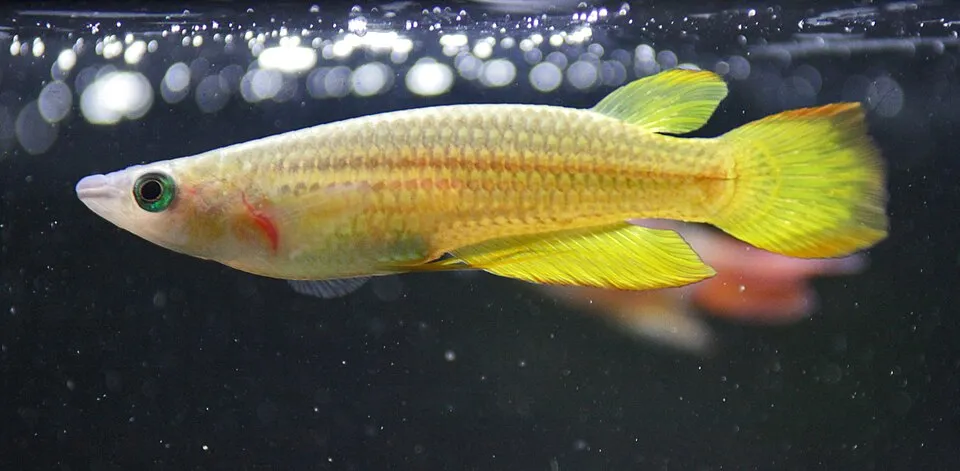
Striped panchax
Aplocheilus lineatus
Freshwater4.3 in (11 cm) · 30 gal (115 L)72–77°F (22–25°C)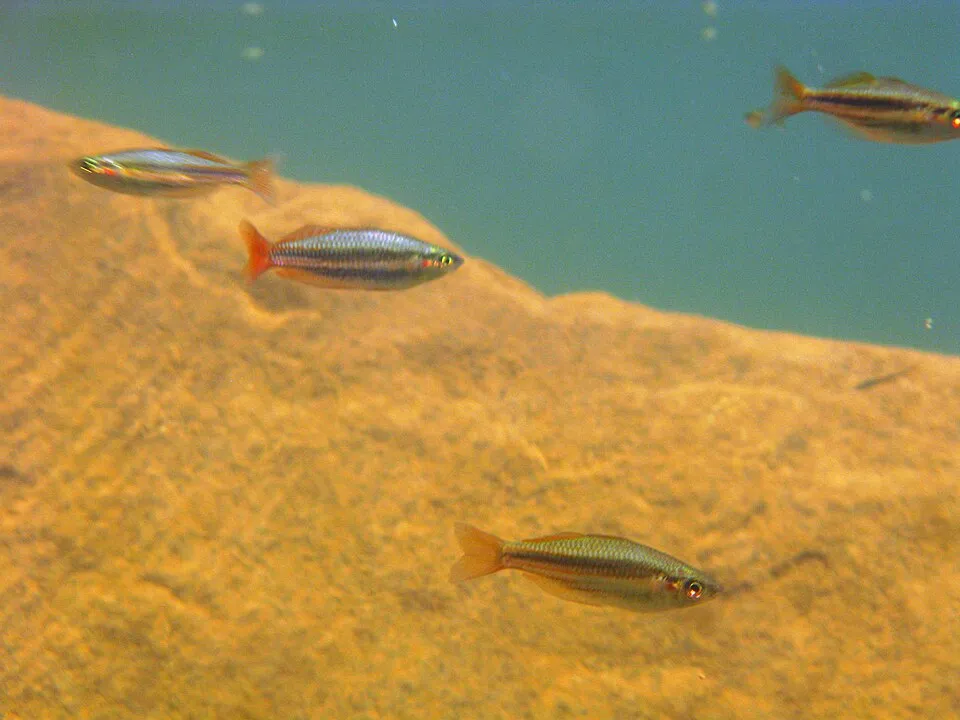
Western rainbowfish
Melanotaenia australis
Freshwater4.7 in (12 cm) · 30 gal (115 L)72–81°F (22–27°C)
Common questions
What size tank does a Roman nose angelfish need?
A Roman nose angelfish needs at least 30 gal (115 L). It spends most of its time in the middle.
What temperature and pH does a Roman nose angelfish need?
A Roman nose angelfish is comfortable at 72–84°F (22–29°C) with a pH of 6.0–7.2.
How big does a Roman nose angelfish get?
An adult Roman nose angelfish reaches about 3.9 in (10 cm).
Does a Roman nose angelfish need a group?
Yes. A Roman nose angelfish is a shoaling species and should be kept in a group, not singly.
Related species
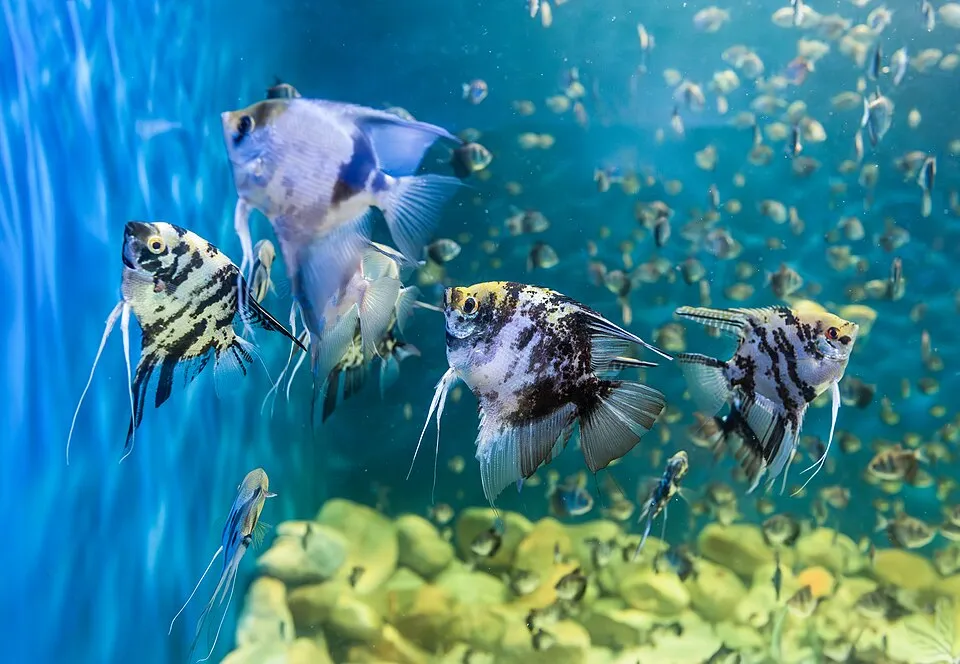 5.9 in (15 cm)30 gal (115 L)75–86°F (24–30°C)
Angelfish
Pterophyllum scalare
5.9 in (15 cm) · 30 gal (115 L)
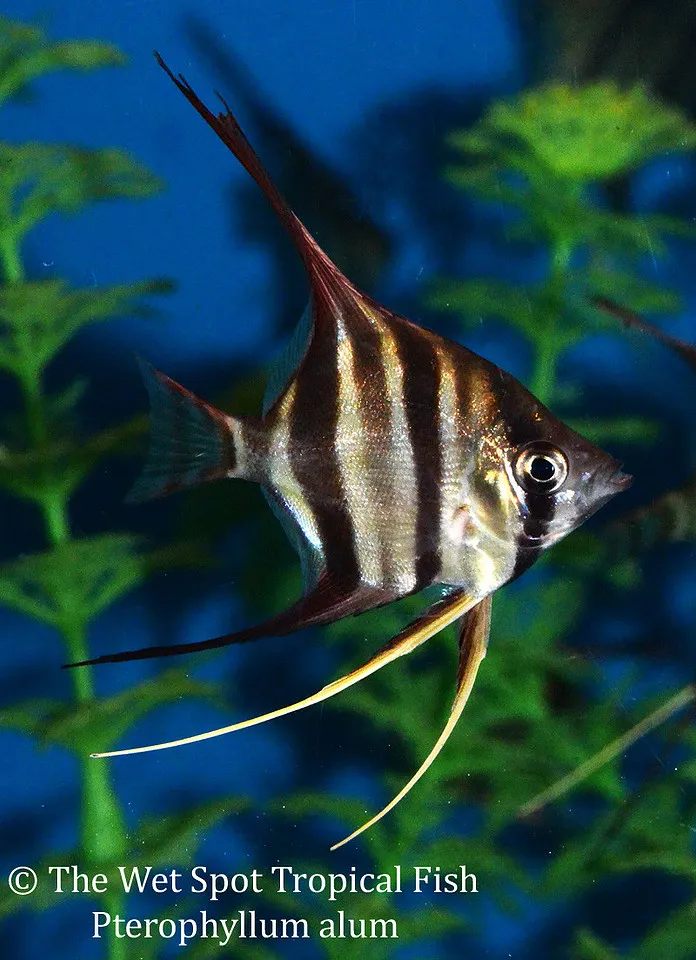 7.1 in (18 cm)45 gal (170 L)79–90°F (26–32°C)
Altum angelfish
Pterophyllum altum
7.1 in (18 cm) · 45 gal (170 L)
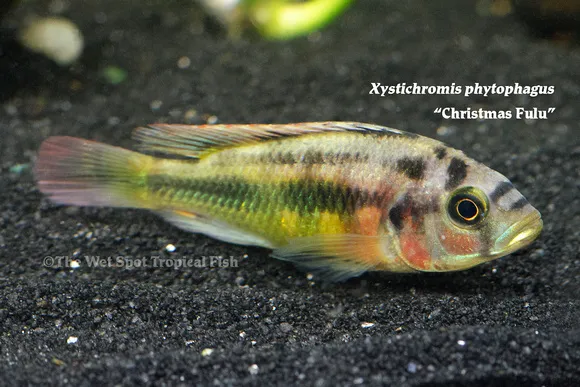 3.9 in (10 cm)53 gal (200 L)73–81°F (23–27°C)
Christmas fulu
Xystichromis phytophagus
3.9 in (10 cm) · 53 gal (200 L)
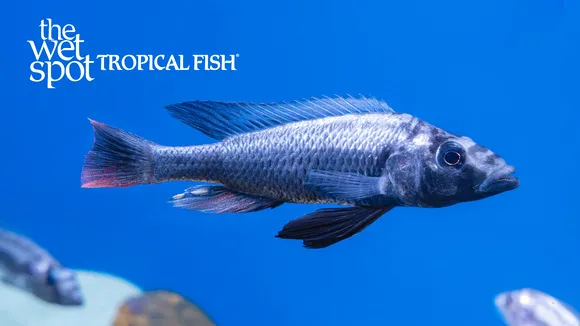 3.9 in (10 cm)53 gal (200 L)73–81°F (23–27°C)
Thereuterion hap
Haplochromis thereuterion
3.9 in (10 cm) · 53 gal (200 L)
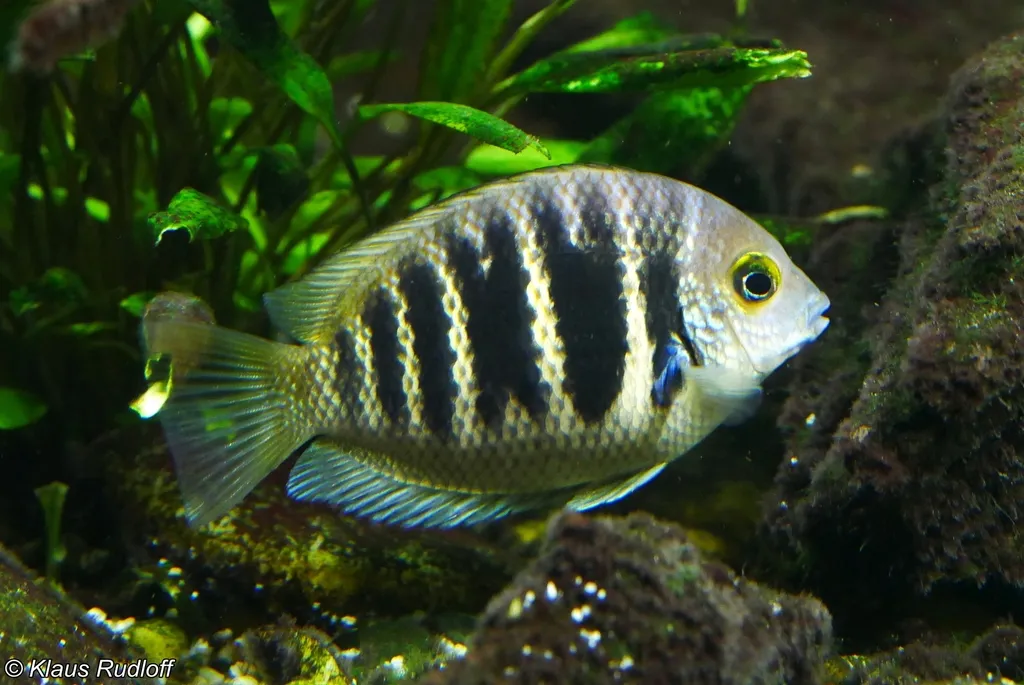 4.3 in (11 cm)55 gal (210 L)72–90°F (22–32°C)
Canara pearlspot
Etroplus canarensis
4.3 in (11 cm) · 55 gal (210 L)
 4.3 in (11 cm)66 gal (250 L)75–82°F (24–28°C)
Guyana festivum
Mesonauta guyanae
4.3 in (11 cm) · 66 gal (250 L)