Altum angelfish
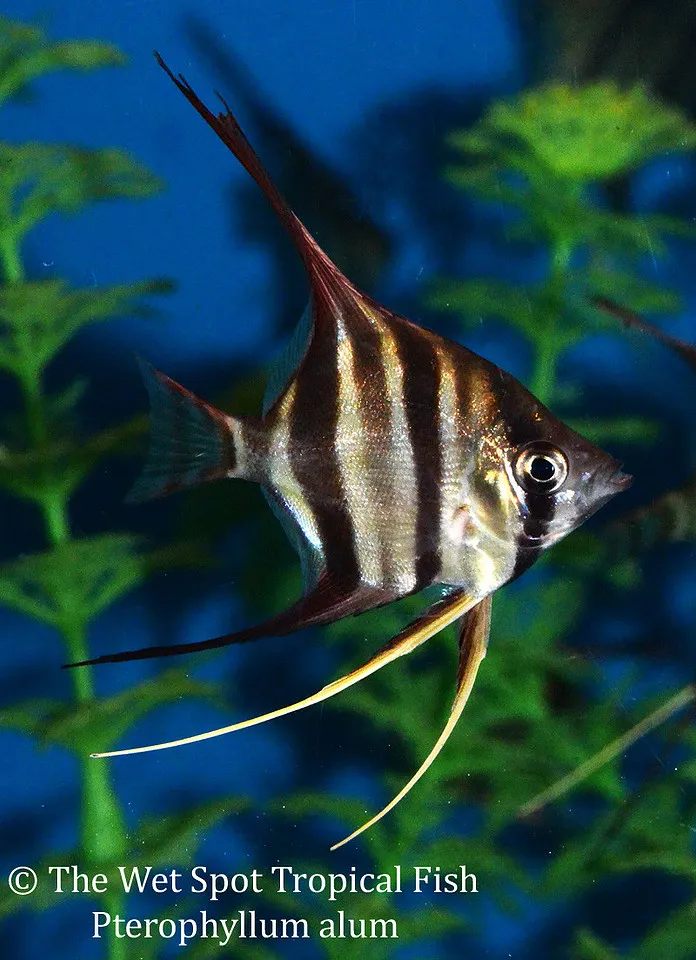
Pterophyllum altum
FreshwaterFish
Care at a glance
- Temperature
- 79–90°F
- 26–32°C
- pH
- 5.5–6.5
- Adult size
- 7.1 in
- 18 cm
- Minimum tank
- 45 gal
- 170 L
- Temperament
- Mostly peaceful
- Social behavior
- Social
- Swim level
- Middle
- Difficulty
- Difficult
- Breeding
- No record
- Rarity
- Very rare
- Family
- Cichlidae
- Origin
- Colombia, Venezuela
Overview
The altum angelfish is a tall, slow-moving fish that does best in a group of five or six, kept in a quiet tank away from fast or nippy tankmates. It stays fairly peaceful but will pair off and hold a small territory around a chosen leaf or piece of wood when spawning. Give it height rather than floor space, with tall plants and vertical driftwood or bogwood roots to break up sight lines. It feeds in the middle and upper water in the wild, so offer small live and frozen foods such as bloodworm, brine shrimp and daphnia alongside a quality flake or micro pellet. Peaceful mid-water schoolers like pencilfish or larger tetras make good company. Plan for a tank of at least 170 liters, and taller than average, so the adults can carry their long fins without damage.
In the wild
Altum angelfish come from the upper Orinoco and Rio Negro basins on the Colombia and Venezuela border, where they live among submerged roots and branches in slow blackwater. That water is warm, very soft and strongly acidic, stained the color of weak tea by tannins from fallen leaves and wood. To recreate it, keep the tank warm at 26 to 32 C with a pH of 5.5 to 6.5, use soft water with little mineral content, and add leaf litter or botanicals to lower the pH and tint the water. Gentle filtration and dim lighting over tall plants and vertical wood suit them best.
Good to know
Pterophyllum altum belongs to the cichlid family, Cichlidae, and is the largest of the three wild angelfish. It reaches around 18 cm in body length but stands much taller from fin tip to fin tip, often close to twice that height. The name altum means tall or high, a reference to the deep, laterally compressed body. Like other angelfish it is an open substrate spawner that lays rows of eggs on a cleaned vertical surface such as a broad leaf or a length of wood, with both parents guarding the eggs and fry. It is rarely bred in home aquariums, and most fish offered for sale are still wild caught.
Did you know
The altum stands out for its height rather than its length. Including the trailing dorsal and anal fins, a full-grown adult can measure close to 50 cm from top to bottom, one of the tallest of all aquarium fish.
Weekly picks
Tank mates
Altum angelfish is a mostly peaceful, social species that keeps to the middle. These picks share a community profile with it, are safe together in both directions, and overlap on water type, temperature and pH.
Spotfin hatchetfish
Thoracocharax stellatus
Freshwater3.5 in (9 cm) · 26 gal (100 L)73–82°F (23–28°C)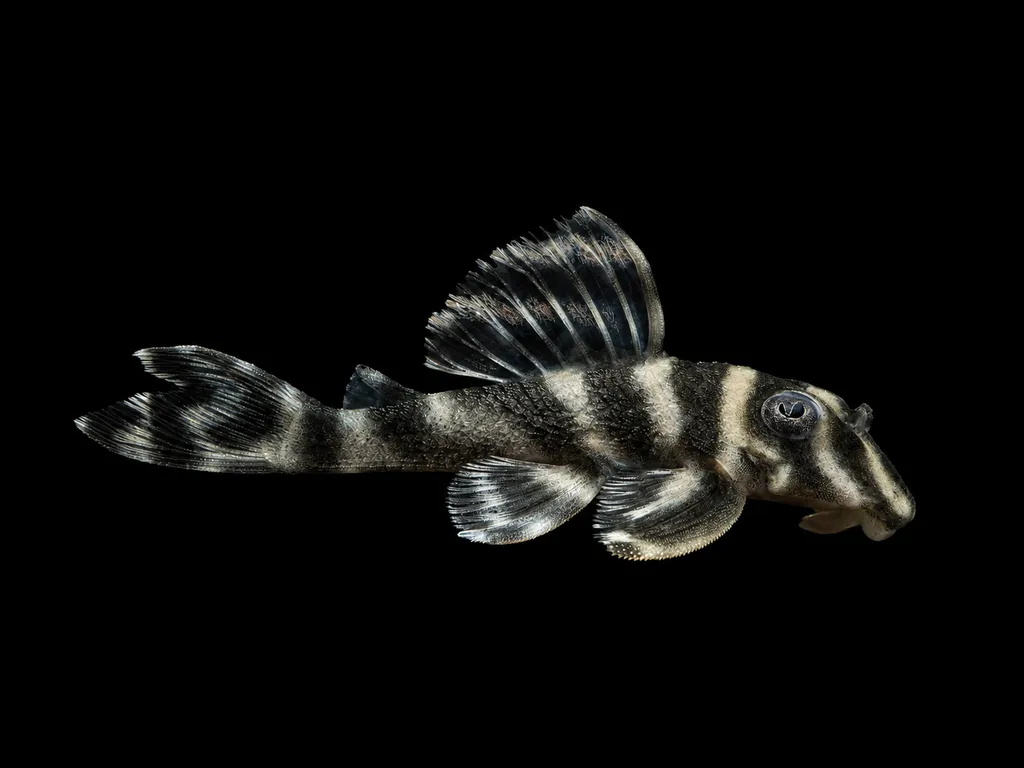
Bandit pleco
Hypancistrus furunculus
Freshwater3.9 in (10 cm) · 42 gal (160 L)79–86°F (26–30°C)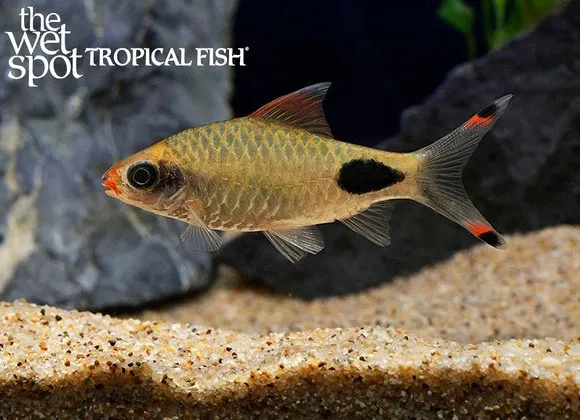
Apsara barb
Dawkinsia apsara
Freshwater3.5 in (9 cm) · 42 gal (160 L)70–79°F (21–26°C)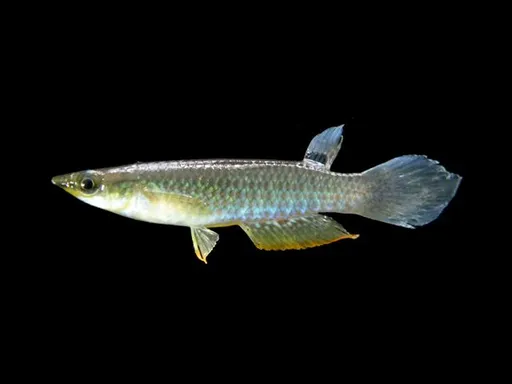
Blue panchax
Aplocheilus panchax
Freshwater3.5 in (9 cm) · 20 gal (75 L)72–82°F (22–28°C)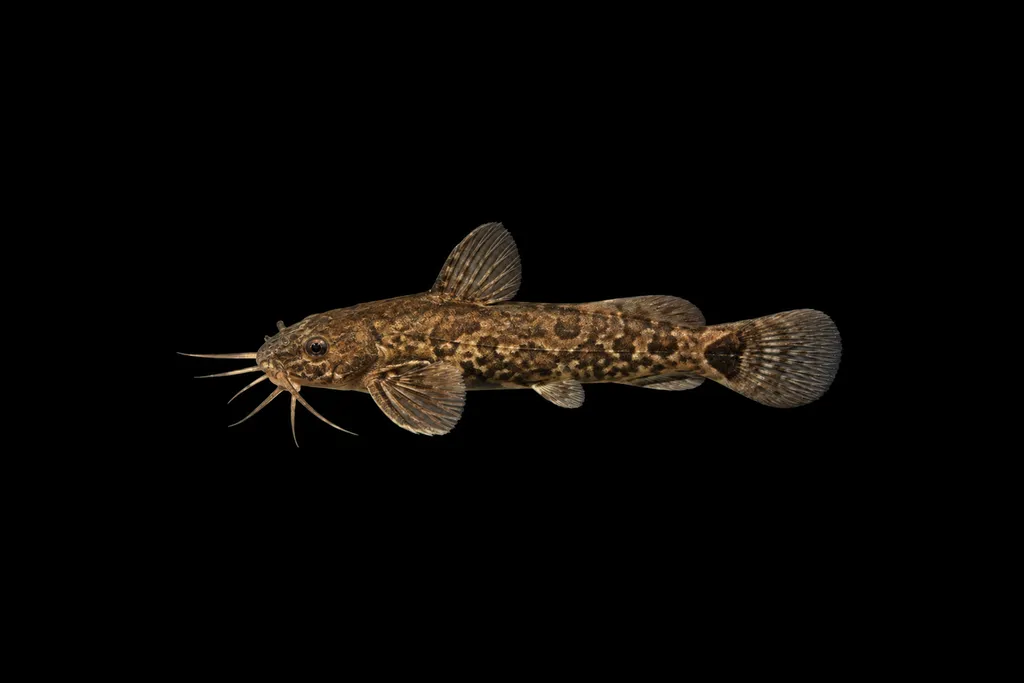
Blotched sisorid catfish
Glyptothorax macromaculatus
Freshwater6.3 in (16 cm) · 42 gal (160 L)68–79°F (20–26°C)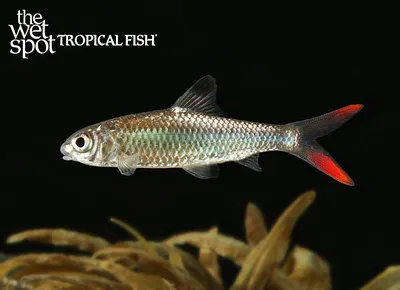
Redcheek barb
Discherodontus ashmeadi
Freshwater5.4 in (13.6 cm) · 42 gal (160 L)72–81°F (22–27°C)
Common questions
What size tank does an Altum angelfish need?
An Altum angelfish needs at least 45 gal (170 L). It spends most of its time in the middle.
What temperature and pH does an Altum angelfish need?
An Altum angelfish is comfortable at 79–90°F (26–32°C) with a pH of 5.5–6.5.
How big does an Altum angelfish get?
An adult Altum angelfish reaches about 7.1 in (18 cm).
Related species
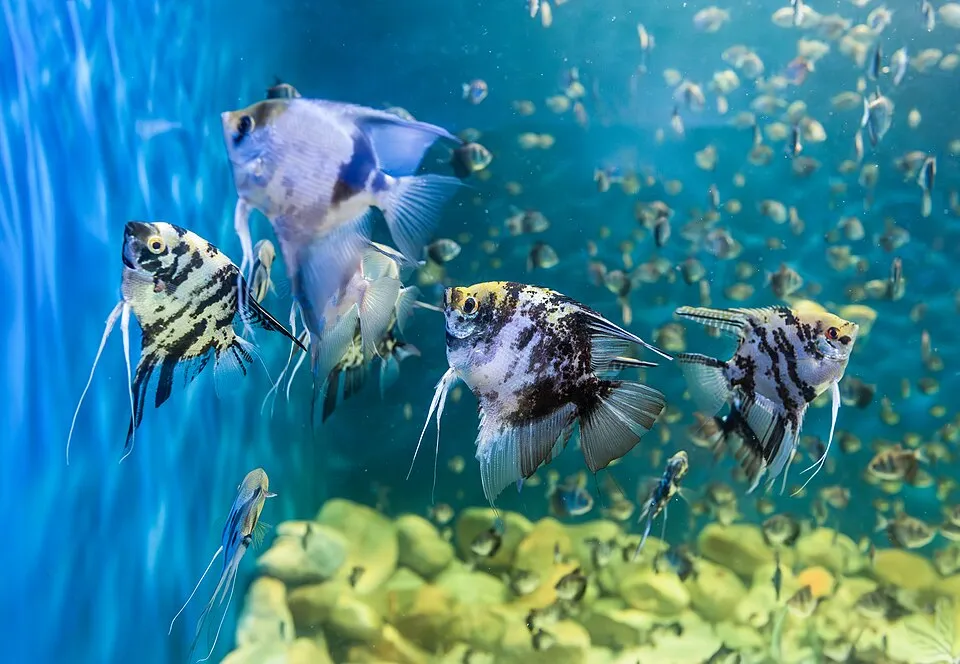 5.9 in (15 cm)30 gal (115 L)75–86°F (24–30°C)
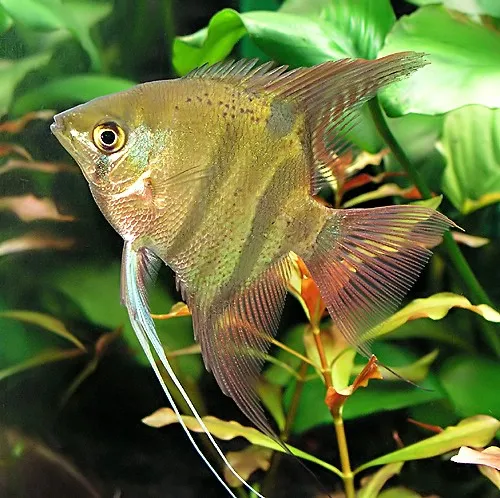
Angelfish
Pterophyllum scalare
5.9 in (15 cm) · 30 gal (115 L)
 3.9 in (10 cm)30 gal (115 L)72–84°F (22–29°C)
Roman nose angelfish
Pterophyllum leopoldi
3.9 in (10 cm) · 30 gal (115 L)
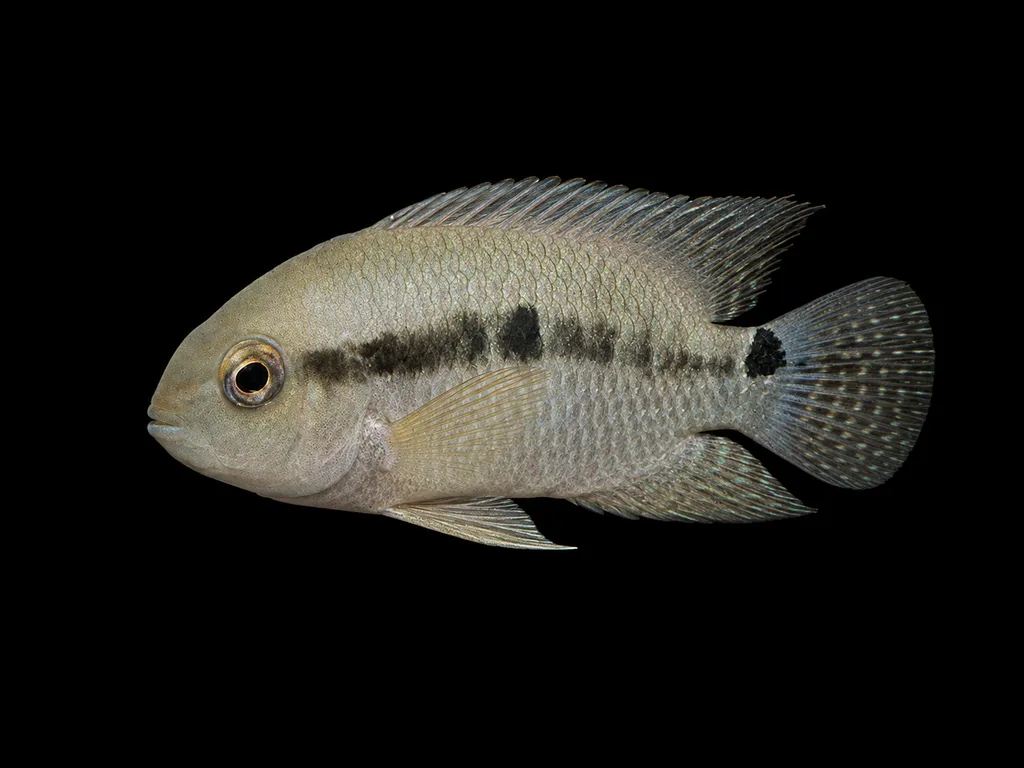 7.1 in (18 cm)40 gal (150 L)68–82°F (20–28°C)
Black acara
Cichlasoma bimaculatum
7.1 in (18 cm) · 40 gal (150 L)
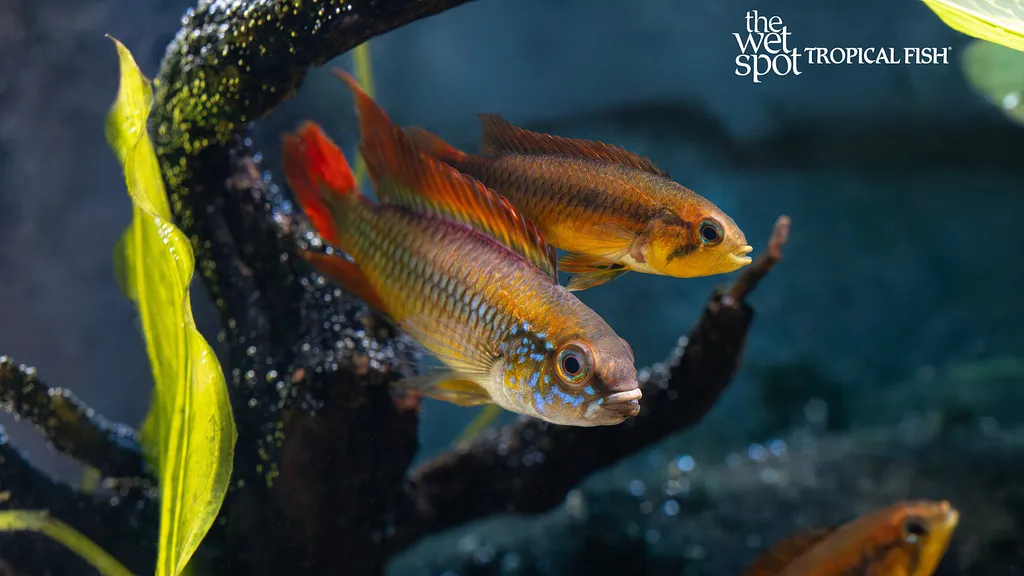 7.1 in (18 cm)75 gal (284 L)82–88°F (28–31°C)
Heckel discus
Symphysodon discus
7.1 in (18 cm) · 75 gal (284 L)
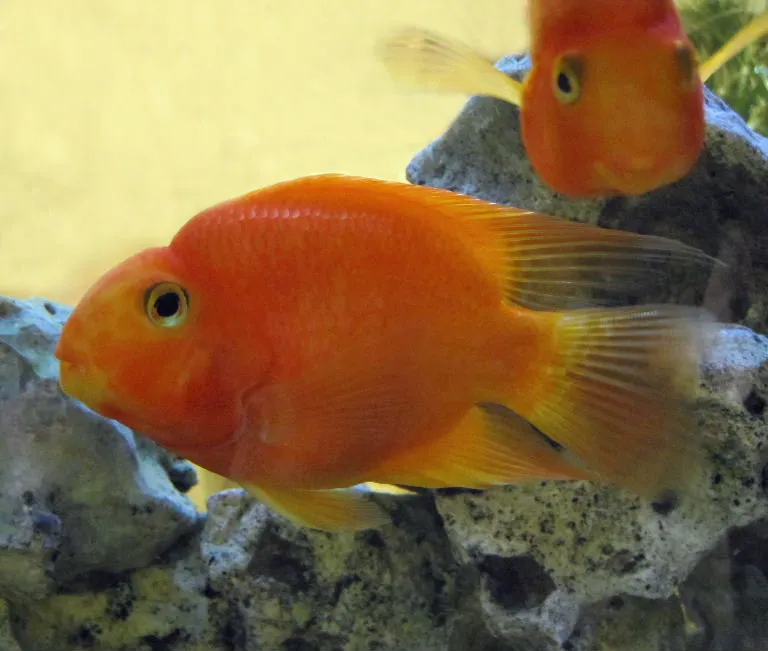 7.9 in (20 cm)32 gal (120 L)72–82°F (22–28°C)
Blood parrot cichlid
A. citrinellus x V. synspilum
7.9 in (20 cm) · 32 gal (120 L)
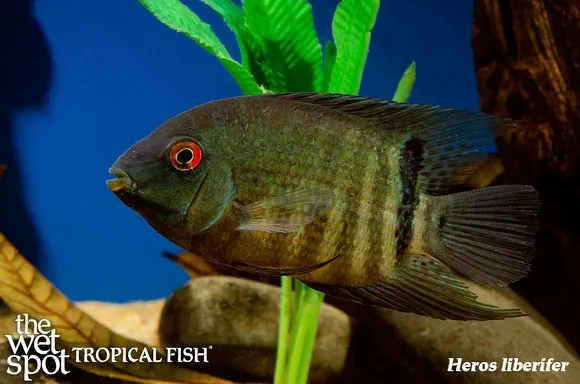 7.9 in (20 cm)106 gal (400 L)75–82°F (24–28°C)
Eyespot severum
Heros liberifer
7.9 in (20 cm) · 106 gal (400 L)